


Post-Industrial Recyclate (PIR) Flexible Packaging Market Outlook
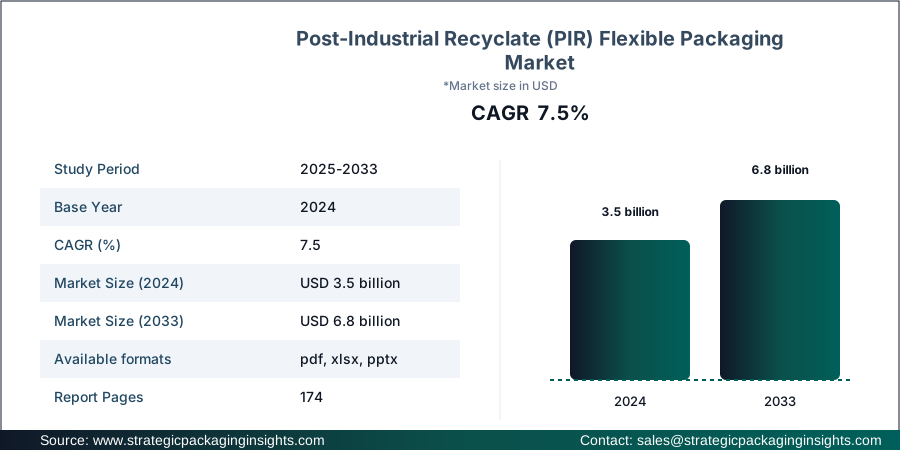
The Post-Industrial Recyclate (PIR) Flexible Packaging market was valued at $3.5 billion in 2024 and is projected to reach $6.8 billion by 2033, growing at a CAGR of 7.5% during the forecast period 2025-2033. This market is witnessing significant growth due to the increasing demand for sustainable packaging solutions across various industries. The shift towards eco-friendly packaging materials is driven by stringent environmental regulations and the growing consumer awareness regarding the environmental impact of packaging waste. The food and beverage industry, in particular, is a major contributor to the demand for PIR flexible packaging, as companies strive to reduce their carbon footprint and enhance their brand image by adopting sustainable practices.
Report Scope
| Attributes | Details |
| Report Title | Post-Industrial Recyclate (PIR) Flexible Packaging Market Size, Future Growth and Forecast 2033 |
| Material Type | Polyethylene, Polypropylene, Polyethylene Terephthalate, Others |
| Application | Food & Beverage, Healthcare, Personal Care, Industrial, Others |
| End-User | Manufacturers, Retailers, Distributors, Others |
| Base Year | 2024 |
| Historic Period | 2017-2023 |
| Forecast Period | 2025-2033 |
| Number of Pages | 174 |
| Customization Available | Yes* |
Opportunities & Threats
One of the key opportunities in the PIR flexible packaging market is the rising demand for sustainable packaging solutions from the food and beverage industry. As consumers become more environmentally conscious, there is a growing preference for products that use eco-friendly packaging. This trend is encouraging manufacturers to invest in PIR flexible packaging solutions that not only meet regulatory requirements but also appeal to the environmentally conscious consumer. Additionally, advancements in recycling technologies are enabling the production of high-quality recyclate materials, which are increasingly being used in flexible packaging applications.
Another significant opportunity lies in the healthcare sector, where the demand for sustainable and safe packaging solutions is on the rise. The healthcare industry is increasingly adopting PIR flexible packaging to ensure the safety and integrity of medical products while minimizing environmental impact. This trend is further supported by regulatory bodies that are encouraging the use of sustainable packaging materials in the healthcare sector. As a result, companies operating in the PIR flexible packaging market have the opportunity to expand their product offerings and cater to the growing demand from the healthcare industry.
However, the market faces certain restraints, such as the high cost of recycling technologies and the limited availability of high-quality recyclate materials. These factors can hinder the growth of the PIR flexible packaging market, as manufacturers may be reluctant to invest in expensive recycling technologies. Additionally, the fluctuating prices of raw materials can impact the profitability of companies operating in this market. Despite these challenges, the increasing focus on sustainability and the growing demand for eco-friendly packaging solutions are expected to drive the market's growth in the coming years.
Drivers & Challenges
The primary driver of the PIR flexible packaging market is the increasing demand for sustainable packaging solutions across various industries. As environmental concerns continue to rise, companies are under pressure to adopt eco-friendly practices and reduce their carbon footprint. This has led to a growing demand for PIR flexible packaging, which offers a sustainable alternative to traditional packaging materials. Additionally, government regulations and initiatives aimed at promoting recycling and reducing packaging waste are further driving the adoption of PIR flexible packaging solutions.
Another significant driver is the technological advancements in recycling processes, which have improved the quality and performance of recyclate materials. These advancements have made it possible to produce high-quality PIR flexible packaging that meets the stringent requirements of various industries, including food and beverage, healthcare, and personal care. As a result, companies are increasingly investing in PIR flexible packaging solutions to enhance their sustainability credentials and meet the evolving demands of consumers and regulatory bodies.
Despite the positive drivers, the PIR flexible packaging market faces several challenges. One of the main challenges is the high cost of recycling technologies, which can be a barrier for small and medium-sized enterprises looking to enter the market. Additionally, the limited availability of high-quality recyclate materials can impact the supply chain and hinder the growth of the market. Companies need to invest in research and development to improve recycling processes and ensure a steady supply of high-quality recyclate materials. Furthermore, the fluctuating prices of raw materials can pose a challenge to the profitability of companies operating in the PIR flexible packaging market.
Market Share Analysis
The competitive landscape of the Post-Industrial Recyclate (PIR) Flexible Packaging market is characterized by the presence of several key players who are actively investing in research and development to enhance their product offerings and expand their market presence. These companies are focusing on strategic partnerships, mergers, and acquisitions to strengthen their position in the market and cater to the growing demand for sustainable packaging solutions. The market is highly competitive, with companies vying for market share by offering innovative and cost-effective PIR flexible packaging solutions.
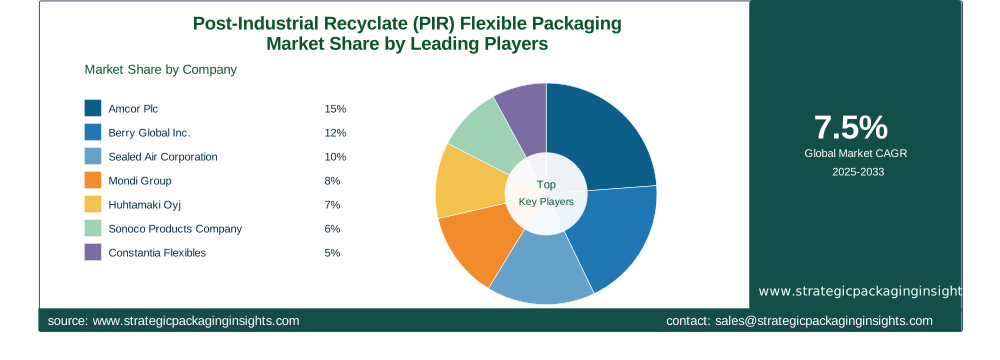
Some of the major companies operating in the PIR flexible packaging market include Amcor Plc, Berry Global Inc., Sealed Air Corporation, Mondi Group, and Huhtamaki Oyj. These companies have a strong presence in the market and are continuously investing in research and development to improve the quality and performance of their PIR flexible packaging solutions. They are also focusing on expanding their product portfolios to cater to the diverse needs of various industries, including food and beverage, healthcare, and personal care.
Amcor Plc is a leading player in the PIR flexible packaging market, offering a wide range of sustainable packaging solutions. The company is committed to reducing its environmental impact and has set ambitious sustainability goals to achieve by 2025. Berry Global Inc. is another major player in the market, known for its innovative and high-quality PIR flexible packaging solutions. The company has a strong focus on sustainability and is actively investing in research and development to enhance its product offerings.
Sealed Air Corporation is a prominent player in the PIR flexible packaging market, offering a range of sustainable packaging solutions for various industries. The company is committed to sustainability and has set ambitious goals to reduce its environmental impact. Mondi Group is another key player in the market, known for its innovative and sustainable packaging solutions. The company is focused on expanding its product portfolio and enhancing its sustainability credentials to cater to the growing demand for eco-friendly packaging solutions.
Key Highlights
- The PIR flexible packaging market is projected to grow at a CAGR of 7.5% from 2025 to 2033.
- Increasing demand for sustainable packaging solutions is driving market growth.
- Technological advancements in recycling processes are enhancing the quality of recyclate materials.
- The food and beverage industry is a major contributor to the demand for PIR flexible packaging.
- Government regulations and initiatives are promoting the adoption of eco-friendly packaging solutions.
- The healthcare sector is increasingly adopting PIR flexible packaging for safe and sustainable packaging solutions.
- High cost of recycling technologies and limited availability of high-quality recyclate materials are key challenges.
- Major companies are focusing on strategic partnerships and mergers to strengthen their market position.
- Amcor Plc, Berry Global Inc., and Sealed Air Corporation are some of the leading players in the market.
Top Countries Insights
The United States is one of the leading markets for PIR flexible packaging, with a market size of $1.2 billion and a CAGR of 6%. The country's strong focus on sustainability and the presence of major players in the market are driving growth. Government regulations promoting recycling and the use of eco-friendly packaging materials are also contributing to the market's expansion.
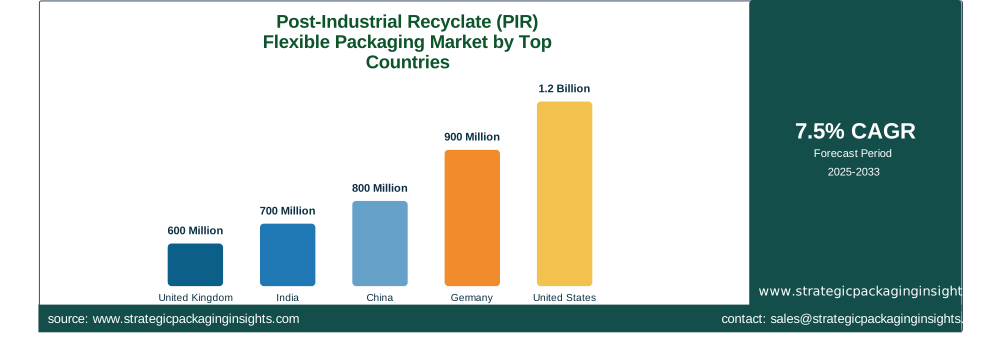
Germany is another key market for PIR flexible packaging, with a market size of $900 million and a CAGR of 5%. The country's strong manufacturing base and commitment to sustainability are driving demand for PIR flexible packaging solutions. The German government's initiatives to promote recycling and reduce packaging waste are further supporting market growth.
China is a rapidly growing market for PIR flexible packaging, with a market size of $800 million and a CAGR of 8%. The country's large population and growing consumer awareness regarding environmental issues are driving demand for sustainable packaging solutions. The Chinese government's focus on reducing packaging waste and promoting recycling is also contributing to market growth.
India is another emerging market for PIR flexible packaging, with a market size of $700 million and a CAGR of 9%. The country's growing middle class and increasing consumer awareness regarding sustainability are driving demand for eco-friendly packaging solutions. Government initiatives to promote recycling and reduce packaging waste are also supporting market growth.
The United Kingdom is a significant market for PIR flexible packaging, with a market size of $600 million and a CAGR of 4%. The country's strong focus on sustainability and the presence of major players in the market are driving growth. Government regulations promoting recycling and the use of eco-friendly packaging materials are also contributing to the market's expansion.
Post-Industrial Recyclate (PIR) Flexible Packaging Market Segments Insights

Material Type Analysis
The material type segment of the PIR flexible packaging market is dominated by polyethylene, which is widely used due to its versatility and cost-effectiveness. Polyethylene offers excellent barrier properties and is easily recyclable, making it a popular choice for PIR flexible packaging solutions. The demand for polyethylene-based PIR flexible packaging is driven by the food and beverage industry, where it is used to package a wide range of products, including snacks, beverages, and ready-to-eat meals. The growing focus on sustainability and the increasing demand for eco-friendly packaging solutions are expected to drive the growth of the polyethylene segment in the coming years.
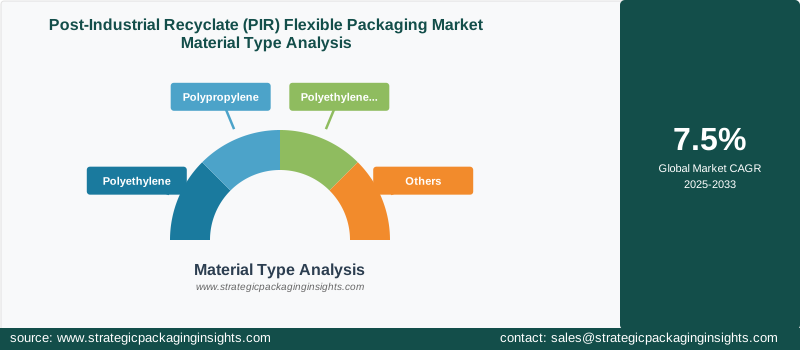
Polypropylene is another significant material type in the PIR flexible packaging market, known for its excellent clarity and high resistance to moisture and chemicals. Polypropylene-based PIR flexible packaging is widely used in the healthcare and personal care industries, where it is used to package products such as pharmaceuticals, cosmetics, and personal care items. The increasing demand for safe and sustainable packaging solutions in these industries is driving the growth of the polypropylene segment. Additionally, advancements in recycling technologies are enabling the production of high-quality polypropylene recyclate materials, further supporting the segment's growth.
Application Analysis
The application segment of the PIR flexible packaging market is dominated by the food and beverage industry, which is a major contributor to the demand for sustainable packaging solutions. The growing consumer awareness regarding the environmental impact of packaging waste is driving the demand for PIR flexible packaging in this industry. Companies are increasingly adopting PIR flexible packaging solutions to enhance their sustainability credentials and meet the evolving demands of consumers and regulatory bodies. The healthcare industry is another significant application segment, where the demand for safe and sustainable packaging solutions is on the rise. The increasing focus on patient safety and the need to minimize environmental impact are driving the adoption of PIR flexible packaging in the healthcare sector.
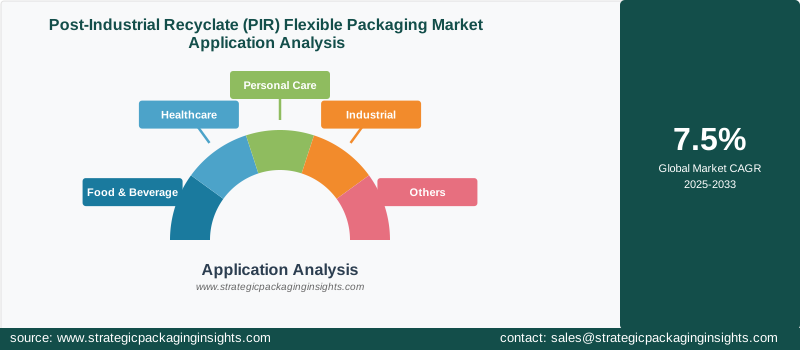
The personal care industry is also a key application segment for PIR flexible packaging, where the demand for eco-friendly packaging solutions is growing. Consumers are increasingly seeking products that use sustainable packaging, and companies are responding by adopting PIR flexible packaging solutions. The industrial sector is another important application segment, where the demand for durable and sustainable packaging solutions is driving the adoption of PIR flexible packaging. The increasing focus on sustainability and the need to reduce packaging waste are expected to drive the growth of the application segment in the coming years.
End-User Analysis
The end-user segment of the PIR flexible packaging market is dominated by manufacturers, who are the primary consumers of PIR flexible packaging solutions. Manufacturers are increasingly adopting PIR flexible packaging to enhance their sustainability credentials and meet the evolving demands of consumers and regulatory bodies. The growing focus on sustainability and the need to reduce packaging waste are driving the demand for PIR flexible packaging among manufacturers. Retailers are another significant end-user segment, where the demand for eco-friendly packaging solutions is growing. Retailers are increasingly seeking products that use sustainable packaging to enhance their brand image and appeal to environmentally conscious consumers.
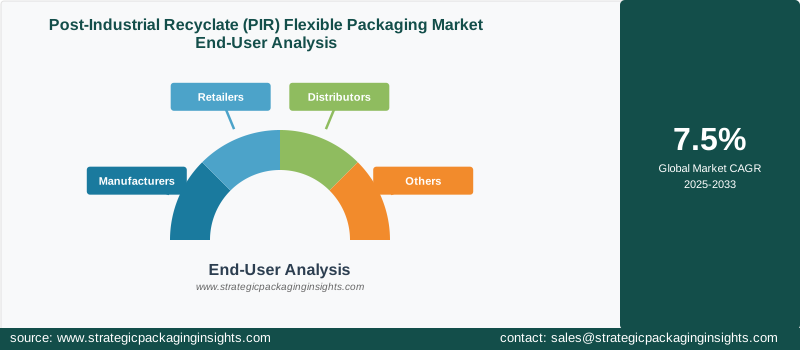
Distributors are also a key end-user segment for PIR flexible packaging, where the demand for durable and sustainable packaging solutions is driving the adoption of PIR flexible packaging. Distributors are increasingly seeking packaging solutions that offer excellent barrier properties and are easily recyclable, making PIR flexible packaging an attractive option. The increasing focus on sustainability and the need to reduce packaging waste are expected to drive the growth of the end-user segment in the coming years. Other end-users, such as logistics companies and e-commerce platforms, are also adopting PIR flexible packaging solutions to enhance their sustainability credentials and meet the evolving demands of consumers and regulatory bodies.
Post-Industrial Recyclate (PIR) Flexible Packaging Market Segments
The Post-Industrial Recyclate (PIR) Flexible Packaging market has been segmented on the basis ofMaterial Type
- Polyethylene
- Polypropylene
- Polyethylene Terephthalate
- Others
Application
- Food & Beverage
- Healthcare
- Personal Care
- Industrial
- Others
End-User
- Manufacturers
- Retailers
- Distributors
- Others




