


Lubricant Container Packaging Market Outlook
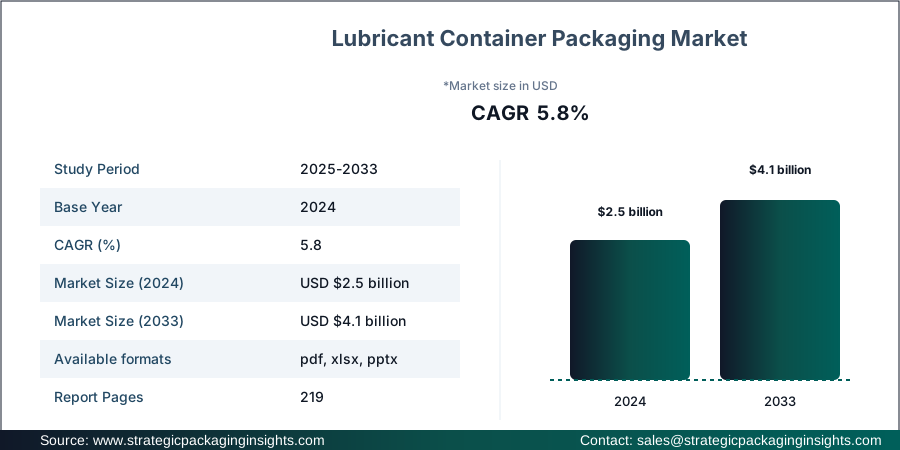
The lubricant container packaging market was valued at $2.5 billion in 2024 and is projected to reach $4.1 billion by 2033, growing at a CAGR of 5.8% during the forecast period 2025-2033. This market is driven by the increasing demand for lubricants across various industries such as automotive, industrial, and marine. The need for efficient and sustainable packaging solutions is also propelling market growth. As industries continue to expand, the demand for lubricants and consequently, lubricant containers, is expected to rise significantly. The market is also witnessing a shift towards eco-friendly packaging solutions, which is anticipated to create new growth opportunities.
Report Scope
| Attributes | Details |
| Report Title | Lubricant Container Packaging Market Size, Future Growth and Forecast 2033 |
| Material Type | Plastic, Metal, Glass |
| Container Type | Bottles, Cans, Drums, Pails |
| Capacity | Less than 1 Liter, 1-5 Liters, 5-20 Liters, Above 20 Liters |
| End-User | Automotive, Industrial, Marine, Aviation, Others |
| Base Year | 2024 |
| Historic Period | 2017-2023 |
| Forecast Period | 2025-2033 |
| Number of Pages | 219 |
| Customization Available | Yes* |
Opportunities & Threats
One of the significant opportunities in the lubricant container packaging market is the growing emphasis on sustainability. With increasing environmental concerns, there is a rising demand for eco-friendly packaging solutions. Companies are investing in research and development to create biodegradable and recyclable packaging materials. This shift towards sustainable packaging is not only helping companies reduce their carbon footprint but also attracting environmentally conscious consumers. Additionally, the development of smart packaging solutions that enhance product safety and shelf life is expected to open new avenues for market growth.
Another opportunity lies in the technological advancements in packaging materials and designs. Innovations such as tamper-evident packaging, child-resistant closures, and anti-counterfeit technologies are gaining traction in the market. These advancements are crucial for maintaining product integrity and ensuring consumer safety. Moreover, the integration of digital technologies like QR codes and RFID tags in packaging is enhancing traceability and providing consumers with valuable product information. These technological innovations are expected to drive market growth by offering enhanced functionality and convenience.
However, the market faces certain restraints, such as the volatility in raw material prices. The packaging industry heavily relies on raw materials like plastics and metals, whose prices are subject to fluctuations due to various economic and geopolitical factors. These price fluctuations can impact the overall cost of production, thereby affecting profit margins. Additionally, stringent regulations regarding packaging waste and recycling are posing challenges for manufacturers. Companies need to comply with these regulations, which often require significant investments in sustainable packaging solutions.
Drivers & Challenges
The primary driver of the lubricant container packaging market is the increasing demand for lubricants across various end-use industries. The automotive industry, in particular, is a major consumer of lubricants, driving the demand for efficient packaging solutions. As the automotive industry continues to grow, especially in emerging economies, the demand for lubricant containers is expected to rise. Furthermore, the industrial sector's expansion, driven by rapid urbanization and industrialization, is contributing to the market's growth. The need for high-performance lubricants in machinery and equipment is fueling the demand for specialized packaging solutions.
Another significant driver is the growing focus on product differentiation and branding. Companies are increasingly investing in innovative packaging designs to enhance brand visibility and attract consumers. Unique packaging designs not only help in differentiating products on the shelf but also play a crucial role in influencing consumer purchasing decisions. The trend of premiumization in the lubricant market is further driving the demand for aesthetically appealing and functional packaging solutions. As companies strive to enhance their brand image, the demand for customized and innovative packaging is expected to increase.
Despite the growth drivers, the market faces challenges such as the increasing competition from unorganized players. The presence of numerous small and medium-sized enterprises offering low-cost packaging solutions is intensifying the competition in the market. These unorganized players often operate with lower overhead costs, allowing them to offer competitive pricing. This poses a challenge for established players who need to maintain their market share while ensuring profitability. Additionally, the ongoing trade tensions and geopolitical uncertainties are impacting the global supply chain, posing challenges for manufacturers in sourcing raw materials and distributing finished products.
Market Share Analysis
The lubricant container packaging market is characterized by intense competition, with several key players dominating the landscape. The competitive environment is shaped by factors such as product innovation, pricing strategies, and distribution networks. Companies are focusing on expanding their product portfolios and enhancing their production capabilities to gain a competitive edge. The market is also witnessing strategic collaborations and partnerships aimed at strengthening market presence and expanding geographical reach. As the demand for lubricant containers continues to grow, companies are investing in research and development to introduce innovative and sustainable packaging solutions.
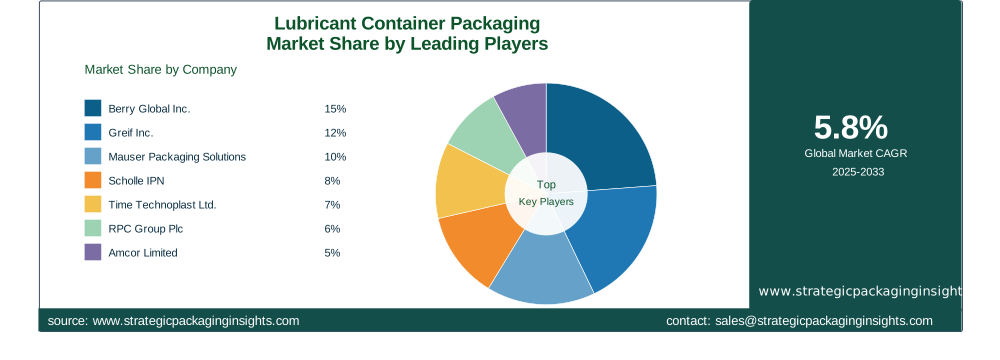
Some of the major companies operating in the lubricant container packaging market include Berry Global Inc., Greif Inc., Mauser Packaging Solutions, Scholle IPN, and Time Technoplast Ltd. Berry Global Inc. is a leading player known for its extensive range of packaging solutions, including rigid and flexible packaging. The company focuses on sustainability and innovation, offering eco-friendly packaging options to meet the evolving consumer demands. Greif Inc. is another prominent player, specializing in industrial packaging solutions. The company has a strong global presence and offers a wide range of products, including drums, intermediate bulk containers, and flexible products.
Mauser Packaging Solutions is renowned for its comprehensive packaging solutions, catering to various industries, including lubricants. The company emphasizes sustainability and has implemented several initiatives to reduce its environmental impact. Scholle IPN is a key player in the flexible packaging segment, offering innovative solutions for liquid products. The company's focus on sustainability and product safety has helped it establish a strong foothold in the market. Time Technoplast Ltd. is a leading manufacturer of polymer-based products, including packaging solutions for lubricants. The company has a diverse product portfolio and a strong presence in emerging markets.
Other notable companies in the market include RPC Group Plc, Amcor Limited, Mondi Group, and Sonoco Products Company. These companies are actively engaged in expanding their product offerings and enhancing their production capabilities to cater to the growing demand for lubricant containers. The competitive landscape is further intensified by the presence of several regional players who offer customized solutions to meet specific customer requirements. As the market continues to evolve, companies are focusing on strategic initiatives such as mergers and acquisitions to strengthen their market position and drive growth.
Key Highlights
- The lubricant container packaging market is projected to grow at a CAGR of 5.8% from 2025 to 2033.
- Increasing demand for eco-friendly and sustainable packaging solutions is driving market growth.
- Technological advancements in packaging materials and designs are enhancing product safety and functionality.
- The automotive industry is a major consumer of lubricant containers, driving market demand.
- Volatility in raw material prices poses a challenge for manufacturers.
- Companies are focusing on product differentiation and branding to enhance market presence.
- Strategic collaborations and partnerships are key strategies adopted by market players.
- Regulatory compliance regarding packaging waste and recycling is a significant challenge.
- The market is witnessing a shift towards smart packaging solutions with digital integration.
- Emerging economies offer significant growth opportunities for market expansion.
Top Countries Insights
In the lubricant container packaging market, the United States holds a significant share, with a market size of approximately $1.2 billion and a CAGR of 4%. The country's well-established automotive and industrial sectors are major growth drivers. The increasing focus on sustainability and regulatory compliance regarding packaging waste is also influencing market dynamics. Germany is another key market, valued at around $800 million, with a CAGR of 3%. The country's strong manufacturing base and emphasis on innovation are driving demand for advanced packaging solutions.
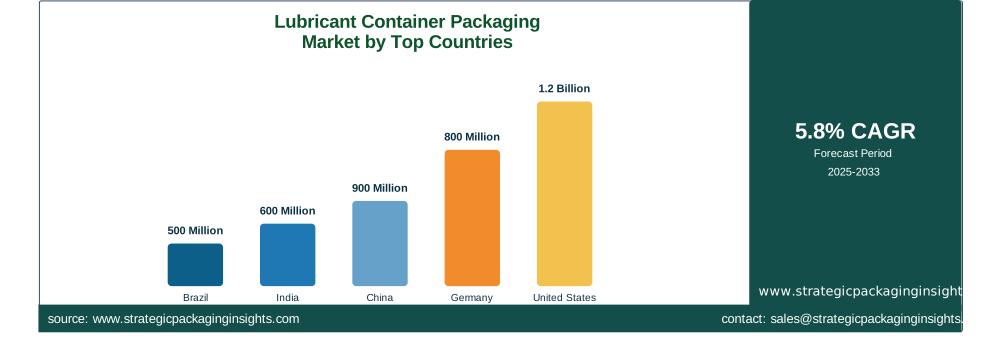
China is a rapidly growing market, with a market size of $900 million and a CAGR of 6%. The country's expanding automotive and industrial sectors, coupled with increasing environmental awareness, are fueling demand for sustainable packaging solutions. India, with a market size of $600 million and a CAGR of 7%, is witnessing significant growth due to rapid industrialization and urbanization. The government's initiatives to promote sustainable practices are further boosting market growth.
Brazil is another important market, with a market size of $500 million and a CAGR of 5%. The country's growing automotive industry and increasing demand for lubricants are driving the need for efficient packaging solutions. However, challenges such as economic instability and regulatory hurdles pose challenges for market players. Despite these challenges, the market offers significant growth opportunities, driven by the increasing demand for eco-friendly packaging solutions.
Lubricant Container Packaging Market Segments Insights

Material Type Analysis
The lubricant container packaging market is segmented by material type into plastic, metal, and glass. Plastic containers dominate the market due to their lightweight, durability, and cost-effectiveness. The demand for plastic containers is driven by their versatility and ability to be molded into various shapes and sizes, catering to diverse packaging needs. However, the increasing environmental concerns regarding plastic waste are pushing manufacturers to explore sustainable alternatives. Metal containers, known for their strength and recyclability, are gaining traction, especially in industrial applications. Glass containers, though less common, are preferred for premium products due to their aesthetic appeal and chemical inertness.
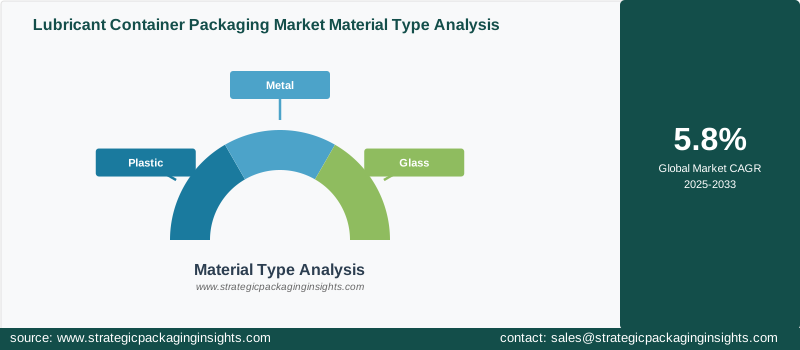
Plastic containers are widely used in the automotive and industrial sectors due to their ability to withstand harsh conditions and provide effective protection to the contents. The development of biodegradable and recyclable plastics is expected to drive the demand for plastic containers in the coming years. Metal containers, on the other hand, are favored for their robustness and ability to protect contents from external factors. The increasing focus on sustainability is driving the demand for metal containers, as they can be easily recycled and reused. Glass containers, although limited in use, are preferred for high-end products where aesthetics and product integrity are crucial.
Container Type Analysis
The market is segmented by container type into bottles, cans, drums, and pails. Bottles are the most commonly used containers, especially in the automotive and consumer sectors, due to their convenience and ease of use. The demand for bottles is driven by their ability to provide precise dispensing and easy handling. Cans, known for their durability and protection against external factors, are widely used in industrial applications. Drums, with their large capacity, are preferred for bulk storage and transportation of lubricants. Pails, offering a balance between capacity and convenience, are used in both consumer and industrial applications.
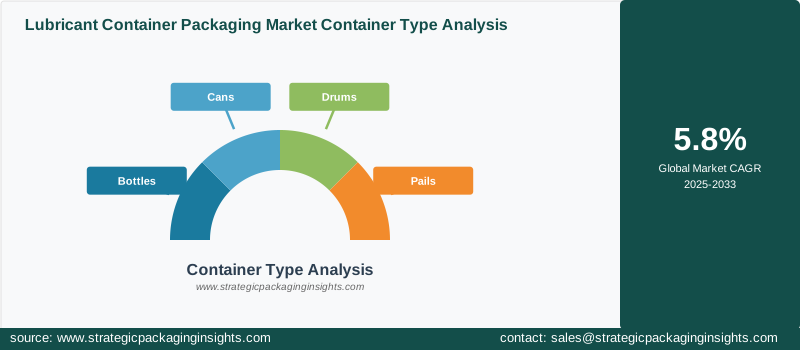
Bottles are favored for their versatility and ability to cater to various packaging needs, from small consumer packs to larger industrial sizes. The development of innovative bottle designs with features like tamper-evident closures and ergonomic shapes is driving their demand. Cans, with their robust construction, are ideal for protecting contents from contamination and damage. The increasing demand for high-performance lubricants in industrial applications is driving the demand for cans. Drums, with their large capacity, are essential for bulk storage and transportation, especially in the industrial sector. Pails, offering a convenient solution for medium-sized packaging needs, are gaining popularity due to their ease of handling and storage.
Capacity Analysis
The market is segmented by capacity into less than 1 liter, 1-5 liters, 5-20 liters, and above 20 liters. Containers with a capacity of 1-5 liters are the most popular, catering to both consumer and industrial needs. The demand for these containers is driven by their versatility and ability to cater to a wide range of applications. Containers with a capacity of less than 1 liter are primarily used for consumer products, offering convenience and ease of use. Containers with a capacity of 5-20 liters are favored for industrial applications, providing a balance between capacity and ease of handling. Containers with a capacity above 20 liters are used for bulk storage and transportation, especially in the industrial sector.
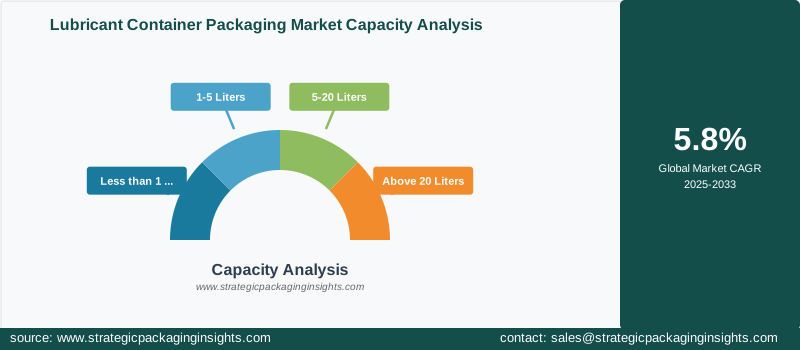
Containers with a capacity of 1-5 liters are widely used in the automotive and consumer sectors, offering a convenient solution for packaging lubricants. The development of innovative designs with features like easy-pour spouts and ergonomic handles is driving their demand. Containers with a capacity of less than 1 liter are ideal for consumer products, offering convenience and ease of use. The increasing demand for small-sized packaging solutions in the consumer sector is driving their demand. Containers with a capacity of 5-20 liters are favored for industrial applications, providing a balance between capacity and ease of handling. Containers with a capacity above 20 liters are essential for bulk storage and transportation, especially in the industrial sector.
End-User Analysis
The market is segmented by end-user into automotive, industrial, marine, aviation, and others. The automotive sector is the largest consumer of lubricant containers, driven by the increasing demand for lubricants in vehicles. The industrial sector is another major consumer, with the demand for high-performance lubricants driving the need for efficient packaging solutions. The marine and aviation sectors, though smaller in comparison, are witnessing significant growth due to the increasing demand for specialized lubricants. The 'others' segment includes applications in agriculture, construction, and other industries, where the demand for lubricants is driving the need for packaging solutions.
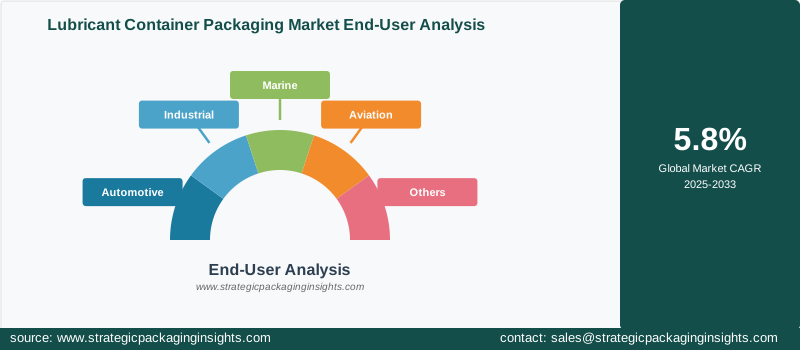
The automotive sector is the largest consumer of lubricant containers, driven by the increasing demand for lubricants in vehicles. The development of innovative packaging solutions with features like tamper-evident closures and ergonomic designs is driving their demand. The industrial sector is another major consumer, with the demand for high-performance lubricants driving the need for efficient packaging solutions. The marine and aviation sectors, though smaller in comparison, are witnessing significant growth due to the increasing demand for specialized lubricants. The 'others' segment includes applications in agriculture, construction, and other industries, where the demand for lubricants is driving the need for packaging solutions.
Lubricant Container Packaging Market Segments
The Lubricant Container Packaging market has been segmented on the basis ofMaterial Type
- Plastic
- Metal
- Glass
Container Type
- Bottles
- Cans
- Drums
- Pails
Capacity
- Less than 1 Liter
- 1-5 Liters
- 5-20 Liters
- Above 20 Liters
End-User
- Automotive
- Industrial
- Marine
- Aviation
- Others




