


Motor Oil Bottle Packaging Market Outlook
The motor oil bottle packaging market was valued at $3.5 billion in 2024 and is projected to reach $5.2 billion by 2033, growing at a CAGR of 4.5% during the forecast period 2025-2033. This growth is driven by the increasing demand for motor oil due to the rising number of vehicles globally, coupled with advancements in packaging technologies that enhance product safety and shelf life. The market is also benefiting from the shift towards more sustainable packaging solutions, as consumers and manufacturers alike are becoming more environmentally conscious. The adoption of innovative materials and designs that improve the recyclability and functionality of motor oil bottles is expected to further propel market growth.
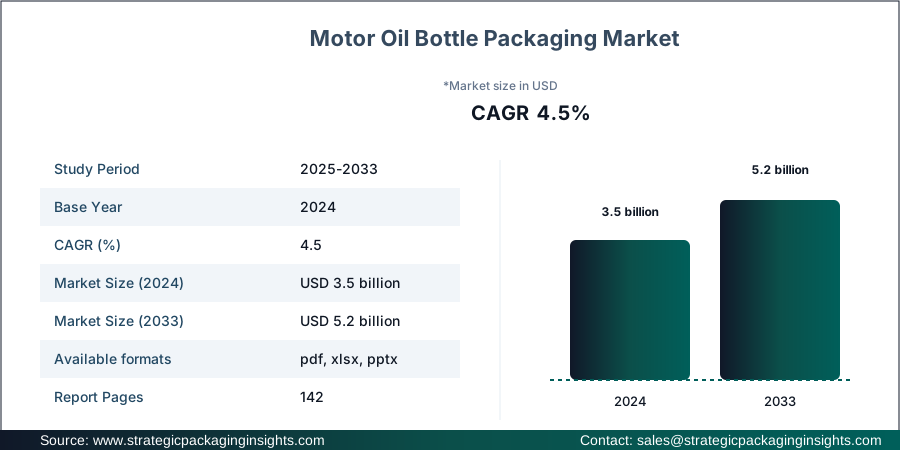
Report Scope
| Attributes | Details |
| Report Title | Motor Oil Bottle Packaging Market Size, Future Growth and Forecast 2033 |
| Material | Plastic, Metal, Glass |
| Capacity | Less than 1 Liter, 1-5 Liters, Above 5 Liters |
| End-User | Automotive, Industrial, Marine, Aviation |
| Region | Asia Pacific, North America, Latin America, Europe, Middle East & Africa |
| Base Year | 2024 |
| Historic Period | 2017-2023 |
| Forecast Period | 2025-2033 |
| Number of Pages | 142 |
| Customization Available | Yes* |
Opportunities & Threats
One of the significant opportunities in the motor oil bottle packaging market is the growing trend towards sustainable and eco-friendly packaging solutions. As environmental concerns continue to rise, consumers and regulatory bodies are pushing for packaging that reduces carbon footprints and is easily recyclable. This has led to increased investments in research and development for biodegradable and reusable packaging materials. Companies that can innovate in this space stand to gain a competitive edge, as they can cater to the environmentally conscious consumer base while also complying with stringent environmental regulations. Additionally, the rise of electric vehicles presents a unique opportunity for packaging companies to diversify their product offerings to include packaging solutions for other automotive fluids and lubricants.
Another opportunity lies in the technological advancements in packaging design and manufacturing processes. The integration of smart packaging technologies, such as QR codes and RFID tags, can enhance consumer engagement and provide valuable data insights for manufacturers. These technologies can improve supply chain efficiency, track product authenticity, and offer personalized marketing opportunities. As the automotive industry continues to evolve, packaging companies that leverage these technologies can create more value-added products and services, thereby increasing their market share.
However, the market faces threats from fluctuating raw material prices, which can impact the cost of production and, consequently, the pricing of the final product. The packaging industry is heavily reliant on materials such as plastic and metal, whose prices are subject to volatility due to factors like geopolitical tensions and supply chain disruptions. This unpredictability can pose challenges for manufacturers in maintaining consistent profit margins. Additionally, the increasing regulatory pressures to reduce plastic usage and waste can also pose a threat to companies that have not yet adapted to more sustainable practices.
Drivers & Challenges
The primary driver of the motor oil bottle packaging market is the increasing global vehicle fleet, which directly correlates with the demand for motor oil and its packaging. As emerging economies continue to urbanize and industrialize, the number of vehicles on the road is expected to rise, thereby boosting the demand for motor oil packaging solutions. Furthermore, the automotive industry's shift towards high-performance and synthetic oils, which require specialized packaging to maintain their integrity and performance, is also driving market growth. The need for packaging that can withstand various environmental conditions and prevent contamination is becoming increasingly important, further fueling demand.
Another significant driver is the growing consumer preference for convenient and user-friendly packaging. Consumers are increasingly looking for packaging that is easy to handle, pour, and store. This has led to innovations in packaging design, such as ergonomic shapes, spill-proof caps, and transparent bottles that allow consumers to see the product level. These features not only enhance the user experience but also help brands differentiate themselves in a competitive market. As a result, companies that focus on improving the functionality and aesthetics of their packaging are likely to see increased consumer loyalty and market share.
Despite these drivers, the market faces challenges such as stringent environmental regulations and the need for significant capital investment in new technologies and materials. The push towards reducing plastic waste and increasing recyclability requires companies to invest in new manufacturing processes and materials, which can be costly and time-consuming. Additionally, the competitive nature of the market means that companies must continuously innovate to stay ahead, which can strain resources and impact profitability. The challenge lies in balancing the need for innovation with cost-effectiveness and regulatory compliance.
Market Share Analysis
The motor oil bottle packaging market is characterized by a competitive landscape with several key players vying for market share. The market is dominated by a mix of global and regional companies, each offering a range of packaging solutions tailored to different end-user needs. The competitive dynamics are influenced by factors such as product innovation, pricing strategies, and distribution networks. Companies that can effectively leverage these factors are better positioned to capture a larger share of the market.
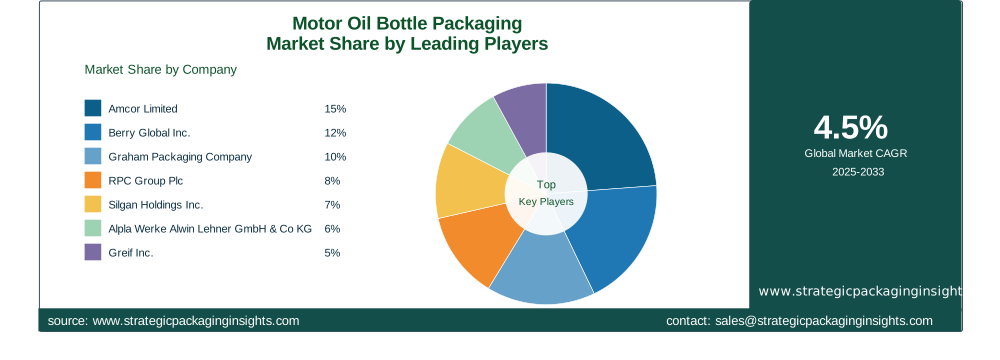
Among the major players, Amcor Limited holds a significant market share due to its extensive product portfolio and strong global presence. The company is known for its innovative packaging solutions that cater to the automotive industry, including sustainable and recyclable options. Similarly, Berry Global Inc. is a key player, offering a wide range of plastic packaging solutions that are both functional and environmentally friendly. The company's focus on sustainability and innovation has helped it maintain a competitive edge in the market.
Another notable company is Graham Packaging Company, which specializes in the design and manufacture of custom blow-molded plastic containers. The company's expertise in creating lightweight and durable packaging solutions has made it a preferred choice for many automotive brands. Additionally, RPC Group Plc, with its comprehensive range of packaging products, is a significant player in the market. The company's focus on customer-centric solutions and its ability to adapt to changing market demands have contributed to its strong market position.
Other key players in the market include Silgan Holdings Inc., known for its metal and plastic packaging solutions, and Alpla Werke Alwin Lehner GmbH & Co KG, which offers innovative and sustainable packaging solutions. These companies, along with others like Greif Inc., Mauser Packaging Solutions, and Plastipak Holdings Inc., are continuously investing in research and development to enhance their product offerings and expand their market reach. The competitive landscape is further shaped by strategic partnerships, mergers, and acquisitions, as companies seek to strengthen their market position and drive growth.
Key Highlights
- The motor oil bottle packaging market is projected to grow at a CAGR of 4.5% from 2025 to 2033.
- Increasing demand for sustainable and eco-friendly packaging solutions is a major market driver.
- Technological advancements in smart packaging are creating new opportunities for market players.
- Fluctuating raw material prices pose a significant threat to market stability.
- Key players are focusing on product innovation and strategic partnerships to enhance market share.
- Regulatory pressures to reduce plastic waste are influencing market dynamics.
- The rise of electric vehicles presents both challenges and opportunities for the market.
Top Countries Insights
In the motor oil bottle packaging market, the United States holds a significant share, with a market size of approximately $1.2 billion and a CAGR of 3%. The country's strong automotive industry and consumer preference for sustainable packaging solutions drive market growth. Government regulations promoting recycling and waste reduction further support this trend.
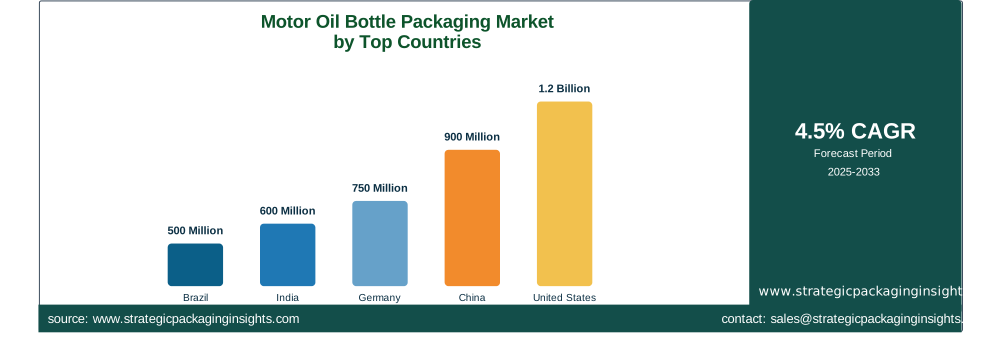
China is another key market, with a market size of $900 million and a CAGR of 5%. The rapid industrialization and urbanization in the country have led to an increase in vehicle ownership, boosting the demand for motor oil and its packaging. The government's focus on environmental sustainability and innovation in packaging technologies also contributes to market expansion.
Germany, with a market size of $750 million and a CAGR of 4%, is a leading market in Europe. The country's strong automotive sector and emphasis on high-quality, sustainable packaging solutions drive demand. Regulatory frameworks promoting eco-friendly packaging practices further enhance market growth.
India, with a market size of $600 million and a CAGR of 6%, is experiencing rapid growth due to increasing vehicle sales and a growing middle class. The demand for convenient and user-friendly packaging solutions is rising, supported by government initiatives promoting sustainable practices.
Brazil, with a market size of $500 million and a CAGR of 4%, is a significant market in Latin America. The country's expanding automotive industry and consumer awareness of environmental issues drive demand for innovative packaging solutions. Government policies supporting recycling and waste management further boost market growth.
Motor Oil Bottle Packaging Market Segments Insights

Material Analysis
The material segment of the motor oil bottle packaging market is primarily dominated by plastic, which is favored for its lightweight, durability, and cost-effectiveness. Plastic bottles are easy to mold into various shapes and sizes, making them ideal for different packaging needs. However, the environmental impact of plastic waste has led to increased scrutiny and regulatory pressures, pushing manufacturers to explore alternative materials. Metal and glass are emerging as viable options, offering superior recyclability and a premium look and feel. The shift towards these materials is driven by consumer demand for sustainable packaging solutions and regulatory mandates aimed at reducing plastic usage.
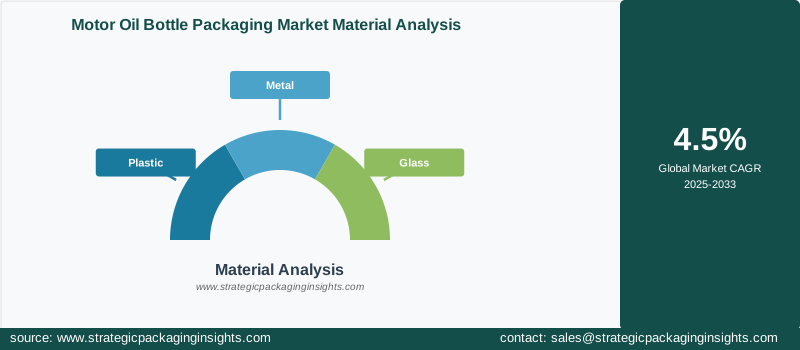
In response to these trends, companies are investing in research and development to create innovative packaging solutions that meet both consumer preferences and regulatory requirements. The development of biodegradable plastics and the use of recycled materials are gaining traction, offering a balance between functionality and sustainability. As the market evolves, the ability to adapt to changing material preferences will be crucial for companies looking to maintain a competitive edge.
Capacity Analysis
The capacity segment of the motor oil bottle packaging market is categorized into less than 1 liter, 1-5 liters, and above 5 liters. The 1-5 liter segment holds the largest market share, driven by its widespread use in both consumer and commercial applications. These bottles are convenient for individual consumers and small businesses, offering a balance between portability and volume. The less than 1-liter segment is gaining popularity for its convenience and ease of use, particularly in urban areas where space is limited.
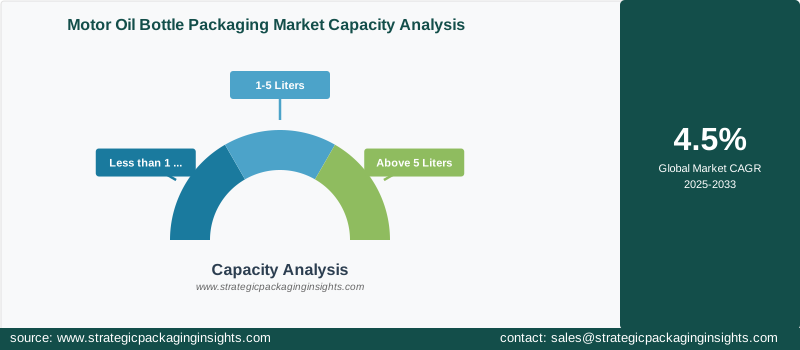
The above 5-liter segment is primarily used in industrial and commercial settings, where larger volumes of motor oil are required. This segment is expected to grow steadily as industries continue to expand and demand for bulk packaging solutions increases. Companies that can offer a range of capacity options, tailored to different end-user needs, are likely to capture a larger share of the market.
End-User Analysis
The end-user segment of the motor oil bottle packaging market includes automotive, industrial, marine, and aviation sectors. The automotive sector is the largest end-user, driven by the increasing number of vehicles on the road and the growing demand for high-performance oils. The industrial sector is also a significant contributor, with packaging solutions tailored to meet the specific needs of various industries.
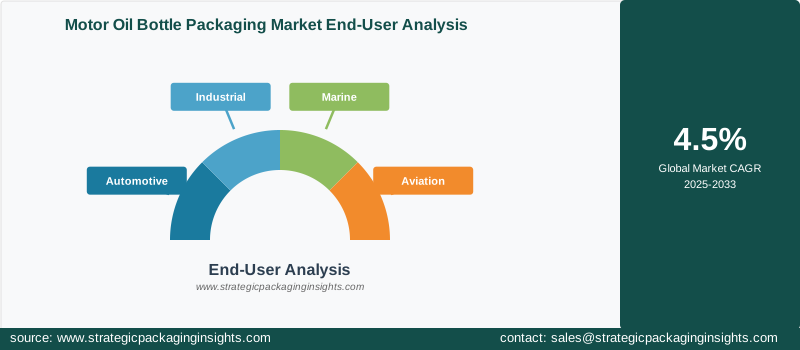
The marine and aviation sectors, while smaller in comparison, offer niche opportunities for packaging companies. These sectors require specialized packaging solutions that can withstand harsh environmental conditions and ensure the integrity of the product. As these industries continue to grow, the demand for innovative and durable packaging solutions is expected to rise.
Regional Analysis
The motor oil bottle packaging market is geographically segmented into North America, Europe, Asia Pacific, Latin America, and the Middle East & Africa. Asia Pacific holds the largest market share, driven by rapid industrialization and urbanization in countries like China and India. The region's growing automotive industry and increasing consumer awareness of sustainable packaging solutions are key growth drivers.
North America and Europe are mature markets, with a strong focus on sustainability and innovation. These regions are characterized by stringent environmental regulations and a high demand for eco-friendly packaging solutions. Latin America and the Middle East & Africa are emerging markets, offering significant growth potential due to expanding automotive industries and increasing consumer awareness of environmental issues.
Motor Oil Bottle Packaging Market Segments
The Motor Oil Bottle Packaging market has been segmented on the basis ofMaterial
- Plastic
- Metal
- Glass
Capacity
- Less than 1 Liter
- 1-5 Liters
- Above 5 Liters
End-User
- Automotive
- Industrial
- Marine
- Aviation
Region
- Asia Pacific
- North America
- Latin America
- Europe
- Middle East & Africa




