


Child-Safe Closures Market Outlook
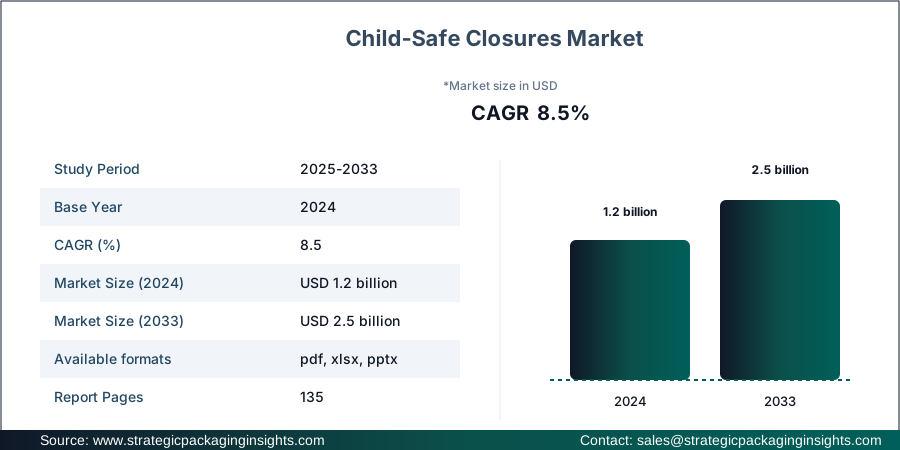
The child-safe closures market was valued at $1.2 billion in 2024 and is projected to reach $2.5 billion by 2033, growing at a CAGR of 8.5% during the forecast period 2025-2033. This market is driven by increasing safety regulations and the rising awareness among consumers regarding the importance of child safety in packaging. The demand for child-safe closures is particularly high in the pharmaceutical and household product sectors, where the risk of accidental ingestion is significant. The market is also benefiting from technological advancements that have made these closures more user-friendly while maintaining their safety features. As more companies adopt sustainable practices, the development of eco-friendly child-safe closures is expected to further boost market growth.
Report Scope
| Attributes | Details |
| Report Title | Child-Safe Closures Market Size, Future Growth and Forecast 2033 |
| Material | Plastic, Metal, Others |
| Type | Push and Turn, Squeeze and Turn, Others |
| End-User | Pharmaceuticals, Household Products, Food and Beverages, Personal Care, Others |
| Region | Asia Pacific, North America, Latin America, Europe, Middle East & Africa |
| Base Year | 2024 |
| Historic Period | 2017-2023 |
| Forecast Period | 2025-2033 |
| Number of Pages | 135 |
| Customization Available | Yes* |
Opportunities & Threats
One of the significant opportunities in the child-safe closures market is the growing demand for innovative and sustainable packaging solutions. As consumers become more environmentally conscious, there is a rising preference for closures made from recyclable materials. This trend is encouraging manufacturers to invest in research and development to create eco-friendly options that do not compromise on safety. Additionally, the expansion of e-commerce and online retailing is creating new avenues for market growth, as these platforms require secure packaging solutions to prevent tampering and ensure product safety during transit.
Another opportunity lies in the increasing regulatory requirements for child-resistant packaging across various regions. Governments and regulatory bodies are implementing stricter guidelines to ensure the safety of children, particularly in the pharmaceutical and household product sectors. This regulatory push is compelling manufacturers to innovate and develop closures that meet these stringent standards, thereby opening up new market opportunities. Furthermore, the growing awareness and education among parents regarding the importance of child-safe packaging are driving demand, as they seek to protect their children from accidental ingestion of harmful substances.
However, the market faces certain restraints, such as the high cost of developing and manufacturing child-safe closures. The need for specialized materials and complex designs to ensure safety can lead to increased production costs, which may be passed on to consumers. Additionally, the market is challenged by the need to balance safety with ease of use, as overly complex closures can frustrate adult users. This necessitates continuous innovation to create designs that are both secure and user-friendly, which can be a significant hurdle for manufacturers.
Drivers & Challenges
The primary driver of the child-safe closures market is the increasing focus on child safety and the prevention of accidental ingestion of hazardous substances. With rising awareness among consumers and stringent regulations being enforced by governments, there is a growing demand for packaging solutions that can effectively prevent children from accessing potentially dangerous products. This is particularly crucial in the pharmaceutical and household product sectors, where the risk of accidental poisoning is high. The development of innovative closure designs that are both child-resistant and easy for adults to use is a key factor driving market growth.
Technological advancements are also playing a significant role in driving the market. The integration of smart technologies into packaging solutions is enabling manufacturers to create closures that offer enhanced safety features. For instance, the use of digital locks and indicators can provide an additional layer of security, ensuring that products remain safe from tampering. These innovations are not only enhancing the safety of child-safe closures but also improving their functionality and user experience, thereby boosting market demand.
Despite these drivers, the market faces challenges such as the high cost of production and the complexity of designing closures that are both secure and user-friendly. Manufacturers must invest in research and development to create innovative solutions that meet regulatory standards while remaining cost-effective. Additionally, the market is challenged by the need to educate consumers about the importance of child-safe packaging and the proper use of these closures. Overcoming these challenges requires a collaborative effort between manufacturers, regulatory bodies, and consumers to ensure the widespread adoption of child-safe closures.
Market Share Analysis
The child-safe closures market is characterized by a competitive landscape with several key players vying for market share. The market is dominated by a few major companies that have established themselves as leaders through innovation, product quality, and strategic partnerships. These companies are continuously investing in research and development to enhance their product offerings and maintain their competitive edge. The market is also witnessing the entry of new players, particularly in emerging economies, where the demand for child-safe packaging solutions is on the rise.
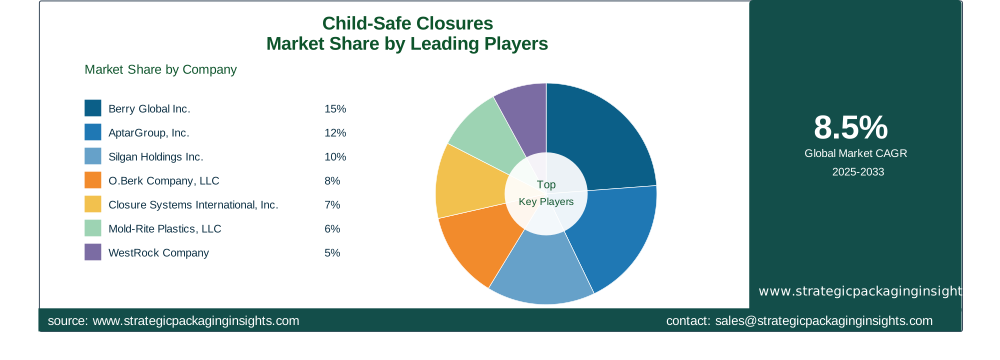
Among the leading companies in the market is Berry Global Inc., which holds a significant market share due to its extensive product portfolio and strong distribution network. The company is known for its innovative closure designs that cater to various end-user industries, including pharmaceuticals and household products. Another major player is AptarGroup, Inc., which is recognized for its focus on sustainability and the development of eco-friendly child-safe closures. The company's commitment to reducing its environmental footprint has positioned it as a preferred choice among environmentally conscious consumers.
Silgan Holdings Inc. is another prominent player in the market, offering a wide range of child-resistant closures for different applications. The company's strong emphasis on quality and safety has earned it a reputation as a reliable supplier in the industry. Similarly, O.Berk Company, LLC is known for its diverse product offerings and customer-centric approach, which has helped it secure a substantial market share. The company's focus on customization and innovation has enabled it to meet the specific needs of its clients, further strengthening its market position.
Other notable companies in the market include Closure Systems International, Inc., which is recognized for its advanced closure technologies and commitment to safety. The company has a strong presence in the pharmaceutical sector, where the demand for child-safe closures is particularly high. Additionally, companies like Mold-Rite Plastics, LLC and WestRock Company are making significant contributions to the market with their innovative solutions and strategic partnerships. These companies are leveraging their expertise and resources to expand their market presence and capture new opportunities in the growing child-safe closures market.
Key Highlights
- The child-safe closures market is projected to grow at a CAGR of 8.5% from 2025 to 2033.
- Increasing regulatory requirements for child-resistant packaging are driving market demand.
- Technological advancements are enabling the development of innovative closure designs.
- The pharmaceutical and household product sectors are the largest end-users of child-safe closures.
- Eco-friendly and sustainable packaging solutions are gaining traction in the market.
- North America and Europe are the leading regions in terms of market share.
- Key players are focusing on strategic partnerships and acquisitions to expand their market presence.
- The market is witnessing the entry of new players, particularly in emerging economies.
- Consumer awareness and education are crucial for the widespread adoption of child-safe closures.
- Balancing safety with ease of use remains a significant challenge for manufacturers.
Top Countries Insights
In the child-safe closures market, the United States holds a significant share, with a market size of $500 million and a CAGR of 7%. The country's stringent regulations on child-resistant packaging, particularly in the pharmaceutical sector, are a major growth driver. Additionally, the high level of consumer awareness and the presence of key market players contribute to the market's strength in the U.S.
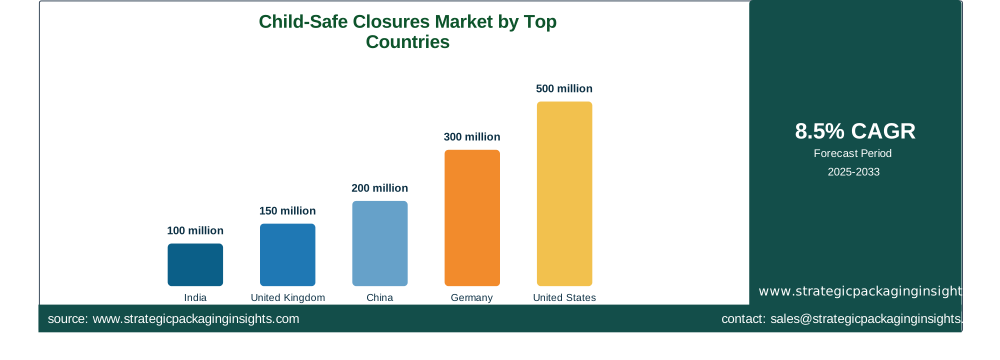
Germany is another leading country in the market, with a market size of $300 million and a CAGR of 6%. The country's strong regulatory framework and emphasis on safety standards are driving demand for child-safe closures. Furthermore, the growing trend of sustainable packaging solutions is encouraging manufacturers to develop eco-friendly options, boosting market growth.
China is experiencing rapid growth in the child-safe closures market, with a market size of $200 million and a CAGR of 10%. The country's expanding pharmaceutical and household product sectors are key growth drivers, as these industries require secure packaging solutions to prevent accidental ingestion. Additionally, the increasing focus on safety regulations is propelling market demand.
The United Kingdom is also a significant player in the market, with a market size of $150 million and a CAGR of 5%. The country's stringent safety regulations and the growing awareness among consumers about the importance of child-safe packaging are driving market growth. The presence of leading market players and the adoption of innovative closure designs further contribute to the market's expansion.
India is emerging as a promising market for child-safe closures, with a market size of $100 million and a CAGR of 12%. The country's growing pharmaceutical industry and increasing consumer awareness about child safety are key growth drivers. Additionally, the government's focus on implementing safety regulations is encouraging manufacturers to develop innovative and secure packaging solutions.
Child-Safe Closures Market Segments Insights

Material Analysis
The material segment of the child-safe closures market is primarily dominated by plastic, which is favored for its versatility, cost-effectiveness, and ease of manufacturing. Plastic closures are widely used across various industries, including pharmaceuticals and household products, due to their ability to provide secure and reliable sealing solutions. However, the growing environmental concerns and the push for sustainable packaging solutions are driving the demand for alternative materials such as metal and biodegradable options. Manufacturers are increasingly investing in research and development to create eco-friendly closures that meet safety standards while reducing environmental impact.
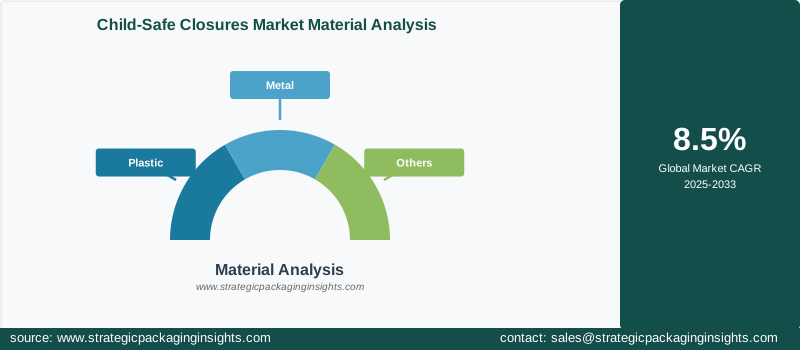
Metal closures, although less common than plastic, are gaining traction in the market due to their durability and recyclability. These closures are particularly popular in the food and beverage industry, where they provide a robust and tamper-evident sealing solution. The demand for metal closures is expected to grow as consumers and manufacturers alike prioritize sustainability and seek packaging solutions that align with their environmental goals. Additionally, the development of innovative metal closure designs that offer enhanced safety features is further boosting their adoption in the market.
Type Analysis
The type segment of the child-safe closures market includes push and turn, squeeze and turn, and other closure types. Push and turn closures are the most widely used due to their simplicity and effectiveness in preventing children from accessing hazardous substances. These closures are commonly used in the pharmaceutical industry, where safety is of utmost importance. The demand for push and turn closures is driven by their ease of use for adults and their ability to meet stringent safety regulations.
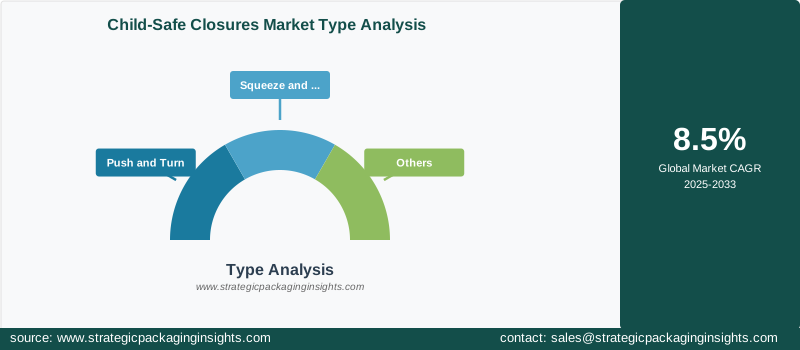
Squeeze and turn closures are also popular, particularly in the household product sector, where they provide a secure and user-friendly sealing solution. These closures are designed to be child-resistant while allowing easy access for adults, making them a preferred choice for products that require frequent use. The development of innovative squeeze and turn designs that enhance safety and usability is expected to drive market growth in this segment. Other closure types, such as snap caps and flip tops, are also gaining popularity due to their convenience and versatility in various applications.
End-User Analysis
The end-user segment of the child-safe closures market is dominated by the pharmaceutical industry, which accounts for the largest share due to the critical need for secure packaging solutions to prevent accidental ingestion of medications. The stringent regulations governing pharmaceutical packaging and the increasing focus on patient safety are driving demand for child-safe closures in this sector. Manufacturers are continuously innovating to develop closures that meet regulatory standards while providing ease of use for patients and caregivers.
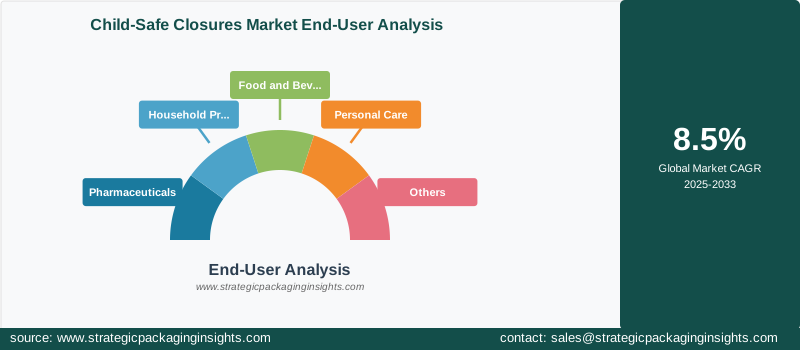
The household product sector is another significant end-user of child-safe closures, as these products often contain hazardous substances that pose a risk to children. The demand for secure and reliable closures in this sector is driven by the need to prevent accidental exposure and ensure product safety. Additionally, the food and beverage industry is increasingly adopting child-safe closures to enhance product safety and comply with regulatory requirements. The growing awareness among consumers about the importance of child-safe packaging is further boosting demand across various end-user industries.
Regional Analysis
The child-safe closures market is geographically segmented into North America, Europe, Asia Pacific, Latin America, and the Middle East & Africa. North America holds the largest market share, driven by stringent safety regulations and high consumer awareness. The presence of key market players and the adoption of innovative closure designs further contribute to the market's strength in this region. Europe is another leading region, with a strong regulatory framework and a focus on sustainability driving demand for child-safe closures.
Asia Pacific is experiencing rapid growth in the child-safe closures market, fueled by the expanding pharmaceutical and household product sectors. The increasing focus on safety regulations and the growing awareness among consumers about child safety are key growth drivers in this region. Latin America and the Middle East & Africa are also witnessing growth, albeit at a slower pace, as manufacturers expand their presence and invest in developing innovative packaging solutions to meet regional demands.
Child-Safe Closures Market Segments
The Child-Safe Closures market has been segmented on the basis ofMaterial
- Plastic
- Metal
- Others
Type
- Push and Turn
- Squeeze and Turn
- Others
End-User
- Pharmaceuticals
- Household Products
- Food and Beverages
- Personal Care
- Others
Region
- Asia Pacific
- North America
- Latin America
- Europe
- Middle East & Africa




