


Solvent-Based Food-Grade rHDPE Recycling Technologies Market Outlook
The Solvent-Based Food-Grade rHDPE Recycling Technologies market was valued at $345 million in 2024 and is projected to reach $1.19 billion by 2033, growing at a CAGR of 13.1% during the forecast period 2025-2033. This market is witnessing significant growth due to the increasing demand for sustainable packaging solutions and the rising awareness about environmental conservation. The solvent-based recycling process is gaining traction as it effectively converts post-consumer HDPE waste into high-quality, food-grade recycled material. This technology is particularly appealing to industries aiming to meet stringent regulatory standards and consumer expectations for eco-friendly products. The market's expansion is further fueled by advancements in recycling technologies and the growing investments in research and development to enhance the efficiency and cost-effectiveness of these processes.
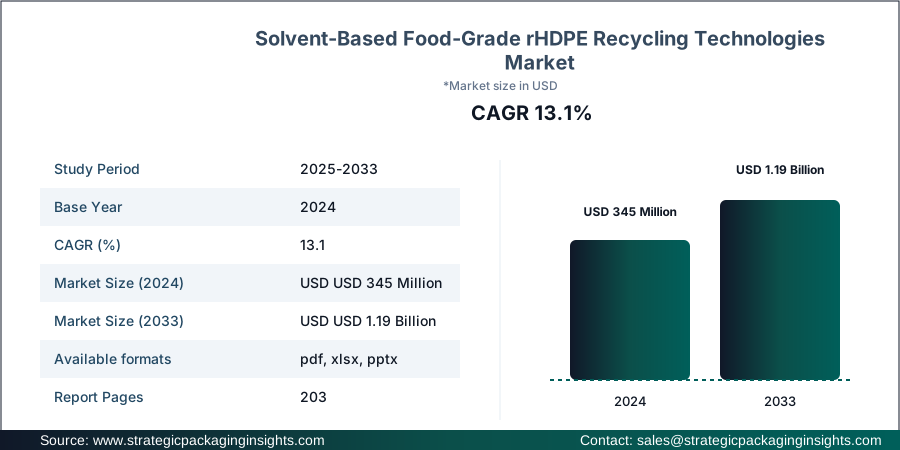
Despite the promising growth trajectory, the market faces challenges such as high initial setup costs and the complexity of the recycling process. Regulatory hurdles and the need for specialized equipment also pose significant barriers to entry for new players. However, the potential for growth remains substantial, driven by the increasing adoption of circular economy principles and the push for reducing plastic waste globally. As companies strive to achieve sustainability goals, the demand for solvent-based food-grade rHDPE recycling technologies is expected to rise, offering lucrative opportunities for market participants.
Report Scope
| Attributes | Details |
| Report Title | Solvent-Based Food-Grade rHDPE Recycling Technologies Market Size, Future Growth and Forecast 2033 |
| Component | Equipment, Solvents, Services |
| Application | Food Packaging, Beverage Containers |
| End-User | Food & Beverage Industry, Consumer Goods |
| Region | North America, Europe |
| Base Year | 2024 |
| Historic Period | 2017-2023 |
| Forecast Period | 2025-2033 |
| Number of Pages | 203 |
| Customization Available | Yes* |
Opportunities & Threats
The Solvent-Based Food-Grade rHDPE Recycling Technologies market presents numerous opportunities, primarily driven by the global shift towards sustainable packaging solutions. As consumers become more environmentally conscious, there is a growing demand for recycled materials that meet food-grade standards. This trend is particularly evident in the food and beverage industry, where companies are under pressure to reduce their carbon footprint and comply with stringent environmental regulations. The adoption of solvent-based recycling technologies allows these companies to produce high-quality recycled HDPE that can be used in food packaging, thereby enhancing their sustainability credentials and appealing to eco-conscious consumers.
Another significant opportunity lies in the technological advancements in recycling processes. Innovations in solvent-based recycling technologies are making it possible to achieve higher purity levels in recycled HDPE, which is crucial for food-grade applications. These advancements are also helping to reduce the cost and complexity of the recycling process, making it more accessible to a broader range of companies. As a result, there is a growing interest from investors and stakeholders in supporting the development and commercialization of these technologies, which is expected to drive market growth in the coming years.
However, the market is not without its threats. One of the primary challenges is the high initial investment required for setting up solvent-based recycling facilities. The cost of specialized equipment and the need for skilled personnel can be prohibitive for smaller companies, limiting their ability to enter the market. Additionally, the regulatory landscape for recycled materials is constantly evolving, with new standards and requirements being introduced regularly. Companies must stay abreast of these changes to ensure compliance, which can be a complex and resource-intensive process.
Drivers & Challenges
The primary drivers of the Solvent-Based Food-Grade rHDPE Recycling Technologies market include the increasing demand for sustainable packaging solutions and the growing awareness of environmental issues. As consumers and governments alike push for more eco-friendly products, companies are under pressure to adopt sustainable practices, including the use of recycled materials. Solvent-based recycling technologies offer a viable solution for producing high-quality, food-grade recycled HDPE, which is in high demand across various industries. This demand is further bolstered by the implementation of extended producer responsibility (EPR) regulations, which require manufacturers to take responsibility for the end-of-life management of their products.
Another significant driver is the technological advancements in recycling processes. Innovations in solvent-based recycling technologies are enabling companies to achieve higher purity levels in recycled HDPE, which is essential for food-grade applications. These advancements are also helping to reduce the cost and complexity of the recycling process, making it more accessible to a broader range of companies. As a result, there is a growing interest from investors and stakeholders in supporting the development and commercialization of these technologies, which is expected to drive market growth in the coming years.
Despite these drivers, the market faces several challenges. One of the primary challenges is the high initial investment required for setting up solvent-based recycling facilities. The cost of specialized equipment and the need for skilled personnel can be prohibitive for smaller companies, limiting their ability to enter the market. Additionally, the regulatory landscape for recycled materials is constantly evolving, with new standards and requirements being introduced regularly. Companies must stay abreast of these changes to ensure compliance, which can be a complex and resource-intensive process.
Solvent-Based Food-Grade rHDPE Recycling Technologies Strategic Outlook
| Trend | Market Driver | Technological/Material Shift | Business Impact |
|---|---|---|---|
| Sustainability | Consumer Demand for Eco-Friendly Products | Advancements in Solvent-Based Recycling | Increased Market Share for Sustainable Brands |
| Smart Tech | Automation in Recycling Processes | Integration of AI and IoT | Enhanced Operational Efficiency |
| Consumer Behavior | Preference for Recycled Packaging | Shift to Circular Economy Models | Brand Loyalty and Customer Retention |
| Logistics | Efficient Waste Collection Systems | Development of Reverse Logistics | Cost Reduction and Resource Optimization |
In 2026, the Solvent-Based Food-Grade rHDPE Recycling Technologies market is poised for significant growth, driven by the increasing demand for sustainable packaging solutions and advancements in recycling technologies. The primary regulatory disruptor in this niche is the implementation of extended producer responsibility (EPR) regulations, which require manufacturers to take responsibility for the end-of-life management of their products. This regulatory shift is pushing companies to adopt solvent-based recycling technologies to meet compliance requirements and enhance their sustainability credentials.
Strategic foresight suggests that brands should pivot towards integrating advanced recycling technologies and adopting circular economy models to maintain market share by 2033. By investing in solvent-based recycling processes, companies can produce high-quality, food-grade recycled HDPE, which is in high demand across various industries. Additionally, leveraging smart technologies such as AI and IoT can enhance operational efficiency and reduce costs, providing a competitive edge in the market. As consumer preferences continue to shift towards eco-friendly products, brands that prioritize sustainability and innovation are likely to thrive in the evolving market landscape.
Market Share Analysis
The competitive landscape of the Solvent-Based Food-Grade rHDPE Recycling Technologies market is characterized by the presence of several key players who are actively investing in research and development to enhance their product offerings and expand their market presence. These companies are focusing on developing innovative recycling technologies that can efficiently convert post-consumer HDPE waste into high-quality, food-grade recycled material. The market is also witnessing strategic collaborations and partnerships among players to leverage each other's strengths and accelerate the commercialization of advanced recycling solutions.
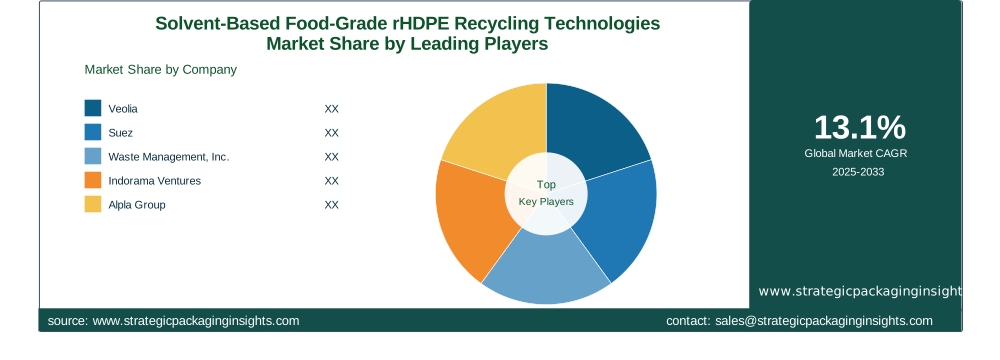
One of the major players in the market is Veolia, which has been at the forefront of developing sustainable recycling solutions. The company has invested significantly in research and development to enhance its solvent-based recycling technologies and expand its product portfolio. Another key player is Suez, which has been focusing on strategic partnerships and collaborations to strengthen its market position. The company has been actively involved in developing innovative recycling processes that can efficiently convert HDPE waste into high-quality recycled material.
Other notable players in the market include Waste Management, Inc., which has been investing in advanced recycling technologies to enhance its product offerings and expand its market presence. The company has been focusing on developing innovative recycling solutions that can efficiently convert post-consumer HDPE waste into high-quality, food-grade recycled material. Additionally, companies like Indorama Ventures and Alpla Group are also making significant strides in the market by investing in research and development to enhance their recycling technologies and expand their product portfolios.
Overall, the competitive landscape of the Solvent-Based Food-Grade rHDPE Recycling Technologies market is characterized by intense competition among key players who are actively investing in research and development to enhance their product offerings and expand their market presence. These companies are focusing on developing innovative recycling technologies that can efficiently convert post-consumer HDPE waste into high-quality, food-grade recycled material. The market is also witnessing strategic collaborations and partnerships among players to leverage each other's strengths and accelerate the commercialization of advanced recycling solutions.
Key Highlights
- The market is projected to grow at a CAGR of 13.1% from 2025 to 2033, reaching a value of $1.19 billion by 2033.
- Increasing demand for sustainable packaging solutions is driving market growth.
- Technological advancements in solvent-based recycling processes are enhancing efficiency and cost-effectiveness.
- Extended producer responsibility (EPR) regulations are pushing companies to adopt solvent-based recycling technologies.
- High initial investment costs and regulatory hurdles pose significant challenges to market entry.
- Strategic collaborations and partnerships are key strategies for market players to enhance their product offerings.
- Integration of AI and IoT in recycling processes is expected to enhance operational efficiency.
- Consumer preference for eco-friendly products is driving demand for recycled materials.
- Companies are focusing on developing innovative recycling technologies to meet food-grade standards.
- The market is witnessing significant investments in research and development to enhance recycling technologies.
Top Countries Insights
In the Solvent-Based Food-Grade rHDPE Recycling Technologies market, the United States is a leading player, with a market size of approximately $300 million and a CAGR of 12%. The country's growth is driven by stringent environmental regulations and a strong emphasis on sustainability. The implementation of extended producer responsibility (EPR) regulations is pushing companies to adopt advanced recycling technologies, further boosting market growth. Additionally, the presence of key players and significant investments in research and development are contributing to the market's expansion.
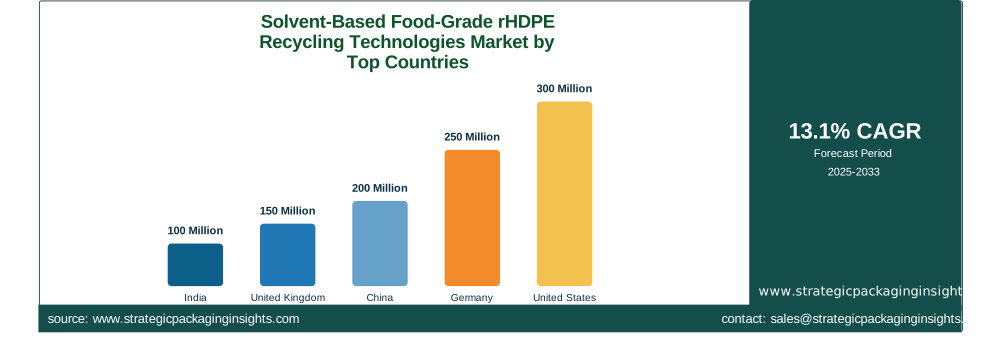
Germany is another key market, with a market size of around $250 million and a CAGR of 10%. The country's growth is fueled by a strong focus on sustainability and the circular economy. Germany's robust recycling infrastructure and government support for sustainable initiatives are driving the adoption of solvent-based recycling technologies. The country's commitment to reducing plastic waste and promoting eco-friendly packaging solutions is also contributing to market growth.
China is experiencing rapid growth in the Solvent-Based Food-Grade rHDPE Recycling Technologies market, with a market size of approximately $200 million and a CAGR of 15%. The country's growth is driven by increasing consumer awareness about environmental issues and a strong demand for sustainable packaging solutions. Government initiatives to promote recycling and reduce plastic waste are also playing a crucial role in driving market growth. Additionally, China's large manufacturing base and growing investments in recycling technologies are contributing to the market's expansion.
In the United Kingdom, the market is valued at around $150 million, with a CAGR of 9%. The country's growth is driven by a strong emphasis on sustainability and the implementation of stringent environmental regulations. The UK's commitment to reducing plastic waste and promoting eco-friendly packaging solutions is driving the adoption of solvent-based recycling technologies. Additionally, the presence of key players and significant investments in research and development are contributing to the market's expansion.
India is emerging as a significant player in the Solvent-Based Food-Grade rHDPE Recycling Technologies market, with a market size of approximately $100 million and a CAGR of 13%. The country's growth is driven by increasing consumer awareness about environmental issues and a strong demand for sustainable packaging solutions. Government initiatives to promote recycling and reduce plastic waste are also playing a crucial role in driving market growth. Additionally, India's large manufacturing base and growing investments in recycling technologies are contributing to the market's expansion.
Solvent-Based Food-Grade rHDPE Recycling Technologies Market Segments Insights

Component Analysis
The component segment of the Solvent-Based Food-Grade rHDPE Recycling Technologies market is divided into equipment, solvents, and services. Equipment plays a crucial role in the recycling process, with advancements in technology driving the development of more efficient and cost-effective machinery. Companies are investing in state-of-the-art equipment to enhance the quality and purity of recycled HDPE, which is essential for food-grade applications. Solvents are another critical component, with innovations in solvent formulations enabling more effective separation and purification of HDPE. The services segment includes consulting, maintenance, and support services, which are essential for ensuring the smooth operation of recycling facilities.
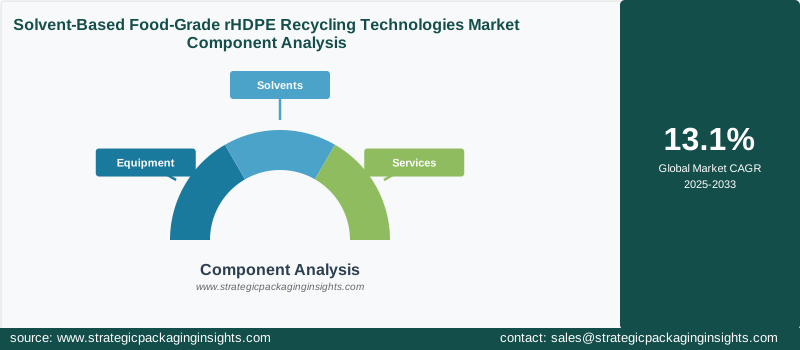
The demand for advanced equipment is driven by the need for higher efficiency and lower operational costs. Companies are focusing on developing machinery that can handle large volumes of HDPE waste while maintaining high purity levels. Solvents are also a key focus area, with research and development efforts aimed at creating more environmentally friendly and effective formulations. The services segment is expected to grow as companies seek to optimize their recycling operations and ensure compliance with regulatory standards. Overall, the component segment is poised for significant growth, driven by technological advancements and increasing demand for high-quality recycled HDPE.
Application Analysis
The application segment of the Solvent-Based Food-Grade rHDPE Recycling Technologies market includes food packaging, beverage containers, household products, and industrial packaging. Food packaging is the largest application segment, driven by the increasing demand for sustainable and eco-friendly packaging solutions. Companies in the food and beverage industry are under pressure to reduce their environmental impact and comply with stringent regulations, leading to a growing demand for food-grade recycled HDPE. Beverage containers are another significant application, with companies seeking to enhance their sustainability credentials by using recycled materials.
Household products and industrial packaging are also important application segments, with companies looking to reduce their carbon footprint and meet consumer expectations for eco-friendly products. The demand for recycled HDPE in these segments is driven by the need for durable and high-quality materials that can withstand the rigors of everyday use. Overall, the application segment is expected to witness significant growth, driven by the increasing adoption of solvent-based recycling technologies and the growing demand for sustainable packaging solutions across various industries.
End-User Analysis
The end-user segment of the Solvent-Based Food-Grade rHDPE Recycling Technologies market includes the food and beverage industry, consumer goods, and the industrial sector. The food and beverage industry is the largest end-user segment, driven by the need for sustainable packaging solutions and compliance with stringent environmental regulations. Companies in this industry are increasingly adopting solvent-based recycling technologies to produce high-quality, food-grade recycled HDPE, which is in high demand for packaging applications.
The consumer goods sector is another significant end-user segment, with companies looking to enhance their sustainability credentials and meet consumer expectations for eco-friendly products. The industrial sector is also a key end-user, with companies seeking to reduce their environmental impact and comply with regulatory standards. Overall, the end-user segment is expected to witness significant growth, driven by the increasing adoption of solvent-based recycling technologies and the growing demand for sustainable packaging solutions across various industries.
Region Analysis
The regional analysis of the Solvent-Based Food-Grade rHDPE Recycling Technologies market includes North America, Europe, Asia Pacific, Latin America, and the Middle East & Africa. North America is a leading region, driven by stringent environmental regulations and a strong emphasis on sustainability. The presence of key players and significant investments in research and development are contributing to the market's growth in this region. Europe is another key market, with a strong focus on sustainability and the circular economy driving the adoption of solvent-based recycling technologies.
Asia Pacific is experiencing rapid growth, driven by increasing consumer awareness about environmental issues and a strong demand for sustainable packaging solutions. Government initiatives to promote recycling and reduce plastic waste are also playing a crucial role in driving market growth in this region. Latin America and the Middle East & Africa are also witnessing growth, driven by the increasing adoption of solvent-based recycling technologies and the growing demand for sustainable packaging solutions. Overall, the regional analysis highlights the significant growth potential of the Solvent-Based Food-Grade rHDPE Recycling Technologies market across various regions.
Solvent-Based Food-Grade rHDPE Recycling Technologies Market Segments
The Solvent-Based Food-Grade rHDPE Recycling Technologies market has been segmented on the basis ofComponent
- Equipment
- Solvents
- Services
Application
- Food Packaging
- Beverage Containers
End-User
- Food & Beverage Industry
- Consumer Goods
Region
- North America
- Europe




