


Zero-Waste Food Tray Microalgae PHA Market Outlook
The Zero-Waste Food Tray Microalgae PHA market was valued at $1.2 billion in 2024 and is projected to reach $3.5 billion by 2033, growing at a CAGR of 12.5% during the forecast period 2025-2033. This market is driven by the increasing demand for sustainable and eco-friendly packaging solutions, as consumers and businesses alike are becoming more environmentally conscious. The use of microalgae-derived polyhydroxyalkanoates (PHA) in food trays offers a biodegradable alternative to traditional plastic, aligning with global sustainability goals. The market is also benefiting from advancements in biotechnology that have made the production of PHA more cost-effective and scalable, further enhancing its adoption across various sectors.
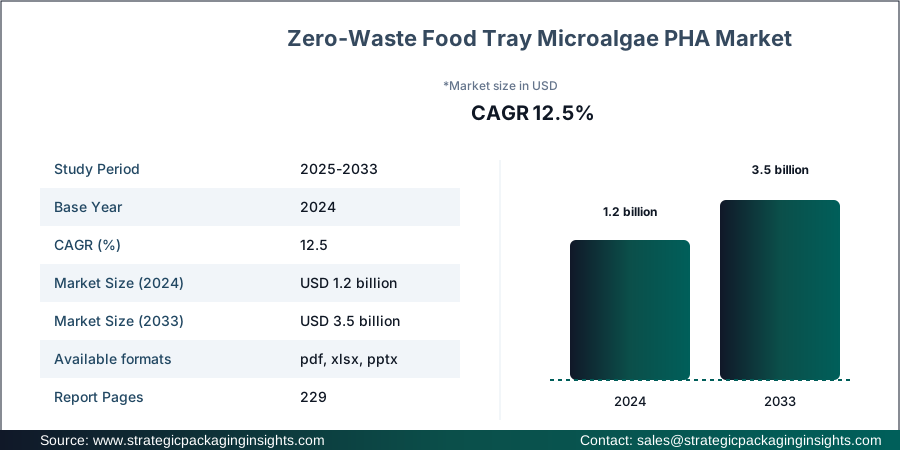
Report Scope
| Attributes | Details |
| Report Title | Zero-Waste Food Tray Microalgae PHA Market Size, Future Growth and Forecast 2033 |
| Material Type | PHA, PLA |
| Application | Food Packaging, Retail |
| End-User | Restaurants, Supermarkets |
| Region | North America, Europe |
| Base Year | 2024 |
| Historic Period | 2017-2023 |
| Forecast Period | 2025-2033 |
| Number of Pages | 229 |
| Customization Available | Yes* |
Opportunities & Threats
One of the significant opportunities in the Zero-Waste Food Tray Microalgae PHA market is the growing consumer preference for sustainable packaging solutions. As awareness about environmental issues increases, consumers are actively seeking products that minimize ecological impact. This shift in consumer behavior is encouraging manufacturers to innovate and develop zero-waste packaging solutions, thereby expanding the market. Additionally, government regulations promoting the use of biodegradable materials in packaging are creating a favorable environment for market growth. These regulations are pushing companies to adopt sustainable practices, which in turn is driving the demand for microalgae PHA-based food trays.
Another opportunity lies in the technological advancements in the production of PHA. Innovations in biotechnology have significantly reduced the cost of producing PHA, making it a more viable option for large-scale applications. This has opened up new avenues for market expansion, particularly in regions where cost has been a barrier to adoption. Furthermore, collaborations between biotechnology firms and packaging companies are leading to the development of new products that meet the specific needs of different industries, thereby broadening the market's scope.
However, the market faces certain restrainers, such as the high initial investment required for setting up production facilities for PHA. The cost of raw materials and the complexity of the production process can also pose challenges for new entrants. Additionally, the market is still in its nascent stage, and widespread adoption is hindered by a lack of awareness among consumers and businesses about the benefits of microalgae PHA. Overcoming these challenges will require concerted efforts from industry stakeholders to educate the market and drive adoption.
Drivers & Challenges
The primary driver of the Zero-Waste Food Tray Microalgae PHA market is the increasing regulatory pressure to reduce plastic waste. Governments worldwide are implementing stringent regulations to curb plastic pollution, which is propelling the demand for biodegradable alternatives like PHA. These regulations are not only encouraging manufacturers to switch to sustainable materials but also incentivizing research and development in this field. As a result, companies are investing heavily in developing innovative packaging solutions that comply with these regulations, thereby driving market growth.
Another significant driver is the rising consumer awareness about the environmental impact of plastic waste. Consumers are becoming more conscious of their purchasing decisions and are opting for products that are environmentally friendly. This shift in consumer behavior is compelling companies to adopt sustainable packaging solutions, thereby boosting the demand for microalgae PHA-based food trays. Additionally, the increasing popularity of organic and natural products is further fueling the demand for eco-friendly packaging solutions, as consumers seek to align their purchases with their values.
Despite these drivers, the market faces challenges such as the high cost of production and limited consumer awareness. The production of PHA is still relatively expensive compared to traditional plastics, which can deter manufacturers from adopting it on a large scale. Moreover, the market is still in its early stages, and many consumers are not yet aware of the benefits of microalgae PHA. Educating consumers and businesses about the advantages of this sustainable material will be crucial for overcoming these challenges and driving market growth.
Market Share Analysis
The competitive landscape of the Zero-Waste Food Tray Microalgae PHA market is characterized by the presence of several key players who are actively investing in research and development to enhance their product offerings. These companies are focusing on developing innovative solutions that cater to the growing demand for sustainable packaging. The market is witnessing a surge in collaborations and partnerships between biotechnology firms and packaging companies, aimed at leveraging each other's expertise to create advanced products. This trend is expected to intensify competition and drive innovation in the market.
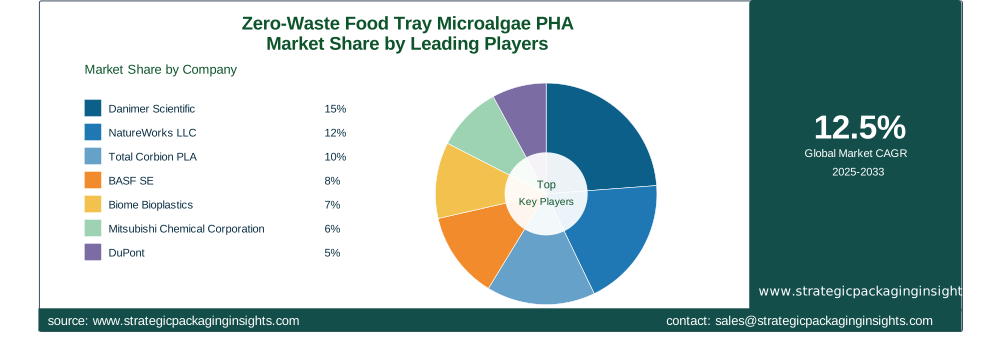
Some of the major companies operating in this market include Danimer Scientific, NatureWorks LLC, and Total Corbion PLA. These companies are at the forefront of developing biodegradable packaging solutions and have established a strong presence in the market. Danimer Scientific, for instance, is known for its innovative PHA-based products that are used in various applications, including food packaging. The company has a robust research and development pipeline and is continuously working on enhancing the performance and cost-effectiveness of its products.
NatureWorks LLC is another key player in the market, renowned for its Ingeo biopolymer, which is derived from renewable resources. The company has a strong focus on sustainability and is committed to reducing the environmental impact of its products. NatureWorks has a global presence and collaborates with various stakeholders to promote the adoption of sustainable packaging solutions. Similarly, Total Corbion PLA is a leading producer of polylactic acid (PLA) and is actively involved in the development of innovative bioplastics that cater to the needs of the packaging industry.
Other notable companies in the market include BASF SE, Biome Bioplastics, and Mitsubishi Chemical Corporation. These companies are investing in research and development to expand their product portfolios and strengthen their market position. BASF SE, for example, is focused on developing high-performance biodegradable plastics that meet the stringent requirements of the packaging industry. Biome Bioplastics is known for its innovative biopolymer solutions that are used in a wide range of applications, including food packaging. Mitsubishi Chemical Corporation is also a key player in the market, offering a diverse range of biodegradable plastics that cater to the needs of various industries.
Key Highlights
- The Zero-Waste Food Tray Microalgae PHA market is projected to grow at a CAGR of 12.5% from 2025 to 2033.
- Increasing consumer preference for sustainable packaging solutions is driving market growth.
- Government regulations promoting the use of biodegradable materials are creating a favorable environment for market expansion.
- Technological advancements in PHA production are reducing costs and enhancing scalability.
- Collaborations between biotechnology firms and packaging companies are leading to the development of innovative products.
- The market faces challenges such as high production costs and limited consumer awareness.
- Key players in the market include Danimer Scientific, NatureWorks LLC, and Total Corbion PLA.
Top Countries Insights
In the Zero-Waste Food Tray Microalgae PHA market, the United States is a leading player, with a market size of $500 million and a CAGR of 10%. The country's strong regulatory framework promoting sustainable packaging solutions and the presence of key market players are driving growth. Additionally, increasing consumer awareness about environmental issues is boosting demand for eco-friendly packaging.
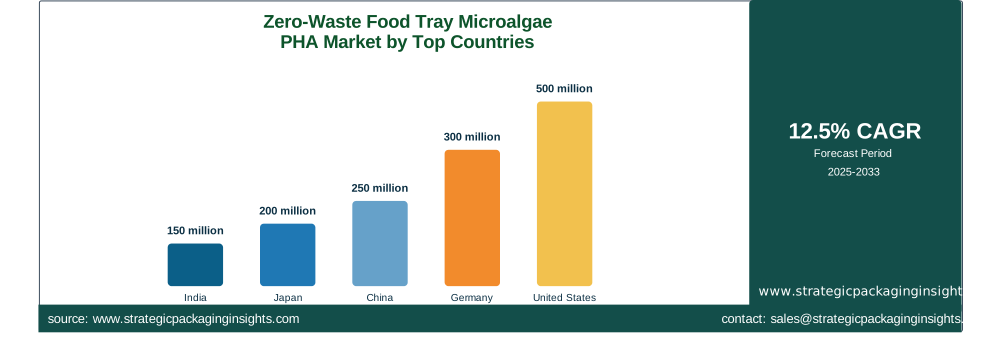
Germany is another significant market, with a market size of $300 million and a CAGR of 9%. The country's stringent regulations on plastic waste and its commitment to sustainability are key growth drivers. Germany's advanced biotechnology sector is also contributing to the development of innovative PHA-based products.
China is emerging as a major market, with a market size of $250 million and a CAGR of 15%. The country's large consumer base and increasing demand for sustainable packaging solutions are driving market growth. Government initiatives to reduce plastic waste and promote biodegradable materials are further supporting the market.
Japan, with a market size of $200 million and a CAGR of 8%, is also a key player in the market. The country's focus on sustainability and its advanced technological capabilities are driving the adoption of PHA-based packaging solutions. Japan's strong regulatory framework is also encouraging the use of biodegradable materials.
India is witnessing rapid growth in the market, with a market size of $150 million and a CAGR of 12%. The country's growing population and increasing awareness about environmental issues are driving demand for sustainable packaging solutions. Government initiatives to promote biodegradable materials are also supporting market growth.
Zero-Waste Food Tray Microalgae PHA Market Segments Insights

Material Type Analysis
The material type segment in the Zero-Waste Food Tray Microalgae PHA market is primarily driven by the increasing demand for biodegradable and sustainable packaging solutions. Polyhydroxyalkanoates (PHA) are gaining traction due to their biodegradability and ability to be produced from renewable resources. This segment is expected to witness significant growth as technological advancements make PHA production more cost-effective and scalable. The use of PHA in food trays offers a viable alternative to traditional plastics, aligning with global sustainability goals and regulatory requirements.
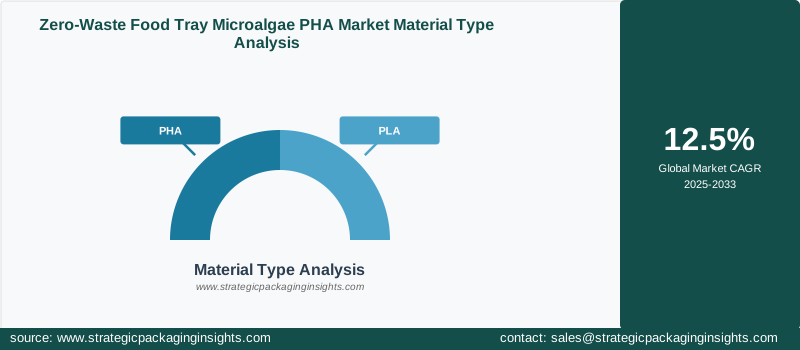
Polylactic acid (PLA) is another key material type in this segment, known for its compostability and renewable origin. PLA-based food trays are increasingly being adopted in the food packaging industry due to their environmental benefits and performance characteristics. The growing consumer preference for eco-friendly packaging solutions is driving demand for PLA, and companies are investing in research and development to enhance its properties and expand its applications. The segment is also witnessing innovation in material blends, combining PHA and PLA to create products with enhanced performance and sustainability.
Application Analysis
The application segment of the Zero-Waste Food Tray Microalgae PHA market is dominated by the food packaging industry, which is experiencing a surge in demand for sustainable solutions. As consumers become more environmentally conscious, there is a growing preference for packaging that minimizes ecological impact. PHA-based food trays are gaining popularity due to their biodegradability and ability to preserve food quality. This segment is expected to witness robust growth as companies continue to innovate and develop products that meet the specific needs of the food packaging industry.
Retail and food service are other significant applications in this segment, driven by the increasing demand for sustainable packaging solutions. Retailers and food service providers are under pressure to reduce their environmental footprint and are turning to PHA-based food trays as a viable solution. The segment is also benefiting from government regulations promoting the use of biodegradable materials in packaging, which is encouraging businesses to adopt sustainable practices. As a result, the application segment is poised for significant growth during the forecast period.
End-User Analysis
The end-user segment of the Zero-Waste Food Tray Microalgae PHA market is characterized by the presence of various stakeholders, including restaurants, supermarkets, and households. Restaurants are increasingly adopting PHA-based food trays to align with consumer preferences for sustainable packaging solutions. The growing trend of takeout and delivery services is also driving demand for eco-friendly packaging options, as consumers seek to minimize their environmental impact.
Supermarkets are another key end-user in this segment, as they are under pressure to reduce plastic waste and promote sustainable practices. The adoption of PHA-based food trays in supermarkets is driven by the need to comply with regulatory requirements and meet consumer demand for eco-friendly products. Households are also emerging as a significant end-user segment, as consumers become more conscious of their purchasing decisions and seek sustainable alternatives for everyday use. This trend is expected to drive growth in the end-user segment during the forecast period.
Region Analysis
The regional analysis of the Zero-Waste Food Tray Microalgae PHA market reveals significant growth opportunities across various geographies. North America is a leading region, driven by strong regulatory frameworks promoting sustainable packaging solutions and the presence of key market players. The region is witnessing increasing consumer awareness about environmental issues, which is boosting demand for eco-friendly packaging.
Europe is another significant region, characterized by stringent regulations on plastic waste and a strong commitment to sustainability. The region's advanced biotechnology sector is contributing to the development of innovative PHA-based products, driving market growth. Asia Pacific is emerging as a major market, with a large consumer base and increasing demand for sustainable packaging solutions. Government initiatives to reduce plastic waste and promote biodegradable materials are further supporting market growth in this region.
Zero-Waste Food Tray Microalgae PHA Market Segments
The Zero-Waste Food Tray Microalgae PHA market has been segmented on the basis ofMaterial Type
- PHA
- PLA
Application
- Food Packaging
- Retail
End-User
- Restaurants
- Supermarkets
Region
- North America
- Europe




