


Intermediate Bulk Container (IBC) Market Outlook
The Intermediate Bulk Container (IBC) market was valued at $16.86 billion in 2025 and is projected to reach $25.94 billion by 2034, growing at a CAGR of 4.90% during the forecast period 2026-2034. This growth is driven by the increasing demand for efficient and cost-effective bulk packaging solutions across various industries. The versatility of IBCs in handling, storing, and transporting liquids, semi-solids, and solids makes them a preferred choice in sectors such as chemicals, pharmaceuticals, and food and beverage. The market is also benefiting from advancements in IBC design and materials, which enhance durability and safety, further boosting their adoption.
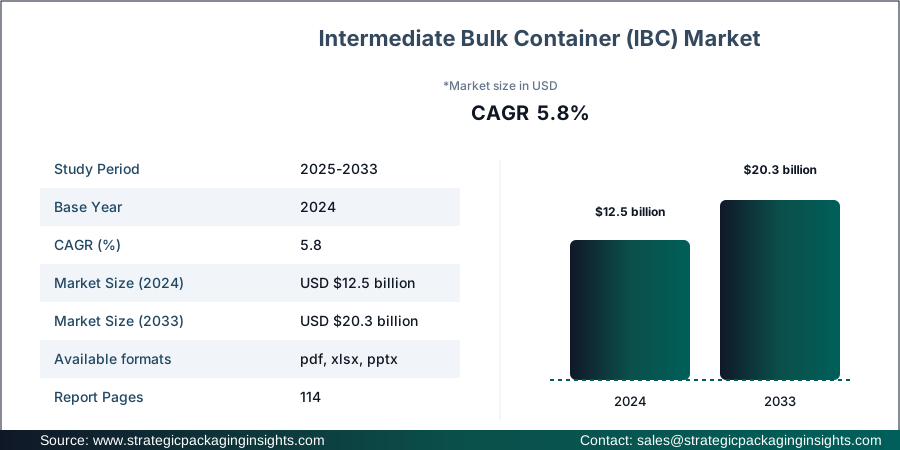
Despite the promising growth prospects, the IBC market faces certain challenges. Regulatory constraints related to the use of plastics and environmental concerns regarding waste management are significant restraining factors. However, the market holds substantial growth potential due to the increasing trend towards sustainable packaging solutions. Innovations in recyclable and reusable IBCs are expected to mitigate environmental impacts, aligning with global sustainability goals. Additionally, the expansion of end-use industries in emerging economies presents lucrative opportunities for market players to expand their footprint.
Report Scope
| Attributes | Details |
| Report Title | Intermediate Bulk Container (IBC) Market Size, Future Growth and Forecast 2034 |
| Product Type | Rigid Plastic IBC, Composite IBC, Stainless Steel IBC, Foldable / Flexible IBC |
| Capacity | Up to 600 Liters, 601–1000 Liters, Above 1000 Liters |
| Service Model | New IBC Sales, Rental / Pooling, Reconditioning and Refurbishment |
| Material | HDPE, Stainless Steel, Hybrid Materials |
| End-Use Industry | Chemicals, Pharmaceuticals and Life Sciences, Food and Beverage, Semiconductor and Electronic Chemicals, Paints, Coatings and Adhesives, Agriculture |
| Region | Asia Pacific, North America, Latin America, Europe, Middle East & Africa |
| Base Year | 2025 |
| Historic Period | 2018-2024 |
| Forecast Period | 2026-2034 |
| Number of Pages | 187 |
| Customization Available | Yes* |
Opportunities & Threats
The Intermediate Bulk Container (IBC) market is poised for significant opportunities driven by the rising demand for sustainable and efficient packaging solutions. As industries increasingly prioritize eco-friendly practices, the development of recyclable and reusable IBCs presents a substantial growth avenue. Companies investing in innovative materials and designs that reduce environmental impact are likely to gain a competitive edge. Furthermore, the expansion of the chemical and pharmaceutical sectors, particularly in emerging markets, is expected to drive demand for IBCs, as these containers offer superior safety and efficiency in handling hazardous and sensitive materials.
Another opportunity lies in the growing trend of outsourcing logistics and supply chain operations. As businesses seek to optimize their operations, the demand for rental and pooling services for IBCs is on the rise. This shift not only reduces capital expenditure for companies but also ensures better management of container fleets, enhancing operational efficiency. Additionally, the increasing adoption of digital technologies in supply chain management is expected to further boost the demand for smart IBCs equipped with tracking and monitoring capabilities, providing real-time data and improving supply chain transparency.
However, the market is not without its threats. Stringent regulations regarding the use of plastics and the disposal of packaging waste pose significant challenges. Compliance with these regulations requires substantial investment in research and development to create compliant and sustainable products. Moreover, fluctuations in raw material prices, particularly for plastics and metals, can impact production costs and profit margins. Companies must navigate these challenges by adopting innovative solutions and strategic partnerships to ensure sustainable growth in the competitive IBC market.
Drivers & Challenges
The Intermediate Bulk Container (IBC) market is driven by several key factors, including the increasing demand for efficient and cost-effective bulk packaging solutions. The versatility of IBCs in handling a wide range of materials, from liquids to solids, makes them an ideal choice for industries such as chemicals, pharmaceuticals, and food and beverage. The ability of IBCs to enhance supply chain efficiency by reducing handling time and minimizing product loss is a significant driver of market growth. Additionally, the growing emphasis on sustainability and the development of eco-friendly IBCs are further propelling market expansion.
Technological advancements in IBC design and materials are also driving market growth. Innovations such as smart IBCs equipped with tracking and monitoring capabilities are gaining traction, providing real-time data and improving supply chain transparency. The integration of IoT technologies in IBCs allows for better inventory management and enhances operational efficiency. Furthermore, the increasing adoption of IBCs in emerging markets, driven by the expansion of end-use industries, presents significant growth opportunities for market players.
Despite these drivers, the IBC market faces several challenges. Regulatory constraints related to the use of plastics and environmental concerns regarding waste management are significant hurdles. Compliance with stringent regulations requires substantial investment in research and development to create sustainable and compliant products. Additionally, fluctuations in raw material prices, particularly for plastics and metals, can impact production costs and profit margins. Companies must navigate these challenges by adopting innovative solutions and strategic partnerships to ensure sustainable growth in the competitive IBC market.
Market Share Analysis
The Intermediate Bulk Container (IBC) market is characterized by a competitive landscape with several key players vying for market share. Schütz GmbH & Co. KGaA is a leading player in the market, known for its innovative IBC solutions and strong global presence. The company holds a significant market share, driven by its focus on sustainability and customer-centric solutions. Mauser Packaging Solutions is another major player, offering a wide range of IBC products and services, including reconditioning and recycling, which align with the growing demand for eco-friendly packaging solutions.
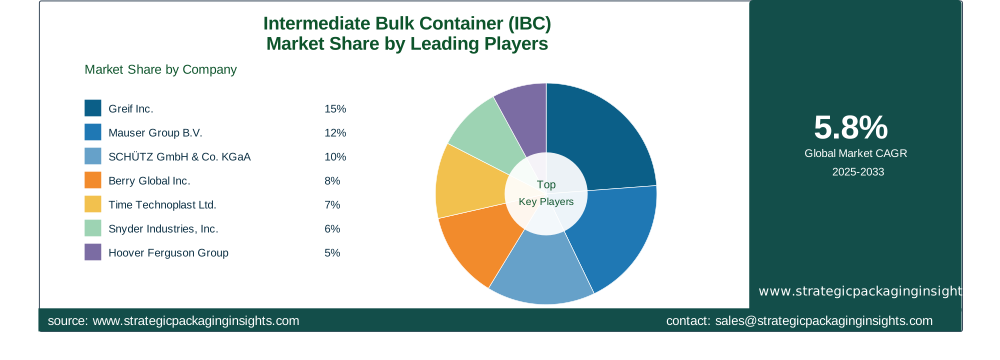
Greif Inc. is a prominent player in the IBC market, known for its comprehensive portfolio of packaging solutions and strong focus on sustainability. The company's commitment to innovation and customer satisfaction has helped it maintain a strong market position. Berry Global is also a key player, offering a diverse range of IBC products and services, including custom solutions tailored to specific customer needs. The company's focus on sustainability and innovation has enabled it to capture a significant share of the market.
Hoover Ferguson is a leading provider of IBC solutions, known for its high-quality products and services. The company's focus on customer satisfaction and operational efficiency has helped it maintain a strong market position. Myers Industries is another key player, offering a wide range of IBC products and services, including rental and pooling solutions. The company's commitment to sustainability and innovation has enabled it to capture a significant share of the market.
Snyder Industries is a prominent player in the IBC market, known for its innovative solutions and strong focus on sustainability. The company's commitment to customer satisfaction and operational efficiency has helped it maintain a strong market position. Time Technoplast is also a key player, offering a diverse range of IBC products and services, including custom solutions tailored to specific customer needs. The company's focus on sustainability and innovation has enabled it to capture a significant share of the market.
Key Highlights
- The IBC market is projected to grow at a CAGR of 4.90% from 2026 to 2034.
- Increasing demand for sustainable and efficient packaging solutions is driving market growth.
- Technological advancements in IBC design and materials are enhancing market expansion.
- Regulatory constraints and environmental concerns pose significant challenges.
- Rental and pooling services for IBCs are gaining traction, reducing capital expenditure for companies.
- Smart IBCs equipped with tracking and monitoring capabilities are gaining popularity.
- Emerging markets present significant growth opportunities for market players.
Top Countries Insights
In the Intermediate Bulk Container (IBC) market, the United States stands out as a key player, with a market size of approximately $4.5 billion and a CAGR of 5%. The country's robust chemical and pharmaceutical industries drive demand for IBCs, as these containers offer superior safety and efficiency in handling hazardous materials. Additionally, the increasing focus on sustainability and the development of eco-friendly IBCs align with the country's regulatory landscape, further boosting market growth.
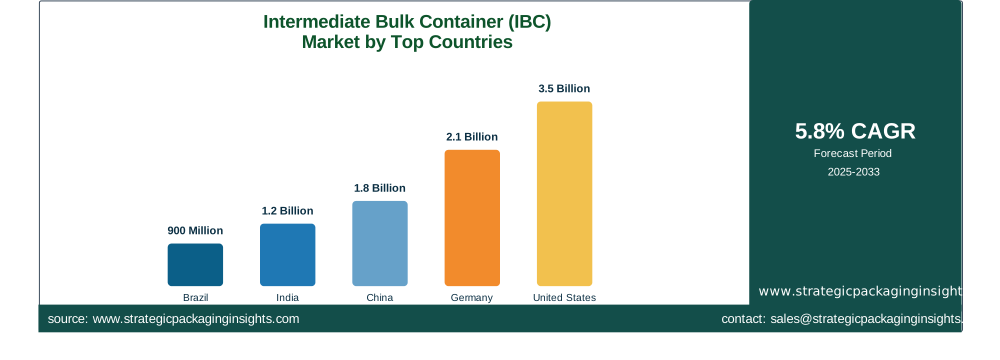
Germany is another significant market for IBCs, with a market size of around $3.2 billion and a CAGR of 4%. The country's strong manufacturing sector, particularly in chemicals and automotive, drives demand for efficient bulk packaging solutions. The emphasis on sustainability and innovation in packaging materials and designs further supports market expansion. Additionally, Germany's strategic location in Europe makes it a key hub for IBC production and distribution.
China is a rapidly growing market for IBCs, with a market size of approximately $2.8 billion and a CAGR of 6%. The country's expanding industrial base, particularly in chemicals and pharmaceuticals, drives demand for IBCs. The government's focus on environmental sustainability and the adoption of eco-friendly packaging solutions further support market growth. Additionally, China's position as a major manufacturing hub presents significant opportunities for IBC manufacturers to expand their footprint.
India is another emerging market for IBCs, with a market size of around $1.5 billion and a CAGR of 7%. The country's growing chemical and pharmaceutical industries drive demand for efficient and cost-effective bulk packaging solutions. The increasing focus on sustainability and the development of recyclable and reusable IBCs align with the country's regulatory landscape, further boosting market growth. Additionally, the expansion of end-use industries in India presents significant growth opportunities for market players.
Brazil is a key market for IBCs in Latin America, with a market size of approximately $1.2 billion and a CAGR of 5%. The country's robust agricultural sector drives demand for IBCs, as these containers offer superior efficiency in handling and transporting agricultural products. The emphasis on sustainability and the development of eco-friendly IBCs further support market expansion. Additionally, Brazil's strategic location in Latin America makes it a key hub for IBC production and distribution.
Intermediate Bulk Container (IBC) Market Segments Insights

Product Type Analysis
The Intermediate Bulk Container (IBC) market is segmented by product type into Rigid Plastic IBC, Composite IBC, Stainless Steel IBC, and Foldable/Flexible IBC. Rigid Plastic IBCs are widely used due to their durability and cost-effectiveness, making them a popular choice in industries such as chemicals and food and beverage. Composite IBCs, which combine a plastic bottle with a metal cage, offer enhanced safety and are preferred for transporting hazardous materials. Stainless Steel IBCs are known for their superior strength and resistance to corrosion, making them ideal for use in the pharmaceutical and food industries. Foldable/Flexible IBCs offer space-saving benefits and are gaining popularity in industries with limited storage space.
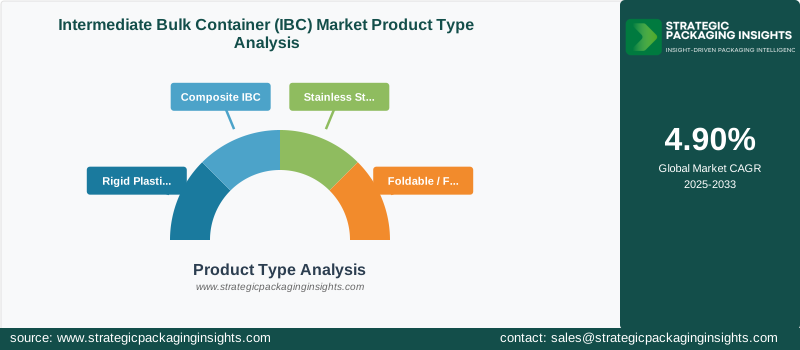
Each product type has its unique advantages and is chosen based on specific industry requirements. The demand for Rigid Plastic IBCs is driven by their cost-effectiveness and versatility, while Composite IBCs are favored for their safety features. Stainless Steel IBCs are preferred for their durability and hygiene, making them suitable for sensitive applications. Foldable/Flexible IBCs are gaining traction due to their space-saving benefits and ease of handling. The choice of product type is influenced by factors such as cost, safety, durability, and industry-specific requirements.
Capacity Analysis
The IBC market is segmented by capacity into Up to 600 Liters, 601-1000 Liters, and Above 1000 Liters. IBCs with a capacity of 601-1000 Liters are the most popular, as they offer a balance between size and handling efficiency. These containers are widely used in industries such as chemicals, pharmaceuticals, and food and beverage, where efficient bulk handling is crucial. IBCs with a capacity of Up to 600 Liters are preferred for smaller quantities and are commonly used in the agriculture and specialty chemicals sectors. IBCs with a capacity of Above 1000 Liters are used for large-scale operations and are favored in industries with high-volume requirements.
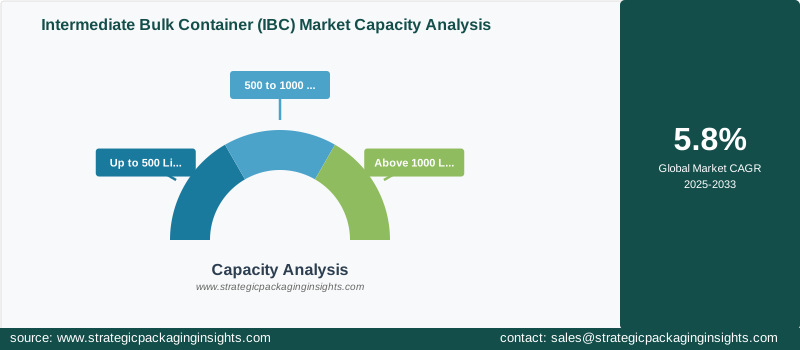
The choice of capacity is influenced by factors such as the volume of material to be transported, storage space availability, and handling requirements. IBCs with a capacity of 601-1000 Liters are favored for their versatility and efficiency, while smaller IBCs are chosen for niche applications. Larger IBCs are preferred for high-volume operations, where maximizing storage and transportation efficiency is critical. The demand for different capacities is driven by industry-specific requirements and operational considerations.
Service Model Analysis
The IBC market is segmented by service model into New IBC Sales, Rental/Pooling, and Reconditioning and Refurbishment. New IBC Sales account for a significant share of the market, driven by the demand for customized solutions and the need for new containers in expanding industries. Rental/Pooling services are gaining popularity as companies seek to optimize their operations and reduce capital expenditure. These services offer flexibility and cost savings, making them an attractive option for businesses with fluctuating demand. Reconditioning and Refurbishment services are also in demand, as companies look to extend the lifespan of their IBCs and reduce environmental impact.
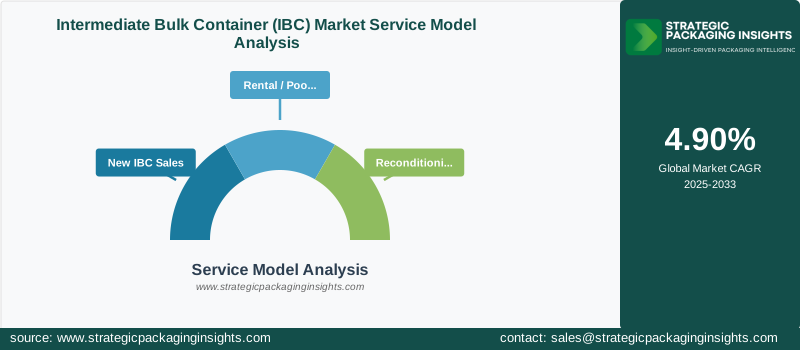
The choice of service model is influenced by factors such as cost, flexibility, and sustainability. New IBC Sales are preferred for their customization options and suitability for specific applications. Rental/Pooling services offer cost savings and operational efficiency, making them an attractive option for businesses with variable demand. Reconditioning and Refurbishment services are favored for their environmental benefits and cost-effectiveness, as they extend the lifespan of IBCs and reduce waste. The demand for different service models is driven by industry-specific requirements and operational considerations.
Material Analysis
The IBC market is segmented by material into HDPE, Stainless Steel, and Hybrid Materials. HDPE is the most commonly used material, known for its durability, cost-effectiveness, and resistance to chemicals. It is widely used in industries such as chemicals, pharmaceuticals, and food and beverage. Stainless Steel is preferred for its superior strength, hygiene, and resistance to corrosion, making it ideal for use in the pharmaceutical and food industries. Hybrid Materials, which combine the benefits of different materials, are gaining popularity for their enhanced performance and versatility.
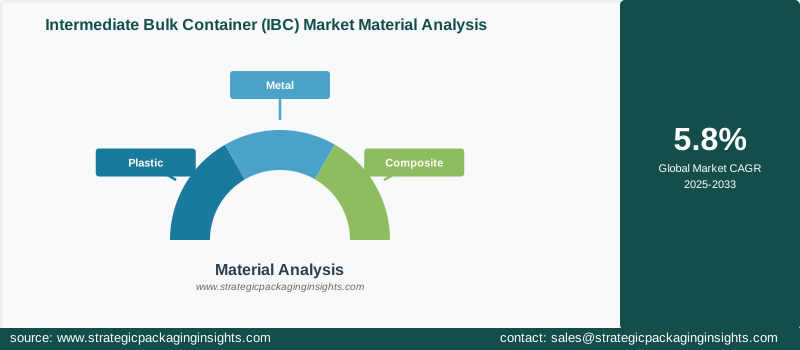
The choice of material is influenced by factors such as cost, durability, and industry-specific requirements. HDPE is favored for its cost-effectiveness and versatility, while Stainless Steel is chosen for its durability and hygiene. Hybrid Materials are gaining traction due to their enhanced performance and versatility, making them suitable for a wide range of applications. The demand for different materials is driven by industry-specific requirements and operational considerations.
End-Use Industry Analysis
The IBC market is segmented by end-use industry into Chemicals, Pharmaceuticals and Life Sciences, Food and Beverage, Semiconductor and Electronic Chemicals, Paints, Coatings and Adhesives, and Agriculture. The Chemicals industry is the largest end-user of IBCs, driven by the need for efficient and safe handling of hazardous materials. The Pharmaceuticals and Life Sciences industry is also a significant user of IBCs, as these containers offer superior safety and hygiene for sensitive applications. The Food and Beverage industry relies on IBCs for efficient bulk handling and transportation of liquids and semi-solids.
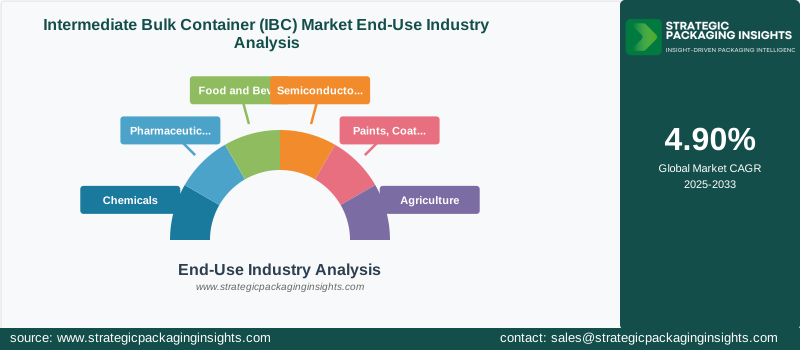
The demand for IBCs in the Semiconductor and Electronic Chemicals industry is driven by the need for safe and efficient handling of high-purity chemicals. The Paints, Coatings and Adhesives industry uses IBCs for bulk handling and transportation of raw materials and finished products. The Agriculture industry relies on IBCs for efficient handling and transportation of fertilizers, pesticides, and other agricultural products. The demand for IBCs in different end-use industries is driven by industry-specific requirements and operational considerations.
Intermediate Bulk Container (IBC) Market Segments
The Intermediate Bulk Container (IBC) market has been segmented on the basis ofProduct Type
- Rigid Plastic IBC
- Composite IBC
- Stainless Steel IBC
- Foldable / Flexible IBC
Capacity
- Up to 600 Liters
- 601–1000 Liters
- Above 1000 Liters
Service Model
- New IBC Sales
- Rental / Pooling
- Reconditioning and Refurbishment
Material
- HDPE
- Stainless Steel
- Hybrid Materials
End-Use Industry
- Chemicals
- Pharmaceuticals and Life Sciences
- Food and Beverage
- Semiconductor and Electronic Chemicals
- Paints, Coatings and Adhesives
- Agriculture
Region
- Asia Pacific
- North America
- Latin America
- Europe
- Middle East & Africa




