


E-Grocery Compostable Delivery Bags Market Outlook
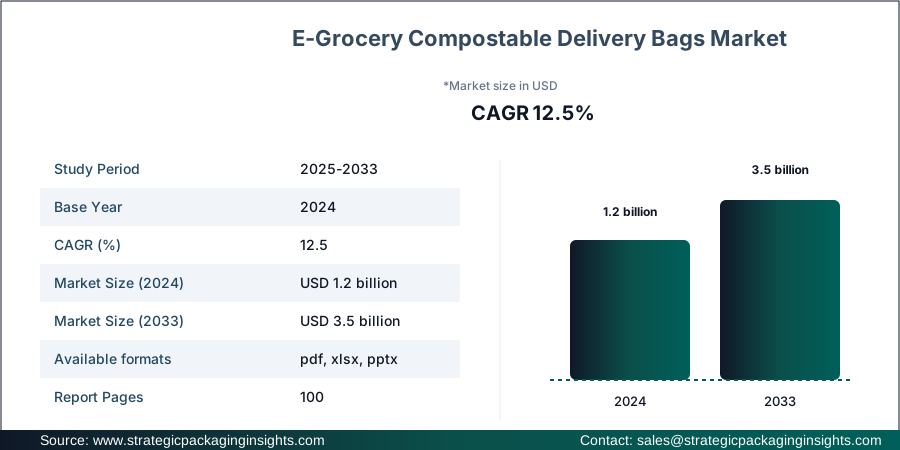
The E-Grocery Compostable Delivery Bags market was valued at $1.2 billion in 2024 and is projected to reach $3.5 billion by 2033, growing at a CAGR of 12.5% during the forecast period 2025-2033. This market is witnessing significant growth due to the increasing demand for sustainable packaging solutions in the e-grocery sector. As consumers become more environmentally conscious, the demand for compostable delivery bags is expected to rise. The market is also driven by stringent regulations on plastic usage and the growing trend of online grocery shopping, which necessitates efficient and eco-friendly packaging solutions. The shift towards a circular economy and the adoption of green practices by major retailers further bolster the market's growth prospects.
Report Scope
| Attributes | Details |
| Report Title | E-Grocery Compostable Delivery Bags Market Size, Future Growth and Forecast 2033 |
| Material Type | Starch-Based, Polylactic Acid, Polyhydroxyalkanoates, Others |
| Application | Fruits & Vegetables, Dairy Products, Bakery & Confectionery, Meat & Seafood, Others |
| Distribution Channel | Online, Offline |
| Region | Asia Pacific, North America, Latin America, Europe, Middle East & Africa |
| Base Year | 2024 |
| Historic Period | 2017-2023 |
| Forecast Period | 2025-2033 |
| Number of Pages | 100 |
| Customization Available | Yes* |
Opportunities & Threats
One of the primary opportunities in the E-Grocery Compostable Delivery Bags market is the increasing consumer preference for sustainable and eco-friendly products. As awareness about environmental issues grows, consumers are more inclined to choose products that have a minimal environmental impact. This shift in consumer behavior presents a significant opportunity for manufacturers to innovate and offer compostable delivery bags that meet these demands. Additionally, the rise of e-commerce and online grocery shopping has created a substantial demand for packaging solutions that are not only functional but also environmentally friendly. Companies that can effectively cater to this demand stand to gain a competitive edge in the market.
Another opportunity lies in the advancements in material science and technology, which are enabling the development of more durable and cost-effective compostable materials. Innovations in biopolymers and the use of renewable resources are paving the way for the production of high-quality compostable bags that can compete with traditional plastic bags in terms of performance and cost. This technological progress opens up new avenues for market players to expand their product offerings and capture a larger share of the market. Furthermore, collaborations and partnerships with retailers and e-commerce platforms can enhance market penetration and brand visibility.
However, the market faces certain threats, such as the high cost of raw materials and production processes associated with compostable bags. These costs can be a barrier to entry for new players and may limit the adoption of compostable bags among price-sensitive consumers. Additionally, the lack of standardized regulations and certifications for compostable products can create confusion among consumers and hinder market growth. Companies need to navigate these challenges by investing in research and development to reduce costs and by advocating for clear and consistent regulatory frameworks.
Drivers & Challenges
The primary driver of the E-Grocery Compostable Delivery Bags market is the increasing regulatory pressure to reduce plastic waste and promote sustainable packaging solutions. Governments worldwide are implementing stringent regulations and policies to curb plastic pollution, which is driving the demand for compostable alternatives. These regulations are encouraging retailers and e-commerce platforms to adopt eco-friendly packaging solutions, thereby boosting the market for compostable delivery bags. Additionally, the growing consumer awareness and preference for sustainable products are further propelling market growth.
Another significant driver is the rapid growth of the e-commerce sector, particularly in the grocery segment. The convenience and accessibility of online grocery shopping have led to a surge in demand for efficient and sustainable packaging solutions. Compostable delivery bags offer a viable solution to meet this demand, as they provide the necessary functionality while minimizing environmental impact. The increasing adoption of digital platforms and the expansion of online grocery services are expected to drive the demand for compostable delivery bags in the coming years.
Despite the positive drivers, the market faces challenges such as the high cost of production and the limited availability of raw materials. The production of compostable bags requires specialized materials and processes, which can be expensive and may limit the scalability of production. Additionally, the lack of consumer awareness and understanding of compostable products can hinder market growth. Educating consumers about the benefits and proper disposal methods of compostable bags is crucial to overcoming these challenges and driving market adoption.
Market Share Analysis
The competitive landscape of the E-Grocery Compostable Delivery Bags market is characterized by the presence of several key players who are actively engaged in product innovation and strategic partnerships to enhance their market position. The market is moderately fragmented, with a mix of established companies and emerging players vying for market share. Companies are focusing on expanding their product portfolios and investing in research and development to introduce innovative and cost-effective compostable solutions. The increasing demand for sustainable packaging solutions is driving companies to adopt strategies such as mergers and acquisitions, collaborations, and partnerships to strengthen their market presence.
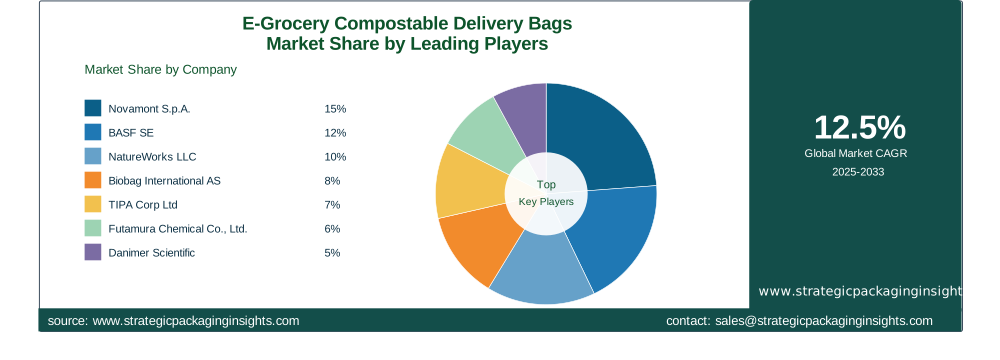
Among the major players in the market, Novamont S.p.A. holds a significant share due to its extensive range of compostable materials and strong distribution network. The company is known for its innovative biopolymer solutions and has established a robust presence in the European market. Similarly, BASF SE is a key player in the market, offering a wide range of biodegradable and compostable polymers. The company's focus on sustainability and its strong research and development capabilities have enabled it to maintain a competitive edge in the market.
Another prominent player is NatureWorks LLC, which is recognized for its Ingeo biopolymer, a leading material used in compostable packaging solutions. The company's commitment to sustainability and its strategic partnerships with retailers and e-commerce platforms have contributed to its strong market position. Additionally, companies like Biobag International AS and TIPA Corp Ltd are making significant strides in the market by offering innovative compostable packaging solutions and expanding their global footprint.
Other notable players in the market include Futamura Chemical Co., Ltd., which is known for its NatureFlex compostable films, and Danimer Scientific, a leader in the development of biodegradable materials. These companies are leveraging their technological expertise and strategic collaborations to enhance their market presence and cater to the growing demand for compostable delivery bags. The competitive landscape is expected to intensify as more companies enter the market and existing players continue to innovate and expand their product offerings.
Key Highlights
- The E-Grocery Compostable Delivery Bags market is projected to grow at a CAGR of 12.5% from 2025 to 2033.
- Increasing consumer preference for sustainable packaging solutions is driving market growth.
- Stringent regulations on plastic usage are boosting the demand for compostable alternatives.
- Advancements in material science are enabling the development of cost-effective compostable materials.
- The rise of e-commerce and online grocery shopping is creating substantial demand for compostable delivery bags.
- High production costs and limited raw material availability are key challenges for the market.
- Major players are focusing on product innovation and strategic partnerships to enhance their market position.
- Europe and North America are leading markets due to strong regulatory frameworks and consumer awareness.
- Asia Pacific is expected to witness significant growth due to the expanding e-commerce sector.
- Companies are investing in research and development to introduce innovative compostable solutions.
Top Countries Insights
In the E-Grocery Compostable Delivery Bags market, the United States holds a significant share, with a market size of $450 million and a CAGR of 10%. The country's strong regulatory framework and consumer awareness about sustainability are key growth drivers. The increasing adoption of online grocery shopping and the presence of major e-commerce players further boost the market. However, challenges such as high production costs and the need for consumer education about compostable products persist.
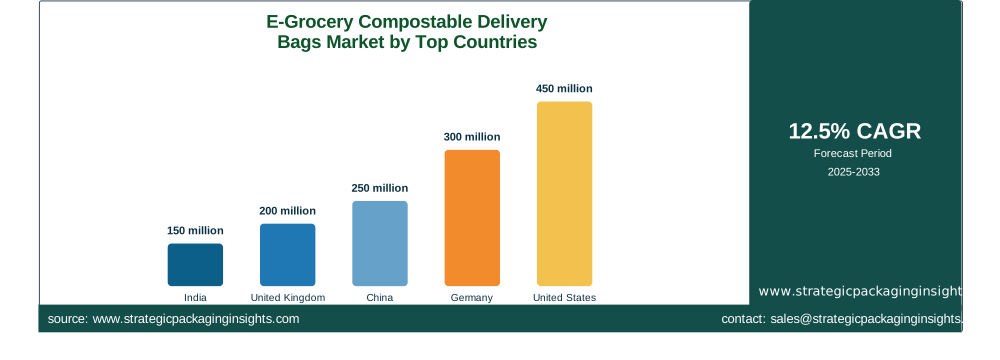
Germany is another leading market, with a market size of $300 million and a CAGR of 9%. The country's stringent regulations on plastic usage and strong consumer preference for eco-friendly products drive market growth. The presence of key players and advancements in material science contribute to the market's expansion. However, the high cost of raw materials and production processes remain challenges for market players.
China is expected to witness significant growth, with a market size of $250 million and a CAGR of 15%. The rapid expansion of the e-commerce sector and increasing consumer awareness about sustainability are key growth drivers. Government initiatives to reduce plastic waste and promote sustainable packaging solutions further support market growth. However, the lack of standardized regulations and certifications for compostable products poses challenges.
In the United Kingdom, the market size is $200 million, with a CAGR of 8%. The country's strong regulatory framework and consumer demand for sustainable products drive market growth. The increasing adoption of online grocery shopping and the presence of major retailers further boost the market. However, challenges such as high production costs and limited consumer awareness about compostable products persist.
India is emerging as a promising market, with a market size of $150 million and a CAGR of 12%. The country's expanding e-commerce sector and growing consumer awareness about sustainability are key growth drivers. Government initiatives to promote sustainable packaging solutions and reduce plastic waste further support market growth. However, challenges such as high production costs and the need for consumer education about compostable products remain.
E-Grocery Compostable Delivery Bags Market Segments Insights

Material Type Analysis
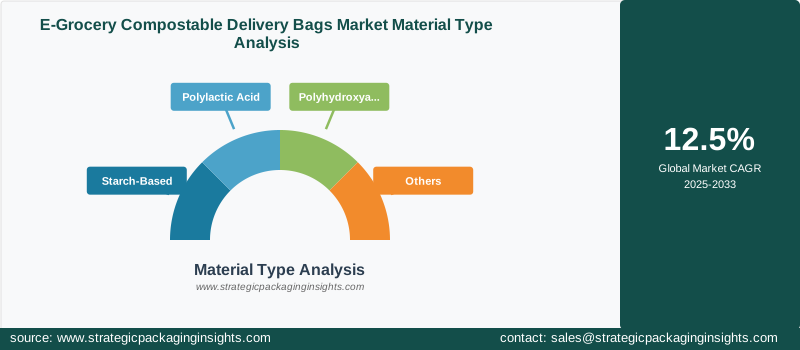
The material type segment in the E-Grocery Compostable Delivery Bags market is crucial as it determines the bag's functionality, cost, and environmental impact. Starch-based materials are gaining popularity due to their biodegradability and cost-effectiveness. These materials are derived from renewable resources and decompose naturally, making them an attractive option for eco-conscious consumers. Polylactic Acid (PLA) is another widely used material known for its strength and versatility. PLA bags are suitable for a variety of applications and offer a balance between performance and sustainability. Polyhydroxyalkanoates (PHA) are emerging as a promising material due to their superior biodegradability and potential to replace traditional plastics. The development of innovative materials and the use of renewable resources are expected to drive the growth of this segment.
Application Analysis
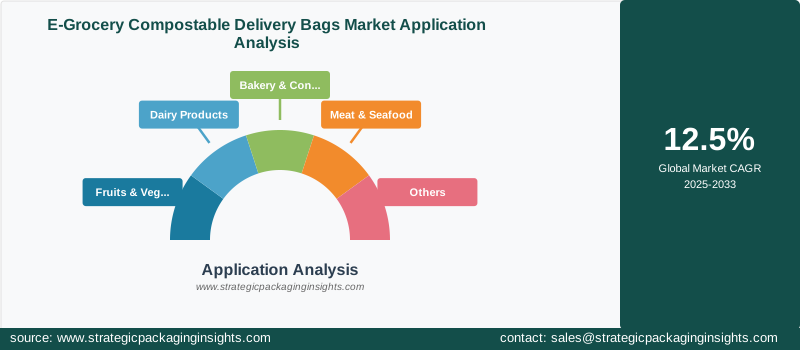
The application segment of the E-Grocery Compostable Delivery Bags market is diverse, catering to various product categories such as fruits and vegetables, dairy products, bakery and confectionery, and meat and seafood. The demand for compostable bags in the fruits and vegetables segment is particularly high due to the perishability of these products and the need for sustainable packaging solutions. Compostable bags offer the necessary protection while minimizing environmental impact. The dairy products segment is also witnessing significant growth as consumers seek eco-friendly packaging options for milk, cheese, and other dairy items. The bakery and confectionery segment is driven by the increasing demand for sustainable packaging solutions for bread, pastries, and sweets. The meat and seafood segment is expected to grow as consumers become more conscious of the environmental impact of packaging materials.
Distribution Channel Analysis
The distribution channel segment in the E-Grocery Compostable Delivery Bags market is divided into online and offline channels. The online channel is experiencing rapid growth due to the increasing popularity of e-commerce and online grocery shopping. Consumers are increasingly turning to online platforms for their grocery needs, driving the demand for efficient and sustainable packaging solutions. Compostable delivery bags are well-suited for online distribution as they provide the necessary protection and sustainability. The offline channel, which includes supermarkets, hypermarkets, and specialty stores, remains a significant distribution channel for compostable bags. Retailers are increasingly adopting compostable packaging solutions to meet consumer demand for eco-friendly products and comply with regulatory requirements. The expansion of both online and offline channels is expected to drive the growth of this segment.
Regional Analysis
The regional analysis of the E-Grocery Compostable Delivery Bags market highlights the varying growth patterns and opportunities across different regions. North America and Europe are leading markets due to strong regulatory frameworks and high consumer awareness about sustainability. The presence of key players and advancements in material science further contribute to the market's growth in these regions. Asia Pacific is expected to witness significant growth due to the expanding e-commerce sector and increasing consumer awareness about sustainability. Government initiatives to reduce plastic waste and promote sustainable packaging solutions further support market growth in this region. Latin America and the Middle East & Africa are emerging markets with potential for growth as consumer awareness and regulatory frameworks improve.
E-Grocery Compostable Delivery Bags Market Segments
The E-Grocery Compostable Delivery Bags market has been segmented on the basis ofMaterial Type
- Starch-Based
- Polylactic Acid
- Polyhydroxyalkanoates
- Others
Application
- Fruits & Vegetables
- Dairy Products
- Bakery & Confectionery
- Meat & Seafood
- Others
Distribution Channel
- Online
- Offline
Region
- Asia Pacific
- North America
- Latin America
- Europe
- Middle East & Africa




