


Photochromic Temperature Labels Market Outlook
The Photochromic Temperature Labels market was valued at $1.2 billion in 2024 and is projected to reach $2.5 billion by 2033, growing at a CAGR of 8.5% during the forecast period 2025-2033. This market is witnessing significant growth due to the increasing demand for smart packaging solutions that enhance product safety and consumer engagement. The integration of photochromic technology in temperature labels allows for real-time monitoring of temperature changes, which is crucial for industries such as food and beverage, healthcare, and logistics. The rising awareness about food safety and the need for efficient cold chain logistics are further propelling the demand for these innovative labels. Additionally, advancements in material science and printing technologies are enabling the production of more cost-effective and durable photochromic temperature labels, thereby expanding their application scope across various sectors.
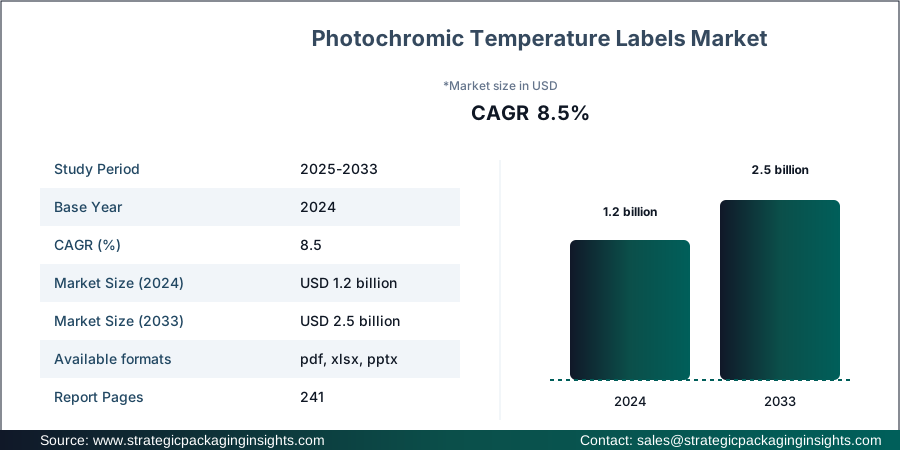
Report Scope
| Attributes | Details |
| Report Title | Photochromic Temperature Labels Market Size, Future Growth and Forecast 2033 |
| Material | Paper, Plastic, Metal |
| Application | Food & Beverage, Healthcare, Logistics, Retail, Industrial |
| Technology | Ink-based, Film-based |
| End-User | Manufacturers, Distributors, Retailers, Consumers |
| Base Year | 2024 |
| Historic Period | 2017-2023 |
| Forecast Period | 2025-2033 |
| Number of Pages | 241 |
| Customization Available | Yes* |
Opportunities & Threats
The Photochromic Temperature Labels market presents numerous opportunities, particularly in the food and beverage industry, where maintaining the integrity of perishable goods is paramount. The increasing consumer demand for transparency and traceability in food products is driving the adoption of smart packaging solutions like photochromic temperature labels. These labels provide a visual indication of temperature changes, ensuring that products have been stored and transported under optimal conditions. Moreover, the growing trend of online grocery shopping and the expansion of e-commerce platforms are creating new avenues for the application of these labels, as they help in maintaining the quality of temperature-sensitive products during transit. The healthcare sector also offers significant growth potential, as these labels can be used to monitor the temperature of pharmaceuticals and vaccines, ensuring their efficacy and safety.
Another opportunity lies in the logistics and supply chain industry, where the need for efficient temperature monitoring solutions is critical. The increasing globalization of trade and the expansion of cold chain logistics are driving the demand for photochromic temperature labels. These labels provide a cost-effective and reliable solution for monitoring temperature fluctuations during the transportation of goods, reducing the risk of spoilage and ensuring product quality. Additionally, the development of eco-friendly and biodegradable materials for these labels is gaining traction, aligning with the growing emphasis on sustainability and environmental responsibility. Companies that invest in research and development to create innovative and sustainable photochromic temperature labels are likely to gain a competitive edge in the market.
However, the market faces certain restrainers, such as the high cost of advanced photochromic materials and the complexity of integrating these labels into existing packaging systems. The initial investment required for adopting photochromic temperature labels can be a barrier for small and medium-sized enterprises, limiting their widespread adoption. Additionally, the lack of standardization and regulatory guidelines for the use of smart packaging solutions can pose challenges for manufacturers and end-users. Companies need to navigate these regulatory complexities and invest in educating consumers and stakeholders about the benefits and applications of photochromic temperature labels to overcome these challenges.
Drivers & Challenges
The primary drivers of the Photochromic Temperature Labels market include the increasing demand for smart packaging solutions and the growing emphasis on food safety and quality assurance. The ability of photochromic temperature labels to provide real-time temperature monitoring and visual indicators of temperature changes makes them an attractive solution for industries dealing with temperature-sensitive products. The rising consumer awareness about food safety and the need for efficient cold chain logistics are further fueling the demand for these labels. Additionally, advancements in material science and printing technologies are enabling the production of more cost-effective and durable photochromic temperature labels, thereby expanding their application scope across various sectors.
Another significant driver is the increasing adoption of photochromic temperature labels in the healthcare sector. The need for precise temperature monitoring of pharmaceuticals and vaccines is critical to ensure their efficacy and safety. Photochromic temperature labels provide a reliable and cost-effective solution for monitoring temperature fluctuations, reducing the risk of spoilage and ensuring product quality. The growing emphasis on patient safety and the need for compliance with stringent regulatory standards are further driving the demand for these labels in the healthcare industry. Moreover, the development of eco-friendly and biodegradable materials for these labels is gaining traction, aligning with the growing emphasis on sustainability and environmental responsibility.
Despite the promising growth prospects, the Photochromic Temperature Labels market faces several challenges. One of the primary challenges is the high cost of advanced photochromic materials, which can be a barrier for small and medium-sized enterprises. The initial investment required for adopting photochromic temperature labels can limit their widespread adoption, particularly in price-sensitive markets. Additionally, the complexity of integrating these labels into existing packaging systems can pose challenges for manufacturers and end-users. Companies need to invest in research and development to create innovative and cost-effective solutions that address these challenges and drive market growth.
Photochromic Temperature Labels Strategic Outlook
| Trend | Market Driver | Technological/Material Shift | Business Impact |
|---|---|---|---|
| Sustainability | Eco-friendly Materials | Biodegradable Labels | Increased Adoption |
| Smart Tech | Real-time Monitoring | Advanced Sensors | Enhanced Product Safety |
| Consumer Behavior | Demand for Transparency | Interactive Labels | Improved Consumer Trust |
| Logistics | Cold Chain Expansion | Durable Materials | Reduced Spoilage |
The Photochromic Temperature Labels market is poised for significant growth, driven by the increasing demand for smart packaging solutions and the growing emphasis on food safety and quality assurance. The market is expected to reach a valuation of $2.5 billion by 2033, with a CAGR of 8.5% during the forecast period. The primary regulatory disruptor in this niche is the increasing focus on sustainability and environmental responsibility, which is driving the development of eco-friendly and biodegradable materials for photochromic temperature labels. To maintain market share by 2033, brands should pivot towards investing in research and development to create innovative and sustainable solutions that address the evolving needs of consumers and industries. Companies that focus on enhancing product safety and transparency through advanced technologies and materials are likely to gain a competitive edge in the market.
Market Share Analysis
The Photochromic Temperature Labels market is characterized by a competitive landscape with several key players vying for market share. The market is dominated by a few major companies that have established themselves as leaders in the industry through their innovative products and strong distribution networks. These companies are focusing on expanding their product portfolios and enhancing their production capabilities to cater to the growing demand for photochromic temperature labels. Additionally, strategic partnerships and collaborations with other industry players are helping these companies to strengthen their market position and expand their global footprint.
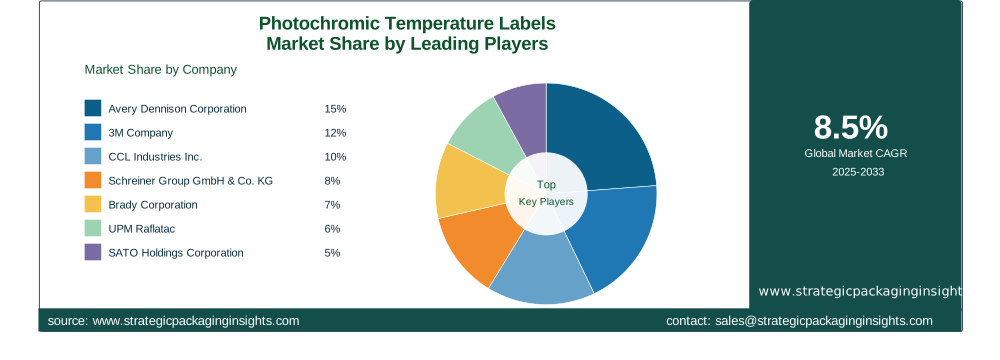
Among the major players in the market, Avery Dennison Corporation holds a significant share due to its extensive range of smart labeling solutions and strong presence in the global market. The company's focus on innovation and sustainability has enabled it to develop advanced photochromic temperature labels that cater to the needs of various industries. Another key player, 3M Company, is known for its cutting-edge technologies and high-quality products. The company's commitment to research and development has resulted in the creation of durable and reliable photochromic temperature labels that are widely used in the healthcare and logistics sectors.
CCL Industries Inc. is another prominent player in the market, offering a diverse range of labeling solutions that include photochromic temperature labels. The company's strong distribution network and strategic acquisitions have helped it to expand its market presence and cater to a wide range of industries. Schreiner Group GmbH & Co. KG is also a key player in the market, known for its innovative labeling solutions and focus on sustainability. The company's eco-friendly and biodegradable photochromic temperature labels are gaining traction in the market, aligning with the growing emphasis on environmental responsibility.
Other notable companies in the market include Brady Corporation, UPM Raflatac, and SATO Holdings Corporation, each of which has carved a niche for itself through its unique product offerings and strong market presence. These companies are investing in research and development to create innovative and cost-effective solutions that address the evolving needs of consumers and industries. The competitive landscape of the Photochromic Temperature Labels market is expected to intensify in the coming years, with companies focusing on expanding their product portfolios and enhancing their production capabilities to cater to the growing demand for smart packaging solutions.
Key Highlights
- The Photochromic Temperature Labels market is projected to reach $2.5 billion by 2033, growing at a CAGR of 8.5% during the forecast period.
- Increasing demand for smart packaging solutions is driving market growth, particularly in the food and beverage and healthcare sectors.
- Advancements in material science and printing technologies are enabling the production of cost-effective and durable photochromic temperature labels.
- The development of eco-friendly and biodegradable materials for these labels is gaining traction, aligning with the growing emphasis on sustainability.
- The healthcare sector offers significant growth potential, with the need for precise temperature monitoring of pharmaceuticals and vaccines.
- The logistics and supply chain industry is driving demand for efficient temperature monitoring solutions, reducing the risk of spoilage.
- Key players in the market include Avery Dennison Corporation, 3M Company, CCL Industries Inc., and Schreiner Group GmbH & Co. KG.
- Strategic partnerships and collaborations are helping companies to strengthen their market position and expand their global footprint.
- The competitive landscape is expected to intensify, with companies focusing on expanding their product portfolios and enhancing their production capabilities.
Top Countries Insights
In the Photochromic Temperature Labels market, the United States holds a significant share, with a market size of $400 million and a CAGR of 9%. The country's strong emphasis on food safety and quality assurance, coupled with the growing demand for smart packaging solutions, is driving market growth. The presence of major players and the increasing adoption of advanced technologies are further contributing to the market's expansion.
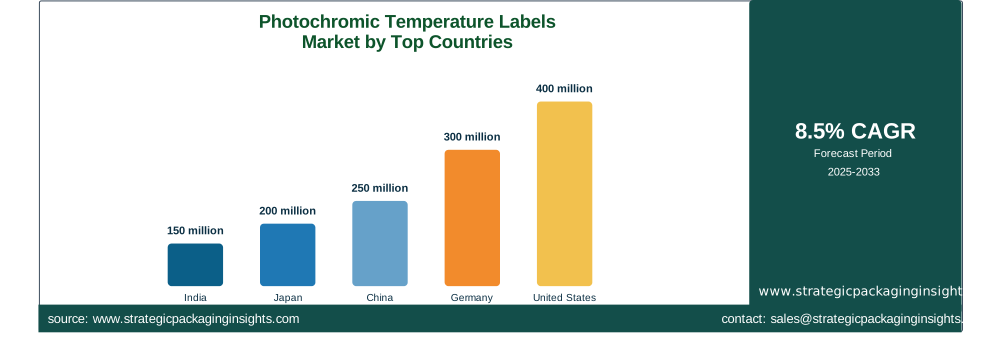
Germany is another key market, with a market size of $300 million and a CAGR of 8%. The country's strong focus on sustainability and environmental responsibility is driving the development of eco-friendly and biodegradable photochromic temperature labels. The growing emphasis on food safety and the need for efficient cold chain logistics are also contributing to market growth.
China is experiencing rapid growth in the Photochromic Temperature Labels market, with a market size of $250 million and a CAGR of 12%. The country's expanding e-commerce sector and the increasing demand for temperature-sensitive products are driving the adoption of smart packaging solutions. The government's focus on improving food safety standards and the growing emphasis on sustainability are further propelling market growth.
Japan is another important market, with a market size of $200 million and a CAGR of 7%. The country's strong emphasis on technological innovation and the growing demand for smart packaging solutions are driving market growth. The increasing adoption of photochromic temperature labels in the healthcare sector is also contributing to the market's expansion.
India is emerging as a promising market, with a market size of $150 million and a CAGR of 10%. The country's growing population and the increasing demand for temperature-sensitive products are driving the adoption of smart packaging solutions. The government's focus on improving food safety standards and the growing emphasis on sustainability are further propelling market growth.
Photochromic Temperature Labels Market Segments Insights

Material Analysis
The material segment of the Photochromic Temperature Labels market is primarily categorized into paper, plastic, and metal. Paper-based labels are gaining popularity due to their eco-friendly nature and cost-effectiveness. These labels are widely used in the food and beverage industry, where sustainability is a key concern. The increasing demand for biodegradable and recyclable packaging solutions is driving the growth of paper-based photochromic temperature labels. Plastic-based labels, on the other hand, offer durability and flexibility, making them suitable for a wide range of applications, including healthcare and logistics. The development of advanced plastic materials that are both durable and environmentally friendly is further propelling the growth of this segment. Metal-based labels, although less common, are used in industrial applications where durability and resistance to harsh environmental conditions are critical.
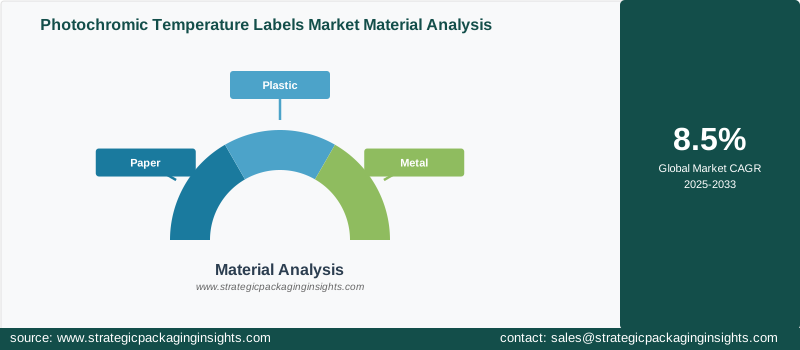
The choice of material for photochromic temperature labels is influenced by factors such as cost, durability, and environmental impact. Companies are investing in research and development to create innovative materials that offer a balance between performance and sustainability. The growing emphasis on reducing the environmental footprint of packaging solutions is driving the development of eco-friendly materials for photochromic temperature labels. As consumer awareness about sustainability continues to rise, the demand for labels made from biodegradable and recyclable materials is expected to increase, providing significant growth opportunities for companies operating in this segment.
Application Analysis
The application segment of the Photochromic Temperature Labels market includes food and beverage, healthcare, logistics, retail, and industrial sectors. The food and beverage industry is the largest application segment, driven by the increasing demand for smart packaging solutions that enhance product safety and quality assurance. Photochromic temperature labels provide a visual indication of temperature changes, ensuring that perishable goods are stored and transported under optimal conditions. The growing trend of online grocery shopping and the expansion of e-commerce platforms are further driving the adoption of these labels in the food and beverage industry.
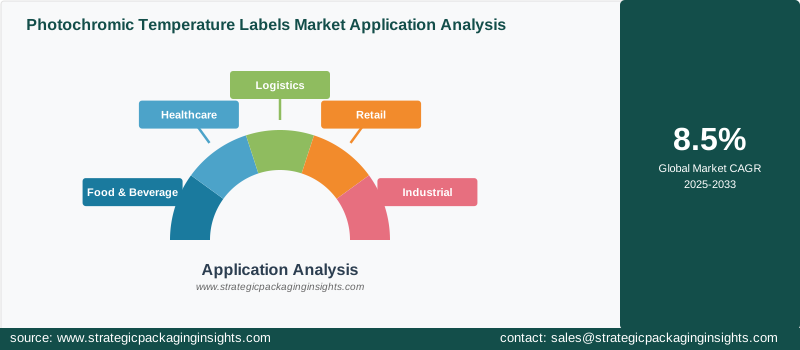
In the healthcare sector, the need for precise temperature monitoring of pharmaceuticals and vaccines is critical to ensure their efficacy and safety. Photochromic temperature labels provide a reliable and cost-effective solution for monitoring temperature fluctuations, reducing the risk of spoilage and ensuring product quality. The logistics and supply chain industry is also a significant application segment, driven by the need for efficient temperature monitoring solutions during the transportation of goods. The increasing globalization of trade and the expansion of cold chain logistics are driving the demand for photochromic temperature labels in this sector. The retail and industrial sectors also offer growth opportunities, as companies seek to enhance product safety and transparency through the use of smart packaging solutions.
Technology Analysis
The technology segment of the Photochromic Temperature Labels market is divided into ink-based and film-based technologies. Ink-based photochromic temperature labels are widely used due to their cost-effectiveness and ease of integration into existing packaging systems. These labels provide a visual indication of temperature changes through color shifts, making them an attractive solution for industries dealing with temperature-sensitive products. The development of advanced ink formulations that offer improved durability and performance is driving the growth of this segment.
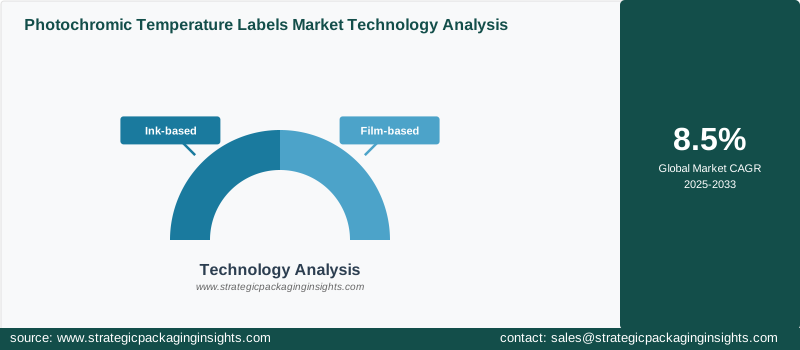
Film-based photochromic temperature labels, on the other hand, offer enhanced durability and resistance to environmental conditions, making them suitable for a wide range of applications. These labels are particularly popular in the healthcare and logistics sectors, where precise temperature monitoring is critical. The development of advanced film materials that offer improved performance and sustainability is further propelling the growth of this segment. Companies are investing in research and development to create innovative technologies that offer a balance between performance and cost-effectiveness, driving the adoption of photochromic temperature labels across various industries.
End-User Analysis
The end-user segment of the Photochromic Temperature Labels market includes manufacturers, distributors, retailers, and consumers. Manufacturers are the largest end-user segment, driven by the increasing demand for smart packaging solutions that enhance product safety and quality assurance. The integration of photochromic temperature labels into packaging systems allows manufacturers to provide real-time temperature monitoring and visual indicators of temperature changes, ensuring that products are stored and transported under optimal conditions.
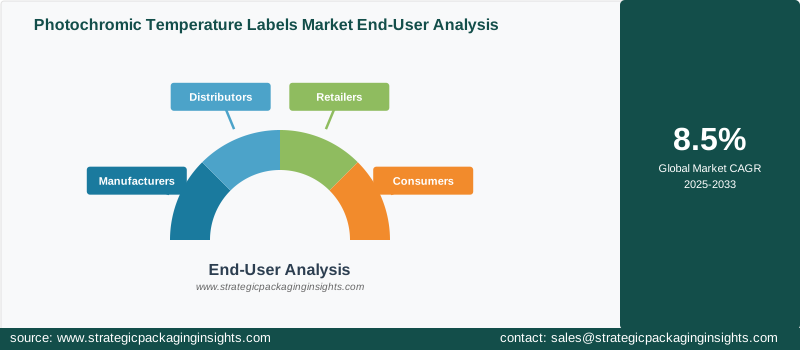
Distributors and retailers are also significant end-user segments, as they seek to enhance product safety and transparency through the use of smart packaging solutions. The growing trend of online grocery shopping and the expansion of e-commerce platforms are driving the adoption of photochromic temperature labels among distributors and retailers. Consumers, although a smaller end-user segment, are increasingly demanding transparency and traceability in food products, driving the adoption of smart packaging solutions like photochromic temperature labels. Companies that focus on enhancing product safety and transparency through advanced technologies and materials are likely to gain a competitive edge in the market.
Photochromic Temperature Labels Market Segments
The Photochromic Temperature Labels market has been segmented on the basis ofMaterial
- Paper
- Plastic
- Metal
Application
- Food & Beverage
- Healthcare
- Logistics
- Retail
- Industrial
Technology
- Ink-based
- Film-based
End-User
- Manufacturers
- Distributors
- Retailers
- Consumers




