


Industrial Printer Market Outlook
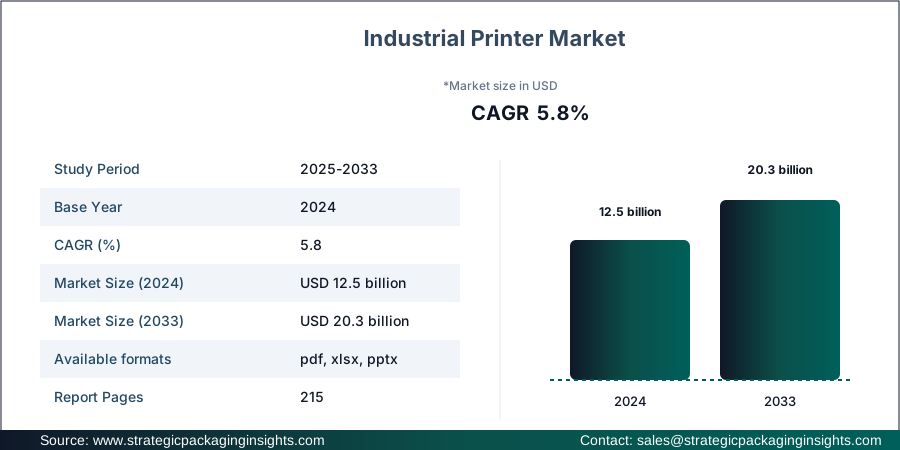
The industrial printer market was valued at $12.5 billion in 2024 and is projected to reach $20.3 billion by 2033, growing at a CAGR of 5.8% during the forecast period 2025-2033. This growth trajectory is driven by the increasing demand for efficient and high-speed printing solutions across various industries such as packaging, textiles, and electronics. The adoption of advanced printing technologies like inkjet and laser is further propelling market expansion. Additionally, the rise in e-commerce and the need for customized packaging solutions are contributing to the market's upward trend. The integration of IoT and AI in industrial printers is enhancing operational efficiency and reducing downtime, making them more appealing to end-users.
Report Scope
| Attributes | Details |
| Report Title | Industrial Printer Market Size, Future Growth and Forecast 2033 |
| Technology | Inkjet, Laser, Thermal, Dot Matrix |
| Application | Packaging, Textile, Electronics, Automotive, Aerospace, Others |
| End-User | Manufacturing, Retail, Logistics, Healthcare, Others |
| Region | Asia Pacific, North America, Latin America, Europe, Middle East & Africa |
| Base Year | 2024 |
| Historic Period | 2017-2023 |
| Forecast Period | 2025-2033 |
| Number of Pages | 215 |
| Customization Available | Yes* |
Opportunities & Threats
The industrial printer market is poised for significant opportunities, particularly with the growing trend of digitalization in manufacturing processes. As industries increasingly adopt Industry 4.0 practices, the demand for smart printing solutions that can seamlessly integrate with automated production lines is on the rise. This shift is creating a fertile ground for innovation in industrial printers, with manufacturers focusing on developing printers that offer real-time data analytics, remote monitoring, and predictive maintenance capabilities. Furthermore, the expansion of the e-commerce sector is driving the need for efficient and flexible packaging solutions, presenting a lucrative opportunity for industrial printers that can deliver high-quality, customized prints at scale.
Another promising opportunity lies in the increasing emphasis on sustainability and eco-friendly practices. As businesses strive to reduce their carbon footprint, there is a growing demand for printers that use environmentally friendly inks and materials. This trend is encouraging manufacturers to invest in research and development to create sustainable printing solutions that meet the evolving needs of environmentally conscious consumers. Additionally, the rise of 3D printing technology is opening new avenues for industrial printers, enabling them to cater to niche markets such as prototyping and small-batch production, thereby expanding their application scope.
Despite these opportunities, the industrial printer market faces certain threats that could hinder its growth. One of the primary challenges is the high initial investment required for advanced printing technologies, which can be a barrier for small and medium-sized enterprises. Moreover, the rapid pace of technological advancements necessitates continuous upgrades and maintenance, adding to the operational costs for businesses. Additionally, the market is subject to stringent regulatory standards regarding emissions and waste management, which can pose compliance challenges for manufacturers. These factors, coupled with the intense competition in the market, require companies to strategically navigate these threats to maintain their competitive edge.
Drivers & Challenges
The industrial printer market is driven by several key factors, including the increasing demand for high-speed and high-quality printing solutions across various industries. The packaging industry, in particular, is a major driver, as it requires efficient and reliable printing solutions to meet the growing demand for customized and visually appealing packaging. The rise of e-commerce has further fueled this demand, as businesses seek to differentiate their products through unique packaging designs. Additionally, the integration of advanced technologies such as IoT and AI in industrial printers is enhancing their functionality and efficiency, making them more attractive to end-users. These technological advancements are enabling printers to offer features such as real-time monitoring, predictive maintenance, and remote operation, thereby improving productivity and reducing downtime.
Another significant driver is the increasing focus on sustainability and eco-friendly practices. As businesses strive to reduce their environmental impact, there is a growing demand for printers that use sustainable materials and inks. This trend is encouraging manufacturers to invest in research and development to create innovative printing solutions that align with the sustainability goals of their customers. Furthermore, the rise of digital printing technology is transforming the industrial printer market, offering benefits such as reduced waste, faster turnaround times, and the ability to produce short print runs cost-effectively. These advantages are driving the adoption of digital printing solutions across various industries, further propelling market growth.
However, the industrial printer market also faces several challenges that could impede its growth. One of the primary challenges is the high cost of advanced printing technologies, which can be prohibitive for small and medium-sized enterprises. Additionally, the market is subject to stringent regulatory standards regarding emissions and waste management, which can pose compliance challenges for manufacturers. The rapid pace of technological advancements also necessitates continuous upgrades and maintenance, adding to the operational costs for businesses. Moreover, the intense competition in the market requires companies to differentiate their offerings and provide value-added services to maintain their competitive edge. These challenges necessitate strategic planning and innovation to overcome and sustain growth in the market.
Industrial Printer Strategic Outlook
| Trend | Market Driver | Technological/Material Shift | Business Impact |
|---|---|---|---|
| Sustainability | Eco-friendly Practices | Biodegradable Inks | Reduced Environmental Impact |
| Smart Tech | Industry 4.0 Integration | IoT-enabled Printers | Enhanced Operational Efficiency |
| Consumer Behavior | Customization Demand | Digital Printing | Increased Customer Satisfaction |
| Logistics | E-commerce Growth | High-speed Printing | Improved Supply Chain Management |
Expert Synthesis: As of 2026, the industrial printer market is experiencing robust growth, driven by technological advancements and the increasing demand for customized printing solutions. The primary disruptor in this niche is the regulatory push towards sustainability, compelling manufacturers to innovate eco-friendly printing solutions. To maintain market share by 2033, brands should pivot towards integrating smart technologies and sustainable practices into their offerings. This strategic foresight will enable them to meet evolving consumer demands and regulatory requirements, ensuring long-term success in the competitive industrial printer market.
Market Share Analysis
The industrial printer market is characterized by a competitive landscape with several key players vying for market share. The market is dominated by a mix of established companies and emerging players, each offering a diverse range of products and solutions. The competitive dynamics are shaped by factors such as technological innovation, product differentiation, and strategic partnerships. Companies are increasingly focusing on expanding their product portfolios and enhancing their technological capabilities to gain a competitive edge. The market is also witnessing a trend of mergers and acquisitions, as companies seek to strengthen their market position and expand their geographical reach.
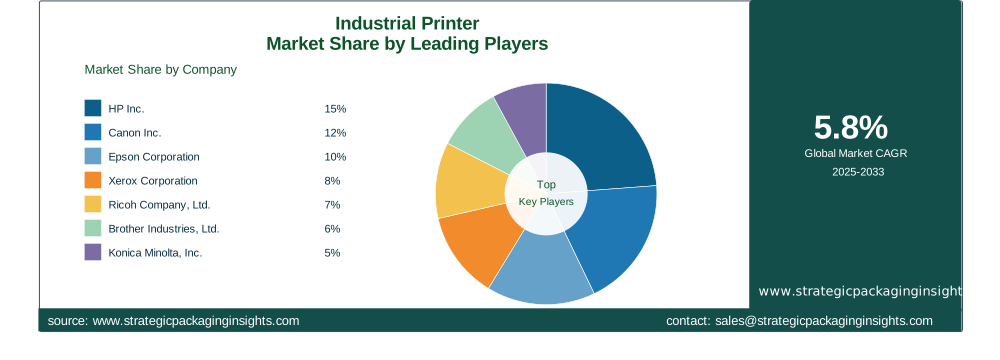
Among the major players in the industrial printer market, HP Inc. holds a significant share, driven by its extensive product range and strong brand presence. The company is known for its innovative printing solutions that cater to various industries, including packaging, textiles, and electronics. Canon Inc. is another key player, renowned for its advanced printing technologies and commitment to sustainability. The company's focus on research and development has enabled it to introduce cutting-edge products that meet the evolving needs of its customers. Epson Corporation is also a prominent player, offering a wide range of industrial printers known for their reliability and efficiency.
Other notable companies in the market include Xerox Corporation, which is recognized for its high-speed printing solutions and strong customer service. The company's strategic partnerships and collaborations have helped it expand its market presence and enhance its product offerings. Ricoh Company, Ltd. is another key player, known for its innovative printing solutions and focus on sustainability. The company's commitment to reducing its environmental impact has positioned it as a leader in the eco-friendly printing segment. Additionally, companies like Brother Industries, Ltd., and Konica Minolta, Inc. are making significant strides in the market, driven by their focus on technological innovation and customer-centric solutions.
Overall, the competitive landscape of the industrial printer market is dynamic, with companies continuously striving to innovate and differentiate their offerings. The market is expected to witness further consolidation as companies seek to strengthen their market position and capitalize on emerging opportunities. As the demand for advanced printing solutions continues to grow, companies that can effectively leverage technology and sustainability will be well-positioned to succeed in this competitive market.
Key Highlights
- The industrial printer market is projected to grow at a CAGR of 5.8% from 2025 to 2033.
- Technological advancements such as IoT and AI integration are enhancing printer functionality.
- The packaging industry is a major driver of demand for industrial printers.
- There is a growing emphasis on sustainability and eco-friendly printing solutions.
- Digital printing technology is transforming the industrial printer market.
- High initial investment costs pose a challenge for small and medium-sized enterprises.
- Regulatory standards regarding emissions and waste management are impacting the market.
- The market is characterized by intense competition and a trend of mergers and acquisitions.
- Companies are focusing on product differentiation and strategic partnerships to gain a competitive edge.
- The rise of e-commerce is driving demand for customized packaging solutions.
Top Countries Insights
In the industrial printer market, the United States stands out as a key player, with a market size of $3.5 billion and a CAGR of 6%. The country's strong manufacturing base and technological advancements are driving demand for industrial printers. The focus on automation and smart manufacturing practices is further boosting market growth. Additionally, the emphasis on sustainability and eco-friendly practices is encouraging the adoption of advanced printing solutions.
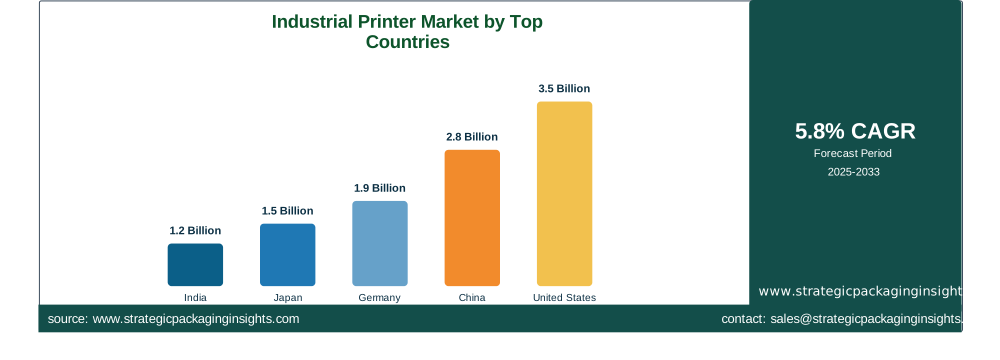
China is another significant market, with a market size of $2.8 billion and a CAGR of 7%. The country's booming manufacturing sector and rapid industrialization are key growth drivers. The government's focus on digitalization and smart manufacturing is also contributing to the market's expansion. However, regulatory challenges related to emissions and waste management pose a challenge for manufacturers.
Germany, with a market size of $1.9 billion and a CAGR of 5%, is a leading market in Europe. The country's strong engineering and manufacturing capabilities are driving demand for industrial printers. The focus on Industry 4.0 and smart manufacturing practices is further boosting market growth. Additionally, the emphasis on sustainability and eco-friendly practices is encouraging the adoption of advanced printing solutions.
Japan, with a market size of $1.5 billion and a CAGR of 4%, is a key market in Asia. The country's strong technological capabilities and focus on innovation are driving demand for industrial printers. The emphasis on automation and smart manufacturing practices is further boosting market growth. However, regulatory challenges related to emissions and waste management pose a challenge for manufacturers.
India, with a market size of $1.2 billion and a CAGR of 8%, is an emerging market with significant growth potential. The country's booming manufacturing sector and rapid industrialization are key growth drivers. The government's focus on digitalization and smart manufacturing is also contributing to the market's expansion. However, regulatory challenges related to emissions and waste management pose a challenge for manufacturers.
Industrial Printer Market Segments Insights

Technology Analysis
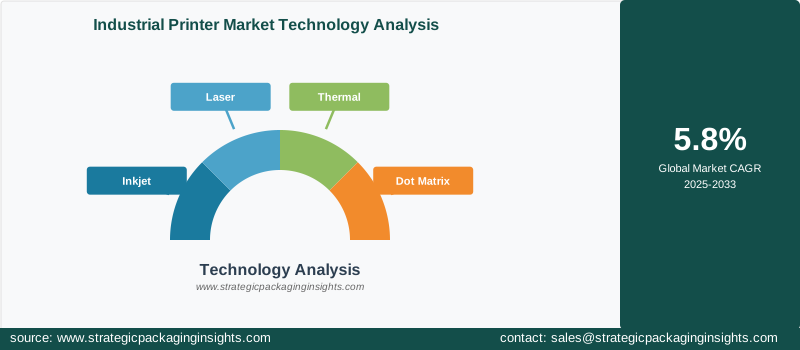
The industrial printer market is segmented by technology into inkjet, laser, thermal, and dot matrix printers. Inkjet printers are gaining traction due to their versatility and ability to produce high-quality prints on various substrates. The demand for inkjet printers is driven by their application in packaging and textiles, where high-resolution and vibrant prints are essential. Laser printers, known for their speed and precision, are widely used in the electronics and automotive industries. The thermal printing segment is also witnessing growth, particularly in logistics and retail, where durable and fast printing solutions are required. Dot matrix printers, although less popular, continue to find applications in niche markets where cost-effectiveness is a priority.
Technological advancements are playing a crucial role in shaping the industrial printer market. The integration of IoT and AI in printers is enhancing their functionality, enabling features such as real-time monitoring and predictive maintenance. These advancements are improving operational efficiency and reducing downtime, making industrial printers more appealing to end-users. Additionally, the shift towards digital printing technology is transforming the market, offering benefits such as reduced waste, faster turnaround times, and the ability to produce short print runs cost-effectively. As industries increasingly adopt digitalization and smart manufacturing practices, the demand for advanced printing solutions is expected to rise.
Application Analysis
The industrial printer market is segmented by application into packaging, textile, electronics, automotive, aerospace, and others. The packaging industry is a major driver of demand for industrial printers, as it requires efficient and reliable printing solutions to meet the growing demand for customized and visually appealing packaging. The rise of e-commerce has further fueled this demand, as businesses seek to differentiate their products through unique packaging designs. The textile industry is also a significant market for industrial printers, with the demand for high-quality and vibrant prints driving the adoption of advanced printing technologies.
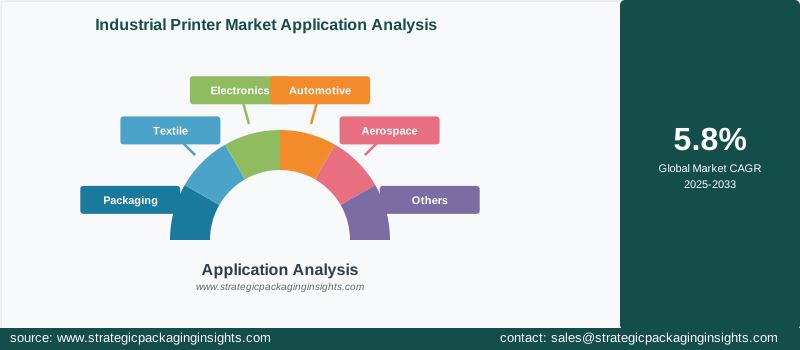
In the electronics and automotive industries, industrial printers are used for printing circuit boards, labels, and other components. The demand for precision and speed in these industries is driving the adoption of laser and inkjet printers. The aerospace industry, although smaller in scale, is also a growing market for industrial printers, with applications in prototyping and small-batch production. Overall, the diverse applications of industrial printers across various industries are contributing to the market's growth, with companies focusing on developing specialized solutions to cater to the unique needs of each industry.
End-User Analysis
The industrial printer market is segmented by end-user into manufacturing, retail, logistics, healthcare, and others. The manufacturing sector is a major end-user of industrial printers, with the demand for high-speed and high-quality printing solutions driving market growth. The focus on automation and smart manufacturing practices is further boosting the adoption of advanced printing technologies. In the retail sector, industrial printers are used for printing labels, tags, and packaging, with the rise of e-commerce driving demand for customized and visually appealing prints.
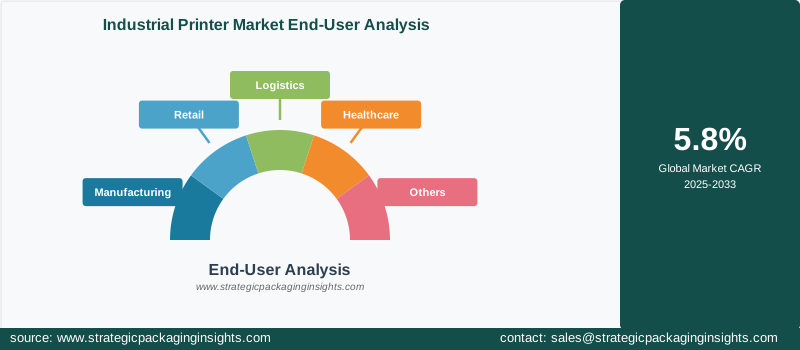
The logistics industry is also a significant market for industrial printers, with the demand for durable and fast printing solutions driving the adoption of thermal and inkjet printers. In the healthcare sector, industrial printers are used for printing labels, packaging, and other components, with the demand for precision and reliability driving the adoption of advanced printing technologies. Overall, the diverse end-user applications of industrial printers are contributing to the market's growth, with companies focusing on developing specialized solutions to cater to the unique needs of each sector.
Region Analysis
The industrial printer market is segmented by region into Asia Pacific, North America, Latin America, Europe, and Middle East & Africa. Asia Pacific is the largest market for industrial printers, driven by the booming manufacturing sector and rapid industrialization in countries like China and India. The focus on digitalization and smart manufacturing practices is further boosting market growth in the region. North America is another significant market, with the United States being a key player. The country's strong manufacturing base and technological advancements are driving demand for industrial printers.
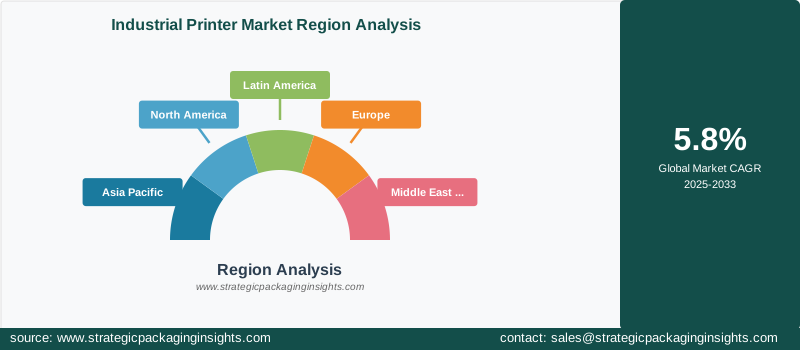
Europe is also a major market for industrial printers, with countries like Germany leading the way. The focus on Industry 4.0 and smart manufacturing practices is driving demand for advanced printing solutions in the region. Latin America and Middle East & Africa are emerging markets with significant growth potential, driven by the expanding manufacturing sector and increasing adoption of digital printing technologies. Overall, the diverse regional dynamics of the industrial printer market are contributing to its growth, with companies focusing on expanding their geographical reach to capitalize on emerging opportunities.
Industrial Printer Market Segments
The Industrial Printer market has been segmented on the basis ofTechnology
- Inkjet
- Laser
- Thermal
- Dot Matrix
Application
- Packaging
- Textile
- Electronics
- Automotive
- Aerospace
- Others
End-User
- Manufacturing
- Retail
- Logistics
- Healthcare
- Others
Region
- Asia Pacific
- North America
- Latin America
- Europe
- Middle East & Africa




