


Protein-matrix Lining Market Outlook
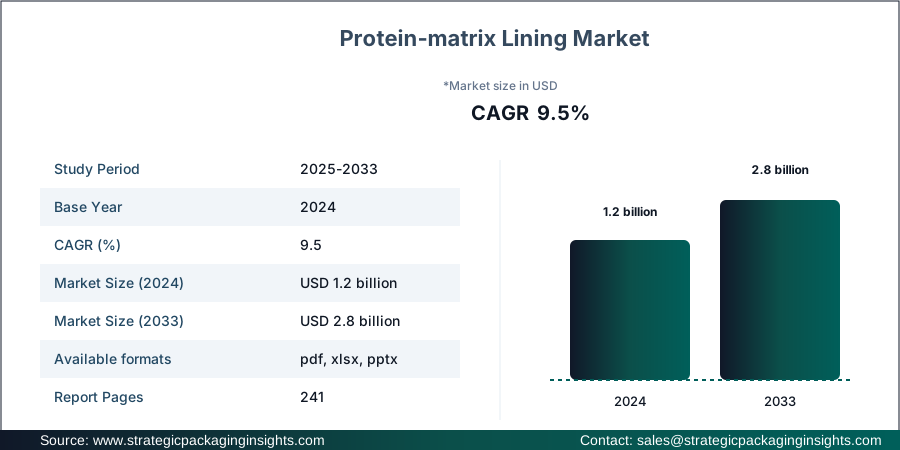
The Protein-matrix Lining market was valued at $1.2 billion in 2024 and is projected to reach $2.8 billion by 2033, growing at a CAGR of 9.5% during the forecast period 2025-2033. This market is witnessing significant growth due to the increasing demand for sustainable and eco-friendly packaging solutions. Protein-matrix linings are gaining traction as they offer biodegradable and renewable alternatives to traditional synthetic linings. The food and beverage industry, in particular, is driving demand as companies seek to reduce their environmental footprint and comply with stringent regulations on packaging waste. Additionally, advancements in material science are enabling the development of protein-matrix linings with enhanced barrier properties, further boosting their adoption across various sectors.
Report Scope
| Attributes | Details |
| Report Title | Protein-matrix Lining Market Size, Future Growth and Forecast 2033 |
| Material Type | Natural, Synthetic |
| Application | Food Packaging, Beverage Packaging |
| End-User | Food & Beverage Industry, Healthcare Industry |
| Region | Asia Pacific, North America |
| Base Year | 2024 |
| Historic Period | 2017-2023 |
| Forecast Period | 2025-2033 |
| Number of Pages | 241 |
| Customization Available | Yes* |
Opportunities & Threats
The Protein-matrix Lining market presents numerous opportunities, particularly in the realm of sustainability. As consumers become more environmentally conscious, there is a growing demand for packaging solutions that minimize environmental impact. Protein-matrix linings, being biodegradable and derived from renewable resources, align perfectly with this trend. Companies that invest in developing innovative protein-based materials can capitalize on this opportunity by offering products that meet both consumer preferences and regulatory requirements. Furthermore, the increasing focus on reducing plastic waste and promoting circular economy practices is expected to drive the adoption of protein-matrix linings in various industries, including food and beverage, healthcare, and cosmetics.
Another significant opportunity lies in the technological advancements in material science. Researchers are continuously exploring new protein sources and processing techniques to enhance the performance of protein-matrix linings. Innovations such as improved barrier properties, increased durability, and enhanced moisture resistance are making these linings more competitive with traditional synthetic options. Companies that leverage these advancements can differentiate themselves in the market by offering high-performance, sustainable packaging solutions. Additionally, collaborations between material scientists, packaging manufacturers, and end-users can lead to the development of customized solutions that cater to specific industry needs, further expanding the market potential.
However, the Protein-matrix Lining market also faces certain threats that could hinder its growth. One of the primary challenges is the cost associated with the production of protein-based materials. Compared to conventional synthetic linings, protein-matrix linings can be more expensive to produce, which may limit their adoption, especially among cost-sensitive industries. Additionally, the availability of raw materials, such as specific proteins, can be a constraint, impacting the scalability of production. Companies need to address these challenges by investing in research and development to optimize production processes and reduce costs. Furthermore, establishing reliable supply chains for raw materials is crucial to ensure consistent production and meet growing demand.
Drivers & Challenges
The Protein-matrix Lining market is primarily driven by the increasing demand for sustainable packaging solutions. As environmental concerns continue to rise, consumers and regulatory bodies are pushing for packaging materials that are biodegradable and have a lower environmental impact. Protein-matrix linings, derived from renewable resources, offer a viable solution to these demands. The food and beverage industry, in particular, is a major driver of this market, as companies seek to reduce their carbon footprint and comply with stringent packaging regulations. Additionally, the healthcare and cosmetics industries are also adopting protein-matrix linings to enhance the sustainability of their packaging solutions.
Another key driver of the Protein-matrix Lining market is the advancements in material science and technology. Researchers are continuously exploring new protein sources and processing techniques to enhance the performance of protein-matrix linings. Innovations such as improved barrier properties, increased durability, and enhanced moisture resistance are making these linings more competitive with traditional synthetic options. Companies that leverage these advancements can differentiate themselves in the market by offering high-performance, sustainable packaging solutions. Furthermore, collaborations between material scientists, packaging manufacturers, and end-users can lead to the development of customized solutions that cater to specific industry needs, further expanding the market potential.
Despite the promising growth prospects, the Protein-matrix Lining market faces several challenges. One of the primary challenges is the cost associated with the production of protein-based materials. Compared to conventional synthetic linings, protein-matrix linings can be more expensive to produce, which may limit their adoption, especially among cost-sensitive industries. Additionally, the availability of raw materials, such as specific proteins, can be a constraint, impacting the scalability of production. Companies need to address these challenges by investing in research and development to optimize production processes and reduce costs. Furthermore, establishing reliable supply chains for raw materials is crucial to ensure consistent production and meet growing demand.
Market Share Analysis
The competitive landscape of the Protein-matrix Lining market is characterized by the presence of several key players who are actively engaged in research and development to enhance their product offerings. These companies are focusing on developing innovative protein-based materials that offer superior performance and sustainability. The market is witnessing a growing trend of collaborations and partnerships between material scientists, packaging manufacturers, and end-users to develop customized solutions that cater to specific industry needs. Additionally, companies are investing in expanding their production capacities to meet the increasing demand for protein-matrix linings across various sectors.
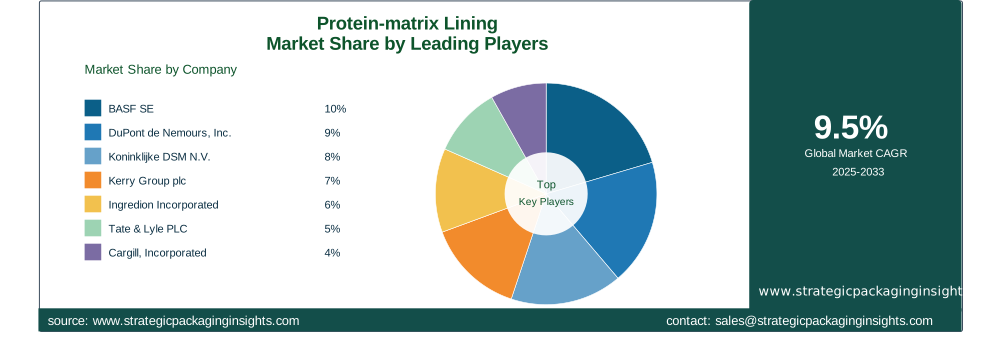
Some of the major companies operating in the Protein-matrix Lining market include BASF SE, DuPont de Nemours, Inc., Koninklijke DSM N.V., Kerry Group plc, Ingredion Incorporated, Tate & Lyle PLC, Cargill, Incorporated, Archer Daniels Midland Company, Roquette Frères, and Avebe U.A. These companies are leveraging their extensive research and development capabilities to develop high-performance protein-based materials that meet the evolving needs of the market. They are also focusing on expanding their global presence through strategic partnerships and acquisitions to strengthen their market position.
BASF SE, a leading player in the market, is known for its innovative solutions in the field of sustainable packaging. The company is actively involved in the development of protein-matrix linings that offer enhanced barrier properties and biodegradability. DuPont de Nemours, Inc. is another key player that is focusing on leveraging its expertise in material science to develop advanced protein-based materials. The company is investing in research and development to enhance the performance of its products and expand its application areas.
Koninklijke DSM N.V. is a prominent player in the Protein-matrix Lining market, known for its commitment to sustainability and innovation. The company is actively engaged in developing protein-based materials that offer superior performance and environmental benefits. Kerry Group plc is another major player that is focusing on expanding its product portfolio to cater to the growing demand for sustainable packaging solutions. The company is investing in research and development to develop innovative protein-matrix linings that meet the specific needs of its customers.
Key Highlights
- The Protein-matrix Lining market is projected to grow at a CAGR of 9.5% from 2025 to 2033.
- Increasing demand for sustainable packaging solutions is driving market growth.
- Advancements in material science are enhancing the performance of protein-matrix linings.
- The food and beverage industry is a major driver of the market.
- Cost and raw material availability are key challenges for market players.
- Collaborations and partnerships are crucial for developing customized solutions.
- Key players are focusing on expanding their global presence through strategic partnerships and acquisitions.
Top Countries Insights
In the Protein-matrix Lining market, the United States is a leading player, with a market size of $300 million and a CAGR of 8%. The country's strong focus on sustainability and stringent packaging regulations are driving the demand for protein-matrix linings. Additionally, the presence of major food and beverage companies that are actively seeking eco-friendly packaging solutions is further boosting market growth. The availability of advanced research facilities and a robust supply chain infrastructure also contribute to the country's market dominance.
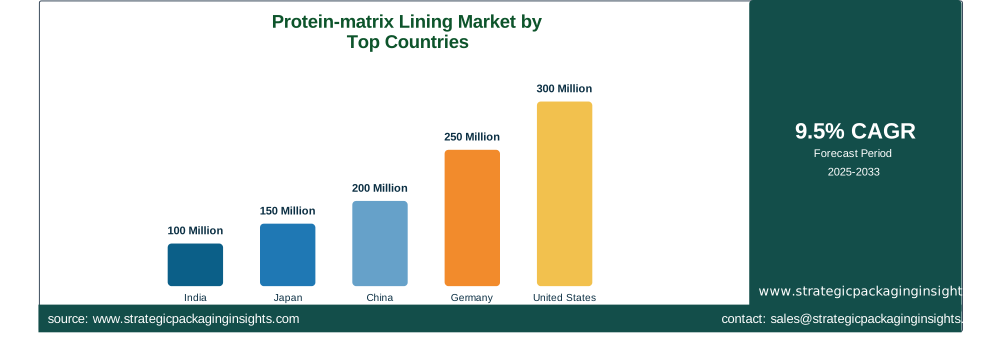
Germany is another key market for protein-matrix linings, with a market size of $250 million and a CAGR of 7%. The country's strong emphasis on environmental sustainability and innovation in material science is driving the adoption of protein-based materials. The presence of leading packaging manufacturers and research institutions is facilitating the development of advanced protein-matrix linings with enhanced performance characteristics. Additionally, government initiatives to promote sustainable packaging solutions are further supporting market growth.
China is emerging as a significant market for protein-matrix linings, with a market size of $200 million and a CAGR of 10%. The country's rapidly growing food and beverage industry, coupled with increasing consumer awareness about environmental issues, is driving the demand for sustainable packaging solutions. The government's focus on reducing plastic waste and promoting circular economy practices is also contributing to market growth. Additionally, the availability of raw materials and cost-effective production capabilities make China an attractive market for protein-matrix linings.
Japan is another important market, with a market size of $150 million and a CAGR of 6%. The country's strong focus on innovation and technology is driving the development of advanced protein-matrix linings. The presence of leading packaging manufacturers and research institutions is facilitating the development of high-performance, sustainable packaging solutions. Additionally, the country's stringent packaging regulations and consumer demand for eco-friendly products are further supporting market growth.
India is also witnessing significant growth in the Protein-matrix Lining market, with a market size of $100 million and a CAGR of 12%. The country's rapidly growing food and beverage industry, coupled with increasing consumer awareness about environmental issues, is driving the demand for sustainable packaging solutions. The government's focus on reducing plastic waste and promoting circular economy practices is also contributing to market growth. Additionally, the availability of raw materials and cost-effective production capabilities make India an attractive market for protein-matrix linings.
Protein-matrix Lining Market Segments Insights

Material Type Analysis
The Protein-matrix Lining market is segmented by material type into natural and synthetic. Natural protein-matrix linings are derived from renewable resources such as plant and animal proteins, making them an eco-friendly alternative to synthetic options. These linings are gaining popularity due to their biodegradability and reduced environmental impact. The demand for natural protein-matrix linings is driven by the increasing consumer preference for sustainable packaging solutions and the stringent regulations on packaging waste. Companies are investing in research and development to enhance the performance of natural protein-matrix linings, focusing on improving their barrier properties and durability.
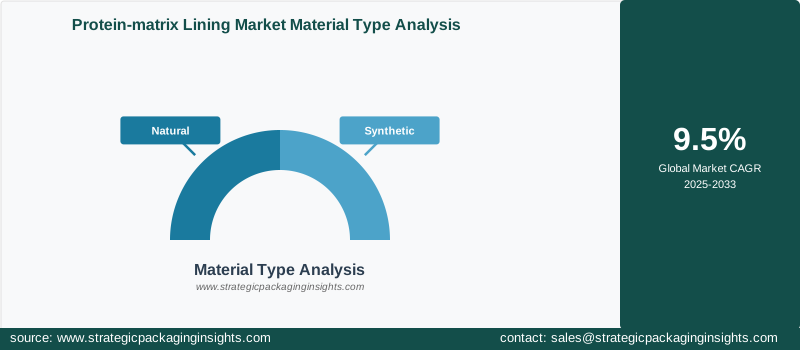
Synthetic protein-matrix linings, on the other hand, are developed using engineered proteins and advanced material science techniques. These linings offer superior performance characteristics, such as enhanced moisture resistance and durability, making them suitable for a wide range of applications. The demand for synthetic protein-matrix linings is driven by the need for high-performance packaging solutions in industries such as healthcare and cosmetics. Companies are focusing on leveraging technological advancements to develop innovative synthetic protein-matrix linings that meet the specific needs of these industries. Additionally, collaborations between material scientists and packaging manufacturers are facilitating the development of customized solutions that cater to specific industry requirements.
Application Analysis
The Protein-matrix Lining market is segmented by application into food packaging, beverage packaging, healthcare packaging, beauty packaging, and advanced packaging. The food packaging segment is a major driver of the market, as companies seek to reduce their environmental footprint and comply with stringent packaging regulations. Protein-matrix linings offer a sustainable alternative to traditional synthetic linings, providing biodegradability and reduced environmental impact. The demand for protein-matrix linings in food packaging is driven by the increasing consumer preference for eco-friendly products and the growing focus on reducing plastic waste.
The beverage packaging segment is also witnessing significant growth, driven by the demand for sustainable packaging solutions in the beverage industry. Protein-matrix linings offer enhanced barrier properties and moisture resistance, making them suitable for beverage packaging applications. Companies are investing in research and development to enhance the performance of protein-matrix linings in beverage packaging, focusing on improving their durability and shelf-life. Additionally, collaborations between packaging manufacturers and beverage companies are facilitating the development of customized solutions that cater to the specific needs of the beverage industry.
End-User Analysis
The Protein-matrix Lining market is segmented by end-user into the food and beverage industry, healthcare industry, cosmetics industry, and others. The food and beverage industry is a major driver of the market, as companies seek to reduce their environmental footprint and comply with stringent packaging regulations. Protein-matrix linings offer a sustainable alternative to traditional synthetic linings, providing biodegradability and reduced environmental impact. The demand for protein-matrix linings in the food and beverage industry is driven by the increasing consumer preference for eco-friendly products and the growing focus on reducing plastic waste.
The healthcare industry is also witnessing significant growth in the adoption of protein-matrix linings, driven by the need for sustainable packaging solutions in the healthcare sector. Protein-matrix linings offer enhanced barrier properties and moisture resistance, making them suitable for healthcare packaging applications. Companies are investing in research and development to enhance the performance of protein-matrix linings in healthcare packaging, focusing on improving their durability and shelf-life. Additionally, collaborations between packaging manufacturers and healthcare companies are facilitating the development of customized solutions that cater to the specific needs of the healthcare industry.
Region Analysis
The Protein-matrix Lining market is segmented by region into Asia Pacific, North America, Latin America, Europe, and Middle East & Africa. North America is a leading market for protein-matrix linings, driven by the strong focus on sustainability and stringent packaging regulations. The presence of major food and beverage companies that are actively seeking eco-friendly packaging solutions is further boosting market growth. The availability of advanced research facilities and a robust supply chain infrastructure also contribute to the region's market dominance.
Europe is another key market for protein-matrix linings, driven by the strong emphasis on environmental sustainability and innovation in material science. The presence of leading packaging manufacturers and research institutions is facilitating the development of advanced protein-matrix linings with enhanced performance characteristics. Additionally, government initiatives to promote sustainable packaging solutions are further supporting market growth. The Asia Pacific region is emerging as a significant market for protein-matrix linings, driven by the rapidly growing food and beverage industry and increasing consumer awareness about environmental issues.
Protein-matrix Lining Market Segments
The Protein-matrix Lining market has been segmented on the basis ofMaterial Type
- Natural
- Synthetic
Application
- Food Packaging
- Beverage Packaging
End-User
- Food & Beverage Industry
- Healthcare Industry
Region
- Asia Pacific
- North America




