


Food Packaging Film Market Outlook
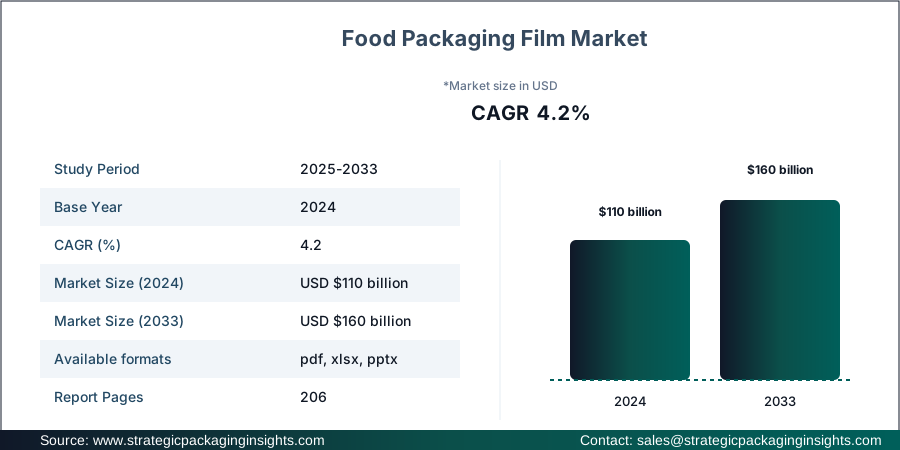
The food packaging film market was valued at $110 billion in 2024 and is projected to reach $160 billion by 2033, growing at a CAGR of 4.2% during the forecast period 2025-2033. This growth is driven by increasing consumer demand for convenient and sustainable packaging solutions, coupled with advancements in packaging technologies. The rise in e-commerce and online food delivery services has further fueled the demand for effective food packaging films that ensure product safety and extend shelf life. Additionally, the growing awareness of food safety and hygiene among consumers is pushing manufacturers to innovate and develop packaging films that offer superior barrier properties and are environmentally friendly.
Report Scope
| Attributes | Details |
| Report Title | Food Packaging Film Market Size, Future Growth and Forecast 2033 |
| Material | Plastic, Paper, Aluminum |
| Application | Dairy Products, Bakery & Confectionery |
| Technology | Flexible, Rigid |
| Region | Asia Pacific, North America |
| Base Year | 2024 |
| Historic Period | 2017-2023 |
| Forecast Period | 2025-2033 |
| Number of Pages | 206 |
| Customization Available | Yes* |
Opportunities & Threats
One of the significant opportunities in the food packaging film market is the increasing consumer preference for sustainable and eco-friendly packaging solutions. As environmental concerns continue to rise, consumers are becoming more conscious of the impact of packaging waste on the environment. This shift in consumer behavior is driving manufacturers to develop biodegradable and recyclable packaging films, which not only reduce environmental impact but also enhance brand image. Furthermore, the growing trend of clean labeling and transparency in food packaging is creating opportunities for innovative packaging solutions that provide clear information about the product, thereby building consumer trust and loyalty.
Another opportunity lies in the technological advancements in packaging materials and processes. The development of smart packaging films that incorporate sensors and indicators to monitor the freshness and quality of food products is gaining traction. These intelligent packaging solutions not only enhance food safety but also reduce food waste by providing real-time information about the product's condition. Additionally, the integration of nanotechnology in packaging films is opening new avenues for improving barrier properties and extending the shelf life of perishable food items. As a result, companies investing in research and development to create advanced packaging solutions are likely to gain a competitive edge in the market.
However, the food packaging film market faces challenges from stringent regulations and standards imposed by governments and regulatory bodies. Compliance with food safety and environmental regulations can be complex and costly for manufacturers, particularly for small and medium-sized enterprises. The need to adhere to various regional and international standards can also limit the market entry for new players. Moreover, the volatility in raw material prices, especially for plastic-based films, poses a threat to market growth. Manufacturers need to balance cost-effectiveness with sustainability, which can be challenging in a highly competitive market.
Drivers & Challenges
The primary driver of the food packaging film market is the increasing demand for convenience foods and ready-to-eat meals. As urbanization and busy lifestyles continue to rise, consumers are seeking quick and easy meal solutions, leading to a surge in demand for packaged food products. This trend is driving the need for effective packaging films that preserve the quality and freshness of food items while offering convenience to consumers. Additionally, the growth of the food and beverage industry, particularly in emerging economies, is boosting the demand for packaging films that cater to diverse product categories and consumer preferences.
Another significant driver is the growing focus on food safety and hygiene. With the increasing incidence of foodborne illnesses and contamination, consumers are prioritizing food safety, leading to a demand for packaging films that offer superior barrier properties and protection against external contaminants. The COVID-19 pandemic has further heightened awareness of hygiene and safety, prompting manufacturers to innovate and develop packaging solutions that ensure product integrity and safety throughout the supply chain. This focus on safety and quality is expected to drive the adoption of advanced packaging films in the coming years.
Despite these drivers, the food packaging film market faces challenges related to environmental sustainability and waste management. The widespread use of plastic-based films has raised concerns about plastic pollution and its impact on the environment. As a result, there is increasing pressure on manufacturers to develop sustainable alternatives that minimize environmental impact. The transition to eco-friendly packaging solutions requires significant investment in research and development, as well as changes in manufacturing processes, which can be challenging for companies with limited resources. Additionally, consumer resistance to higher costs associated with sustainable packaging options can hinder market growth.
Market Share Analysis
The competitive landscape of the food packaging film market is characterized by the presence of several key players who dominate the market with their extensive product portfolios and strong distribution networks. These companies are continuously investing in research and development to innovate and offer advanced packaging solutions that meet the evolving needs of consumers and regulatory requirements. The market is also witnessing strategic collaborations and partnerships among players to expand their market presence and enhance their product offerings.
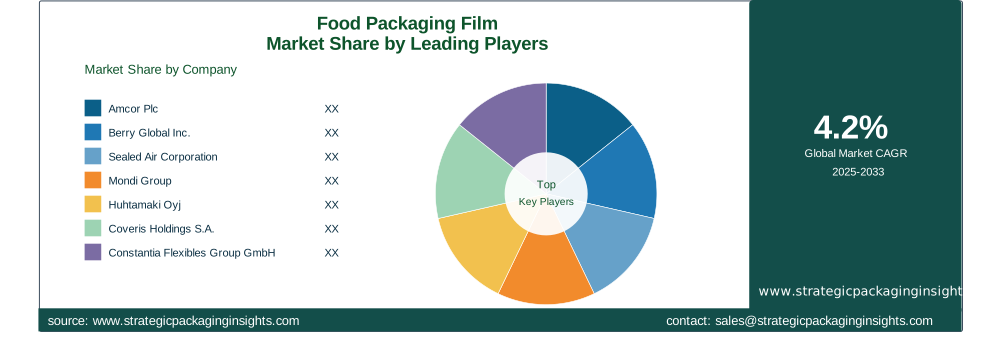
Among the major companies in the food packaging film market, Amcor Plc holds a significant market share due to its comprehensive range of packaging solutions and focus on sustainability. The company is known for its innovative products that cater to various food packaging needs, including flexible and rigid packaging films. Another key player, Berry Global Inc., is recognized for its extensive product portfolio and strong emphasis on sustainability and innovation. The company's commitment to reducing plastic waste and developing recyclable packaging solutions has strengthened its position in the market.
Sealed Air Corporation is another prominent player in the food packaging film market, known for its advanced packaging technologies and solutions that enhance food safety and extend shelf life. The company's focus on innovation and sustainability has enabled it to capture a significant share of the market. Additionally, Mondi Group is a leading player with a strong presence in the market, offering a wide range of packaging films that cater to various food and beverage applications. The company's emphasis on sustainable packaging solutions and its global reach have contributed to its market leadership.
Other notable companies in the market include Huhtamaki Oyj, known for its innovative and sustainable packaging solutions, and Coveris Holdings S.A., which offers a diverse range of packaging films for the food industry. These companies, along with others such as Constantia Flexibles Group GmbH and Sonoco Products Company, are actively engaged in expanding their product portfolios and enhancing their market presence through strategic acquisitions and partnerships. The competitive landscape is expected to remain dynamic, with companies focusing on innovation and sustainability to maintain their market positions.
Key Highlights
- The food packaging film market is projected to grow at a CAGR of 4.2% from 2025 to 2033.
- Increasing consumer demand for sustainable and eco-friendly packaging solutions is driving market growth.
- Technological advancements in packaging materials and processes are creating new opportunities for innovation.
- Stringent regulations and standards pose challenges for manufacturers in the market.
- The rise of e-commerce and online food delivery services is boosting demand for effective packaging films.
- Key players in the market are focusing on sustainability and innovation to maintain their competitive edge.
- The market is witnessing strategic collaborations and partnerships among players to expand their market presence.
Top Countries Insights
In the food packaging film market, the United States holds a significant market share, with a current market size of $25 billion and a CAGR of 3%. The country's growth is driven by the increasing demand for convenience foods and the presence of major food and beverage companies. Additionally, stringent food safety regulations and the growing focus on sustainability are influencing the adoption of advanced packaging solutions.
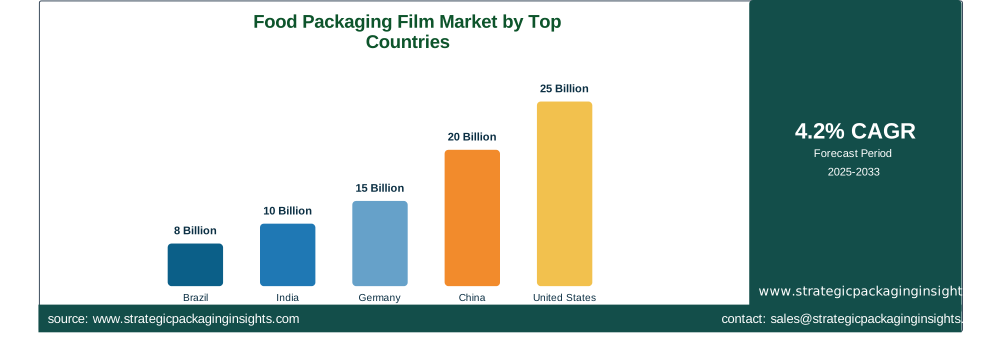
China is another key market, with a market size of $20 billion and a CAGR of 5%. The rapid urbanization and changing consumer lifestyles in the country are driving the demand for packaged food products, leading to increased adoption of packaging films. The government's initiatives to promote sustainable packaging and reduce plastic waste are also contributing to market growth.
Germany, with a market size of $15 billion and a CAGR of 4%, is a leading market in Europe. The country's strong focus on sustainability and innovation in packaging solutions is driving market growth. The presence of major packaging companies and the increasing demand for eco-friendly packaging options are further boosting the market.
India, with a market size of $10 billion and a CAGR of 6%, is experiencing significant growth in the food packaging film market. The rising middle-class population and increasing disposable incomes are driving the demand for packaged food products. The government's initiatives to promote food safety and hygiene are also contributing to market growth.
Brazil, with a market size of $8 billion and a CAGR of 4%, is a key market in Latin America. The growing demand for convenience foods and the increasing focus on food safety and hygiene are driving the adoption of packaging films. The presence of major food and beverage companies in the country is also contributing to market growth.
Food Packaging Film Market Segments Insights

Material Analysis
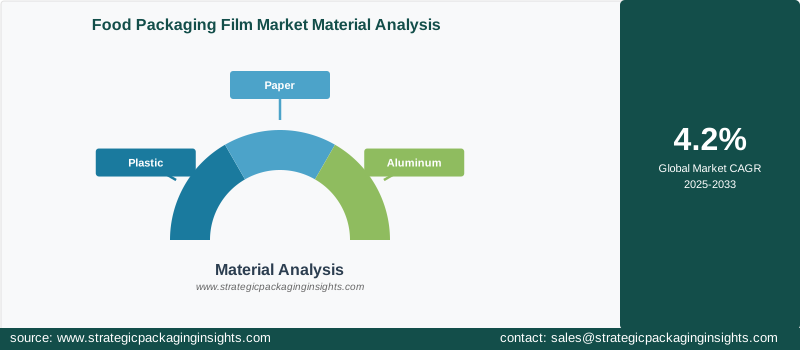
The material segment of the food packaging film market is dominated by plastic, which is widely used due to its versatility, durability, and cost-effectiveness. Plastic films offer excellent barrier properties, protecting food products from moisture, oxygen, and contaminants, thereby extending shelf life. However, the environmental impact of plastic waste is driving the demand for alternative materials such as paper and aluminum. Paper-based films are gaining popularity due to their biodegradability and recyclability, aligning with the growing consumer preference for sustainable packaging solutions. Aluminum films, known for their superior barrier properties, are also being adopted for packaging applications that require high protection against light, moisture, and oxygen.
The shift towards sustainable materials is further fueled by regulatory pressures and consumer demand for eco-friendly packaging options. Manufacturers are investing in research and development to create innovative materials that offer the benefits of traditional plastic films while minimizing environmental impact. The development of bio-based and compostable films is gaining traction, providing opportunities for companies to differentiate their products and meet the evolving needs of consumers and regulatory requirements. As the market continues to evolve, the material segment is expected to witness significant innovation and diversification.
Application Analysis
The application segment of the food packaging film market is diverse, catering to various food categories such as dairy products, bakery and confectionery, fruits and vegetables, meat, poultry, and seafood. The demand for packaging films in the dairy products segment is driven by the need to preserve freshness and extend shelf life, particularly for perishable items like cheese and yogurt. In the bakery and confectionery segment, packaging films play a crucial role in maintaining product quality and preventing contamination, while also providing attractive packaging designs that enhance brand appeal.
The fruits and vegetables segment is witnessing increased adoption of packaging films due to the growing demand for fresh and minimally processed produce. Packaging films help maintain the freshness and quality of fruits and vegetables by providing protection against moisture loss and microbial contamination. In the meat, poultry, and seafood segment, packaging films are essential for ensuring food safety and extending shelf life, particularly for products that require high barrier protection against oxygen and moisture. As consumer preferences continue to evolve, the application segment is expected to witness further diversification and innovation.
Technology Analysis
The technology segment of the food packaging film market is characterized by the use of flexible and rigid packaging solutions. Flexible packaging films are widely used due to their lightweight, cost-effectiveness, and versatility, making them suitable for a wide range of food products. These films offer excellent barrier properties and can be customized to meet specific packaging requirements, such as resealability and easy opening features. The demand for flexible packaging films is driven by the increasing consumer preference for convenience and portion control, as well as the growing focus on sustainability and waste reduction.
Rigid packaging films, on the other hand, are used for applications that require high protection and durability, such as packaging for fragile or heavy food items. These films offer superior strength and stability, making them suitable for products that require long shelf life and protection against external factors. The technology segment is witnessing advancements in materials and processes, with manufacturers focusing on developing innovative solutions that enhance product performance and sustainability. As the market continues to evolve, the technology segment is expected to witness further innovation and diversification.
Regional Analysis
The regional analysis of the food packaging film market reveals significant growth opportunities across various regions. In North America, the market is driven by the increasing demand for convenience foods and the presence of major food and beverage companies. The region's focus on sustainability and innovation in packaging solutions is also contributing to market growth. In Europe, the market is characterized by a strong emphasis on sustainability and eco-friendly packaging solutions, driven by stringent regulations and consumer demand for environmentally responsible products.
In the Asia Pacific region, the market is experiencing rapid growth due to the increasing urbanization and changing consumer lifestyles. The region's growing middle-class population and rising disposable incomes are driving the demand for packaged food products, leading to increased adoption of packaging films. In Latin America, the market is driven by the growing demand for convenience foods and the increasing focus on food safety and hygiene. The presence of major food and beverage companies in the region is also contributing to market growth. In the Middle East and Africa, the market is witnessing growth due to the increasing demand for packaged food products and the region's focus on improving food safety and quality standards.
Food Packaging Film Market Segments
The Food Packaging Film market has been segmented on the basis ofMaterial
- Plastic
- Paper
- Aluminum
Application
- Dairy Products
- Bakery & Confectionery
Technology
- Flexible
- Rigid
Region
- Asia Pacific
- North America




