


Aluminum Cans Market Outlook
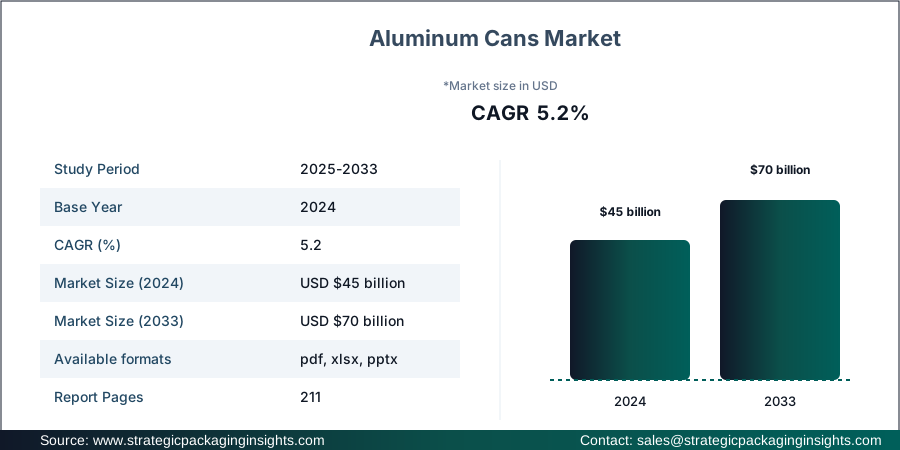
The aluminum cans market was valued at $45 billion in 2024 and is projected to reach $70 billion by 2033, growing at a CAGR of 5.2% during the forecast period 2025-2033. This growth trajectory is driven by the increasing demand for sustainable and recyclable packaging solutions, as aluminum cans are highly favored for their recyclability and lightweight properties. The beverage industry, in particular, is a significant contributor to this market, with a rising preference for canned beverages over plastic bottles due to environmental concerns. Additionally, the food industry is increasingly adopting aluminum cans for packaging due to their ability to preserve the freshness and quality of food products. The market is also witnessing innovations in can design and printing technologies, which are enhancing the aesthetic appeal and functionality of aluminum cans.
Report Scope
| Attributes | Details |
| Report Title | Aluminum Cans Market Size, Future Growth and Forecast 2033 |
| Material Type | Primary Aluminum, Recycled Aluminum |
| Application | Beverages, Food, Pharmaceuticals, Personal Care, Others |
| End-User | Beverage Industry, Food Industry, Pharmaceutical Industry, Personal Care Industry, Others |
| Region | Asia Pacific, North America, Latin America, Europe, Middle East & Africa |
| Base Year | 2024 |
| Historic Period | 2017-2023 |
| Forecast Period | 2025-2033 |
| Number of Pages | 211 |
| Customization Available | Yes* |
Opportunities & Threats
One of the primary opportunities in the aluminum cans market is the growing consumer preference for eco-friendly packaging solutions. As environmental awareness increases globally, consumers are actively seeking products that align with sustainable practices. Aluminum cans, being 100% recyclable, fit perfectly into this narrative, offering brands a chance to enhance their green credentials. Furthermore, the rise of the craft beverage industry, including craft beers and artisanal sodas, presents a lucrative opportunity for aluminum can manufacturers. These niche markets often prefer aluminum cans for their ability to preserve the taste and quality of beverages while offering a unique branding canvas.
Another significant opportunity lies in the technological advancements in can manufacturing and design. Innovations such as smart cans, which incorporate QR codes and augmented reality features, are gaining traction. These technologies not only enhance consumer engagement but also provide valuable data insights for brands. Additionally, the development of lightweight aluminum cans is reducing material costs and improving transportation efficiency, further boosting market growth. The expansion of e-commerce and direct-to-consumer sales channels also presents an opportunity for aluminum can manufacturers to reach a broader audience.
However, the aluminum cans market faces certain threats, primarily from the volatility in raw material prices. The cost of aluminum is subject to fluctuations due to geopolitical tensions, trade policies, and supply chain disruptions. Such volatility can impact the profitability of manufacturers and lead to increased product prices, potentially affecting demand. Additionally, the competition from alternative packaging materials, such as biodegradable plastics and glass, poses a threat to the aluminum cans market. These materials are also marketed as sustainable options, and their growing popularity could challenge the dominance of aluminum cans.
Drivers & Challenges
The aluminum cans market is primarily driven by the increasing demand for sustainable packaging solutions. As consumers become more environmentally conscious, there is a growing preference for packaging materials that are recyclable and have a lower environmental impact. Aluminum cans, being infinitely recyclable, are at the forefront of this trend. The beverage industry, in particular, is a major driver of this demand, with a shift towards canned beverages over plastic bottles. Additionally, the food industry is increasingly adopting aluminum cans for their ability to preserve the freshness and quality of food products, further driving market growth.
Another key driver is the advancements in can manufacturing technologies. Innovations in can design and printing technologies are enhancing the aesthetic appeal and functionality of aluminum cans. Smart cans, which incorporate QR codes and augmented reality features, are gaining traction, providing brands with new ways to engage consumers and gather valuable data insights. The development of lightweight aluminum cans is also reducing material costs and improving transportation efficiency, further boosting market growth. The expansion of e-commerce and direct-to-consumer sales channels is also driving demand for aluminum cans, as they offer a convenient and sustainable packaging solution.
Despite these drivers, the aluminum cans market faces several challenges. One of the primary challenges is the volatility in raw material prices. The cost of aluminum is subject to fluctuations due to geopolitical tensions, trade policies, and supply chain disruptions. Such volatility can impact the profitability of manufacturers and lead to increased product prices, potentially affecting demand. Additionally, the competition from alternative packaging materials, such as biodegradable plastics and glass, poses a challenge to the aluminum cans market. These materials are also marketed as sustainable options, and their growing popularity could challenge the dominance of aluminum cans.
Market Share Analysis
The aluminum cans market is characterized by a competitive landscape with several key players vying for market share. The market is dominated by a few large companies that have established themselves as leaders in the industry through extensive product portfolios, strong distribution networks, and strategic partnerships. These companies are continuously investing in research and development to innovate and improve their product offerings, thereby maintaining their competitive edge. The market is also witnessing the entry of new players, particularly in emerging markets, who are leveraging technological advancements and cost-effective manufacturing processes to gain a foothold in the industry.
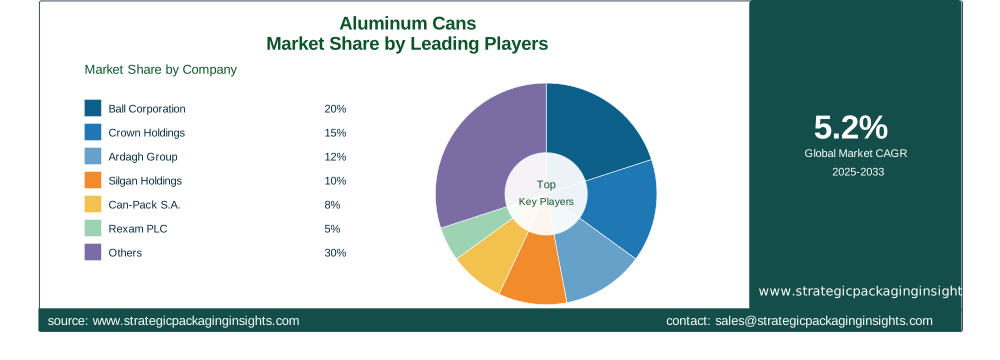
Among the major players in the aluminum cans market, Ball Corporation holds a significant market share. The company is known for its innovative product designs and sustainable packaging solutions. Ball Corporation has a strong presence in the beverage industry, supplying aluminum cans to leading beverage brands worldwide. Another key player is Crown Holdings, which offers a wide range of aluminum can products for various applications, including beverages, food, and personal care. Crown Holdings is recognized for its focus on sustainability and has implemented several initiatives to reduce its environmental impact.
Ardagh Group is another prominent player in the aluminum cans market, known for its extensive product portfolio and global reach. The company has a strong focus on innovation and sustainability, offering a range of lightweight and recyclable aluminum cans. Ardagh Group has established partnerships with leading beverage and food brands, further strengthening its market position. Additionally, Silgan Holdings is a notable player in the market, offering a diverse range of aluminum can products for the food and beverage industries. The company is committed to sustainability and has implemented several initiatives to reduce its carbon footprint.
Other significant players in the aluminum cans market include Can-Pack S.A., which is known for its high-quality aluminum can products and strong customer relationships. The company has a global presence and is continuously expanding its production capabilities to meet growing demand. Rexam PLC, a subsidiary of Ball Corporation, is also a key player in the market, offering a wide range of aluminum can products for various applications. The company is recognized for its focus on innovation and sustainability, providing environmentally friendly packaging solutions to its customers.
Key Highlights
- The aluminum cans market is projected to reach $70 billion by 2033, growing at a CAGR of 5.2% from 2025 to 2033.
- Increasing demand for sustainable and recyclable packaging solutions is driving market growth.
- The beverage industry is a significant contributor to the aluminum cans market, with a rising preference for canned beverages over plastic bottles.
- Technological advancements in can manufacturing and design are enhancing the aesthetic appeal and functionality of aluminum cans.
- Volatility in raw material prices poses a threat to the aluminum cans market.
- Competition from alternative packaging materials, such as biodegradable plastics and glass, is a challenge for the aluminum cans market.
- Key players in the market include Ball Corporation, Crown Holdings, Ardagh Group, and Silgan Holdings.
Top Countries Insights
The United States is one of the leading markets for aluminum cans, with a market size of $12 billion and a CAGR of 4%. The country's strong demand for canned beverages, driven by consumer preferences for sustainable packaging, is a key growth driver. Additionally, the presence of major beverage companies and a well-established recycling infrastructure further support market growth. However, the market faces challenges from the volatility in aluminum prices and competition from alternative packaging materials.
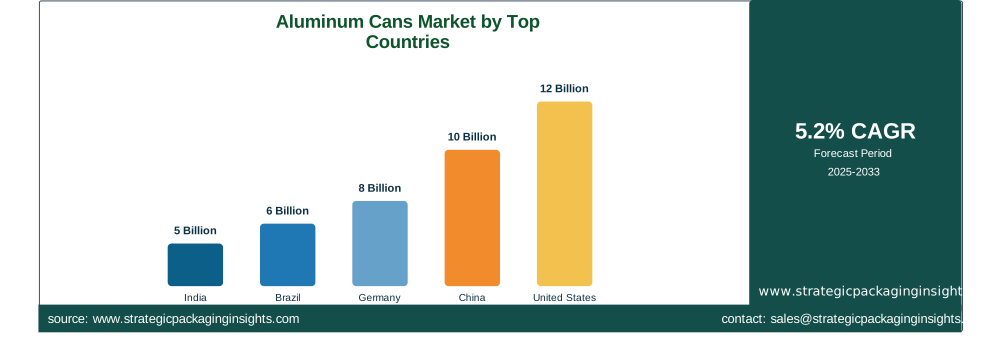
China is another significant market for aluminum cans, with a market size of $10 billion and a CAGR of 6%. The country's growing middle class and increasing consumption of canned beverages are driving demand for aluminum cans. Additionally, government initiatives to promote recycling and reduce plastic waste are supporting market growth. However, the market faces challenges from the high cost of raw materials and competition from other packaging materials.
Germany is a key market for aluminum cans in Europe, with a market size of $8 billion and a CAGR of 5%. The country's strong focus on sustainability and recycling is driving demand for aluminum cans. Additionally, the presence of major beverage companies and a well-established recycling infrastructure further support market growth. However, the market faces challenges from the volatility in aluminum prices and competition from alternative packaging materials.
Brazil is a growing market for aluminum cans, with a market size of $6 billion and a CAGR of 7%. The country's increasing consumption of canned beverages and government initiatives to promote recycling are driving demand for aluminum cans. Additionally, the presence of major beverage companies and a growing middle class further support market growth. However, the market faces challenges from the high cost of raw materials and competition from other packaging materials.
India is an emerging market for aluminum cans, with a market size of $5 billion and a CAGR of 8%. The country's growing middle class and increasing consumption of canned beverages are driving demand for aluminum cans. Additionally, government initiatives to promote recycling and reduce plastic waste are supporting market growth. However, the market faces challenges from the high cost of raw materials and competition from other packaging materials.
Aluminum Cans Market Segments Insights

Material Type Analysis
The aluminum cans market is segmented by material type into primary aluminum and recycled aluminum. Primary aluminum is extensively used in the production of aluminum cans due to its superior quality and strength. However, the use of recycled aluminum is gaining traction due to its environmental benefits and cost-effectiveness. Recycled aluminum requires significantly less energy to produce compared to primary aluminum, making it a more sustainable option. The increasing focus on sustainability and the circular economy is driving demand for recycled aluminum in the production of aluminum cans. Additionally, advancements in recycling technologies are improving the quality of recycled aluminum, further boosting its adoption in the market.

The demand for recycled aluminum is also driven by regulatory initiatives aimed at reducing carbon emissions and promoting recycling. Governments across the globe are implementing policies to encourage the use of recycled materials in packaging, which is positively impacting the aluminum cans market. Furthermore, the beverage industry is increasingly adopting recycled aluminum for can production, as it aligns with their sustainability goals and enhances their brand image. The growing consumer preference for eco-friendly packaging solutions is also contributing to the demand for recycled aluminum in the market.
Application Analysis
The aluminum cans market is segmented by application into beverages, food, pharmaceuticals, personal care, and others. The beverage segment is the largest application segment, driven by the increasing demand for canned beverages such as soft drinks, beer, and energy drinks. Aluminum cans are preferred in the beverage industry due to their ability to preserve the taste and quality of beverages, as well as their recyclability. The food segment is also witnessing significant growth, with aluminum cans being used for packaging a variety of food products, including canned fruits, vegetables, and ready-to-eat meals. The ability of aluminum cans to preserve the freshness and quality of food products is driving their adoption in the food industry.
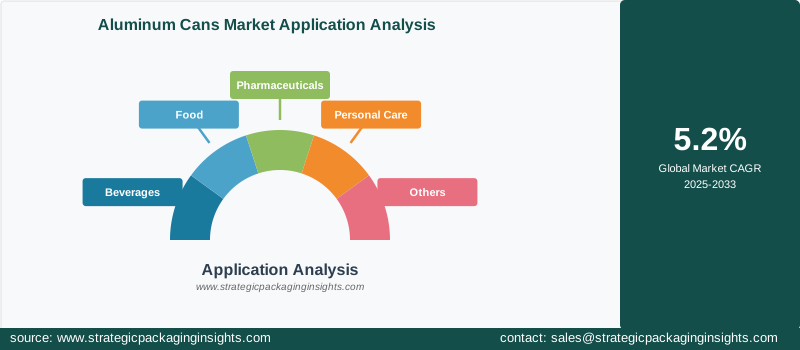
The pharmaceutical and personal care segments are also contributing to the growth of the aluminum cans market. Aluminum cans are used for packaging pharmaceutical products such as aerosols and ointments, as they provide a barrier against moisture and light, ensuring the stability and efficacy of the products. In the personal care industry, aluminum cans are used for packaging products such as deodorants and hair sprays, as they offer a convenient and durable packaging solution. The increasing demand for convenient and sustainable packaging solutions in these industries is driving the growth of the aluminum cans market.
End-User Analysis
The aluminum cans market is segmented by end-user into the beverage industry, food industry, pharmaceutical industry, personal care industry, and others. The beverage industry is the largest end-user segment, driven by the increasing demand for canned beverages. The shift towards canned beverages over plastic bottles is driven by consumer preferences for sustainable packaging solutions. The food industry is also a significant end-user of aluminum cans, with a growing demand for canned food products. The ability of aluminum cans to preserve the freshness and quality of food products is driving their adoption in the food industry.
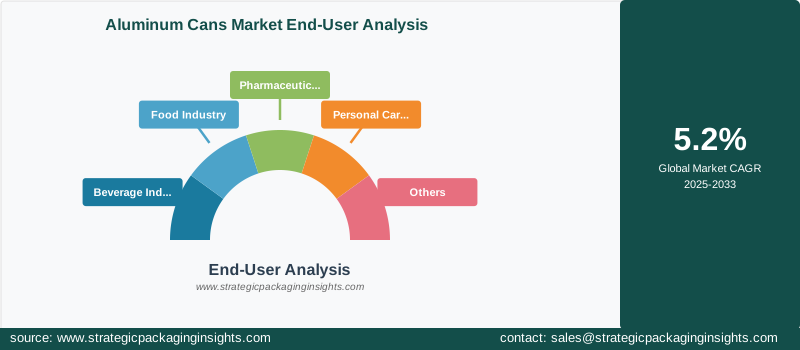
The pharmaceutical and personal care industries are also significant end-users of aluminum cans. In the pharmaceutical industry, aluminum cans are used for packaging products such as aerosols and ointments, as they provide a barrier against moisture and light, ensuring the stability and efficacy of the products. In the personal care industry, aluminum cans are used for packaging products such as deodorants and hair sprays, as they offer a convenient and durable packaging solution. The increasing demand for convenient and sustainable packaging solutions in these industries is driving the growth of the aluminum cans market.
Regional Market Intelligence
The aluminum cans market is segmented by region into North America, Europe, Asia Pacific, Latin America, and Middle East & Africa. North America is one of the leading markets for aluminum cans, driven by the strong demand for canned beverages and a well-established recycling infrastructure. The presence of major beverage companies and a focus on sustainability are also contributing to market growth. Europe is another significant market, with a strong focus on sustainability and recycling driving demand for aluminum cans. The presence of major beverage companies and a well-established recycling infrastructure further support market growth.
Asia Pacific is the fastest-growing market for aluminum cans, driven by the increasing consumption of canned beverages and government initiatives to promote recycling. The presence of major beverage companies and a growing middle class are also contributing to market growth. Latin America is a growing market for aluminum cans, with increasing consumption of canned beverages and government initiatives to promote recycling driving demand. The presence of major beverage companies and a growing middle class further support market growth. The Middle East & Africa is an emerging market for aluminum cans, with increasing consumption of canned beverages and government initiatives to promote recycling driving demand.
Aluminum Cans Market Segments
The Aluminum Cans market has been segmented on the basis ofMaterial Type
- Primary Aluminum
- Recycled Aluminum
Application
- Beverages
- Food
- Pharmaceuticals
- Personal Care
- Others
End-User
- Beverage Industry
- Food Industry
- Pharmaceutical Industry
- Personal Care Industry
- Others
Region
- Asia Pacific
- North America
- Latin America
- Europe
- Middle East & Africa




