


Flooring and Surface Systems Using High Durability PCR Market Outlook
The Flooring and Surface Systems Using High Durability PCR market was valued at $4.47 billion in 2025 and is projected to reach $8.15 billion by 2034, growing at a CAGR of 6.9% during the forecast period 2026-2034. This market is driven by the increasing demand for sustainable and eco-friendly flooring solutions, as consumers and industries alike are becoming more environmentally conscious. The use of post-consumer recycled (PCR) materials in flooring systems not only reduces environmental impact but also offers cost-effective solutions for large-scale applications. The market is witnessing significant growth due to advancements in recycling technologies and the development of high-performance materials that meet stringent durability and aesthetic standards.
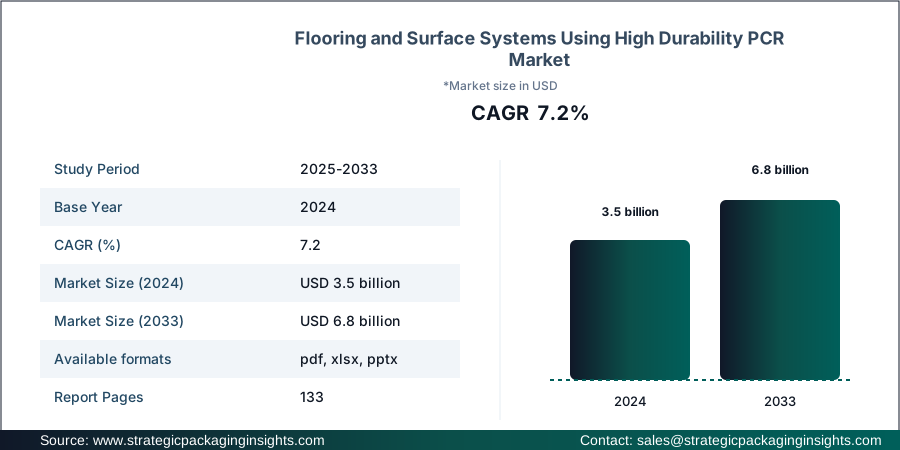
Despite the promising growth trajectory, the market faces challenges such as regulatory hurdles and the high initial cost of PCR materials compared to traditional options. However, the long-term benefits of durability and sustainability are expected to outweigh these initial costs, driving further adoption. The market potential is further enhanced by the increasing investments in infrastructure and construction projects worldwide, which are expected to boost demand for durable and sustainable flooring solutions. Additionally, the growing trend of green building certifications is likely to propel the market as more builders and developers seek to meet these standards.
Report Scope
| Attributes | Details |
| Report Title | Flooring and Surface Systems Using High Durability PCR Market Size, Future Growth and Forecast 2034 |
| By Material Type | PCR Vinyl, Recycled Polyolefin, Recycled Rubber Composites |
| By Product Type | Floor Tiles, Sheets, Surface Panels |
| By Application | Commercial Flooring, Industrial Surfaces, Retail Spaces |
| By End Use | Construction, Healthcare, Education, Retail |
| Region | Asia Pacific, North America, Latin America, Europe, Middle East & Africa |
| Base Year | 2025 |
| Historic Period | 2018-2024 |
| Forecast Period | 2026-2034 |
| Number of Pages | 167 |
| Customization Available | Yes* |
Opportunities & Threats
The Flooring and Surface Systems Using High Durability PCR market presents numerous opportunities, particularly in the realm of sustainable construction. As global awareness of environmental issues continues to rise, there is a growing demand for eco-friendly building materials. This trend is particularly strong in developed regions where regulatory frameworks support green building initiatives. The use of PCR materials in flooring systems aligns with these initiatives, offering a competitive edge to manufacturers who can provide certified sustainable products. Furthermore, the increasing urbanization and infrastructure development in emerging economies present a significant opportunity for market expansion, as these regions seek to adopt modern, sustainable building practices.
Another opportunity lies in technological advancements in recycling processes, which are making it more feasible to produce high-quality PCR materials at a lower cost. Innovations in material science are leading to the development of PCR flooring products that not only meet but exceed the performance of traditional materials. This opens up new markets and applications, particularly in sectors that require high durability and aesthetic appeal, such as commercial and retail spaces. Additionally, partnerships between manufacturers and recycling companies can streamline the supply chain, reducing costs and improving the availability of PCR materials.
However, the market is not without its threats. One of the primary challenges is the competition from traditional flooring materials, which are often cheaper and more readily available. Additionally, the market faces potential regulatory challenges, as different regions have varying standards and certifications for recycled materials. This can complicate the market entry for companies looking to expand internationally. Furthermore, the economic downturns and fluctuations in raw material prices can impact the profitability of PCR flooring products, posing a threat to market growth.
Drivers & Challenges
The primary drivers of the Flooring and Surface Systems Using High Durability PCR market include the increasing demand for sustainable building materials and the growing emphasis on reducing carbon footprints in construction. As consumers and businesses become more environmentally conscious, there is a significant push towards adopting green building practices. PCR flooring systems offer a viable solution by utilizing recycled materials, thus reducing waste and conserving natural resources. Additionally, the durability and low maintenance requirements of PCR flooring make it an attractive option for commercial and industrial applications, where long-term performance is a critical consideration.
Another key driver is the advancement in recycling technologies, which has significantly improved the quality and performance of PCR materials. These advancements have enabled manufacturers to produce flooring systems that are not only environmentally friendly but also meet the high standards of durability and aesthetics demanded by modern construction projects. The increasing availability of PCR materials and the development of innovative products are expected to drive market growth further. Moreover, government incentives and subsidies for green building projects are likely to boost the adoption of PCR flooring systems, providing a favorable environment for market expansion.
Despite these drivers, the market faces several challenges. One of the main challenges is the high initial cost of PCR materials compared to traditional flooring options. While the long-term benefits of durability and sustainability are clear, the upfront investment can be a barrier for some consumers and businesses. Additionally, the market is subject to fluctuations in raw material prices, which can impact the cost-effectiveness of PCR flooring systems. Another challenge is the lack of awareness and understanding of the benefits of PCR materials among consumers and builders, which can hinder market growth. Educating stakeholders about the advantages of PCR flooring systems is crucial to overcoming this challenge.
Market Share Analysis
The competitive landscape of the Flooring and Surface Systems Using High Durability PCR market is characterized by the presence of several key players who are actively engaged in product innovation and strategic partnerships to enhance their market position. Companies such as Tarkett, Interface, Mohawk Industries, and Shaw Industries are leading the market with their extensive product portfolios and strong distribution networks. These companies are focusing on developing high-performance PCR flooring solutions that cater to the diverse needs of commercial, industrial, and residential applications.
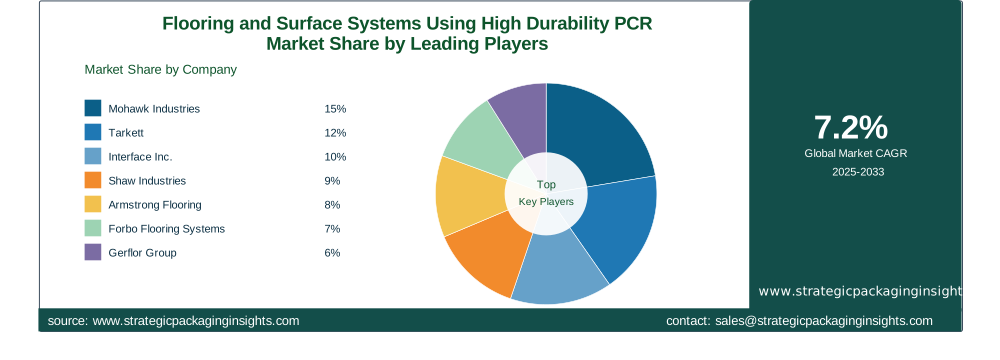
Tarkett, a global leader in innovative flooring solutions, holds a significant market share due to its commitment to sustainability and continuous product innovation. The company offers a wide range of PCR flooring products that are designed to meet the highest standards of durability and environmental performance. Interface, another major player, is renowned for its modular carpet tiles made from recycled materials. The company's focus on sustainability and design innovation has helped it maintain a strong market presence.
Mohawk Industries and Shaw Industries are also prominent players in the market, known for their comprehensive range of flooring products that include PCR options. These companies have invested heavily in research and development to enhance the performance and aesthetic appeal of their products. Gerflor and Forbo Flooring are other notable companies that have made significant strides in the PCR flooring market, offering innovative solutions that cater to the growing demand for sustainable building materials.
Armstrong Flooring, Milliken, Nora Systems, and Mannington Mills are also key contributors to the market, each with their unique offerings and strategic initiatives aimed at capturing a larger market share. These companies are leveraging their expertise in flooring solutions to develop PCR products that meet the evolving needs of the construction industry. The competitive landscape is further enriched by the presence of several regional players who are focusing on niche markets and customized solutions to gain a competitive edge.
Key Highlights
- The market is projected to grow from $4.47 billion in 2025 to $8.15 billion by 2034, at a CAGR of 6.9%.
- Increasing demand for sustainable and eco-friendly flooring solutions is a major market driver.
- Technological advancements in recycling processes are enhancing the quality of PCR materials.
- Regulatory frameworks supporting green building initiatives are boosting market growth.
- High initial costs of PCR materials pose a challenge to market expansion.
- Key players include Tarkett, Interface, Mohawk Industries, and Shaw Industries.
- Partnerships between manufacturers and recycling companies are streamlining supply chains.
- Growing urbanization and infrastructure development in emerging economies present significant opportunities.
- Government incentives for green building projects are likely to boost adoption of PCR flooring systems.
Top Countries Insights
In the Flooring and Surface Systems Using High Durability PCR market, the United States stands out as a leading country, with a market size of approximately $1.2 billion and a CAGR of 7%. The country's strong regulatory framework supporting sustainable building practices and the high demand for eco-friendly construction materials are key growth drivers. Additionally, the presence of major market players and continuous innovation in recycling technologies contribute to the market's expansion.
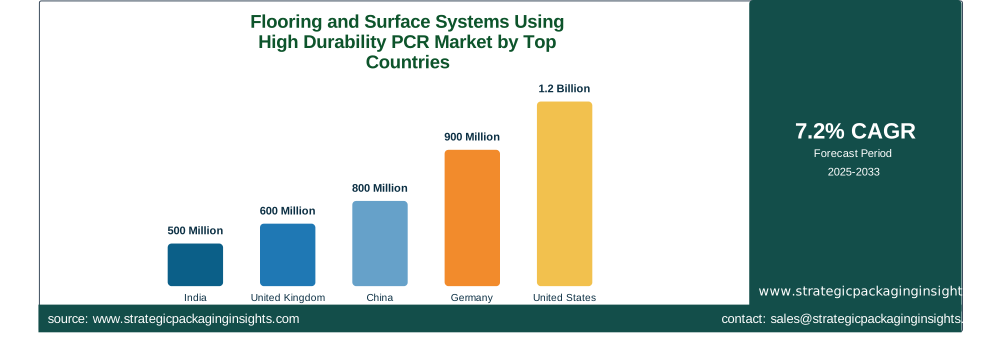
Germany is another significant player in the market, with a market size of around $900 million and a CAGR of 6%. The country's commitment to environmental sustainability and stringent building regulations drive the demand for PCR flooring systems. The German market benefits from a well-established recycling infrastructure and a strong focus on green building certifications, which are crucial for market growth.
China, with a market size of approximately $800 million and a CAGR of 8%, is experiencing rapid growth in the PCR flooring market. The country's booming construction industry and increasing urbanization are major growth drivers. Additionally, government initiatives promoting sustainable development and the adoption of green building practices are expected to boost the market further.
The United Kingdom, with a market size of about $700 million and a CAGR of 5%, is also a key market for PCR flooring systems. The country's focus on reducing carbon emissions and promoting sustainable construction practices drives the demand for eco-friendly building materials. The UK's strong regulatory framework and incentives for green building projects further support market growth.
India, with a market size of around $600 million and a CAGR of 9%, is emerging as a significant market for PCR flooring systems. The country's rapid urbanization and infrastructure development, coupled with increasing awareness of environmental sustainability, are key growth drivers. Government policies promoting the use of recycled materials in construction are expected to further boost the market.
Flooring and Surface Systems Using High Durability PCR Market Segments Insights

By Material Type Analysis
The Flooring and Surface Systems Using High Durability PCR market is segmented by material type into PCR vinyl, recycled polyolefin, and recycled rubber composites. PCR vinyl is the most widely used material due to its excellent durability and aesthetic appeal. It is particularly popular in commercial and industrial applications where high performance and low maintenance are critical. The demand for PCR vinyl is driven by its ability to mimic the appearance of natural materials while offering superior resistance to wear and tear.
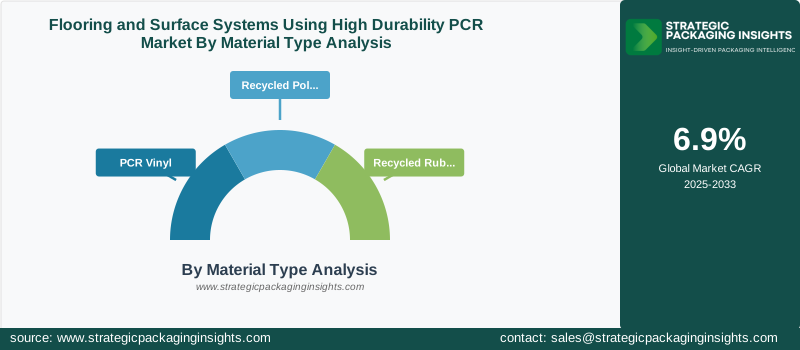
Recycled polyolefin is gaining traction in the market due to its cost-effectiveness and versatility. This material is used in a variety of applications, including residential and commercial flooring, where it provides a balance of performance and affordability. The increasing focus on sustainability and the development of advanced recycling technologies are expected to drive the demand for recycled polyolefin in the coming years.
Recycled rubber composites are also an important segment of the market, offering unique benefits such as shock absorption and slip resistance. These properties make them ideal for use in sports facilities, gyms, and other high-impact environments. The growing awareness of the environmental benefits of using recycled rubber in flooring systems is expected to boost demand in this segment.
By Product Type Analysis
The market is further segmented by product type into floor tiles, sheets, and surface panels. Floor tiles are the most popular product type, offering a wide range of design options and easy installation. They are widely used in both residential and commercial applications, where aesthetics and functionality are equally important. The demand for floor tiles is driven by their versatility and the increasing trend of modular flooring solutions.
Sheets are another significant product type, offering seamless installation and superior durability. They are particularly popular in industrial and healthcare settings, where hygiene and ease of maintenance are critical considerations. The demand for sheets is expected to grow as more industries adopt sustainable flooring solutions that meet stringent performance standards.
Surface panels are gaining popularity in the market due to their ability to provide a continuous, uniform appearance. They are used in a variety of applications, including retail spaces and commercial interiors, where aesthetics and durability are key considerations. The development of innovative surface panel designs and materials is expected to drive growth in this segment.
By Application Analysis
The Flooring and Surface Systems Using High Durability PCR market is segmented by application into commercial flooring, industrial surfaces, and retail spaces. Commercial flooring is the largest application segment, driven by the increasing demand for durable and aesthetically pleasing flooring solutions in office buildings, hotels, and other commercial establishments. The trend towards open-plan office spaces and the need for flexible, modular flooring solutions are key drivers of demand in this segment.
Industrial surfaces are another important application segment, where the focus is on durability and performance. PCR flooring systems are ideal for use in manufacturing facilities, warehouses, and other industrial environments where heavy machinery and high foot traffic are common. The demand for industrial surfaces is driven by the need for flooring solutions that can withstand harsh conditions and provide long-term performance.
Retail spaces are also a significant application segment, where aesthetics and customer experience are key considerations. PCR flooring systems offer a wide range of design options that can enhance the visual appeal of retail environments while providing the durability needed to withstand high foot traffic. The growing trend of experiential retail and the need for unique, engaging store designs are expected to drive demand in this segment.
By End Use Analysis
The market is segmented by end use into construction, healthcare, education, and retail. The construction sector is the largest end-use segment, driven by the increasing demand for sustainable building materials in residential and commercial projects. The trend towards green building certifications and the need for eco-friendly construction solutions are key drivers of demand in this segment.
The healthcare sector is another important end-use segment, where the focus is on hygiene and durability. PCR flooring systems are ideal for use in hospitals, clinics, and other healthcare facilities where cleanliness and ease of maintenance are critical considerations. The demand for healthcare flooring solutions is driven by the need for materials that can withstand frequent cleaning and provide a safe, hygienic environment.
The education sector is also a significant end-use segment, where the focus is on creating safe, engaging learning environments. PCR flooring systems offer a range of design options that can enhance the aesthetic appeal of educational facilities while providing the durability needed to withstand high foot traffic. The growing trend of modern, flexible learning spaces is expected to drive demand in this segment.
Flooring and Surface Systems Using High Durability PCR Market Segments
The Flooring and Surface Systems Using High Durability PCR market has been segmented on the basis ofBy Material Type
- PCR Vinyl
- Recycled Polyolefin
- Recycled Rubber Composites
By Product Type
- Floor Tiles
- Sheets
- Surface Panels
By Application
- Commercial Flooring
- Industrial Surfaces
- Retail Spaces
By End Use
- Construction
- Healthcare
- Education
- Retail
Region
- Asia Pacific
- North America
- Latin America
- Europe
- Middle East & Africa




