


Transparent rPET Market for Beverage Outlook
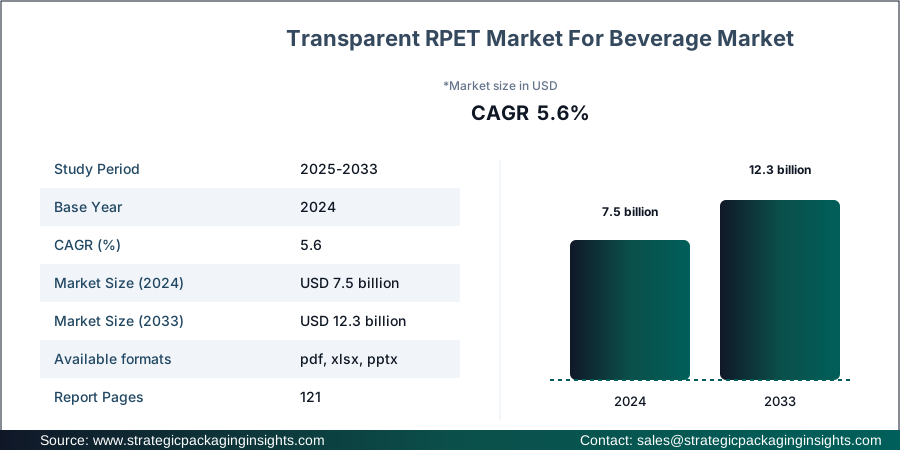
The Transparent rPET Market for Beverage was valued at $7.5 billion in 2024 and is projected to reach $12.3 billion by 2033, growing at a CAGR of 5.6% during the forecast period 2025-2033. This growth is driven by increasing consumer demand for sustainable packaging solutions, as well as regulatory pressures to reduce plastic waste. The beverage industry, being one of the largest consumers of plastic packaging, is rapidly adopting recycled PET (rPET) to meet these demands. The market is also benefiting from technological advancements in recycling processes, which have improved the quality and clarity of rPET, making it more appealing for beverage packaging applications.
Report Scope
| Attributes | Details |
| Report Title | Transparent rPET Market for Beverage Size, Future Growth and Forecast 2033 |
| Material Type | Bottles, Films |
| Application | Carbonated Soft Drinks, Water |
| End-User | Beverage Manufacturers, Retailers |
| Region | North America, Europe |
| Base Year | 2024 |
| Historic Period | 2017-2023 |
| Forecast Period | 2025-2033 |
| Number of Pages | 121 |
| Customization Available | Yes* |
Opportunities & Threats
One of the significant opportunities in the Transparent rPET Market for Beverage is the growing consumer preference for eco-friendly products. As awareness about environmental issues increases, consumers are more inclined to choose products that are packaged sustainably. This shift in consumer behavior is encouraging beverage companies to adopt rPET, which is perceived as a more environmentally friendly option compared to virgin PET. Additionally, the development of advanced recycling technologies is enabling the production of high-quality rPET that meets the stringent requirements of beverage packaging, further expanding its market potential.
Another opportunity lies in the regulatory landscape that is increasingly favoring recycled materials. Governments across the globe are implementing policies and regulations that mandate the use of recycled content in packaging. For instance, the European Union's directive on single-use plastics aims to increase the use of recycled materials in packaging, which is expected to drive the demand for rPET in the beverage industry. This regulatory push is creating a favorable environment for the growth of the rPET market, as beverage companies strive to comply with these regulations and enhance their sustainability credentials.
However, the market faces challenges such as the high cost of recycling processes and the limited availability of high-quality rPET. The recycling process for PET is complex and requires significant investment in technology and infrastructure, which can drive up costs. Additionally, the supply of high-quality rPET is constrained by the availability of suitable feedstock, as not all PET waste is suitable for recycling into food-grade rPET. These factors can limit the growth of the market, as beverage companies may be hesitant to switch to rPET if it significantly increases their packaging costs.
Drivers & Challenges
The primary driver of the Transparent rPET Market for Beverage is the increasing demand for sustainable packaging solutions. As consumers become more environmentally conscious, there is a growing preference for products that are packaged in materials that have a lower environmental impact. rPET, being a recycled material, fits this demand perfectly, as it reduces the need for virgin plastic production and helps in managing plastic waste. This consumer-driven demand is compelling beverage companies to incorporate more rPET into their packaging solutions, thereby driving market growth.
Technological advancements in recycling processes are also a significant driver of the market. Innovations in recycling technology have improved the quality and clarity of rPET, making it more suitable for use in beverage packaging. These advancements have addressed some of the quality concerns associated with recycled materials, making rPET a viable alternative to virgin PET. As a result, beverage companies are increasingly adopting rPET to meet both consumer demand and regulatory requirements, further propelling market growth.
Despite these drivers, the market faces challenges such as the high cost of recycling and the limited availability of high-quality rPET. The recycling process for PET is capital-intensive and requires significant investment in technology and infrastructure. This can increase the cost of rPET, making it less competitive compared to virgin PET. Additionally, the supply of high-quality rPET is limited by the availability of suitable feedstock, as not all PET waste is suitable for recycling into food-grade rPET. These challenges can hinder the growth of the market, as beverage companies may be reluctant to switch to rPET if it significantly increases their packaging costs.
Market Share Analysis
The competitive landscape of the Transparent rPET Market for Beverage is characterized by the presence of several key players who are actively investing in research and development to enhance the quality and performance of rPET. These companies are focusing on expanding their production capacities and improving their recycling technologies to meet the growing demand for rPET in the beverage industry. The market is also witnessing strategic collaborations and partnerships among players to strengthen their market position and expand their geographical reach.
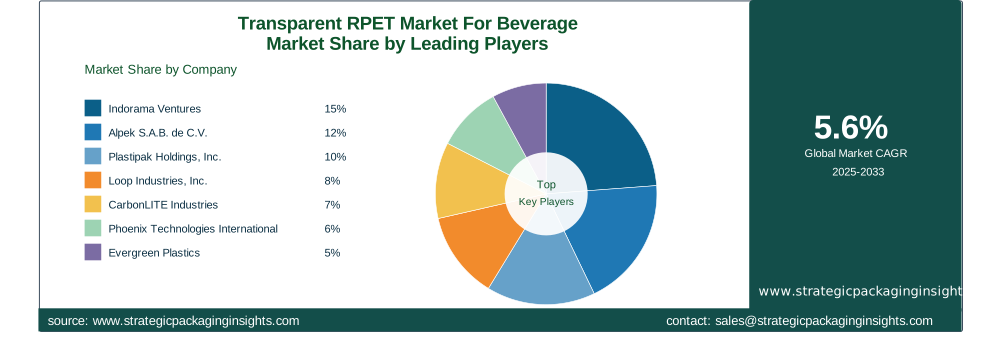
Some of the major companies operating in this market include Indorama Ventures, Alpek S.A.B. de C.V., Plastipak Holdings, Inc., and Loop Industries, Inc. These companies are leading the market with their extensive product portfolios and strong distribution networks. Indorama Ventures, for instance, is one of the largest producers of rPET globally, with a significant presence in the beverage packaging market. The company is continuously investing in expanding its recycling capabilities to meet the increasing demand for sustainable packaging solutions.
Alpek S.A.B. de C.V. is another key player in the market, known for its advanced recycling technologies and high-quality rPET products. The company has a strong presence in the Americas and is actively expanding its operations in other regions to capitalize on the growing demand for rPET. Plastipak Holdings, Inc. is also a prominent player in the market, with a focus on innovation and sustainability. The company has developed several patented technologies for recycling PET, which have enhanced the quality and performance of its rPET products.
Loop Industries, Inc. is a relatively new entrant in the market but has quickly gained prominence due to its innovative recycling technology. The company's proprietary process allows for the production of high-quality rPET from low-value PET waste, making it a key player in the market. Other notable companies in the market include CarbonLITE Industries, Phoenix Technologies International, and Evergreen Plastics, which are also investing in expanding their recycling capabilities and enhancing the quality of their rPET products.
Key Highlights
- Transparent rPET Market for Beverage is projected to grow at a CAGR of 5.6% from 2025 to 2033.
- Increasing consumer demand for sustainable packaging is a major driver of market growth.
- Regulatory mandates for recycled content in packaging are creating opportunities for rPET adoption.
- Technological advancements in recycling processes are improving the quality of rPET.
- High cost of recycling and limited availability of high-quality rPET are key challenges.
- Major players are investing in expanding their recycling capabilities and enhancing product quality.
- Strategic collaborations and partnerships are common in the market to strengthen market position.
- Indorama Ventures, Alpek S.A.B. de C.V., and Plastipak Holdings, Inc. are leading players in the market.
- Loop Industries, Inc. is gaining prominence with its innovative recycling technology.
- The market is witnessing a shift towards more sustainable and eco-friendly packaging solutions.
Top Countries Insights
In the Transparent rPET Market for Beverage, the United States is a leading country with a market size of $2.1 billion and a CAGR of 6%. The country's growth is driven by strong consumer demand for sustainable packaging and favorable regulatory policies that encourage the use of recycled materials. The presence of major beverage companies and advanced recycling infrastructure further supports market growth.
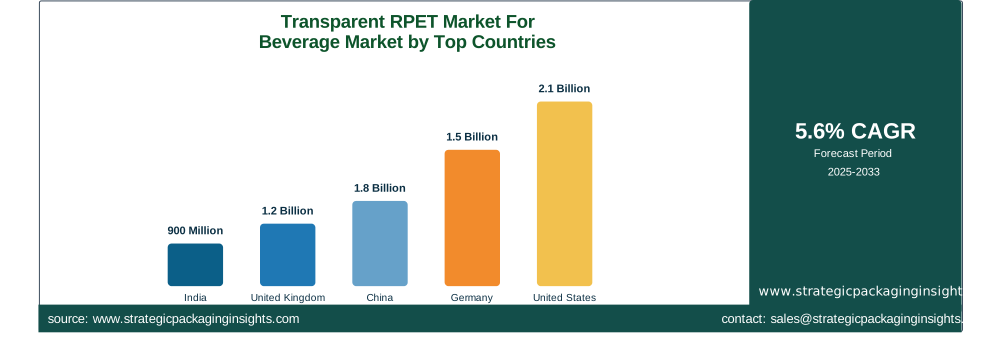
Germany is another key market, with a market size of $1.5 billion and a CAGR of 5%. The country's stringent environmental regulations and strong consumer preference for eco-friendly products are driving the demand for rPET. Germany's well-established recycling infrastructure and government incentives for sustainable packaging are also contributing to market growth.
China is experiencing rapid growth in the rPET market, with a market size of $1.8 billion and a CAGR of 7%. The country's large population and increasing awareness about environmental issues are driving the demand for sustainable packaging solutions. Government initiatives to reduce plastic waste and promote recycling are also supporting market growth.
The United Kingdom is a significant market for rPET, with a market size of $1.2 billion and a CAGR of 5%. The country's strong focus on sustainability and circular economy principles is driving the adoption of rPET in the beverage industry. Government policies that mandate the use of recycled content in packaging are also contributing to market growth.
India is an emerging market for rPET, with a market size of $900 million and a CAGR of 8%. The country's growing middle class and increasing awareness about environmental issues are driving the demand for sustainable packaging solutions. Government initiatives to promote recycling and reduce plastic waste are also supporting market growth.
Transparent rPET Market for Beverage Segments Insights

Material Type Analysis
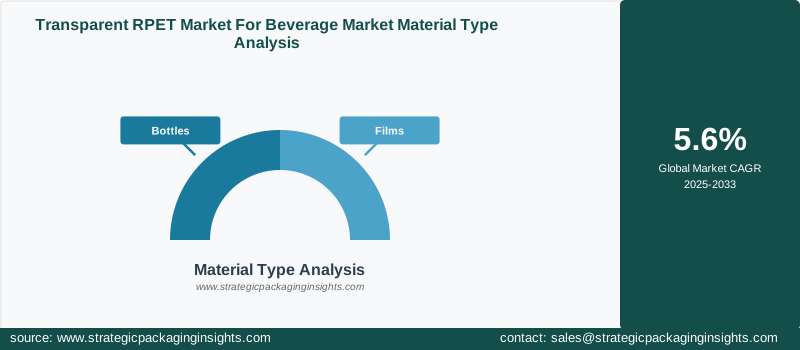
The material type segment of the Transparent rPET Market for Beverage is primarily divided into bottles, films, and others. Bottles are the most significant sub-segment, driven by the high demand for bottled beverages such as water, carbonated drinks, and juices. The clarity and strength of rPET make it an ideal material for beverage bottles, which require durability and aesthetic appeal. The films sub-segment is also gaining traction, particularly for packaging applications that require flexibility and transparency. The demand for rPET films is driven by their use in shrink wraps and labels, which are essential components of beverage packaging.
The increasing focus on sustainability and the circular economy is driving the demand for rPET in the beverage industry. Beverage manufacturers are increasingly adopting rPET bottles to meet consumer demand for eco-friendly packaging. The development of advanced recycling technologies has improved the quality of rPET, making it a viable alternative to virgin PET. This trend is expected to continue, with more beverage companies incorporating rPET into their packaging solutions to enhance their sustainability credentials and comply with regulatory requirements.
Application Analysis
The application segment of the Transparent rPET Market for Beverage includes carbonated soft drinks, water, juices, and others. The water sub-segment is the largest, driven by the high consumption of bottled water worldwide. The demand for rPET in this sub-segment is fueled by the increasing consumer preference for sustainable packaging and the regulatory push for recycled content in beverage packaging. Carbonated soft drinks are another significant application, with beverage companies increasingly adopting rPET bottles to reduce their environmental impact and meet consumer demand for eco-friendly products.
The juices sub-segment is also witnessing growth, as consumers become more health-conscious and demand natural and organic beverages. The use of rPET in juice packaging is driven by the need for high-quality, transparent packaging that preserves the freshness and flavor of the product. The others sub-segment includes applications such as sports drinks and energy drinks, where the demand for rPET is driven by similar factors. Overall, the application segment is expected to witness significant growth, as more beverage companies adopt rPET to meet consumer demand and regulatory requirements.
End-User Analysis
The end-user segment of the Transparent rPET Market for Beverage includes beverage manufacturers, retailers, and others. Beverage manufacturers are the largest end-users, driven by the need to meet consumer demand for sustainable packaging and comply with regulatory requirements. The adoption of rPET by beverage manufacturers is fueled by the increasing focus on sustainability and the circular economy, as well as the availability of high-quality rPET that meets the stringent requirements of beverage packaging.
Retailers are also significant end-users, as they play a crucial role in promoting sustainable packaging solutions to consumers. The demand for rPET by retailers is driven by the need to enhance their sustainability credentials and meet consumer demand for eco-friendly products. The others sub-segment includes end-users such as food service providers and hospitality businesses, where the demand for rPET is driven by similar factors. Overall, the end-user segment is expected to witness significant growth, as more companies adopt rPET to meet consumer demand and regulatory requirements.
Regional Analysis
The regional analysis of the Transparent rPET Market for Beverage reveals significant growth opportunities across different regions. North America is a leading market, driven by strong consumer demand for sustainable packaging and favorable regulatory policies. The presence of major beverage companies and advanced recycling infrastructure further supports market growth. Europe is another key market, with stringent environmental regulations and strong consumer preference for eco-friendly products driving the demand for rPET.
Asia Pacific is experiencing rapid growth, driven by the large population and increasing awareness about environmental issues. Government initiatives to reduce plastic waste and promote recycling are also supporting market growth. Latin America and the Middle East & Africa are emerging markets, with increasing consumer demand for sustainable packaging and government initiatives to promote recycling driving the demand for rPET. Overall, the regional analysis highlights significant growth opportunities for the Transparent rPET Market for Beverage, as more regions adopt sustainable packaging solutions to meet consumer demand and regulatory requirements.
Transparent RPET Market For Beverage Market Segments
The Transparent RPET Market For Beverage market has been segmented on the basis ofMaterial Type
- Bottles
- Films
Application
- Carbonated Soft Drinks
- Water
End-User
- Beverage Manufacturers
- Retailers
Region
- North America
- Europe




