


Deblistering Machine Market Outlook
The Deblistering Machine market was valued at $248.75 million in 2025 and is projected to reach $399.33 million by 2034, growing at a CAGR of 5.4% during the forecast period 2026-2034. This growth is driven by the increasing demand for efficient pharmaceutical packaging solutions, particularly in emerging markets where healthcare infrastructure is rapidly developing. The need for cost-effective and time-saving deblistering solutions is also propelling market expansion. Additionally, the rise in pharmaceutical production and the growing emphasis on recycling and sustainability are further boosting the demand for deblistering machines globally.
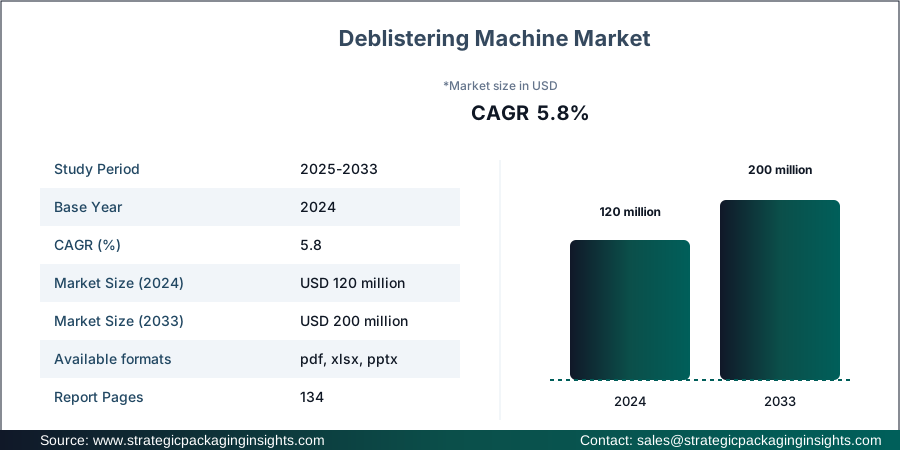
Report Scope
| Attributes | Details |
| Report Title | Deblistering Machine Market Size, Future Growth and Forecast 2034 |
| Machine Type | Manual, Semi-Automatic, Automatic |
| Output Type | Tablets, Capsules, Softgels |
| End Use | Pharma Manufacturers, Hospitals, Recycling Firms, CDMOs |
| Capacity | Low-Speed, Medium-Speed, High-Speed |
| Region | Asia Pacific, North America, Latin America, Europe, Middle East & Africa |
| Base Year | 2025 |
| Historic Period | 2018-2024 |
| Forecast Period | 2026-2034 |
| Number of Pages | 177 |
| Customization Available | Yes* |
Opportunities & Threats
One of the significant opportunities in the Deblistering Machine market lies in the increasing adoption of automation in pharmaceutical manufacturing processes. As the industry moves towards more automated solutions to enhance efficiency and reduce human error, the demand for automatic deblistering machines is expected to rise. These machines offer high-speed operations and precision, which are crucial for large-scale pharmaceutical production. Furthermore, the growing trend of personalized medicine and small-batch production presents an opportunity for manufacturers to develop machines that cater to these specific needs, thereby expanding their market reach.
Another opportunity is the expanding pharmaceutical sector in emerging economies. Countries in Asia Pacific and Latin America are witnessing significant growth in their pharmaceutical industries, driven by increasing healthcare expenditure and a growing population. This expansion creates a substantial demand for deblistering machines, as pharmaceutical companies in these regions seek efficient and reliable packaging solutions. Additionally, the increasing focus on sustainability and recycling in the pharmaceutical industry presents an opportunity for manufacturers to develop eco-friendly deblistering machines that align with these environmental goals.
However, the market faces certain restraints, such as the high initial cost of deblistering machines, which can be a barrier for small and medium-sized enterprises. These companies may find it challenging to invest in advanced machinery due to budget constraints. Additionally, the complexity of operating and maintaining these machines requires skilled personnel, which can be a challenge in regions with a shortage of trained workforce. Furthermore, stringent regulatory requirements in the pharmaceutical industry can pose challenges for manufacturers in terms of compliance and certification, potentially hindering market growth.
Drivers & Challenges
The primary driver of the Deblistering Machine market is the increasing demand for efficient and reliable pharmaceutical packaging solutions. As the pharmaceutical industry continues to grow, there is a heightened need for machines that can quickly and accurately deblister tablets, capsules, and softgels. This demand is further fueled by the rising production of generic drugs, which require cost-effective packaging solutions. Additionally, the growing emphasis on reducing medication errors and improving patient safety is driving the adoption of advanced deblistering machines that offer precision and reliability.
Another significant driver is the technological advancements in deblistering machines. Manufacturers are continuously innovating to develop machines that offer higher speed, greater accuracy, and enhanced user-friendliness. The integration of automation and digital technologies in these machines is enabling pharmaceutical companies to streamline their operations and improve efficiency. Moreover, the increasing focus on sustainability and waste reduction in the pharmaceutical industry is driving the demand for machines that can efficiently recycle blister packs, thereby reducing environmental impact.
Despite these drivers, the market faces challenges such as the high cost of advanced deblistering machines, which can be prohibitive for smaller companies. Additionally, the complexity of these machines requires skilled operators, which can be a challenge in regions with a shortage of trained personnel. Furthermore, the stringent regulatory environment in the pharmaceutical industry can pose challenges for manufacturers in terms of compliance and certification. These factors can hinder the adoption of deblistering machines, particularly in smaller markets with limited resources.
Market Share Analysis
The Deblistering Machine market is characterized by a competitive landscape with several key players vying for market share. Companies such as Sepha, Omnicell, Pharma Technology, Uhlmann Pac-Systeme, and Romaco are prominent players in this market, each offering a range of deblistering solutions tailored to different customer needs. Sepha, for instance, is known for its innovative deblistering machines that cater to both small and large-scale pharmaceutical operations. Omnicell, on the other hand, focuses on automation and integration, providing solutions that enhance efficiency and reduce operational costs.
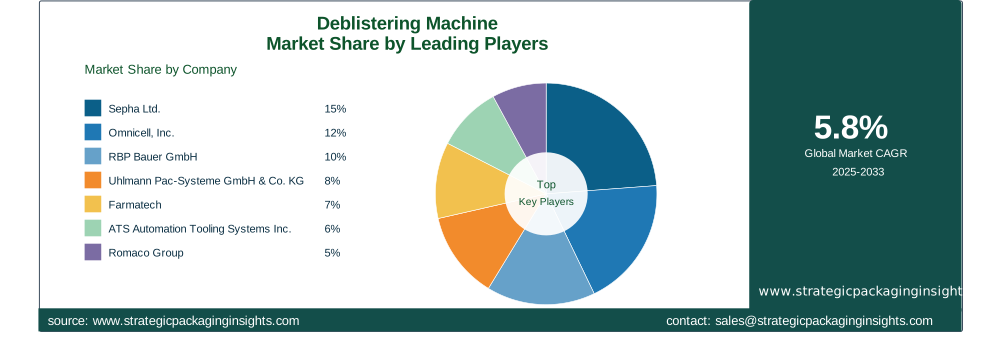
Pharma Technology is another key player, offering a wide range of deblistering machines that are designed for high-speed operations and precision. The company's focus on innovation and customer satisfaction has helped it maintain a strong presence in the market. Uhlmann Pac-Systeme, a leader in pharmaceutical packaging solutions, offers advanced deblistering machines that are known for their reliability and efficiency. The company's commitment to quality and innovation has made it a preferred choice for many pharmaceutical companies worldwide.
Romaco, a global leader in processing and packaging technology, offers a range of deblistering machines that are designed to meet the diverse needs of the pharmaceutical industry. The company's focus on sustainability and eco-friendly solutions has helped it gain a competitive edge in the market. Stripfoil Deblistering, RBP Bauer, ACG, Jornen Machinery, and SaintyCo are other notable players in the market, each offering unique solutions that cater to different segments of the pharmaceutical industry.
Overall, the competitive landscape of the Deblistering Machine market is shaped by innovation, customer focus, and the ability to offer tailored solutions that meet the specific needs of pharmaceutical companies. As the market continues to grow, companies that can offer advanced, efficient, and eco-friendly solutions are likely to gain a competitive advantage and capture a larger share of the market.
Key Highlights
- The Deblistering Machine market is projected to grow at a CAGR of 5.4% from 2026 to 2034.
- Increasing demand for automated deblistering solutions is driving market growth.
- Emerging markets in Asia Pacific and Latin America present significant growth opportunities.
- High initial costs and regulatory challenges are key restraints in the market.
- Technological advancements are leading to the development of more efficient and eco-friendly machines.
- Key players in the market include Sepha, Omnicell, Pharma Technology, and Uhlmann Pac-Systeme.
- The market is characterized by a competitive landscape with a focus on innovation and customer satisfaction.
Top Countries Insights
In the Deblistering Machine market, the United States holds a significant share due to its advanced pharmaceutical industry and high demand for efficient packaging solutions. The market in the U.S. is driven by technological advancements and the presence of major pharmaceutical companies. The CAGR for the U.S. market is projected at 6%, with a market size of approximately $120 million. The focus on automation and sustainability is a key growth driver in this region.
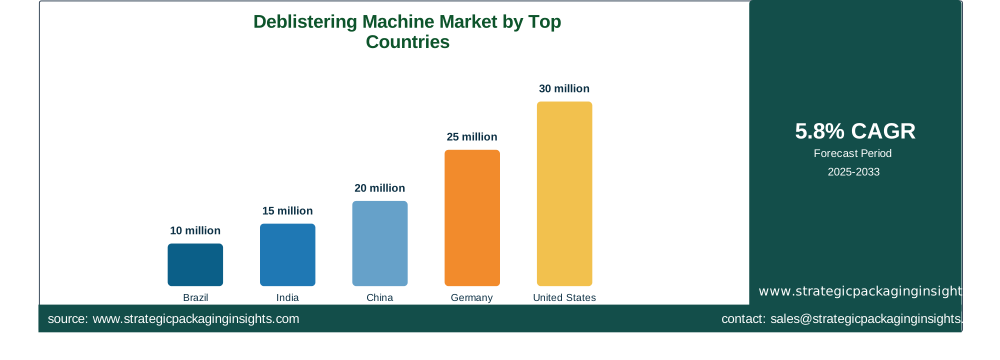
Germany is another leading market for deblistering machines, with a strong emphasis on innovation and quality. The country's well-established pharmaceutical sector and stringent regulatory standards drive the demand for advanced deblistering solutions. The German market is expected to grow at a CAGR of 5%, with a market size of around $80 million. The focus on eco-friendly solutions and recycling is a significant growth driver in this region.
China is emerging as a key market for deblistering machines, driven by the rapid expansion of its pharmaceutical industry and increasing healthcare expenditure. The market in China is projected to grow at a CAGR of 7%, with a market size of approximately $70 million. The government's focus on improving healthcare infrastructure and promoting domestic pharmaceutical production is a major growth driver in this region.
India is also witnessing significant growth in the deblistering machine market, driven by the increasing demand for generic drugs and the expansion of its pharmaceutical manufacturing capabilities. The Indian market is expected to grow at a CAGR of 8%, with a market size of around $60 million. The focus on cost-effective and efficient packaging solutions is a key growth driver in this region.
Brazil is another important market for deblistering machines, with a growing pharmaceutical industry and increasing healthcare expenditure. The market in Brazil is projected to grow at a CAGR of 6%, with a market size of approximately $50 million. The focus on improving healthcare access and expanding pharmaceutical production is a significant growth driver in this region.
Deblistering Machine Market Segments Insights

Machine Type Analysis
The Deblistering Machine market is segmented by machine type into manual, semi-automatic, and automatic machines. Manual machines are typically used in smaller operations where cost is a significant factor, and the volume of deblistering is relatively low. These machines are favored for their simplicity and low maintenance requirements. However, as the demand for efficiency and speed increases, many companies are transitioning to semi-automatic and automatic machines. Semi-automatic machines offer a balance between cost and efficiency, making them ideal for medium-sized operations. They require some manual intervention but significantly reduce the time and effort needed compared to manual machines.
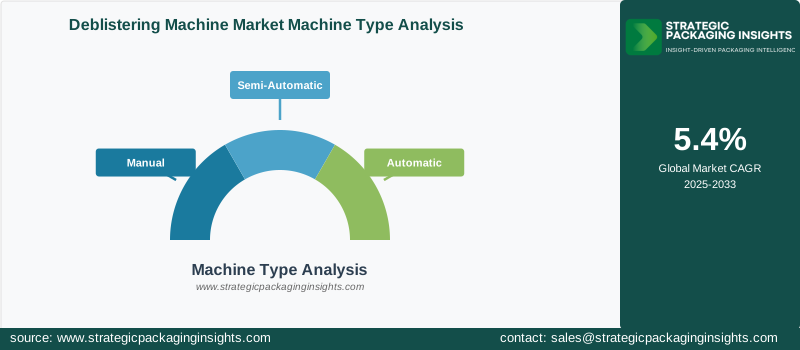
Automatic deblistering machines are gaining popularity due to their high-speed operations and precision. These machines are designed for large-scale pharmaceutical manufacturing where efficiency and accuracy are paramount. The integration of advanced technologies such as robotics and automation in these machines enhances their performance and reduces the likelihood of errors. As the pharmaceutical industry continues to grow and the demand for high-volume production increases, the adoption of automatic deblistering machines is expected to rise significantly. This trend is particularly evident in developed markets where the focus is on maximizing productivity and minimizing operational costs.
Output Type Analysis
The market is also segmented by output type, including tablets, capsules, and softgels. Tablets are the most common form of medication, and as such, deblistering machines designed for tablets are in high demand. These machines are equipped with features that allow for the efficient and precise removal of tablets from blister packs, ensuring that the integrity of the medication is maintained. The demand for tablet deblistering machines is driven by the high volume of tablet production in the pharmaceutical industry.
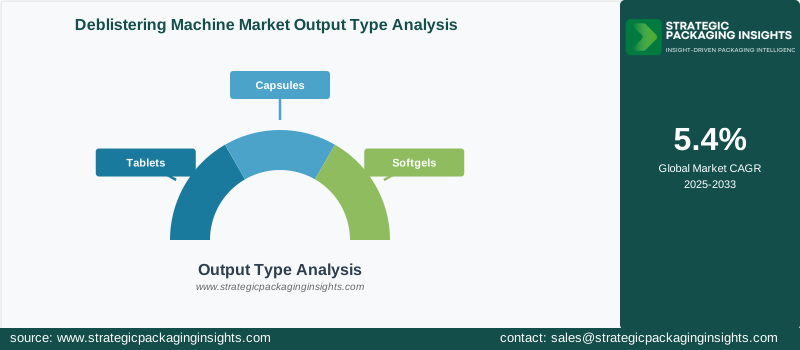
Capsules and softgels are also significant segments in the deblistering machine market. Machines designed for these output types are equipped with specialized features to handle the unique characteristics of capsules and softgels. The demand for capsule and softgel deblistering machines is driven by the increasing production of these dosage forms, particularly in the nutraceutical and dietary supplement industries. As consumer demand for these products continues to grow, the need for efficient deblistering solutions for capsules and softgels is expected to increase.
End Use Analysis
The end-use segment of the Deblistering Machine market includes pharmaceutical manufacturers, hospitals, recycling firms, and contract development and manufacturing organizations (CDMOs). Pharmaceutical manufacturers are the primary end-users of deblistering machines, as they require efficient and reliable solutions for packaging and repackaging medications. The demand for deblistering machines in this segment is driven by the increasing production of pharmaceuticals and the need for cost-effective packaging solutions.
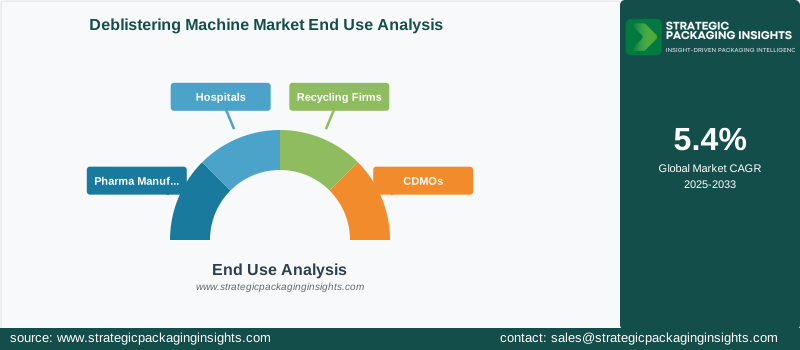
Hospitals also represent a significant end-use segment, as they require deblistering machines for repackaging medications for patient use. The demand for these machines in hospitals is driven by the need to improve medication management and reduce waste. Recycling firms are another important end-use segment, as they use deblistering machines to separate medications from blister packs for recycling purposes. The demand for deblistering machines in this segment is driven by the increasing focus on sustainability and waste reduction in the pharmaceutical industry.
Capacity Analysis
The Deblistering Machine market is segmented by capacity into low-speed, medium-speed, and high-speed machines. Low-speed machines are typically used in smaller operations where the volume of deblistering is relatively low. These machines are favored for their simplicity and low cost, making them ideal for small-scale operations. However, as the demand for efficiency and speed increases, many companies are transitioning to medium-speed and high-speed machines.

Medium-speed machines offer a balance between cost and efficiency, making them ideal for medium-sized operations. These machines are capable of handling a moderate volume of deblistering, providing a cost-effective solution for companies looking to improve efficiency without incurring the high costs associated with high-speed machines. High-speed machines are designed for large-scale pharmaceutical manufacturing where efficiency and accuracy are paramount. These machines are equipped with advanced technologies that allow for high-speed operations and precision, making them ideal for high-volume production environments.
Deblistering Machine Market Segments
The Deblistering Machine market has been segmented on the basis ofMachine Type
- Manual
- Semi-Automatic
- Automatic
Output Type
- Tablets
- Capsules
- Softgels
End Use
- Pharma Manufacturers
- Hospitals
- Recycling Firms
- CDMOs
Capacity
- Low-Speed
- Medium-Speed
- High-Speed
Region
- Asia Pacific
- North America
- Latin America
- Europe
- Middle East & Africa




