


Low Migration Ink Market Outlook
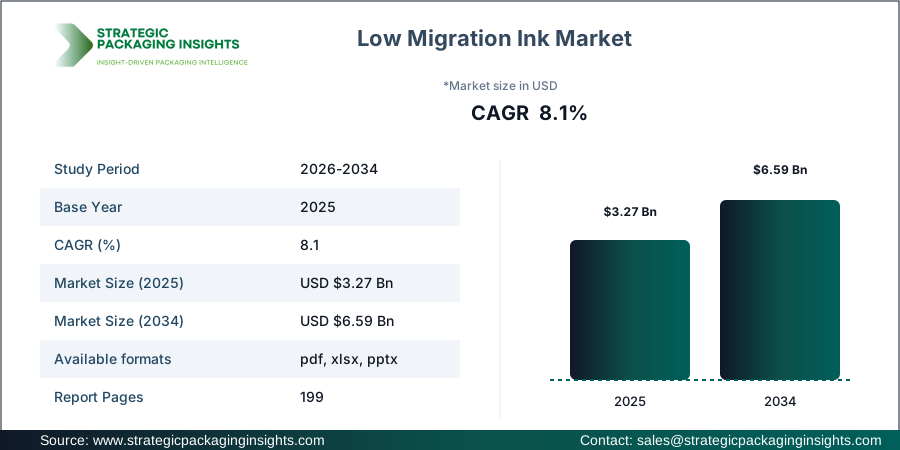
The Low Migration Ink market was valued at $3.27 billion in 2025 and is projected to reach $6.59 billion by 2034, growing at a CAGR of 8.1% during the forecast period 2026-2034. This market is witnessing significant growth due to the increasing demand for safe and compliant packaging solutions, particularly in the food and pharmaceutical sectors. The stringent regulations imposed by various governments to ensure consumer safety are driving the adoption of low migration inks. These inks are designed to minimize the migration of harmful substances from packaging materials into the products they contain, thus ensuring product safety and compliance with health standards. The market is also benefiting from technological advancements in ink formulations, which are enhancing the performance and application range of low migration inks.
Despite the promising growth prospects, the Low Migration Ink market faces certain challenges. The high cost of raw materials and the complex manufacturing processes involved in producing low migration inks can act as restraints to market growth. Additionally, the need for specialized equipment and expertise for the application of these inks can limit their adoption, particularly among small and medium-sized enterprises. However, the growing awareness about the benefits of low migration inks and the increasing demand for eco-friendly and sustainable packaging solutions present significant growth opportunities for market players. The market is also expected to benefit from the rising trend of digital printing, which is driving the demand for high-quality, low migration inks.
Report Scope
| Attributes | Details |
| Report Title | Low Migration Ink Market Size, Future Growth and Forecast 2034 |
| Type | UV, Water-based |
| Color | CMYK, Spot |
| Substrate | Plastic, Paper |
| Application | Food, Pharma |
| Region | Asia Pacific, North America, Latin America, Europe, Middle East & Africa |
| Base Year | 2025 |
| Historic Period | 2018-2024 |
| Forecast Period | 2026-2034 |
| Number of Pages | 199 |
| Customization Available | Yes* |
Opportunities & Threats
The Low Migration Ink market presents numerous opportunities for growth, driven by the increasing demand for safe and compliant packaging solutions. One of the key opportunities lies in the food and beverage industry, where the need for packaging materials that prevent contamination and ensure product safety is paramount. The growing consumer awareness about food safety and the stringent regulations imposed by regulatory bodies are driving the demand for low migration inks in this sector. Additionally, the pharmaceutical industry offers significant growth potential, as the need for safe and compliant packaging solutions is critical to ensure the efficacy and safety of pharmaceutical products. The increasing focus on sustainability and the demand for eco-friendly packaging solutions also present opportunities for market players to develop innovative low migration inks that meet these requirements.
Another opportunity for the Low Migration Ink market lies in the technological advancements in ink formulations and printing technologies. The development of new ink formulations that offer improved performance, such as enhanced adhesion, faster drying times, and better color vibrancy, is driving the adoption of low migration inks across various industries. The rise of digital printing technologies is also contributing to market growth, as these technologies require high-quality inks that offer excellent print quality and durability. Market players can capitalize on these opportunities by investing in research and development to create innovative ink solutions that meet the evolving needs of their customers.
However, the Low Migration Ink market also faces certain threats that could hinder its growth. One of the primary threats is the high cost of raw materials and the complex manufacturing processes involved in producing low migration inks. These factors can increase the overall production costs, making it challenging for market players to offer competitive pricing. Additionally, the need for specialized equipment and expertise for the application of these inks can limit their adoption, particularly among small and medium-sized enterprises. The market also faces competition from alternative packaging solutions, such as barrier coatings and laminates, which can offer similar benefits in terms of product safety and compliance.
Drivers & Challenges
The Low Migration Ink market is driven by several key factors, including the increasing demand for safe and compliant packaging solutions. The growing awareness about the potential health risks associated with the migration of harmful substances from packaging materials into products is driving the adoption of low migration inks. Regulatory bodies across the globe are imposing stringent regulations to ensure consumer safety, which is further fueling the demand for these inks. The food and pharmaceutical industries, in particular, are major drivers of market growth, as they require packaging solutions that prevent contamination and ensure product safety.
Technological advancements in ink formulations and printing technologies are also driving the growth of the Low Migration Ink market. The development of new ink formulations that offer improved performance, such as enhanced adhesion, faster drying times, and better color vibrancy, is driving the adoption of low migration inks across various industries. The rise of digital printing technologies is also contributing to market growth, as these technologies require high-quality inks that offer excellent print quality and durability. Market players are investing in research and development to create innovative ink solutions that meet the evolving needs of their customers.
Despite the promising growth prospects, the Low Migration Ink market faces certain challenges. The high cost of raw materials and the complex manufacturing processes involved in producing low migration inks can act as restraints to market growth. Additionally, the need for specialized equipment and expertise for the application of these inks can limit their adoption, particularly among small and medium-sized enterprises. The market also faces competition from alternative packaging solutions, such as barrier coatings and laminates, which can offer similar benefits in terms of product safety and compliance. Market players need to address these challenges by developing cost-effective solutions and expanding their product offerings to cater to a wider range of applications.
Market Share Analysis
The Low Migration Ink market is characterized by a competitive landscape with several key players dominating the market. Companies such as Sun Chemical, Flint Group, SICPA, Toyo Ink, Sakata Inx, T&K Toka, DIC Corporation, Nazdar, INX International, and Wikoff Color are some of the major players in this market. These companies are focusing on expanding their product portfolios and investing in research and development to create innovative ink solutions that meet the evolving needs of their customers. The competitive landscape is also marked by strategic collaborations, mergers, and acquisitions, as companies seek to strengthen their market position and expand their global footprint.
Sun Chemical is one of the leading players in the Low Migration Ink market, known for its extensive range of ink solutions that cater to various industries. The company is focusing on developing innovative ink formulations that offer improved performance and compliance with regulatory standards. Flint Group is another major player in the market, offering a wide range of low migration inks for packaging applications. The company is investing in research and development to create sustainable ink solutions that meet the growing demand for eco-friendly packaging.
SICPA is a key player in the Low Migration Ink market, known for its expertise in security inks and solutions. The company is focusing on expanding its product offerings to include low migration inks for packaging applications. Toyo Ink is another major player in the market, offering a wide range of ink solutions for various industries. The company is investing in research and development to create innovative ink formulations that meet the evolving needs of its customers.
Sakata Inx and T&K Toka are also prominent players in the Low Migration Ink market, known for their extensive range of ink solutions for packaging applications. These companies are focusing on expanding their product portfolios and investing in research and development to create innovative ink solutions that meet the evolving needs of their customers. DIC Corporation, Nazdar, INX International, and Wikoff Color are also key players in the market, known for their expertise in ink formulations and printing technologies. These companies are focusing on developing sustainable ink solutions that meet the growing demand for eco-friendly packaging.
Key Highlights
- The Low Migration Ink market is projected to grow at a CAGR of 8.1% from 2026 to 2034.
- Increasing demand for safe and compliant packaging solutions is driving market growth.
- Technological advancements in ink formulations are enhancing market potential.
- The food and pharmaceutical industries are major drivers of market growth.
- High cost of raw materials and complex manufacturing processes are key challenges.
- Key players are focusing on expanding their product portfolios and investing in R&D.
- Strategic collaborations, mergers, and acquisitions are shaping the competitive landscape.
- The market is witnessing a growing demand for eco-friendly and sustainable packaging solutions.
- Digital printing technologies are driving the demand for high-quality, low migration inks.
Top Countries Insights
In the Low Migration Ink market, the United States is a leading player, with a market size of approximately $1.2 billion and a CAGR of 7%. The country's stringent regulations on food and pharmaceutical packaging drive the demand for low migration inks. The focus on consumer safety and compliance with health standards is a significant growth driver. Additionally, the rise of digital printing technologies in the U.S. is boosting the demand for high-quality inks.

Germany is another key market, with a market size of around $900 million and a CAGR of 6%. The country's strong manufacturing base and emphasis on quality and safety in packaging are driving the demand for low migration inks. The German market is also benefiting from technological advancements in ink formulations and printing technologies, which are enhancing the performance and application range of these inks.
China is a rapidly growing market, with a market size of approximately $800 million and a CAGR of 10%. The country's expanding food and pharmaceutical industries are major drivers of market growth. The increasing focus on consumer safety and compliance with regulatory standards is driving the adoption of low migration inks. Additionally, the rise of digital printing technologies in China is contributing to market growth.
Japan is another significant market, with a market size of around $700 million and a CAGR of 5%. The country's strong focus on quality and safety in packaging is driving the demand for low migration inks. The Japanese market is also benefiting from technological advancements in ink formulations and printing technologies, which are enhancing the performance and application range of these inks.
India is an emerging market, with a market size of approximately $600 million and a CAGR of 12%. The country's growing food and pharmaceutical industries are major drivers of market growth. The increasing focus on consumer safety and compliance with regulatory standards is driving the adoption of low migration inks. Additionally, the rise of digital printing technologies in India is contributing to market growth.
Low Migration Ink Market Segments Insights

Type Analysis
The Low Migration Ink market is segmented by type into UV and water-based inks. UV inks are gaining popularity due to their fast curing times and excellent adhesion properties. These inks are ideal for applications that require high-quality prints and durability. The demand for UV inks is driven by the increasing adoption of digital printing technologies, which require inks that offer superior print quality and performance. Water-based inks, on the other hand, are favored for their eco-friendly properties and low VOC emissions. These inks are ideal for applications that require compliance with environmental regulations and sustainability standards. The demand for water-based inks is driven by the growing focus on sustainability and the need for eco-friendly packaging solutions.

The competition in the type segment is intense, with key players focusing on developing innovative ink formulations that offer improved performance and compliance with regulatory standards. Companies are investing in research and development to create ink solutions that meet the evolving needs of their customers. The demand for UV and water-based inks is expected to grow significantly during the forecast period, driven by the increasing adoption of digital printing technologies and the growing focus on sustainability.
Color Analysis
The Low Migration Ink market is segmented by color into CMYK and spot colors. CMYK inks are widely used in the printing industry due to their versatility and ability to produce a wide range of colors. These inks are ideal for applications that require high-quality prints and color accuracy. The demand for CMYK inks is driven by the increasing adoption of digital printing technologies, which require inks that offer superior print quality and performance. Spot colors, on the other hand, are favored for their ability to produce specific colors that cannot be achieved with CMYK inks. These inks are ideal for applications that require precise color matching and consistency.

The competition in the color segment is intense, with key players focusing on developing innovative ink formulations that offer improved performance and color accuracy. Companies are investing in research and development to create ink solutions that meet the evolving needs of their customers. The demand for CMYK and spot colors is expected to grow significantly during the forecast period, driven by the increasing adoption of digital printing technologies and the growing focus on color accuracy and consistency.
Substrate Analysis
The Low Migration Ink market is segmented by substrate into plastic and paper. Plastic substrates are widely used in the packaging industry due to their durability and versatility. The demand for low migration inks for plastic substrates is driven by the increasing focus on product safety and compliance with regulatory standards. Paper substrates, on the other hand, are favored for their eco-friendly properties and recyclability. The demand for low migration inks for paper substrates is driven by the growing focus on sustainability and the need for eco-friendly packaging solutions.

The competition in the substrate segment is intense, with key players focusing on developing innovative ink formulations that offer improved performance and compliance with regulatory standards. Companies are investing in research and development to create ink solutions that meet the evolving needs of their customers. The demand for low migration inks for plastic and paper substrates is expected to grow significantly during the forecast period, driven by the increasing focus on product safety and sustainability.
Application Analysis
The Low Migration Ink market is segmented by application into food and pharmaceutical industries. The food industry is a major driver of market growth, as the need for packaging materials that prevent contamination and ensure product safety is paramount. The demand for low migration inks in the food industry is driven by the increasing focus on consumer safety and compliance with regulatory standards. The pharmaceutical industry also offers significant growth potential, as the need for safe and compliant packaging solutions is critical to ensure the efficacy and safety of pharmaceutical products.

The competition in the application segment is intense, with key players focusing on developing innovative ink formulations that offer improved performance and compliance with regulatory standards. Companies are investing in research and development to create ink solutions that meet the evolving needs of their customers. The demand for low migration inks in the food and pharmaceutical industries is expected to grow significantly during the forecast period, driven by the increasing focus on consumer safety and compliance with regulatory standards.
Low Migration Ink Market Segments
The Low Migration Ink market has been segmented on the basis ofType
- UV
- Water-based
Color
- CMYK
- Spot
Substrate
- Plastic
- Paper
Application
- Food
- Pharma
Region
- Asia Pacific
- North America
- Latin America
- Europe
- Middle East & Africa




