


Anti-Microbial Packaging Market Outlook
The Anti-Microbial Packaging market was valued at $12.35 billion in 2025 and is projected to reach $23.28 billion by 2034, growing at a CAGR of 7.30% during the forecast period 2026-2034. This market is witnessing significant growth due to the increasing demand for food safety and hygiene, driven by consumer awareness and stringent regulations. The rise in foodborne illnesses has prompted the food and beverage industry to adopt antimicrobial packaging solutions to extend shelf life and maintain product quality. Additionally, the healthcare sector's expansion, particularly in emerging economies, is further propelling the demand for antimicrobial packaging to ensure the sterility and safety of medical products.
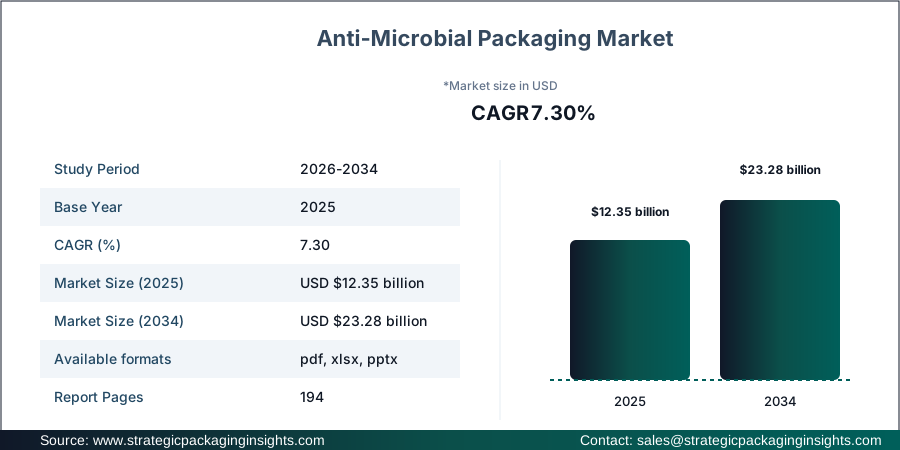
However, the market faces challenges such as high costs associated with antimicrobial packaging materials and the complexity of integrating these materials into existing packaging systems. Regulatory hurdles also pose a significant barrier, as manufacturers must comply with stringent guidelines to ensure the safety and efficacy of antimicrobial agents used in packaging. Despite these challenges, the market holds immense growth potential, driven by technological advancements and the development of innovative packaging solutions that offer enhanced antimicrobial properties. The increasing focus on sustainability and eco-friendly packaging solutions is also expected to create new opportunities for market players.
Report Scope
| Attributes | Details |
| Report Title | Anti-Microbial Packaging Market Size, Future Growth and Forecast 2034 |
| Material | Plastics, Paper and Paperboard, Biopolymers, Others |
| Packaging Type | Flexible Packaging, Rigid Packaging |
| Antimicrobial Agent | Organic Acids, Bacteriocins, Enzymes, Essential Oils, Metal Ions and Nanoparticles, Others |
| Application | Food and Beverages, Meat and Poultry, Dairy, Bakery and Confectionery, Ready-to-eat, Fruits and Vegetables, Pharmaceuticals, Personal Care and Cosmetics, Healthcare Packaging, Others |
| Functionality | Active Packaging, Controlled Release Packaging, Surface-coated Antimicrobial Packaging |
| Region | Asia Pacific, North America, Latin America, Europe, Middle East & Africa |
| Base Year | 2025 |
| Historic Period | 2018-2024 |
| Forecast Period | 2026-2034 |
| Number of Pages | 194 |
| Customization Available | Yes* |
Opportunities & Threats
The Anti-Microbial Packaging market presents numerous opportunities, particularly in the food and beverage sector, where the demand for safe and hygienic packaging solutions is paramount. The growing consumer awareness regarding food safety and the increasing incidence of foodborne illnesses are driving the adoption of antimicrobial packaging. This trend is further supported by stringent government regulations aimed at ensuring food safety and quality. Additionally, the rising demand for ready-to-eat and convenience foods is creating a significant opportunity for antimicrobial packaging solutions that can extend shelf life and maintain product freshness.
Another promising opportunity lies in the healthcare sector, where the need for sterile and safe packaging solutions is critical. The expansion of the healthcare industry, particularly in emerging economies, is driving the demand for antimicrobial packaging to ensure the safety and efficacy of medical products. Furthermore, the increasing focus on sustainability and eco-friendly packaging solutions is creating new opportunities for market players to develop innovative antimicrobial packaging materials that are both effective and environmentally friendly.
Despite the promising opportunities, the Anti-Microbial Packaging market faces several threats, including the high costs associated with antimicrobial packaging materials. The integration of antimicrobial agents into existing packaging systems can be complex and costly, posing a significant barrier for manufacturers. Additionally, regulatory hurdles present a major challenge, as manufacturers must comply with stringent guidelines to ensure the safety and efficacy of antimicrobial agents used in packaging. These challenges may hinder market growth, particularly for small and medium-sized enterprises with limited resources.
Drivers & Challenges
The primary drivers of the Anti-Microbial Packaging market include the increasing demand for food safety and hygiene, driven by consumer awareness and stringent regulations. The rise in foodborne illnesses has prompted the food and beverage industry to adopt antimicrobial packaging solutions to extend shelf life and maintain product quality. Additionally, the healthcare sector's expansion, particularly in emerging economies, is further propelling the demand for antimicrobial packaging to ensure the sterility and safety of medical products. Technological advancements and the development of innovative packaging solutions with enhanced antimicrobial properties are also driving market growth.
Another significant driver is the increasing focus on sustainability and eco-friendly packaging solutions. Consumers are becoming more environmentally conscious, leading to a growing demand for packaging materials that are both effective and sustainable. This trend is encouraging market players to develop innovative antimicrobial packaging materials that offer enhanced performance while minimizing environmental impact. The rise in e-commerce and online food delivery services is also contributing to the demand for antimicrobial packaging solutions that can ensure product safety during transportation and storage.
However, the market faces several challenges, including the high costs associated with antimicrobial packaging materials. The integration of antimicrobial agents into existing packaging systems can be complex and costly, posing a significant barrier for manufacturers. Additionally, regulatory hurdles present a major challenge, as manufacturers must comply with stringent guidelines to ensure the safety and efficacy of antimicrobial agents used in packaging. These challenges may hinder market growth, particularly for small and medium-sized enterprises with limited resources.
Market Share Analysis
The Anti-Microbial Packaging market is characterized by a competitive landscape with several key players striving to gain a significant market share. Companies such as Amcor plc, Berry Global Inc., Sealed Air Corporation, and Sonoco Products Company are leading the market with their extensive product portfolios and strong distribution networks. These companies are focusing on strategic partnerships, mergers, and acquisitions to expand their market presence and enhance their product offerings. Additionally, they are investing in research and development to develop innovative antimicrobial packaging solutions that meet the evolving needs of consumers and regulatory requirements.
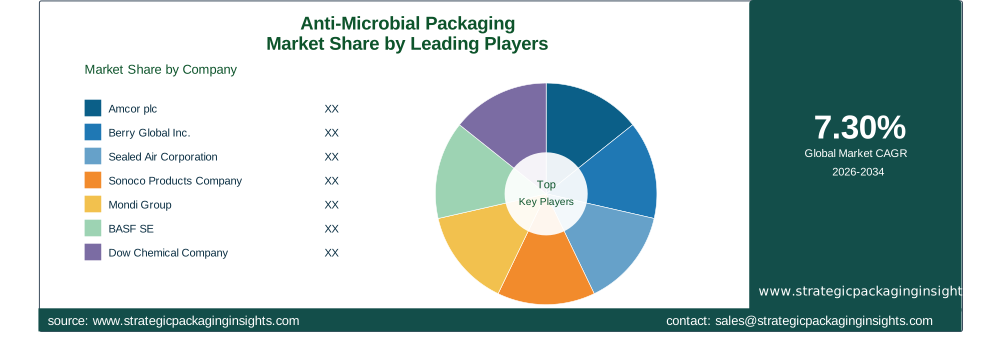
Amcor plc is a prominent player in the Anti-Microbial Packaging market, known for its innovative packaging solutions and strong focus on sustainability. The company is actively investing in research and development to develop eco-friendly antimicrobial packaging materials that offer enhanced performance and meet consumer demands for sustainable solutions. Berry Global Inc. is another key player, offering a wide range of antimicrobial packaging solutions for various applications, including food and beverages, healthcare, and personal care. The company's strong distribution network and focus on customer satisfaction have helped it maintain a competitive edge in the market.
Sealed Air Corporation is a leading provider of antimicrobial packaging solutions, known for its innovative products and strong focus on sustainability. The company is actively investing in research and development to develop eco-friendly antimicrobial packaging materials that offer enhanced performance and meet consumer demands for sustainable solutions. Sonoco Products Company is another key player, offering a wide range of antimicrobial packaging solutions for various applications, including food and beverages, healthcare, and personal care. The company's strong distribution network and focus on customer satisfaction have helped it maintain a competitive edge in the market.
Mondi Group, BASF SE, Dow Chemical Company, AptarGroup, Huhtamaki, and Coveris are also significant players in the Anti-Microbial Packaging market. These companies are focusing on strategic partnerships, mergers, and acquisitions to expand their market presence and enhance their product offerings. Additionally, they are investing in research and development to develop innovative antimicrobial packaging solutions that meet the evolving needs of consumers and regulatory requirements. The competitive landscape of the Anti-Microbial Packaging market is expected to remain dynamic, with companies striving to gain a significant market share through innovation and strategic initiatives.
Key Highlights
- The Anti-Microbial Packaging market is projected to grow at a CAGR of 7.30% from 2026 to 2034.
- Increasing demand for food safety and hygiene is driving the adoption of antimicrobial packaging solutions.
- The healthcare sector's expansion is propelling the demand for sterile and safe packaging solutions.
- Technological advancements are leading to the development of innovative antimicrobial packaging materials.
- High costs and regulatory hurdles pose significant challenges for market growth.
- Key players are focusing on strategic partnerships and mergers to expand their market presence.
- The rise in e-commerce and online food delivery services is contributing to the demand for antimicrobial packaging.
- Consumers' increasing focus on sustainability is driving the demand for eco-friendly packaging solutions.
Top Countries Insights
In the Anti-Microbial Packaging market, the United States holds a significant share, driven by the strong presence of key market players and the increasing demand for safe and hygienic packaging solutions. The market in the U.S. is expected to grow at a CAGR of 6%, supported by stringent regulations and consumer awareness regarding food safety. The rise in e-commerce and online food delivery services is also contributing to the demand for antimicrobial packaging solutions in the country.
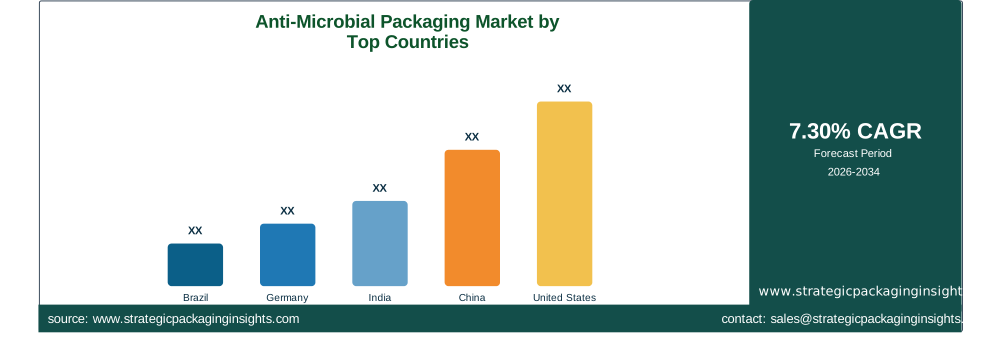
China is another major market for Anti-Microbial Packaging, with a projected CAGR of 8%. The country's growing population and increasing disposable income are driving the demand for convenience foods, which in turn is boosting the demand for antimicrobial packaging solutions. Additionally, the expansion of the healthcare sector in China is propelling the demand for sterile and safe packaging solutions, further supporting market growth.
India is witnessing significant growth in the Anti-Microbial Packaging market, with a projected CAGR of 9%. The country's expanding food and beverage industry, coupled with increasing consumer awareness regarding food safety, is driving the demand for antimicrobial packaging solutions. The government's focus on improving food safety standards and regulations is also contributing to market growth.
Germany is a key market in Europe, with a projected CAGR of 5%. The country's strong focus on sustainability and eco-friendly packaging solutions is driving the demand for innovative antimicrobial packaging materials. Additionally, the presence of key market players and the increasing demand for safe and hygienic packaging solutions are supporting market growth in Germany.
Brazil is experiencing growth in the Anti-Microbial Packaging market, with a projected CAGR of 7%. The country's expanding food and beverage industry and increasing consumer awareness regarding food safety are driving the demand for antimicrobial packaging solutions. The rise in e-commerce and online food delivery services is also contributing to market growth in Brazil.
Anti-Microbial Packaging Market Segments Insights

Material Analysis
The material segment of the Anti-Microbial Packaging market is dominated by plastics, including PE, PP, PET, and PS, due to their versatility and cost-effectiveness. Plastics are widely used in various applications, including food and beverages, healthcare, and personal care, owing to their excellent barrier properties and ability to incorporate antimicrobial agents. The demand for biopolymers is also increasing, driven by the growing focus on sustainability and eco-friendly packaging solutions. Biopolymers offer the advantage of being biodegradable and compostable, making them an attractive option for environmentally conscious consumers.
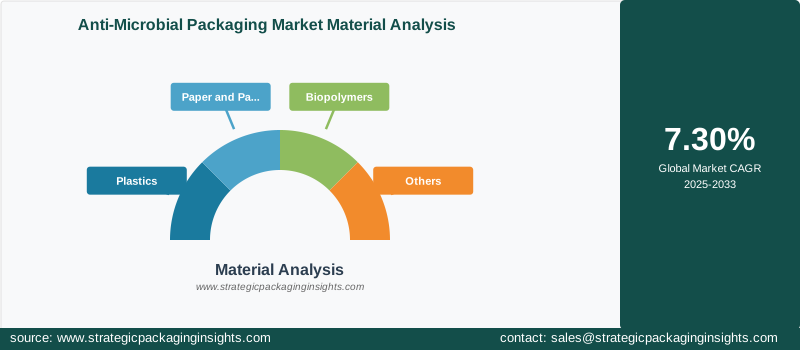
Paper and paperboard are also gaining traction in the Anti-Microbial Packaging market, particularly in the food and beverage sector. These materials offer excellent printability and recyclability, making them a preferred choice for packaging applications that require branding and marketing. The demand for antimicrobial paper and paperboard packaging is driven by the increasing consumer awareness regarding food safety and hygiene, as well as the growing demand for sustainable packaging solutions. The development of innovative antimicrobial coatings and treatments for paper and paperboard is further supporting market growth.
Packaging Type Analysis
The packaging type segment of the Anti-Microbial Packaging market is divided into flexible and rigid packaging. Flexible packaging is the dominant segment, driven by its lightweight, cost-effectiveness, and versatility. Flexible packaging solutions, such as pouches, bags, and films, are widely used in the food and beverage industry to extend shelf life and maintain product freshness. The demand for flexible antimicrobial packaging is further supported by the rise in e-commerce and online food delivery services, which require packaging solutions that can ensure product safety during transportation and storage.

Rigid packaging, including bottles, containers, and trays, is also witnessing significant growth in the Anti-Microbial Packaging market. Rigid packaging solutions offer excellent protection and durability, making them suitable for applications that require high levels of product safety and integrity. The demand for rigid antimicrobial packaging is driven by the healthcare and personal care sectors, where the need for sterile and safe packaging solutions is critical. The development of innovative antimicrobial coatings and treatments for rigid packaging materials is further supporting market growth.
Antimicrobial Agent Analysis
The antimicrobial agent segment of the Anti-Microbial Packaging market includes organic acids, bacteriocins, enzymes, essential oils, metal ions, and nanoparticles. Metal ions and nanoparticles, such as silver and zinc oxide, are the most widely used antimicrobial agents due to their broad-spectrum antimicrobial activity and effectiveness at low concentrations. These agents are commonly used in food and beverage packaging to extend shelf life and maintain product quality. The demand for metal ions and nanoparticles is driven by the increasing consumer awareness regarding food safety and hygiene, as well as the growing demand for innovative packaging solutions.
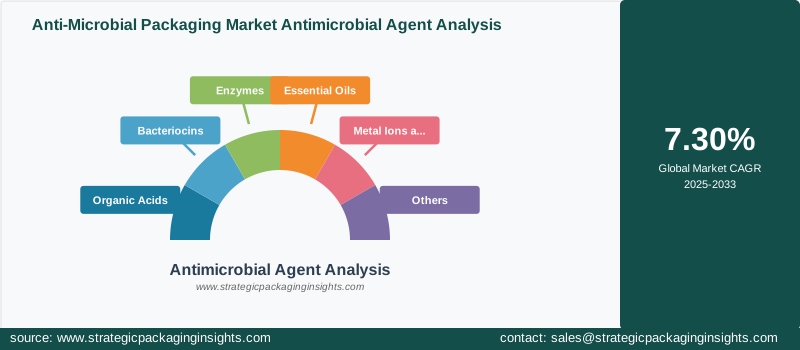
Organic acids and bacteriocins are also gaining popularity in the Anti-Microbial Packaging market, particularly in the food and beverage sector. These agents offer the advantage of being natural and safe for human consumption, making them an attractive option for consumers seeking clean-label products. The demand for organic acids and bacteriocins is driven by the increasing focus on natural and sustainable packaging solutions, as well as the growing consumer awareness regarding food safety and hygiene. The development of innovative antimicrobial formulations and treatments is further supporting market growth.
Application Analysis
The application segment of the Anti-Microbial Packaging market is dominated by the food and beverage industry, driven by the increasing demand for safe and hygienic packaging solutions. The rise in foodborne illnesses and the growing consumer awareness regarding food safety are prompting the adoption of antimicrobial packaging solutions to extend shelf life and maintain product quality. The demand for antimicrobial packaging is particularly high in the meat and poultry, dairy, bakery and confectionery, and ready-to-eat segments, where the risk of contamination is significant.
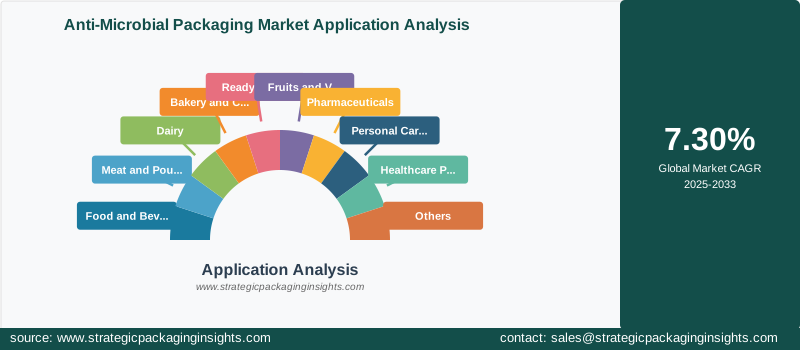
The healthcare sector is another major application area for antimicrobial packaging, driven by the need for sterile and safe packaging solutions. The expansion of the healthcare industry, particularly in emerging economies, is propelling the demand for antimicrobial packaging to ensure the safety and efficacy of medical products. The personal care and cosmetics industry is also witnessing significant growth in the demand for antimicrobial packaging solutions, driven by the increasing consumer awareness regarding product safety and hygiene. The development of innovative antimicrobial packaging materials and solutions is further supporting market growth.
Anti-Microbial Packaging Market Segments
The Anti-Microbial Packaging market has been segmented on the basis ofMaterial
- Plastics
- Paper and Paperboard
- Biopolymers
- Others
Packaging Type
- Flexible Packaging
- Rigid Packaging
Antimicrobial Agent
- Organic Acids
- Bacteriocins
- Enzymes
- Essential Oils
- Metal Ions and Nanoparticles
- Others
Application
- Food and Beverages
- Meat and Poultry
- Dairy
- Bakery and Confectionery
- Ready-to-eat
- Fruits and Vegetables
- Pharmaceuticals
- Personal Care and Cosmetics
- Healthcare Packaging
- Others
Functionality
- Active Packaging
- Controlled Release Packaging
- Surface-coated Antimicrobial Packaging
Region
- Asia Pacific
- North America
- Latin America
- Europe
- Middle East & Africa




