


Export Packaging Market Outlook
The export packaging market was valued at $150 billion in 2024 and is projected to reach $230 billion by 2033, growing at a CAGR of 4.8% during the forecast period 2025-2033. This market is driven by the increasing globalization of trade, which necessitates robust packaging solutions to ensure the safe and efficient transport of goods across international borders. The demand for export packaging is further fueled by the rise in e-commerce, which requires reliable packaging to protect products during long-distance shipping. Additionally, advancements in packaging materials and technologies are enhancing the durability and sustainability of export packaging solutions, making them more appealing to environmentally conscious businesses.
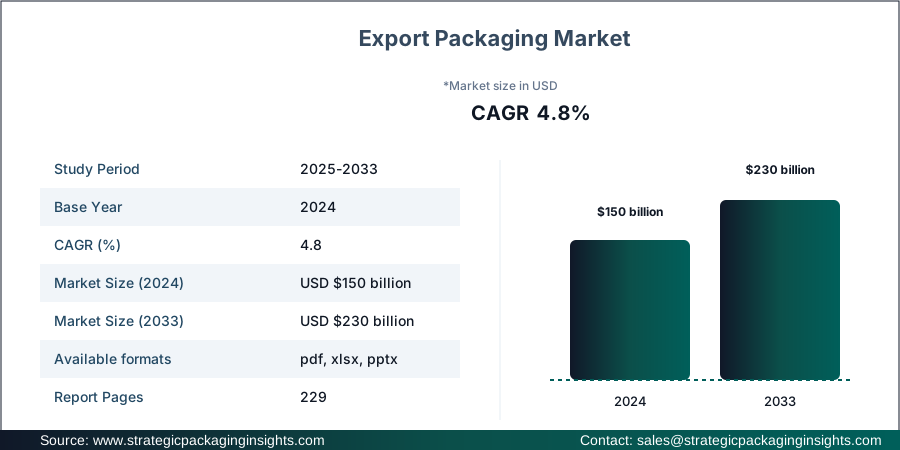
However, the market faces challenges such as stringent regulations regarding packaging waste and recycling, which can increase costs for manufacturers. Despite these challenges, the export packaging market holds significant growth potential due to the increasing demand for sustainable and innovative packaging solutions. Companies are investing in research and development to create eco-friendly packaging materials that comply with international standards, thereby expanding their market reach. The growing emphasis on reducing carbon footprints and enhancing supply chain efficiency is also expected to drive market growth in the coming years.
Report Scope
| Attributes | Details |
| Report Title | Export Packaging Market Size, Future Growth and Forecast 2033 |
| Material | Plastic, Paper, Metal, Wood |
| Application | Food & Beverages, Electronics, Automotive, Pharmaceuticals, Chemicals, Others |
| Packaging Type | Primary, Secondary, Tertiary |
| End-User | Manufacturers, Distributors, Retailers, Logistics Companies |
| Base Year | 2024 |
| Historic Period | 2017-2023 |
| Forecast Period | 2025-2033 |
| Number of Pages | 229 |
| Customization Available | Yes* |
Opportunities & Threats
The export packaging market presents numerous opportunities for growth, particularly in the development of sustainable packaging solutions. As environmental concerns continue to rise, there is a growing demand for packaging materials that are biodegradable, recyclable, and made from renewable resources. Companies that can innovate in this area stand to gain a competitive edge, as consumers and businesses alike are increasingly prioritizing sustainability in their purchasing decisions. Furthermore, the integration of smart packaging technologies, such as RFID tags and QR codes, offers opportunities to enhance supply chain transparency and efficiency, providing additional value to customers.
Another significant opportunity lies in the expansion of e-commerce, which has been accelerated by the COVID-19 pandemic. As more consumers turn to online shopping, the need for reliable and protective packaging solutions has increased. Export packaging companies can capitalize on this trend by developing packaging that not only protects products during transit but also enhances the unboxing experience for consumers. Additionally, the growth of emerging markets presents opportunities for export packaging companies to expand their operations and tap into new customer bases.
Despite these opportunities, the export packaging market faces several threats, including fluctuating raw material prices and stringent regulatory requirements. The cost of materials such as paper, plastic, and metal can be volatile, impacting the profitability of packaging manufacturers. Moreover, regulations related to packaging waste and recycling are becoming increasingly stringent, particularly in regions such as Europe and North America. Companies must navigate these regulatory landscapes carefully to avoid penalties and maintain compliance, which can be resource-intensive and costly.
Market Share Analysis
The export packaging market is characterized by a highly competitive landscape, with numerous players vying for market share. Key companies in this market include International Paper Company, Smurfit Kappa Group, Mondi Group, DS Smith Plc, and WestRock Company, among others. These companies are focusing on expanding their product portfolios and enhancing their production capabilities to meet the growing demand for export packaging solutions. Additionally, strategic partnerships and acquisitions are common strategies employed by these companies to strengthen their market positions and expand their global reach.
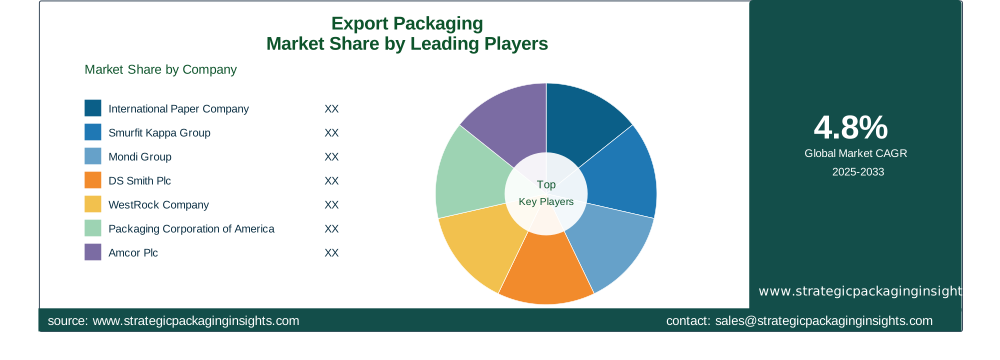
International Paper Company holds a significant share of the market, leveraging its extensive product range and strong distribution network. The company is known for its innovative packaging solutions that cater to various industries, including food and beverages, electronics, and pharmaceuticals. Smurfit Kappa Group is another major player, renowned for its sustainable packaging solutions and commitment to reducing environmental impact. The company has a strong presence in Europe and is expanding its operations in emerging markets to capture new growth opportunities.
Mondi Group is a leading provider of paper and packaging solutions, with a focus on sustainability and innovation. The company has a diverse product portfolio that includes corrugated packaging, flexible packaging, and industrial bags. DS Smith Plc is known for its innovative packaging designs and strong focus on customer service. The company has a robust presence in Europe and is expanding its operations in North America and Asia to capitalize on growing demand.
WestRock Company is a key player in the export packaging market, offering a wide range of packaging solutions for various industries. The company is committed to sustainability and has implemented several initiatives to reduce its environmental footprint. Other notable companies in the market include Packaging Corporation of America, Amcor Plc, and Sealed Air Corporation, each of which has a strong market presence and is focused on expanding its product offerings and geographic reach.
Key Highlights
- The export packaging market is projected to grow at a CAGR of 4.8% from 2025 to 2033.
- Increasing globalization and e-commerce are driving demand for export packaging solutions.
- Sustainable packaging materials are gaining traction due to environmental concerns.
- Smart packaging technologies are enhancing supply chain transparency and efficiency.
- Emerging markets offer significant growth opportunities for export packaging companies.
- Fluctuating raw material prices pose a challenge to market profitability.
- Stringent regulations on packaging waste and recycling are impacting market dynamics.
Top Countries Insights
In the export packaging market, the United States holds a significant share, with a market size of $45 billion and a CAGR of 5%. The country's robust logistics infrastructure and strong demand for sustainable packaging solutions are key growth drivers. China is another major player, with a market size of $30 billion and a CAGR of 6%. The rapid growth of e-commerce and increasing exports are fueling demand for export packaging in the region.
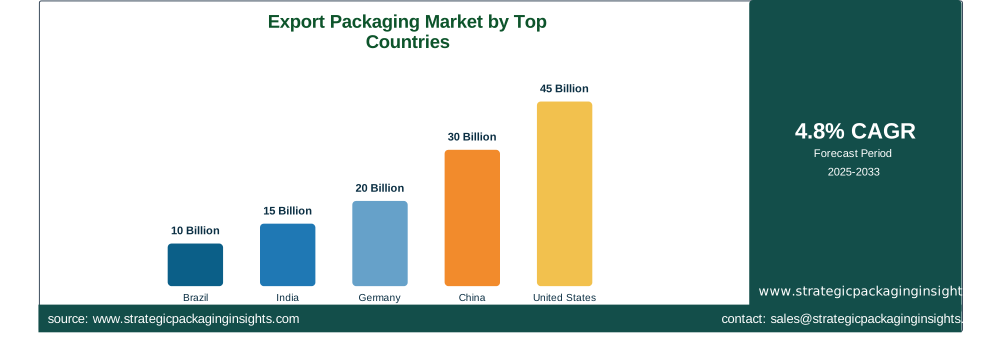
Germany, with a market size of $20 billion and a CAGR of 4%, is a leading market in Europe. The country's strong manufacturing sector and emphasis on sustainability are driving demand for innovative packaging solutions. India, with a market size of $15 billion and a CAGR of 7%, is experiencing rapid growth due to the expansion of its manufacturing and e-commerce sectors. The government's focus on improving logistics infrastructure is also contributing to market growth.
Brazil, with a market size of $10 billion and a CAGR of 3%, is a key market in Latin America. The country's growing exports and increasing demand for sustainable packaging solutions are driving market growth. However, challenges such as economic instability and regulatory hurdles may impact market dynamics in the region.
Evolving Market Dynamics (2018-2024) and Strategic Foresight (2025-2033)
| Metric | 2018-2024 | 2025-2033 |
|---|---|---|
| CAGR | 3.5% | 4.8% |
| Market Size Evolution | $120 billion to $150 billion | $150 billion to $230 billion |
| Segment Distribution Shifts | Increased demand for plastic and paper packaging | Growth in sustainable and smart packaging solutions |
| Regional Contribution Changes | Strong growth in Asia Pacific and North America | Expansion in emerging markets like India and Brazil |
| Technological Impact Factors | Introduction of smart packaging technologies | Advancements in sustainable materials and designs |
| Client Demand Transformations | Focus on cost-effective solutions | Emphasis on sustainability and innovation |
Export Packaging Market Segments Insights

Material Analysis
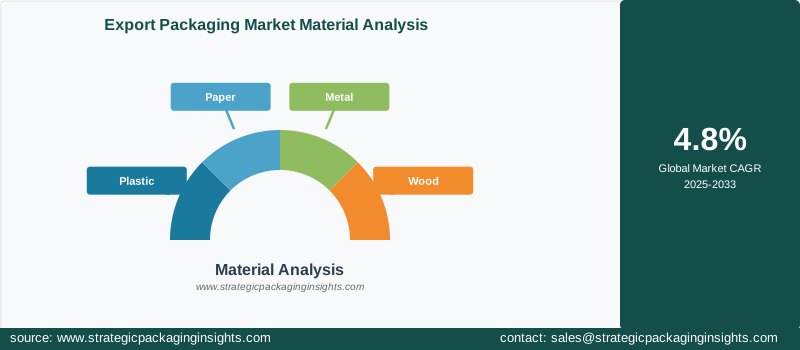
The material segment of the export packaging market is dominated by plastic, paper, metal, and wood. Plastic packaging is widely used due to its durability, lightweight nature, and cost-effectiveness. However, environmental concerns are driving the shift towards more sustainable materials such as paper and biodegradable plastics. Paper packaging is gaining popularity due to its recyclability and biodegradability, making it an attractive option for environmentally conscious companies. Metal packaging, known for its strength and protective qualities, is commonly used for high-value goods, while wood packaging is favored for heavy-duty applications.
In recent years, there has been a significant push towards developing eco-friendly packaging materials. Companies are investing in research and development to create innovative solutions that reduce environmental impact while maintaining performance standards. The demand for sustainable packaging is expected to grow as consumers and businesses increasingly prioritize environmental responsibility. Additionally, advancements in material technologies are enabling the production of packaging that is not only sustainable but also enhances product protection and shelf life.
Application Analysis
The application segment of the export packaging market includes food and beverages, electronics, automotive, pharmaceuticals, chemicals, and others. The food and beverage industry is a major driver of demand for export packaging, as it requires packaging solutions that ensure product safety and freshness during transit. The electronics industry also relies heavily on export packaging to protect sensitive components from damage during shipping. In the automotive sector, packaging solutions are needed to transport parts and components safely and efficiently.
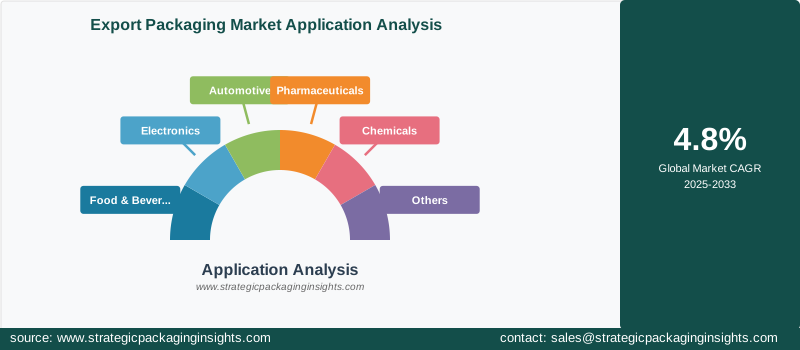
The pharmaceutical industry requires specialized packaging solutions that comply with stringent regulatory standards to ensure the safety and efficacy of products. Chemical packaging must also meet specific requirements to prevent leaks and contamination. As these industries continue to grow, the demand for export packaging solutions is expected to increase. Companies are focusing on developing packaging that meets the unique needs of each industry while also addressing environmental concerns.
Packaging Type Analysis
Export packaging can be categorized into primary, secondary, and tertiary packaging. Primary packaging is the first layer of protection and is in direct contact with the product. It is designed to protect the product from contamination and damage. Secondary packaging groups multiple primary packages together for easier handling and distribution. Tertiary packaging is used for bulk handling, storage, and transportation, providing additional protection during transit.
The demand for each type of packaging varies depending on the industry and product requirements. For instance, the food and beverage industry relies heavily on primary packaging to ensure product safety, while the electronics industry may require robust tertiary packaging to protect sensitive components. As the export packaging market evolves, companies are focusing on developing packaging solutions that offer enhanced protection, sustainability, and cost-effectiveness across all packaging types.
End-User Analysis
The end-user segment of the export packaging market includes manufacturers, distributors, retailers, and logistics companies. Manufacturers are the primary users of export packaging, as they need to ensure their products are protected during transit to international markets. Distributors and retailers also rely on export packaging to maintain product integrity and facilitate efficient supply chain operations. Logistics companies play a crucial role in the export packaging market, as they are responsible for transporting goods safely and efficiently across borders.
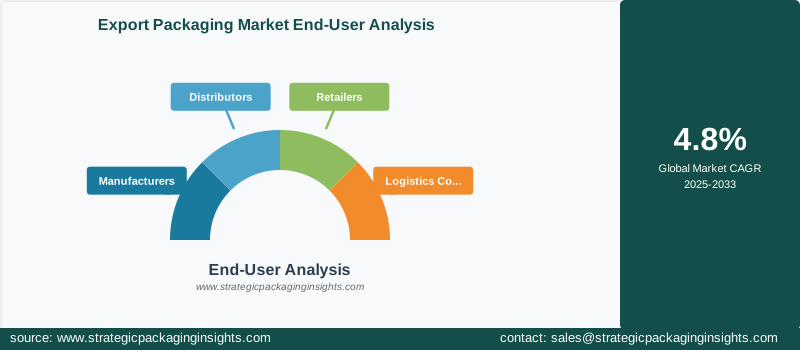
As global trade continues to expand, the demand for export packaging solutions is expected to grow among all end-user segments. Companies are focusing on developing packaging solutions that meet the specific needs of each end-user, such as enhancing supply chain efficiency, reducing costs, and minimizing environmental impact. The increasing emphasis on sustainability and innovation is driving the development of packaging solutions that offer added value to end-users, such as improved product protection, reduced waste, and enhanced supply chain transparency.
Export Packaging Market Segments
The Export Packaging market has been segmented on the basis ofMaterial
- Plastic
- Paper
- Metal
- Wood
Application
- Food & Beverages
- Electronics
- Automotive
- Pharmaceuticals
- Chemicals
- Others
Packaging Type
- Primary
- Secondary
- Tertiary
End-User
- Manufacturers
- Distributors
- Retailers
- Logistics Companies




