


Shrink Film Packaging Market Outlook
The shrink film packaging market was valued at $4.5 billion in 2024 and is projected to reach $7.8 billion by 2033, growing at a CAGR of 6.2% during the forecast period 2025-2033. This market is driven by the increasing demand for efficient and cost-effective packaging solutions across various industries, including food and beverage, pharmaceuticals, and consumer goods. Shrink film packaging offers several advantages such as enhanced product protection, improved shelf appeal, and reduced packaging waste, which are contributing to its growing adoption. The rise in e-commerce and retail sectors is further propelling the demand for shrink film packaging as it ensures the safe and secure delivery of products. Additionally, advancements in material technology and the development of eco-friendly shrink films are expected to create new growth opportunities in the market.
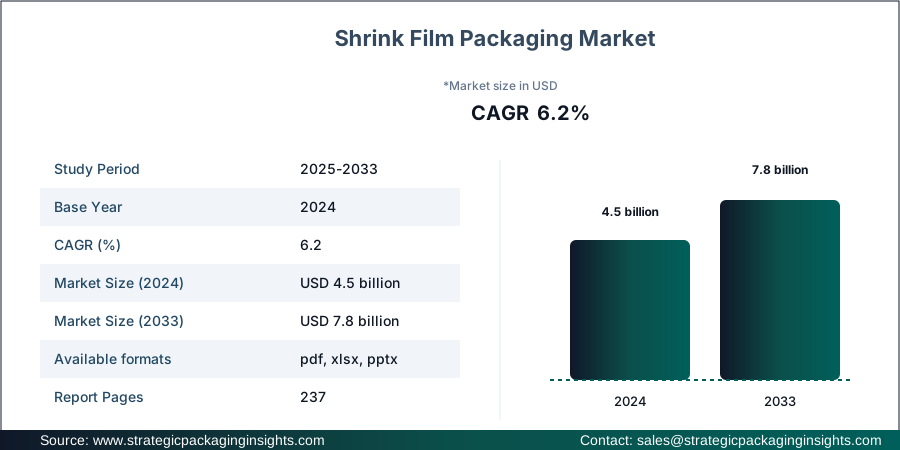
Despite the promising growth prospects, the shrink film packaging market faces certain challenges that could hinder its expansion. Regulatory restrictions on the use of certain plastic materials and the increasing focus on sustainability are compelling manufacturers to innovate and develop biodegradable and recyclable shrink films. The high cost of raw materials and the complexity of recycling processes are also potential restraints for market growth. However, the ongoing research and development activities aimed at improving the recyclability and performance of shrink films are likely to mitigate these challenges and unlock new growth avenues for market players.
Report Scope
| Attributes | Details |
| Report Title | Shrink Film Packaging Market Size, Future Growth and Forecast 2033 |
| Material Type | Polyethylene, Polypropylene |
| Application | Food & Beverage, Industrial Packaging |
| End-User | Retail, Manufacturing |
| Region | North America, Asia Pacific |
| Base Year | 2024 |
| Historic Period | 2017-2023 |
| Forecast Period | 2025-2033 |
| Number of Pages | 237 |
| Customization Available | Yes* |
Opportunities & Threats
The shrink film packaging market presents significant opportunities for growth, particularly in the food and beverage industry. As consumer preferences shift towards convenient and ready-to-eat food products, the demand for efficient packaging solutions that ensure product freshness and extend shelf life is on the rise. Shrink film packaging, with its ability to conform to the shape of the product and provide a tight seal, is well-suited to meet these requirements. Additionally, the increasing trend of online grocery shopping is driving the need for robust packaging solutions that can withstand the rigors of transportation and handling. This is creating a lucrative opportunity for shrink film packaging manufacturers to expand their product offerings and cater to the evolving needs of the food and beverage sector.
Another promising opportunity lies in the pharmaceutical industry, where the demand for secure and tamper-evident packaging solutions is paramount. Shrink film packaging offers an effective solution for ensuring the integrity and safety of pharmaceutical products, making it an attractive option for manufacturers. The growing focus on patient safety and the stringent regulatory requirements for pharmaceutical packaging are further driving the adoption of shrink film packaging in this sector. Moreover, the development of advanced shrink films with enhanced barrier properties and anti-counterfeiting features is expected to boost their application in the pharmaceutical industry.
However, the shrink film packaging market is not without its threats. The increasing environmental concerns and the push for sustainable packaging solutions pose a significant challenge for market players. The growing awareness about the environmental impact of plastic waste is leading to stricter regulations and a shift towards biodegradable and recyclable packaging materials. This is compelling manufacturers to invest in research and development to create eco-friendly shrink films that meet regulatory standards and consumer expectations. Additionally, the volatility in raw material prices and the intense competition from alternative packaging solutions such as flexible packaging and rigid containers are potential threats that could impact the market's growth trajectory.
Market Share Analysis
The shrink film packaging market is characterized by a competitive landscape with several key players vying for market share. The market is dominated by a mix of global and regional players, each offering a diverse range of products and solutions to cater to the varying needs of end-users. The competitive rivalry in the market is intense, with companies focusing on product innovation, strategic partnerships, and mergers and acquisitions to strengthen their market position. The presence of a large number of players has led to a fragmented market structure, with the top players accounting for a significant share of the market revenue.
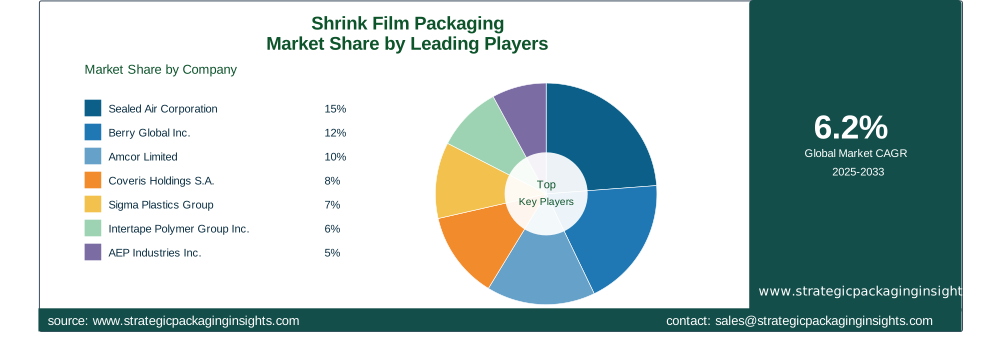
Among the leading companies in the shrink film packaging market is Sealed Air Corporation, which holds a substantial market share due to its extensive product portfolio and strong distribution network. The company is known for its innovative packaging solutions and has a strong presence in the food and beverage industry. Another major player is Berry Global Inc., which has a significant market share owing to its focus on sustainable packaging solutions and its strategic acquisitions to expand its product offerings. Amcor Limited is also a key player in the market, known for its advanced packaging technologies and commitment to sustainability.
Other notable companies in the shrink film packaging market include Coveris Holdings S.A., which is recognized for its high-performance packaging solutions and strong customer relationships. Bemis Company, Inc., now part of Amcor, is another prominent player with a focus on flexible packaging solutions. Sigma Plastics Group is a leading manufacturer of polyethylene films and has a strong presence in the North American market. Additionally, Intertape Polymer Group Inc. is known for its innovative shrink film products and has a significant market share in the industrial packaging segment.
Furthermore, companies like AEP Industries Inc., RKW Group, and Clondalkin Group Holdings B.V. are also key players in the market, each contributing to the competitive dynamics with their unique product offerings and strategic initiatives. These companies are continuously investing in research and development to enhance their product capabilities and meet the evolving demands of end-users. The competitive landscape of the shrink film packaging market is expected to remain dynamic, with companies focusing on innovation and sustainability to gain a competitive edge.
Key Highlights
- The shrink film packaging market is projected to grow at a CAGR of 6.2% from 2025 to 2033.
- Advancements in material technology are driving the development of eco-friendly shrink films.
- The food and beverage industry is a major end-user of shrink film packaging solutions.
- Regulatory restrictions on plastic materials are pushing manufacturers towards sustainable alternatives.
- The pharmaceutical industry presents significant growth opportunities for shrink film packaging.
- Online retail and e-commerce are boosting the demand for robust packaging solutions.
- Intense competition and fragmented market structure characterize the shrink film packaging market.
- Key players are focusing on product innovation and strategic partnerships to strengthen their market position.
- The development of advanced shrink films with enhanced barrier properties is a key trend.
- Environmental concerns and the push for sustainable packaging solutions are major challenges for the market.
Top Countries Insights
In the shrink film packaging market, the United States holds a significant market share, with a market size of $1.2 billion and a CAGR of 5%. The country's robust retail and e-commerce sectors are major growth drivers, along with the increasing demand for sustainable packaging solutions. The presence of key market players and the focus on innovation further contribute to the market's growth in the United States.
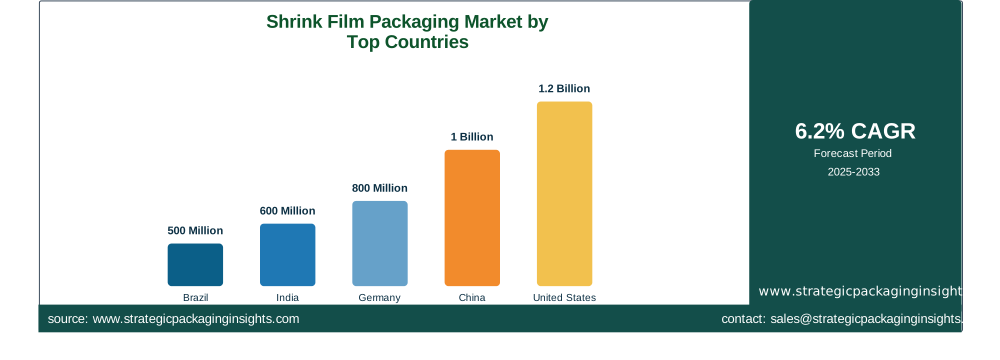
China is another leading market for shrink film packaging, with a market size of $1 billion and a CAGR of 7%. The rapid growth of the food and beverage industry, coupled with the expanding e-commerce sector, is driving the demand for shrink film packaging in the country. Additionally, government initiatives to promote sustainable packaging solutions are expected to boost market growth.
Germany, with a market size of $800 million and a CAGR of 4%, is a key player in the European shrink film packaging market. The country's strong manufacturing sector and the increasing focus on sustainability are major growth drivers. The presence of leading packaging companies and the emphasis on innovation further support market growth in Germany.
India, with a market size of $600 million and a CAGR of 8%, is experiencing rapid growth in the shrink film packaging market. The country's booming retail and e-commerce sectors, along with the increasing demand for packaged food products, are driving market growth. Government initiatives to promote sustainable packaging solutions are also contributing to the market's expansion.
Brazil, with a market size of $500 million and a CAGR of 6%, is a significant market for shrink film packaging in Latin America. The country's growing food and beverage industry and the increasing demand for consumer goods are major growth drivers. The focus on sustainable packaging solutions and the presence of key market players further support market growth in Brazil.
Evolving Market Dynamics (2018-2024) and Strategic Foresight (2025-2033)
| Metrics | 2018-2024 | 2025-2033 |
|---|---|---|
| CAGR | 5.5% | 6.2% |
| Market Size Evolution | $3.8 billion to $4.5 billion | $4.5 billion to $7.8 billion |
| Segment Distribution Shifts | Food & Beverage Dominance | Increased Pharmaceutical Demand |
| Regional Contribution Changes | North America Leading | Asia Pacific Growth Surge |
| Technological Impact Factors | Material Advancements | Eco-Friendly Innovations |
| Client Demand Transformations | Retail & E-commerce Focus | Sustainability & Safety Emphasis |
Shrink Film Packaging Market Segments Insights

Material Type Analysis
The material type segment of the shrink film packaging market is primarily dominated by polyethylene, which is widely used due to its excellent shrink properties and cost-effectiveness. Polyethylene shrink films are preferred for their durability and ability to provide a tight seal, making them ideal for packaging a variety of products. The demand for polyethylene shrink films is driven by their extensive application in the food and beverage industry, where they are used to package items such as bottled beverages, canned goods, and perishable food products. Additionally, the development of eco-friendly polyethylene films is gaining traction as manufacturers seek to address environmental concerns and meet regulatory requirements.
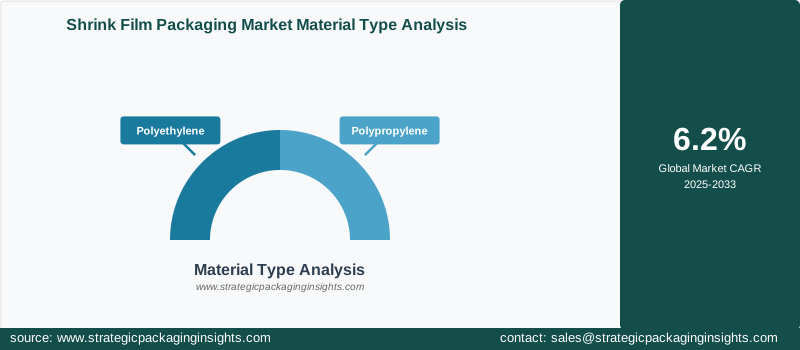
Polypropylene is another significant material type in the shrink film packaging market, known for its clarity and high gloss finish. Polypropylene shrink films are favored for their aesthetic appeal and are commonly used in retail packaging to enhance product visibility and shelf appeal. The growing demand for visually appealing packaging solutions in the consumer goods sector is driving the adoption of polypropylene shrink films. Furthermore, advancements in polypropylene film technology, such as the development of biaxially oriented polypropylene (BOPP) films, are expected to boost their application in various industries.
Application Analysis
The application segment of the shrink film packaging market is led by the food and beverage industry, which accounts for a significant share of the market revenue. Shrink film packaging is extensively used in this industry to package a wide range of products, including beverages, canned foods, and fresh produce. The demand for shrink film packaging in the food and beverage sector is driven by the need for efficient packaging solutions that ensure product freshness, extend shelf life, and enhance product visibility. The increasing trend of online grocery shopping and the growing popularity of ready-to-eat food products are further propelling the demand for shrink film packaging in this industry.
Industrial packaging is another key application area for shrink film packaging, where it is used to bundle and protect products during transportation and storage. The demand for shrink film packaging in the industrial sector is driven by the need for cost-effective and durable packaging solutions that can withstand the rigors of handling and transportation. The growing focus on reducing packaging waste and improving supply chain efficiency is also contributing to the adoption of shrink film packaging in the industrial sector. Additionally, the development of high-performance shrink films with enhanced barrier properties is expected to boost their application in industrial packaging.
End-User Analysis
The end-user segment of the shrink film packaging market is dominated by the retail sector, which is a major consumer of shrink film packaging solutions. The demand for shrink film packaging in the retail sector is driven by the need for attractive and secure packaging solutions that enhance product visibility and protect products from damage. The rise of e-commerce and online retailing is further boosting the demand for shrink film packaging, as it ensures the safe and secure delivery of products to consumers. The growing focus on sustainability and the increasing demand for eco-friendly packaging solutions are also influencing the adoption of shrink film packaging in the retail sector.
The manufacturing sector is another significant end-user of shrink film packaging, where it is used to package a wide range of products, including consumer goods, electronics, and automotive parts. The demand for shrink film packaging in the manufacturing sector is driven by the need for efficient and cost-effective packaging solutions that protect products during transportation and storage. The increasing focus on reducing packaging waste and improving supply chain efficiency is also contributing to the adoption of shrink film packaging in the manufacturing sector. Additionally, the development of advanced shrink films with enhanced barrier properties and anti-counterfeiting features is expected to boost their application in the manufacturing sector.
Region Analysis
The regional analysis of the shrink film packaging market reveals that North America holds a significant share of the market, driven by the strong presence of key market players and the robust demand for packaging solutions in the food and beverage industry. The region's focus on sustainability and the increasing demand for eco-friendly packaging solutions are also contributing to market growth. The United States, in particular, is a major market for shrink film packaging, with a strong retail and e-commerce sector driving demand.
Asia Pacific is expected to witness the highest growth rate in the shrink film packaging market, driven by the rapid expansion of the food and beverage industry and the growing e-commerce sector in countries like China and India. The region's focus on sustainable packaging solutions and the increasing demand for packaged food products are also contributing to market growth. Additionally, government initiatives to promote sustainable packaging solutions are expected to boost market growth in the region.
Shrink Film Packaging Market Segments
The Shrink Film Packaging market has been segmented on the basis ofMaterial Type
- Polyethylene
- Polypropylene
Application
- Food & Beverage
- Industrial Packaging
End-User
- Retail
- Manufacturing
Region
- North America
- Asia Pacific




