


Warehouse-Ready Packaging Market Outlook
The Warehouse-Ready Packaging market was valued at $45 billion in 2024 and is projected to reach $75 billion by 2033, growing at a CAGR of 5.5% during the forecast period 2025-2033. This market is experiencing robust growth driven by the increasing demand for efficient and sustainable packaging solutions in logistics and supply chain operations. The rise of e-commerce and the need for quick, safe, and reliable packaging solutions have further fueled the demand for warehouse-ready packaging. Companies are increasingly focusing on innovative packaging materials and designs that enhance durability and reduce environmental impact, aligning with global sustainability goals.
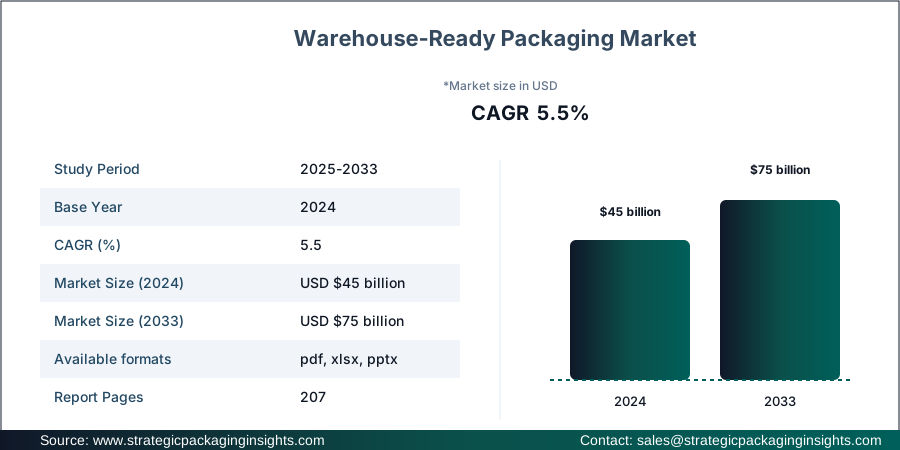
Despite the promising growth trajectory, the market faces several challenges, including stringent regulatory requirements and fluctuating raw material prices. The need for compliance with environmental regulations and standards can increase operational costs for manufacturers. However, the growth potential remains significant as companies invest in research and development to create cost-effective and eco-friendly packaging solutions. The market is also witnessing a shift towards automation and smart packaging technologies, which are expected to open new avenues for growth and efficiency improvements in the coming years.
Report Scope
| Attributes | Details |
| Report Title | Warehouse-Ready Packaging Market Size, Future Growth and Forecast 2033 |
| Material | Corrugated Boxes, Pallets, Stretch Films, Strapping, Others |
| Application | Food & Beverage, Consumer Goods, Pharmaceuticals, Electronics, Others |
| End-User | Retail, Manufacturing, Logistics, E-commerce, Others |
| Region | Asia Pacific, North America, Latin America, Europe, Middle East & Africa |
| Base Year | 2024 |
| Historic Period | 2017-2023 |
| Forecast Period | 2025-2033 |
| Number of Pages | 207 |
| Customization Available | Yes* |
Opportunities & Threats
The Warehouse-Ready Packaging market presents numerous opportunities, particularly in the realm of sustainability and innovation. As environmental concerns continue to rise, there is a growing demand for eco-friendly packaging solutions that minimize waste and reduce carbon footprints. Companies that can innovate in this space by developing biodegradable or recyclable materials stand to gain a competitive edge. Additionally, the integration of smart technologies such as RFID tags and IoT-enabled packaging offers opportunities to enhance supply chain visibility and efficiency, providing real-time data and insights that can optimize logistics operations.
Another significant opportunity lies in the expansion of e-commerce and the corresponding need for efficient packaging solutions that can withstand the rigors of shipping and handling. As online retail continues to grow, the demand for packaging that ensures product safety and integrity during transit is expected to increase. Companies that can offer customizable and scalable packaging solutions to meet the diverse needs of e-commerce businesses will likely see substantial growth. Furthermore, the trend towards automation in warehouses and distribution centers presents opportunities for packaging solutions that are compatible with automated systems, enhancing operational efficiency and reducing labor costs.
However, the market is not without its threats. One of the primary challenges is the volatility in raw material prices, which can impact production costs and profit margins. Additionally, the market is subject to stringent regulatory requirements related to packaging waste and recycling, which can pose compliance challenges for manufacturers. Companies must navigate these regulations carefully to avoid penalties and maintain their market position. Moreover, the competitive landscape is intense, with numerous players vying for market share, which can lead to price wars and margin pressures.
Market Share Analysis
The Warehouse-Ready Packaging market is characterized by a highly competitive landscape with numerous players striving to capture market share. The market is dominated by a mix of established players and emerging companies, each bringing unique strengths and capabilities to the table. The competitive dynamics are shaped by factors such as product innovation, pricing strategies, distribution networks, and customer service. Companies that can effectively differentiate their offerings through innovation and superior service are likely to gain a competitive advantage.
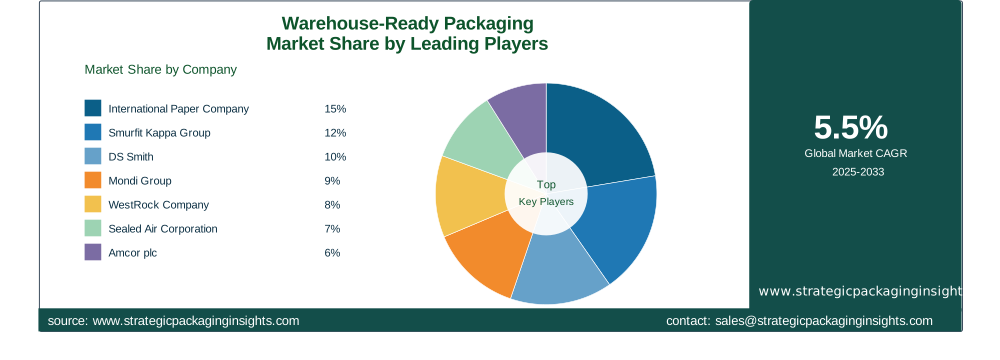
Among the key players in the market, International Paper Company holds a significant share due to its extensive product portfolio and strong distribution network. The company is known for its innovative packaging solutions that cater to a wide range of industries, including food and beverage, consumer goods, and pharmaceuticals. Similarly, Smurfit Kappa Group has established itself as a leader in sustainable packaging solutions, leveraging its expertise in recycling and eco-friendly materials to meet the growing demand for green packaging.
Another major player, DS Smith, has made significant strides in the market by focusing on customer-centric solutions and leveraging its global presence to expand its reach. The company has invested heavily in research and development to create innovative packaging designs that enhance product protection and reduce environmental impact. Mondi Group is also a prominent player, known for its integrated approach to packaging and paper solutions, which allows it to offer a comprehensive range of products and services to its clients.
Other notable companies in the market include WestRock Company, which has a strong focus on innovation and sustainability, and Sealed Air Corporation, known for its protective packaging solutions that cater to various industries. These companies, along with others such as Amcor plc, Berry Global Inc., and Sonoco Products Company, continue to invest in technology and innovation to maintain their competitive edge and meet the evolving needs of their customers.
Key Highlights
- The Warehouse-Ready Packaging market is projected to grow at a CAGR of 5.5% from 2025 to 2033.
- Increasing demand for sustainable and eco-friendly packaging solutions is a major growth driver.
- The rise of e-commerce is boosting the demand for durable and efficient packaging solutions.
- Smart packaging technologies are gaining traction, offering enhanced supply chain visibility.
- Volatility in raw material prices poses a challenge to market growth.
- Stringent regulatory requirements related to packaging waste and recycling are impacting the market.
- Automation in warehouses is driving demand for compatible packaging solutions.
- Key players are focusing on innovation and sustainability to gain a competitive edge.
- Asia Pacific is expected to be the fastest-growing region in the market.
- Companies are investing in R&D to develop cost-effective and eco-friendly packaging solutions.
Top Countries Insights
In the Warehouse-Ready Packaging market, the United States stands out as a leading country with a market size of $12 billion and a CAGR of 4%. The growth in the U.S. is driven by the robust e-commerce sector and the increasing focus on sustainable packaging solutions. The presence of major players and the adoption of advanced technologies further bolster the market's growth in this region.
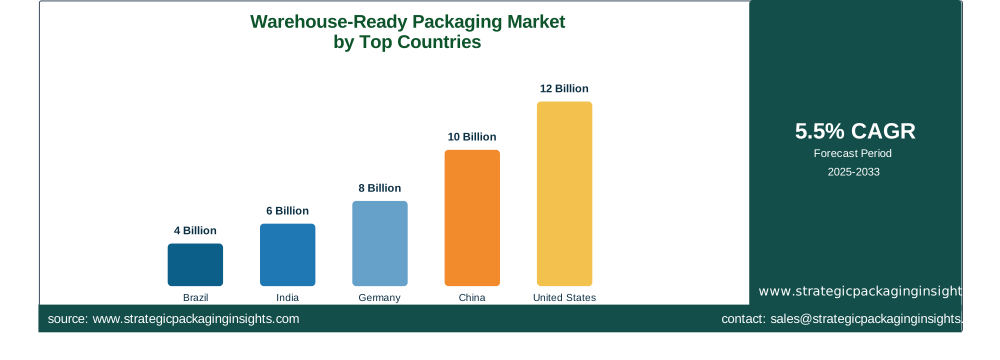
China is another key player in the market, with a market size of $10 billion and a CAGR of 6%. The rapid expansion of the e-commerce industry and the government's initiatives to promote sustainable practices are significant growth drivers. China's manufacturing capabilities and cost advantages also contribute to its strong position in the market.
Germany, with a market size of $8 billion and a CAGR of 5%, is a prominent market in Europe. The country's focus on sustainability and innovation in packaging solutions is a major growth driver. The presence of leading packaging companies and a strong industrial base further support the market's growth in Germany.
India, with a market size of $6 billion and a CAGR of 7%, is emerging as a significant market for warehouse-ready packaging. The growth is fueled by the booming e-commerce sector and the increasing demand for efficient packaging solutions. Government initiatives to promote manufacturing and sustainability are also contributing to the market's expansion.
Brazil, with a market size of $4 billion and a CAGR of 5%, is a key market in Latin America. The growth is driven by the expanding retail sector and the increasing adoption of sustainable packaging solutions. The country's focus on improving logistics and supply chain efficiency further supports the market's growth.
Evolving Market Dynamics (2018-2024) and Strategic Foresight (2025-2033)
| Metrics | 2018-2024 | 2025-2033 |
|---|---|---|
| CAGR | 4.5% | 5.5% |
| Market Size Evolution | $35 billion to $45 billion | $45 billion to $75 billion |
| Segment Distribution Shifts | Increased demand for corrugated boxes | Rising demand for smart packaging solutions |
| Regional Contribution Changes | North America and Europe dominated | Asia Pacific emerging as a key region |
| Technological Impact Factors | Introduction of automation | Integration of IoT and smart technologies |
| Client Demand Transformations | Focus on durability and cost-effectiveness | Emphasis on sustainability and innovation |
Warehouse-Ready Packaging Market Segments Insights

Material Analysis
The material segment of the Warehouse-Ready Packaging market is crucial as it determines the durability, cost, and environmental impact of packaging solutions. Corrugated boxes are the most widely used material due to their strength, lightweight nature, and recyclability. They are particularly favored in the e-commerce sector for shipping a wide range of products. Pallets, made from wood, plastic, or metal, are essential for handling and transporting goods in warehouses. The demand for plastic pallets is increasing due to their durability and ease of cleaning, although environmental concerns are driving a shift towards more sustainable materials.
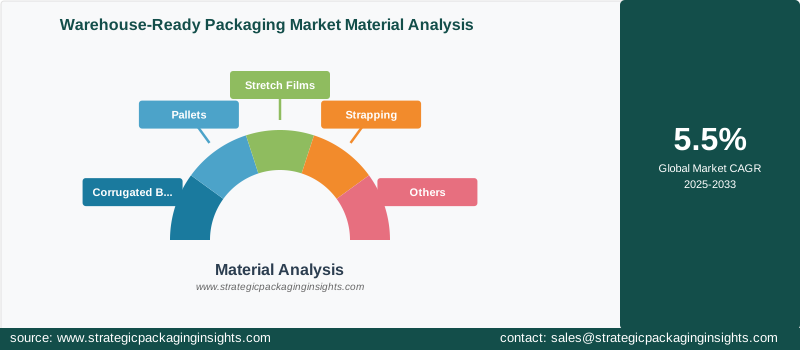
Stretch films and strapping are also vital components of warehouse-ready packaging, providing stability and protection during transit. The market is witnessing innovations in biodegradable and recyclable films, aligning with the growing demand for eco-friendly solutions. Companies are investing in research and development to create materials that offer superior performance while minimizing environmental impact. The choice of material is often influenced by factors such as cost, product type, and regulatory requirements, with companies seeking to balance these considerations to optimize their packaging strategies.
Application Analysis
The application segment of the Warehouse-Ready Packaging market is diverse, encompassing industries such as food and beverage, consumer goods, pharmaceuticals, and electronics. Each industry has unique packaging requirements, driving demand for specialized solutions. In the food and beverage sector, packaging must ensure product safety and freshness, leading to the use of materials that provide barrier protection against moisture and contaminants. The consumer goods industry demands packaging that is both attractive and functional, often requiring customization to enhance brand visibility.
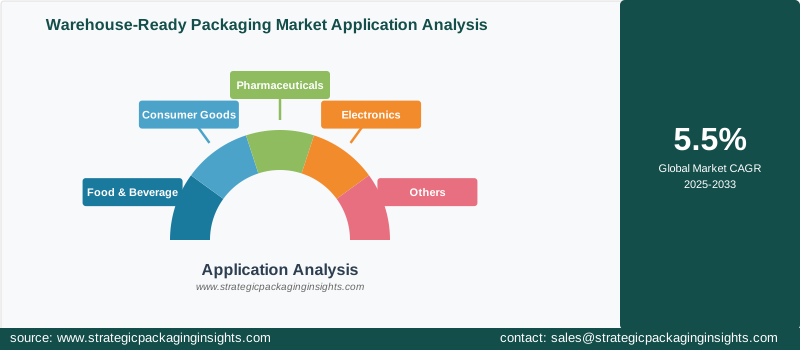
Pharmaceutical packaging is subject to stringent regulations to ensure product integrity and patient safety. This has led to the development of tamper-evident and child-resistant packaging solutions. The electronics industry requires packaging that provides protection against static electricity and physical damage, driving demand for materials with anti-static properties. As these industries continue to evolve, the need for innovative and adaptable packaging solutions is expected to grow, with companies focusing on developing products that meet the specific needs of each application.
End-User Analysis
The end-user segment of the Warehouse-Ready Packaging market includes retail, manufacturing, logistics, e-commerce, and others. Each end-user has distinct packaging needs, influencing the demand for different types of packaging solutions. The retail sector requires packaging that is both functional and visually appealing to attract consumers and enhance the shopping experience. In manufacturing, packaging must provide protection during storage and transportation, often requiring robust materials that can withstand harsh conditions.
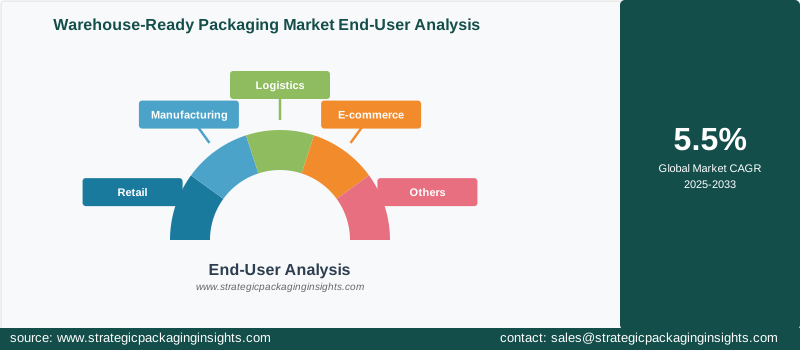
The logistics industry demands packaging solutions that enhance efficiency and reduce costs, with a focus on materials that are lightweight yet durable. E-commerce has emerged as a significant end-user, driving demand for packaging that ensures product safety during transit and provides a positive unboxing experience for consumers. As these end-users continue to evolve, the market is expected to see increased demand for innovative packaging solutions that address their specific needs and challenges.
Region Analysis
The regional analysis of the Warehouse-Ready Packaging market reveals significant variations in demand and growth drivers across different geographies. North America and Europe have traditionally been dominant markets, driven by the presence of major players and advanced logistics infrastructure. However, Asia Pacific is emerging as a key growth region, fueled by the rapid expansion of e-commerce and manufacturing industries. The region's cost advantages and increasing focus on sustainability are also contributing to its growth.
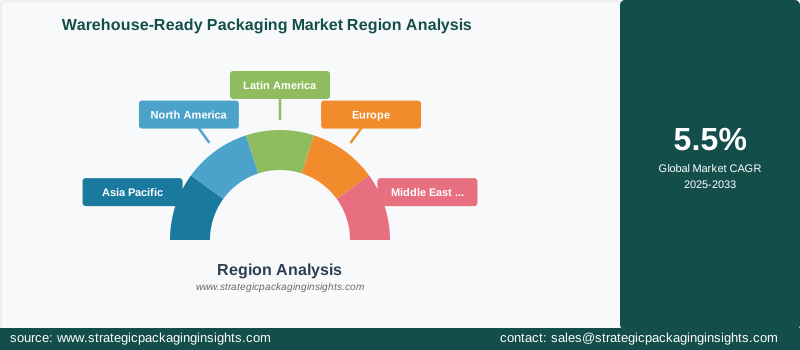
Latin America and the Middle East & Africa are also witnessing growth, driven by the expanding retail and logistics sectors. These regions present opportunities for companies to expand their presence and tap into new markets. The market dynamics in each region are influenced by factors such as economic conditions, regulatory environment, and consumer preferences, with companies needing to adapt their strategies to succeed in these diverse markets.
Warehouse-Ready Packaging Market Segments
The Warehouse-Ready Packaging market has been segmented on the basis ofMaterial
- Corrugated Boxes
- Pallets
- Stretch Films
- Strapping
- Others
Application
- Food & Beverage
- Consumer Goods
- Pharmaceuticals
- Electronics
- Others
End-User
- Retail
- Manufacturing
- Logistics
- E-commerce
- Others
Region
- Asia Pacific
- North America
- Latin America
- Europe
- Middle East & Africa




