


Active Packaging Market Outlook
The Active Packaging market size was valued at USD 15.38 Billion in 2025 and is anticipated to reach USD 29.74 Billion by 2034, growing at a CAGR of 7.6% during the forecast period according to Strategic Packaging Insights. This growth is driven by the increasing demand for longer shelf life and enhanced product safety in the food and beverage industry. Companies like Amcor plc and Sealed Air Corporation are at the forefront, innovating with technologies that extend product freshness and reduce waste. The market's expansion is further fueled by advancements in smart packaging solutions that cater to consumer preferences for convenience and sustainability.
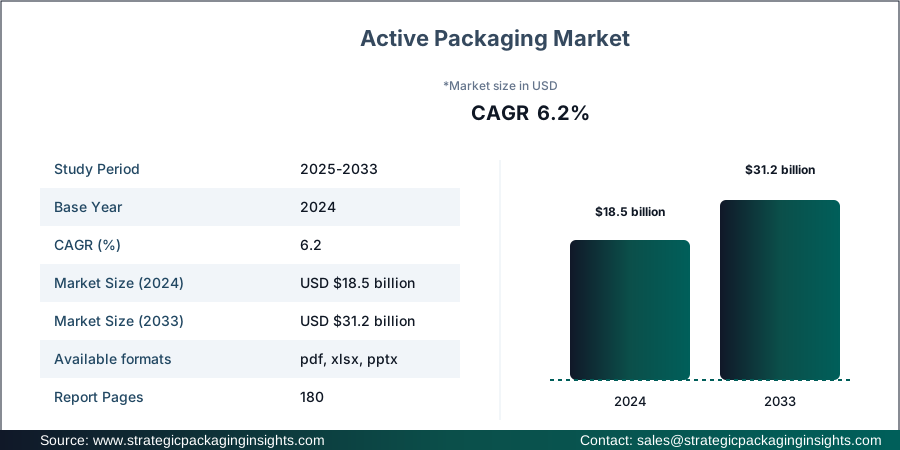
One of the most impactful drivers of the Active Packaging market is the rising consumer awareness regarding food safety and quality. Governments worldwide are implementing stringent regulations to ensure food safety, which in turn is pushing manufacturers to adopt active packaging solutions. For instance, the U.S. Food and Drug Administration (FDA) has set guidelines that encourage the use of packaging technologies that can actively control the environment inside the package. This regulatory push, combined with consumer demand for transparency and safety, is propelling the market forward. Companies like Berry Global and Mitsubishi Gas Chemical Company are leveraging these trends to develop innovative packaging solutions that meet regulatory standards while enhancing consumer trust.
Report Scope
| Attributes | Details |
| Report Title | Active Packaging Market Size, Future Growth and Forecast 2034 |
| By Technology | Oxygen Scavengers, Moisture Absorbers, Ethylene Absorbers, Antimicrobial Packaging, Carbon Dioxide Emitters, Self-Venting Packaging |
| By Packaging Type | Flexible Packaging, Rigid Packaging, Trays, Pouches, Bottles & Containers |
| By Application | Food & Beverage, Healthcare & Pharmaceuticals, Personal Care, Consumer Electronics, Industrial Products |
| By End User | Food Manufacturers, Pharmaceutical Companies, Consumer Goods Companies, Packaging Converters, Retail Chains |
| Region | Asia Pacific, North America, Latin America, Europe, Middle East & Africa |
| Base Year | 2025 |
| Historic Period | 2018-2024 |
| Forecast Period | 2026-2034 |
| Number of Pages | 116 |
| Customization Available | Yes* |
Sustainability & Circular Economy Analysis
Sustainability initiatives are significantly shaping the active packaging market, with a strong focus on reducing environmental impact through recyclable materials and eco-friendly innovations. Companies are increasingly investing in lightweight packaging solutions that not only reduce material usage but also lower transportation emissions. This shift is driven by consumer preferences for sustainable products and the growing emphasis on corporate social responsibility. As a result, packaging manufacturers are exploring biodegradable and compostable materials to align with circular economy principles.
The integration of circular economy practices is influencing packaging design and manufacturing processes. Companies are adopting waste reduction strategies and extended producer responsibility (EPR) frameworks to minimize their carbon footprint. These initiatives are not only enhancing brand reputation but also ensuring compliance with evolving packaging regulations. As a result, businesses are making strategic investments in sustainable technologies to maintain long-term competitiveness in the market.
Moreover, the focus on sustainability is driving innovation in packaging supply chains. Companies are collaborating with suppliers and partners to develop closed-loop systems that facilitate recycling and reuse. This collaborative approach is essential for meeting regulatory requirements and achieving sustainability goals. As consumer demand for eco-friendly packaging continues to rise, businesses are prioritizing sustainable practices to enhance their market position and drive growth.
Packaging Value Chain & Supply Chain Analysis
The active packaging value chain is a complex ecosystem involving raw material sourcing, packaging converters, manufacturers, and logistics providers. Efficient supply chain management is crucial for ensuring the timely delivery of packaging solutions to end-users. Companies like Amcor plc and Sealed Air Corporation are optimizing their procurement strategies to secure a steady supply of high-quality raw materials, which is essential for maintaining production capabilities and meeting customer demands.
Supply chain resilience is a key focus for packaging manufacturers, especially in the face of global disruptions. Businesses are adopting localization strategies to reduce dependency on international suppliers and enhance supply chain agility. This approach not only mitigates risks but also improves inventory management and reduces lead times. Strategic partnerships with logistics providers and distributors are also playing a vital role in ensuring efficient transportation and distribution of packaging products.
Recycling networks are becoming an integral part of the packaging supply chain, driven by the need for sustainable practices. Companies are collaborating with recycling partners to develop systems that facilitate the collection and processing of used packaging materials. This collaboration is essential for achieving sustainability goals and complying with regulatory requirements. As the demand for eco-friendly packaging solutions grows, businesses are investing in innovative supply chain strategies to enhance their market competitiveness and drive long-term growth.
Opportunities & Threats
The active packaging market presents significant opportunities for growth, driven by the increasing demand for innovative packaging solutions that enhance product safety and extend shelf life. The food and beverage industry, in particular, is a major growth area, as consumers seek packaging that preserves freshness and quality. Companies like AptarGroup and Multisorb Technologies are capitalizing on this trend by developing advanced packaging technologies that cater to the evolving needs of consumers and manufacturers. Additionally, the healthcare and pharmaceuticals sector offers lucrative opportunities for active packaging solutions that ensure the integrity and safety of medical products.
Another opportunity lies in the growing emphasis on sustainability and eco-friendly packaging solutions. As consumers become more environmentally conscious, there is a rising demand for packaging that minimizes environmental impact. This trend is driving innovation in biodegradable and recyclable materials, providing companies with the opportunity to differentiate themselves in the market. Businesses that invest in sustainable packaging technologies are likely to gain a competitive edge and attract environmentally conscious consumers.
However, the active packaging market also faces challenges, particularly in terms of regulatory compliance and cost pressures. Stringent regulations regarding food safety and packaging materials can pose challenges for manufacturers, requiring them to invest in compliance and testing. Additionally, the high cost of advanced packaging technologies can be a barrier for small and medium-sized enterprises. Companies must navigate these challenges by investing in research and development to create cost-effective solutions that meet regulatory standards and consumer expectations.
Drivers & Challenges
One of the primary drivers of the active packaging market is the increasing consumer demand for convenience and product safety. As lifestyles become busier, consumers are seeking packaging solutions that offer ease of use and enhance the shelf life of products. This demand is particularly evident in the food and beverage industry, where active packaging technologies are being adopted to maintain product freshness and quality. Companies like CSP Technologies and W. R. Grace & Co. are leveraging these trends to develop innovative packaging solutions that cater to consumer preferences.
Technological advancements are also driving the growth of the active packaging market. Innovations in smart packaging technologies, such as sensors and indicators, are enabling manufacturers to offer packaging solutions that provide real-time information about product quality and safety. These technologies are gaining traction in the healthcare and pharmaceuticals sector, where ensuring the integrity of medical products is critical. As a result, companies are investing in research and development to create cutting-edge packaging solutions that meet the evolving needs of consumers and industries.
Despite these drivers, the active packaging market faces challenges related to cost and regulatory compliance. The high cost of advanced packaging technologies can be a barrier for small and medium-sized enterprises, limiting their ability to compete in the market. Additionally, stringent regulations regarding packaging materials and food safety require manufacturers to invest in compliance and testing, which can increase operational costs. Companies must navigate these challenges by developing cost-effective solutions that meet regulatory standards and consumer expectations.
Market Share Analysis
The active packaging market is characterized by intense competition, with several key players vying for market share. Companies like Amcor plc, Sealed Air Corporation, and AptarGroup are leading the market with their innovative packaging solutions and strong global presence. These companies are investing heavily in research and development to create advanced packaging technologies that cater to the evolving needs of consumers and industries. Their focus on sustainability and eco-friendly packaging solutions is also helping them gain a competitive edge in the market.
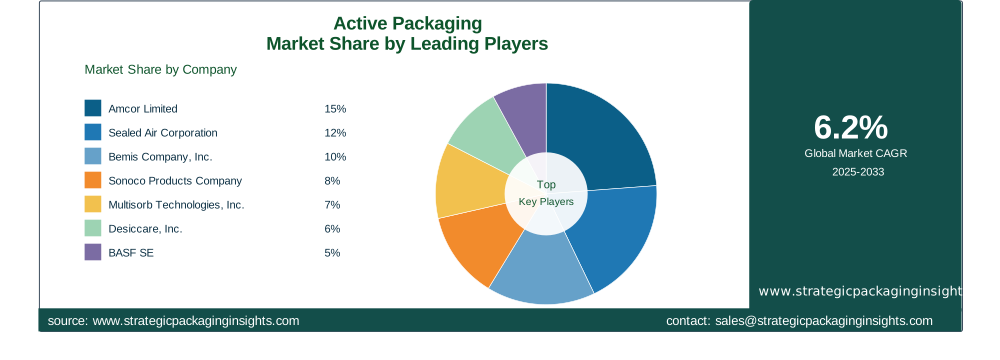
Amcor plc is a major player in the active packaging market, known for its innovative packaging solutions that enhance product safety and extend shelf life. The company is leveraging its global presence and strong research and development capabilities to drive growth and expand its market share. Sealed Air Corporation is another key player, offering a wide range of active packaging solutions that cater to various industries, including food and beverage, healthcare, and pharmaceuticals. The company's focus on sustainability and eco-friendly packaging solutions is helping it gain a competitive edge in the market.
AptarGroup is a leading provider of active packaging solutions, known for its innovative technologies that enhance product safety and quality. The company is investing in research and development to create advanced packaging solutions that cater to the evolving needs of consumers and industries. Berry Global is another key player, offering a wide range of active packaging solutions that cater to various industries, including food and beverage, healthcare, and pharmaceuticals. The company's focus on sustainability and eco-friendly packaging solutions is helping it gain a competitive edge in the market.
Other notable players in the active packaging market include Mitsubishi Gas Chemical Company, Multisorb Technologies, BASF SE, Stora Enso, CSP Technologies, W. R. Grace & Co., Desiccare Inc., Clariant AG, ProAmpac, Coveris, and Huhtamaki Oyj. These companies are investing in research and development to create innovative packaging solutions that cater to the evolving needs of consumers and industries. Their focus on sustainability and eco-friendly packaging solutions is helping them gain a competitive edge in the market.
Key Highlights
- Market Size: The active packaging market was valued at USD 15.38 Billion in 2025 and is projected to reach USD 29.74 Billion by 2034.
- Growth Rate: The market is expected to grow at a CAGR of 7.6% during the forecast period.
- Leading Companies: Key players include Amcor plc, Sealed Air Corporation, and AptarGroup.
- Technology Segment: Oxygen scavengers and antimicrobial packaging are leading technologies.
- Application Segment: Food & Beverage and Healthcare & Pharmaceuticals are major application areas.
- Regional Growth: Asia Pacific is expected to witness the highest growth rate.
- Sustainability Focus: Increasing demand for eco-friendly and recyclable packaging solutions.
Active Packaging Market Segments Insights

By Technology Analysis
The active packaging market is segmented by technology into oxygen scavengers, moisture absorbers, ethylene absorbers, antimicrobial packaging, carbon dioxide emitters, and self-venting packaging. Oxygen scavengers are among the most widely used technologies, driven by the need to extend the shelf life of perishable goods. Companies like Mitsubishi Gas Chemical Company and Multisorb Technologies are leading the way in developing advanced oxygen scavenging solutions that cater to the food and beverage industry. Antimicrobial packaging is also gaining traction, particularly in the healthcare and pharmaceuticals sector, where ensuring product safety is critical.
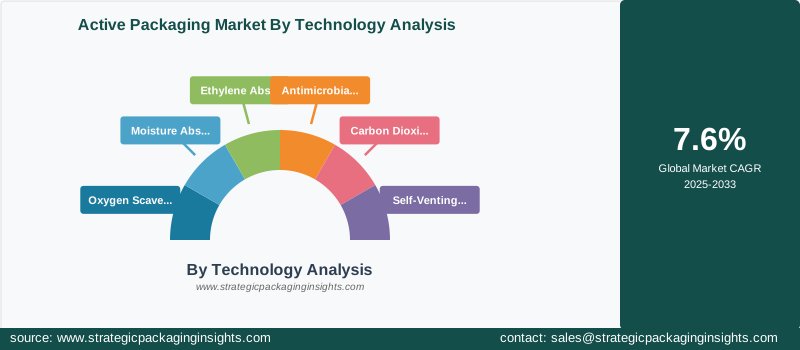
Moisture absorbers and ethylene absorbers are essential technologies for maintaining product quality and freshness. These technologies are widely used in the food and beverage industry to prevent spoilage and extend shelf life. Companies are investing in research and development to create innovative solutions that cater to the evolving needs of consumers and industries. Carbon dioxide emitters and self-venting packaging are also gaining popularity, driven by the demand for packaging solutions that enhance product safety and quality.
By Packaging Type Analysis
The active packaging market is segmented by packaging type into flexible packaging, rigid packaging, trays, pouches, and bottles & containers. Flexible packaging is the most widely used packaging type, driven by its versatility and cost-effectiveness. Companies like Amcor plc and Sealed Air Corporation are leading the way in developing innovative flexible packaging solutions that cater to various industries, including food and beverage, healthcare, and pharmaceuticals. Rigid packaging is also gaining traction, particularly in the healthcare and pharmaceuticals sector, where ensuring product safety is critical.
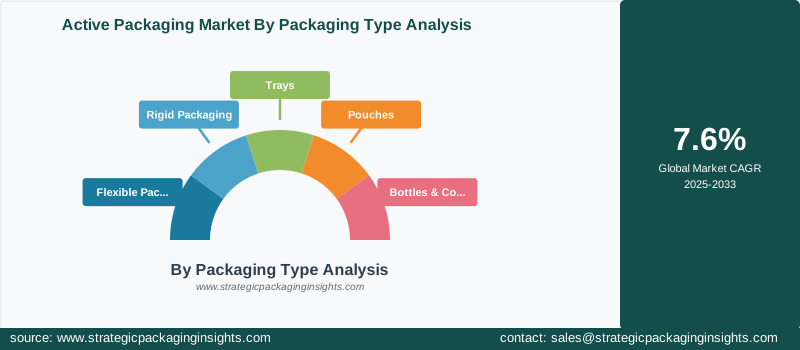
Trays, pouches, and bottles & containers are essential packaging types for maintaining product quality and freshness. These packaging types are widely used in the food and beverage industry to prevent spoilage and extend shelf life. Companies are investing in research and development to create innovative solutions that cater to the evolving needs of consumers and industries. The demand for eco-friendly and recyclable packaging solutions is also driving innovation in packaging design and manufacturing processes.
By Application Analysis
The active packaging market is segmented by application into food & beverage, healthcare & pharmaceuticals, personal care, consumer electronics, and industrial products. The food & beverage industry is the largest application segment, driven by the need for packaging solutions that enhance product safety and extend shelf life. Companies like AptarGroup and Multisorb Technologies are leading the way in developing advanced packaging solutions that cater to the evolving needs of consumers and manufacturers. The healthcare & pharmaceuticals sector is also a major growth area, as active packaging solutions are essential for ensuring the integrity and safety of medical products.
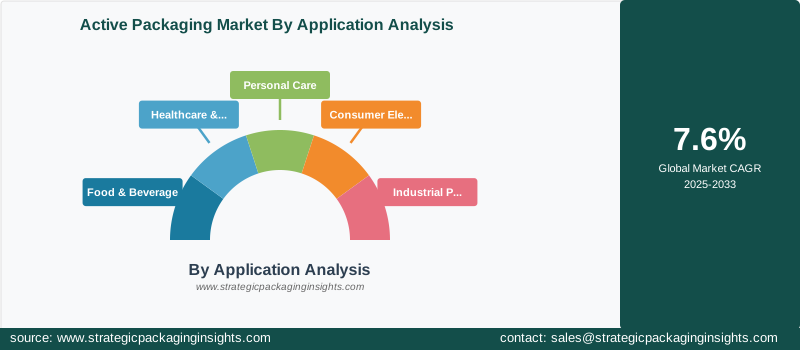
Personal care, consumer electronics, and industrial products are emerging application segments, driven by the demand for packaging solutions that enhance product safety and quality. Companies are investing in research and development to create innovative solutions that cater to the evolving needs of consumers and industries. The focus on sustainability and eco-friendly packaging solutions is also driving innovation in packaging design and manufacturing processes.
By End User Analysis
The active packaging market is segmented by end user into food manufacturers, pharmaceutical companies, consumer goods companies, packaging converters, and retail chains. Food manufacturers are the largest end-user segment, driven by the need for packaging solutions that enhance product safety and extend shelf life. Companies like Amcor plc and Sealed Air Corporation are leading the way in developing innovative packaging solutions that cater to the evolving needs of food manufacturers. Pharmaceutical companies are also a major growth area, as active packaging solutions are essential for ensuring the integrity and safety of medical products.
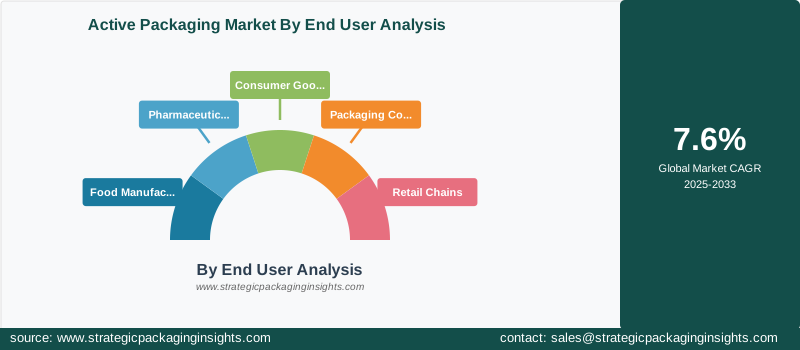
Consumer goods companies, packaging converters, and retail chains are emerging end-user segments, driven by the demand for packaging solutions that enhance product safety and quality. Companies are investing in research and development to create innovative solutions that cater to the evolving needs of consumers and industries. The focus on sustainability and eco-friendly packaging solutions is also driving innovation in packaging design and manufacturing processes.
Active Packaging Market Segments
The Active Packaging market has been segmented on the basis ofBy Technology
- Oxygen Scavengers
- Moisture Absorbers
- Ethylene Absorbers
- Antimicrobial Packaging
- Carbon Dioxide Emitters
- Self-Venting Packaging
By Packaging Type
- Flexible Packaging
- Rigid Packaging
- Trays
- Pouches
- Bottles & Containers
By Application
- Food & Beverage
- Healthcare & Pharmaceuticals
- Personal Care
- Consumer Electronics
- Industrial Products
By End User
- Food Manufacturers
- Pharmaceutical Companies
- Consumer Goods Companies
- Packaging Converters
- Retail Chains
Region
- Asia Pacific
- North America
- Latin America
- Europe
- Middle East & Africa




