


Moisture Absorber Packaging Market Outlook
The moisture absorber packaging market was valued at $1.2 billion in 2024 and is projected to reach $2.5 billion by 2033, growing at a CAGR of 8.5% during the forecast period 2025-2033. This market is driven by the increasing demand for moisture control solutions across various industries such as food and beverage, pharmaceuticals, and electronics. The need to extend the shelf life of products and prevent moisture-related damage is a significant factor propelling the market growth. Additionally, the rise in e-commerce and the subsequent demand for effective packaging solutions to ensure product safety during transit further bolster the market. Technological advancements in packaging materials and the development of eco-friendly moisture absorbers are also contributing to the market's expansion.
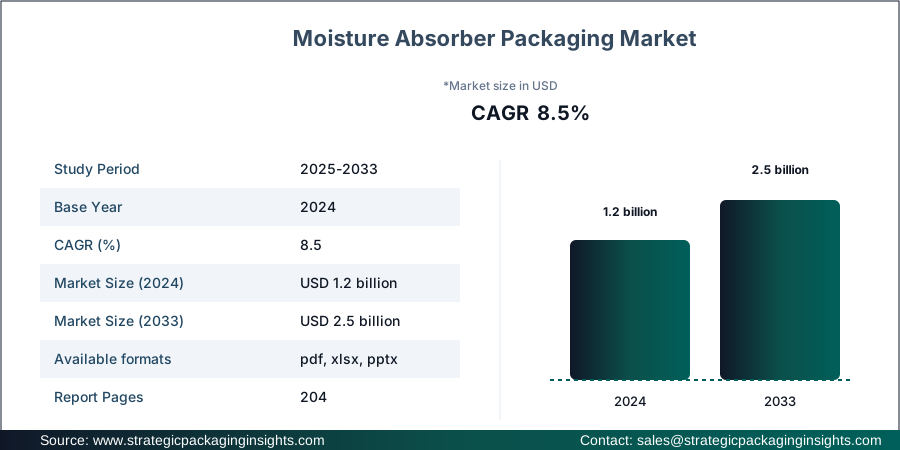
However, the market faces certain restraints, including stringent environmental regulations regarding the disposal of packaging materials and the high cost of advanced moisture absorber solutions. Despite these challenges, the market holds substantial growth potential due to the increasing awareness about the benefits of moisture absorber packaging and the growing trend of sustainable packaging solutions. The development of biodegradable and recyclable moisture absorbers presents lucrative opportunities for market players. Furthermore, the expansion of the electronics and pharmaceutical sectors in emerging economies is expected to create new avenues for market growth.
Report Scope
| Attributes | Details |
| Report Title | Moisture Absorber Packaging Market Size, Future Growth and Forecast 2033 |
| Material Type | Silica Gel, Activated Charcoal, Calcium Chloride, Clay, Others |
| Application | Food & Beverage, Pharmaceuticals, Electronics, Automotive, Others |
| Packaging Type | Bags, Containers, Sheets, Sachets, Others |
| End-User | Industrial, Commercial, Residential, Others |
| Base Year | 2024 |
| Historic Period | 2017-2023 |
| Forecast Period | 2025-2033 |
| Number of Pages | 204 |
| Customization Available | Yes* |
Opportunities & Threats
The moisture absorber packaging market presents numerous opportunities, primarily driven by the increasing demand for moisture control solutions in the food and beverage industry. As consumers become more health-conscious, the need for packaging that preserves the freshness and quality of food products is paramount. This trend is particularly evident in the packaged food segment, where moisture absorbers play a crucial role in extending shelf life and maintaining product integrity. Additionally, the rise of online grocery shopping has heightened the demand for effective packaging solutions that can withstand varying environmental conditions during transit. This shift in consumer behavior offers significant growth prospects for moisture absorber packaging manufacturers.
Another opportunity lies in the pharmaceutical industry, where moisture control is critical to maintaining the efficacy and safety of drugs. The increasing production of pharmaceuticals, coupled with stringent regulations regarding drug storage, is driving the demand for advanced moisture absorber packaging solutions. Moreover, the growing focus on sustainable packaging is encouraging manufacturers to develop eco-friendly moisture absorbers, which not only meet regulatory requirements but also appeal to environmentally conscious consumers. This trend is expected to create new growth avenues for market players, particularly those investing in research and development to innovate sustainable packaging solutions.
Despite these opportunities, the market faces certain threats, including the high cost of advanced moisture absorber solutions, which may deter price-sensitive consumers. Additionally, the market is subject to stringent environmental regulations regarding the disposal of packaging materials, which can pose challenges for manufacturers. The need to comply with these regulations while maintaining cost-effectiveness is a significant challenge for market players. Furthermore, the presence of alternative moisture control solutions, such as desiccant bags and humidity indicator cards, may limit the growth of the moisture absorber packaging market.
Market Share Analysis
The competitive landscape of the moisture absorber packaging market is characterized by the presence of several key players, each striving to enhance their market share through strategic initiatives such as mergers and acquisitions, product innovations, and expansions. The market is moderately fragmented, with a mix of global and regional players competing to cater to the diverse needs of end-users. Companies are focusing on developing innovative and sustainable moisture absorber solutions to gain a competitive edge and meet the evolving demands of consumers.
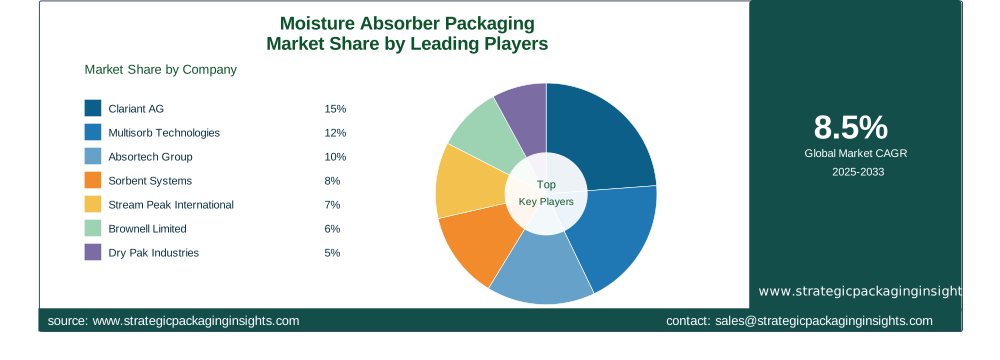
Among the major players in the market, Clariant AG holds a significant share due to its extensive product portfolio and strong focus on research and development. The company offers a wide range of moisture absorber solutions, including silica gel and activated charcoal, catering to various industries such as pharmaceuticals, electronics, and food and beverage. Another prominent player, Multisorb Technologies, is known for its innovative moisture control solutions and has a strong presence in the North American market. The company's focus on sustainability and eco-friendly products has helped it maintain a competitive position in the market.
Other notable companies in the market include Absortech Group, which specializes in moisture protection solutions for the logistics and transportation sectors. The company's products are widely used in the shipping industry to prevent moisture-related damage during transit. Sorbent Systems, a leading provider of desiccant and moisture absorber solutions, has a strong presence in the electronics and pharmaceutical sectors. The company's focus on quality and customer satisfaction has helped it build a loyal customer base.
Additionally, companies like Stream Peak International and Brownell Limited are making significant strides in the market by offering customized moisture absorber solutions tailored to specific industry needs. These companies are leveraging their expertise in packaging solutions to expand their market presence and cater to the growing demand for moisture control solutions. Overall, the market is witnessing intense competition, with companies focusing on innovation, sustainability, and customer-centric solutions to enhance their market share.
Key Highlights
- The moisture absorber packaging market is projected to grow at a CAGR of 8.5% from 2025 to 2033.
- Increasing demand for moisture control solutions in the food and beverage industry is a major growth driver.
- Technological advancements in packaging materials are enhancing the effectiveness of moisture absorbers.
- The rise of e-commerce is boosting the demand for effective packaging solutions to ensure product safety during transit.
- Stringent environmental regulations pose challenges for manufacturers in terms of packaging material disposal.
- The development of biodegradable and recyclable moisture absorbers presents lucrative opportunities for market players.
- The expansion of the electronics and pharmaceutical sectors in emerging economies is expected to drive market growth.
- Companies are focusing on innovation and sustainability to gain a competitive edge in the market.
- The market is moderately fragmented, with a mix of global and regional players competing for market share.
Top Countries Insights
In the moisture absorber packaging market, the United States holds a significant share, with a market size of $300 million and a CAGR of 7%. The country's robust food and beverage industry, coupled with the increasing demand for packaged food products, is driving the market growth. Additionally, the presence of major pharmaceutical companies and the growing focus on drug safety and efficacy are contributing to the demand for moisture absorber packaging solutions.
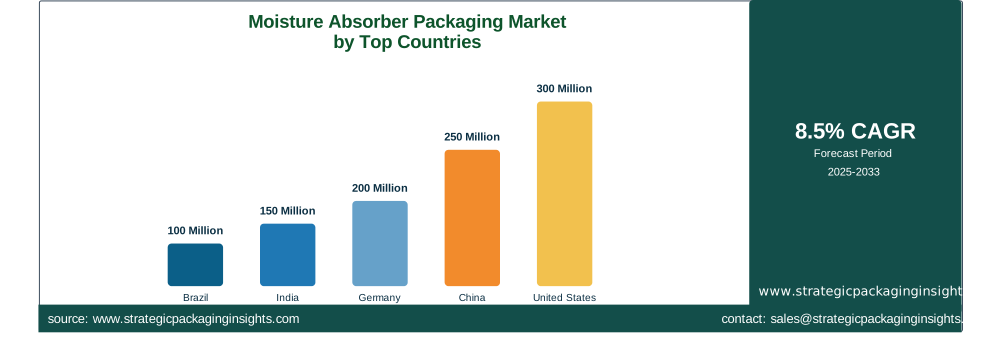
China is another key market, with a market size of $250 million and a CAGR of 9%. The country's booming electronics industry and the increasing production of consumer electronics are major growth drivers. Furthermore, the rising awareness about the benefits of moisture control solutions in preserving product quality is boosting the market. The government's focus on sustainable packaging solutions is also encouraging manufacturers to develop eco-friendly moisture absorbers.
Germany, with a market size of $200 million and a CAGR of 6%, is a prominent player in the European market. The country's strong automotive industry and the increasing demand for moisture control solutions in automotive packaging are driving the market growth. Additionally, the growing focus on sustainability and the development of biodegradable packaging materials are creating new opportunities for market players.
India, with a market size of $150 million and a CAGR of 10%, is emerging as a lucrative market for moisture absorber packaging. The country's expanding pharmaceutical and electronics sectors, coupled with the increasing demand for effective packaging solutions, are driving the market growth. The government's initiatives to promote sustainable packaging are also encouraging manufacturers to invest in eco-friendly moisture absorbers.
Brazil, with a market size of $100 million and a CAGR of 8%, is a key market in Latin America. The country's growing food and beverage industry and the increasing demand for packaged food products are major growth drivers. Additionally, the rising awareness about the benefits of moisture control solutions in extending product shelf life is boosting the market. The government's focus on sustainable packaging solutions is also encouraging manufacturers to develop eco-friendly moisture absorbers.
Evolving Market Dynamics (2018-2024) and Strategic Foresight (2025-2033)
| Metrics | 2018-2024 | 2025-2033 |
|---|---|---|
| CAGR | 6.5% | 8.5% |
| Market Size Evolution | $900 million to $1.2 billion | $1.2 billion to $2.5 billion |
| Segment Distribution Shifts | Food & Beverage Dominance | Increased Electronics & Pharma Share |
| Regional Contribution Changes | North America & Europe Lead | Asia Pacific & Latin America Surge |
| Technological Impact Factors | Basic Moisture Control | Advanced Eco-Friendly Solutions |
| Client Demand Transformations | Standard Packaging Needs | Customized & Sustainable Solutions |
Moisture Absorber Packaging Market Segments Insights

Material Type Analysis
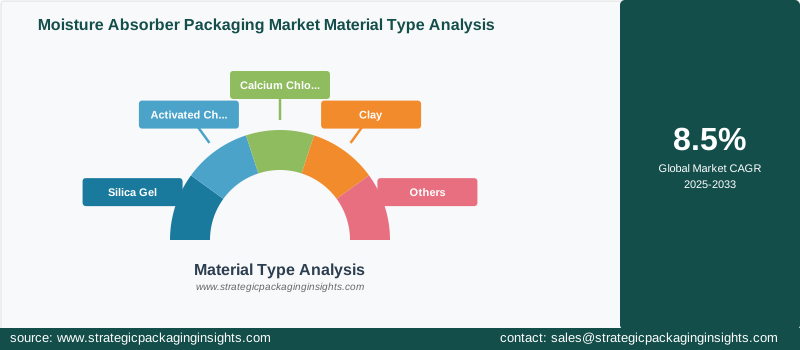
The material type segment of the moisture absorber packaging market is diverse, encompassing silica gel, activated charcoal, calcium chloride, clay, and others. Silica gel is one of the most widely used materials due to its high moisture absorption capacity and cost-effectiveness. It is extensively used in the electronics and pharmaceutical industries to protect products from moisture damage. Activated charcoal, known for its superior adsorption properties, is gaining traction in the food and beverage industry, where maintaining product freshness is crucial. Calcium chloride, with its high moisture absorption rate, is preferred in industrial applications where rapid moisture control is required. The demand for clay-based moisture absorbers is also rising, particularly in the packaging of sensitive products that require gentle moisture control.
Technological advancements in material science are driving the development of innovative moisture absorber solutions. Manufacturers are focusing on enhancing the moisture absorption capacity of materials while ensuring environmental sustainability. The development of biodegradable and recyclable materials is a key trend in this segment, driven by the increasing demand for eco-friendly packaging solutions. Additionally, the customization of moisture absorbers to meet specific industry requirements is gaining popularity, with manufacturers offering tailored solutions to cater to diverse end-user needs. The competition in this segment is intense, with companies investing in research and development to gain a competitive edge and capture a larger market share.
Application Analysis
The application segment of the moisture absorber packaging market is broad, covering food and beverage, pharmaceuticals, electronics, automotive, and others. The food and beverage industry is a major consumer of moisture absorber packaging, driven by the need to extend the shelf life of products and maintain their quality. The rise of online grocery shopping and the increasing demand for packaged food products are further boosting the demand for moisture absorbers in this industry. In the pharmaceutical sector, moisture control is critical to ensuring the efficacy and safety of drugs, driving the demand for advanced moisture absorber solutions.
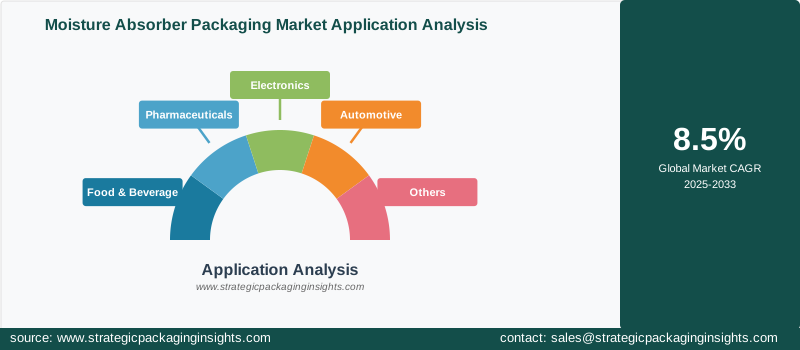
The electronics industry is another significant application area, where moisture absorbers are used to protect sensitive components from moisture damage. The increasing production of consumer electronics and the growing demand for high-quality electronic products are driving the demand for moisture absorber packaging in this sector. The automotive industry is also witnessing a growing demand for moisture control solutions, particularly in the packaging of automotive components that are sensitive to moisture. The competition in this segment is fierce, with companies focusing on innovation and customization to meet the specific needs of different industries.
Packaging Type Analysis
The packaging type segment of the moisture absorber packaging market includes bags, containers, sheets, sachets, and others. Bags are one of the most commonly used packaging types due to their versatility and ease of use. They are widely used in the food and beverage and pharmaceutical industries to protect products from moisture damage. Containers, known for their durability and high moisture absorption capacity, are preferred in industrial applications where robust moisture control is required. Sheets and sachets are gaining popularity in the electronics and automotive industries, where they are used to protect sensitive components from moisture.
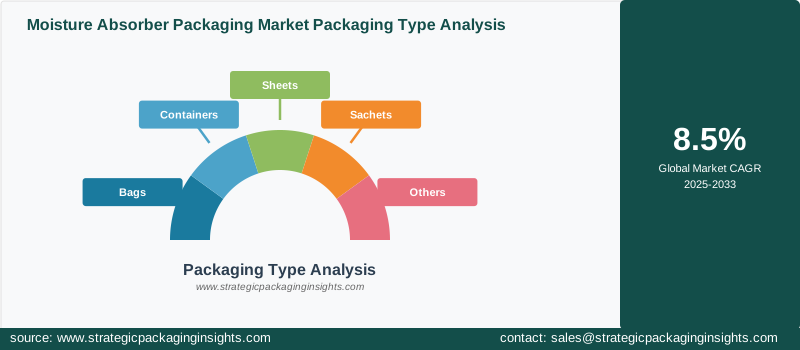
The development of innovative packaging solutions is a key trend in this segment, driven by the increasing demand for effective and sustainable moisture control solutions. Manufacturers are focusing on enhancing the moisture absorption capacity of packaging materials while ensuring environmental sustainability. The customization of packaging solutions to meet specific industry requirements is also gaining traction, with manufacturers offering tailored solutions to cater to diverse end-user needs. The competition in this segment is intense, with companies investing in research and development to gain a competitive edge and capture a larger market share.
End-User Analysis
The end-user segment of the moisture absorber packaging market is diverse, encompassing industrial, commercial, residential, and others. The industrial sector is a major consumer of moisture absorber packaging, driven by the need to protect products from moisture damage during storage and transportation. The increasing demand for moisture control solutions in the logistics and transportation sectors is further boosting the demand for moisture absorbers in this segment. The commercial sector, including retail and hospitality, is also witnessing a growing demand for moisture control solutions, particularly in the packaging of food and beverage products.
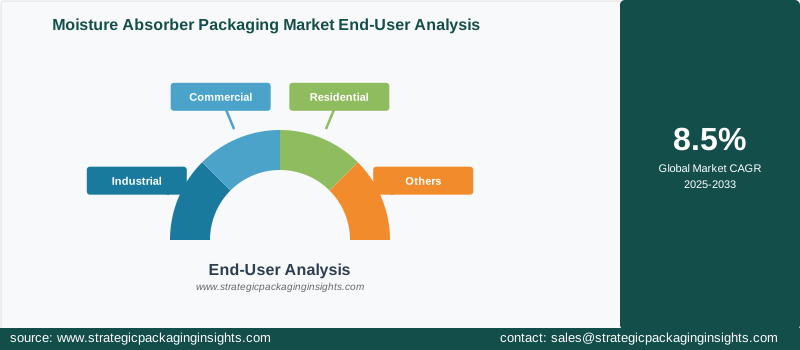
The residential sector is another significant end-user, where moisture absorbers are used to protect household items from moisture damage. The increasing awareness about the benefits of moisture control solutions in preserving product quality is driving the demand for moisture absorbers in this sector. The competition in this segment is fierce, with companies focusing on innovation and customization to meet the specific needs of different end-users. The development of eco-friendly moisture absorbers is a key trend in this segment, driven by the increasing demand for sustainable packaging solutions.
Moisture Absorber Packaging Market Segments
The Moisture Absorber Packaging market has been segmented on the basis ofMaterial Type
- Silica Gel
- Activated Charcoal
- Calcium Chloride
- Clay
- Others
Application
- Food & Beverage
- Pharmaceuticals
- Electronics
- Automotive
- Others
Packaging Type
- Bags
- Containers
- Sheets
- Sachets
- Others
End-User
- Industrial
- Commercial
- Residential
- Others




