


CPLA for Packaging Market Outlook
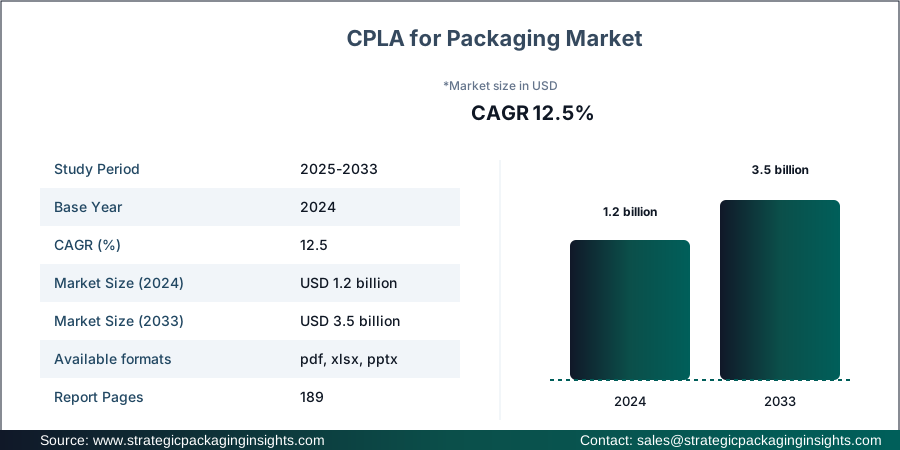
The CPLA for Packaging market was valued at $1.2 billion in 2024 and is projected to reach $3.5 billion by 2033, growing at a CAGR of 12.5% during the forecast period 2025-2033. This growth is driven by increasing consumer demand for sustainable and eco-friendly packaging solutions, as well as regulatory pressures to reduce plastic waste. The market is witnessing a shift towards biodegradable materials, with CPLA (Crystallized Polylactic Acid) emerging as a preferred choice due to its compostable nature and ability to withstand higher temperatures compared to traditional PLA. The food and beverage industry remains the largest end-user segment, leveraging CPLA's properties to meet consumer expectations for environmentally responsible packaging.
Report Scope
| Attributes | Details |
| Report Title | CPLA for Packaging Market Size, Future Growth and Forecast 2033 |
| Material Type | CPLA Films, CPLA Sheets, CPLA Containers |
| Application | Food Packaging, Beverage Packaging, Healthcare Packaging, Personal Care Packaging |
| End-User | Food & Beverage Industry, Healthcare Industry, Personal Care Industry, Retail Industry |
| Region | Asia Pacific, North America, Latin America, Europe, Middle East & Africa |
| Base Year | 2024 |
| Historic Period | 2017-2023 |
| Forecast Period | 2025-2033 |
| Number of Pages | 189 |
| Customization Available | Yes* |
Opportunities & Threats
Opportunities in the CPLA for Packaging market are abundant, particularly as global awareness of environmental issues continues to rise. The increasing adoption of sustainable practices by major corporations presents a significant opportunity for CPLA manufacturers. As companies strive to meet their sustainability goals, the demand for biodegradable and compostable packaging solutions is expected to surge. Additionally, advancements in CPLA technology, such as improved heat resistance and durability, are opening new avenues for application in sectors like healthcare and personal care, where packaging requirements are stringent. The growing trend of circular economy initiatives further supports the expansion of CPLA usage, as it aligns with the principles of reducing waste and promoting recycling.
Another opportunity lies in the expanding regulatory frameworks aimed at reducing plastic pollution. Governments worldwide are implementing stricter regulations on single-use plastics, creating a favorable environment for CPLA adoption. This regulatory push is particularly strong in regions like Europe and North America, where policies such as the European Union's Single-Use Plastics Directive are driving the transition towards sustainable packaging solutions. As a result, companies that invest in CPLA technology and production capabilities are well-positioned to capitalize on these regulatory changes and gain a competitive edge in the market.
However, the market faces certain threats that could hinder its growth. One of the primary challenges is the higher cost of CPLA compared to conventional plastics. This cost disparity can be a barrier for widespread adoption, especially in price-sensitive markets. Additionally, the availability of raw materials for CPLA production, such as corn starch, can be affected by agricultural fluctuations and geopolitical factors, potentially impacting supply chains. Furthermore, while CPLA is compostable, it requires industrial composting facilities for effective degradation, which are not universally available. This limitation could restrict the market's growth in regions lacking the necessary infrastructure.
Drivers & Challenges
The primary drivers of the CPLA for Packaging market include the increasing consumer preference for eco-friendly products and the growing regulatory pressures to reduce plastic waste. Consumers are becoming more environmentally conscious, leading to a shift in purchasing behavior towards products that offer sustainable packaging solutions. This trend is particularly evident in the food and beverage industry, where brands are increasingly adopting CPLA packaging to align with consumer values and enhance brand image. Additionally, regulatory bodies across the globe are enforcing stricter guidelines on plastic usage, compelling manufacturers to explore alternative materials like CPLA to comply with these regulations.
Technological advancements in CPLA production are also driving market growth. Innovations in polymer processing and material science have led to the development of CPLA with enhanced properties, such as improved heat resistance and mechanical strength. These advancements have expanded the application scope of CPLA, making it suitable for a wider range of packaging needs, including those in the healthcare and personal care sectors. The ability of CPLA to withstand higher temperatures without compromising its compostability is a significant advantage, allowing it to replace traditional plastics in applications where heat resistance is critical.
Despite these drivers, the market faces challenges that could impede its growth trajectory. One of the major challenges is the cost competitiveness of CPLA compared to conventional plastics. The production of CPLA involves higher costs due to the complexity of the manufacturing process and the price of raw materials. This cost factor can be a deterrent for manufacturers, particularly in regions where cost considerations are paramount. Additionally, the lack of widespread industrial composting facilities poses a challenge for the effective disposal of CPLA products. Without the necessary infrastructure, the environmental benefits of CPLA cannot be fully realized, limiting its adoption in certain areas.
CPLA for Packaging Strategic Outlook
| Trend | Market Driver | Technological/Material Shift | Business Impact |
|---|---|---|---|
| Sustainability | Regulatory Compliance | Biodegradable Materials | Increased Market Share |
| Smart Tech | Consumer Demand | Advanced CPLA Properties | Product Differentiation |
| Consumer Behavior | Eco-Conscious Purchasing | Compostable Packaging | Brand Loyalty |
| Logistics | Supply Chain Optimization | Efficient Production | Cost Reduction |
In 2026, the CPLA for Packaging market is poised for significant growth, driven by the increasing emphasis on sustainability and regulatory compliance. The primary disruptor in this niche is the stringent regulations on plastic usage, which are compelling manufacturers to adopt biodegradable alternatives like CPLA. As brands navigate this evolving landscape, strategic foresight suggests a pivot towards enhancing production capabilities and investing in R&D to improve CPLA properties. By doing so, companies can maintain their market share and capitalize on the growing demand for eco-friendly packaging solutions. Embracing technological advancements and optimizing supply chains will be crucial for businesses to remain competitive and meet consumer expectations in the coming years.
Market Share Analysis
The competitive landscape of the CPLA for Packaging market is characterized by the presence of several key players who are actively investing in research and development to enhance their product offerings. These companies are focusing on expanding their production capacities and establishing strategic partnerships to strengthen their market position. The market is moderately fragmented, with a mix of established players and emerging companies vying for market share. The increasing demand for sustainable packaging solutions has intensified competition, prompting companies to innovate and differentiate their products to gain a competitive edge.
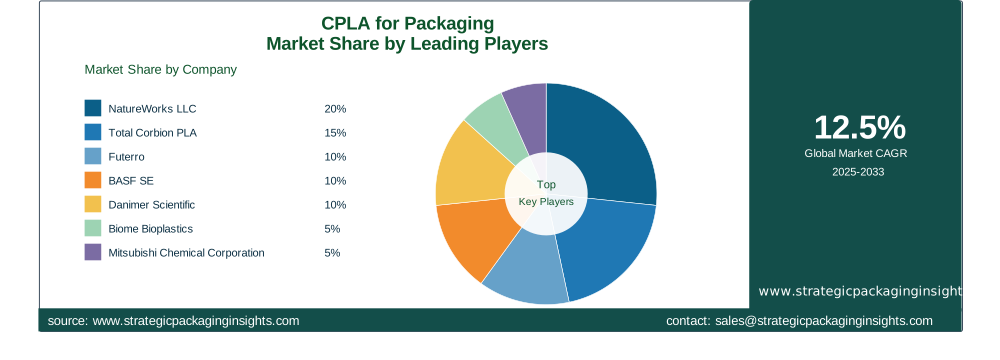
Among the major players in the market, NatureWorks LLC holds a significant share due to its extensive experience and expertise in biopolymer production. The company is known for its Ingeo brand, which offers a range of CPLA products catering to various packaging needs. Similarly, Total Corbion PLA, a joint venture between Total and Corbion, is a prominent player with a strong focus on developing high-performance PLA solutions. The company's commitment to sustainability and innovation has positioned it as a leader in the CPLA market.
Futerro, a subsidiary of Galactic, is another key player that has made significant strides in the CPLA market. The company has invested heavily in R&D to develop advanced CPLA materials with enhanced properties. Futerro's strategic collaborations with other industry players have further bolstered its market presence. Additionally, companies like BASF SE and Danimer Scientific are actively exploring opportunities in the CPLA market, leveraging their expertise in material science to develop innovative solutions that meet the evolving needs of consumers and regulatory bodies.
Other notable companies in the market include Biome Bioplastics, which focuses on developing compostable bioplastics for various applications, and Mitsubishi Chemical Corporation, which offers a range of biodegradable polymers, including CPLA. These companies are continuously expanding their product portfolios and investing in new technologies to stay ahead in the competitive landscape. The market is also witnessing the entry of new players, particularly in regions with favorable regulatory environments, further intensifying competition and driving innovation.
Key Highlights
- The CPLA for Packaging market is projected to grow at a CAGR of 12.5% from 2025 to 2033.
- Increasing consumer demand for sustainable packaging solutions is a major growth driver.
- Regulatory pressures to reduce plastic waste are accelerating the adoption of CPLA.
- Technological advancements are enhancing the properties of CPLA, expanding its application scope.
- The food and beverage industry is the largest end-user segment for CPLA packaging.
- Cost competitiveness remains a challenge for CPLA adoption in price-sensitive markets.
- The lack of widespread industrial composting facilities limits the market's growth potential.
- Strategic partnerships and R&D investments are key strategies for market players.
- Europe and North America are leading regions in terms of regulatory support for CPLA adoption.
- Emerging markets present significant growth opportunities for CPLA manufacturers.
Top Countries Insights
In the CPLA for Packaging market, the United States stands out as a leading country with a market size of approximately $500 million and a CAGR of 10%. The country's strong regulatory framework, coupled with increasing consumer awareness about sustainability, drives the demand for CPLA packaging. The presence of major players and advanced infrastructure further supports market growth. However, challenges such as the higher cost of CPLA compared to conventional plastics remain a concern.
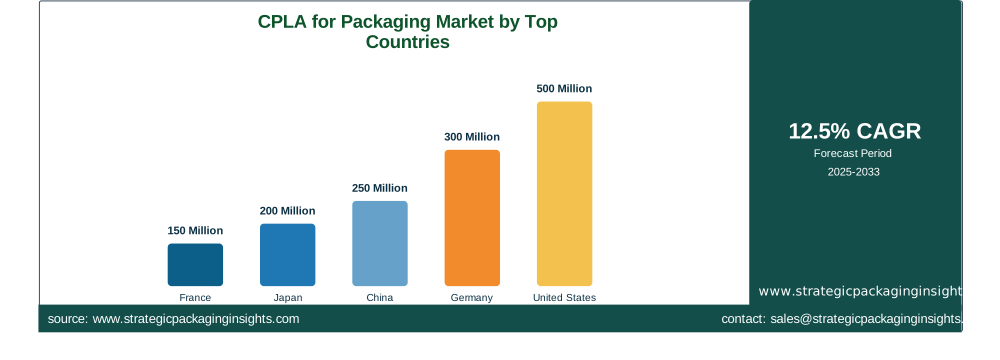
Germany is another key market, with a market size of $300 million and a CAGR of 9%. The country's stringent environmental regulations and commitment to reducing plastic waste have accelerated the adoption of CPLA. Germany's robust industrial composting infrastructure facilitates the effective disposal of CPLA products, enhancing their appeal to consumers and businesses alike. The market is also supported by strong government incentives for sustainable packaging solutions.
China, with a market size of $250 million and a CAGR of 15%, represents a rapidly growing market for CPLA packaging. The country's large population and increasing urbanization drive the demand for sustainable packaging solutions. Government initiatives to reduce plastic pollution and promote biodegradable materials further boost the market. However, the lack of widespread composting facilities poses a challenge to the effective implementation of CPLA solutions.
In Japan, the CPLA for Packaging market is valued at $200 million, with a CAGR of 8%. The country's focus on innovation and technology has led to the development of advanced CPLA materials with enhanced properties. Japan's commitment to sustainability and its strong regulatory framework support the market's growth. However, the high cost of CPLA remains a barrier to widespread adoption.
France, with a market size of $150 million and a CAGR of 7%, is another significant market for CPLA packaging. The country's proactive approach to environmental sustainability and its robust regulatory framework drive the demand for CPLA solutions. France's well-established composting infrastructure supports the effective disposal of CPLA products, enhancing their appeal to consumers and businesses. However, the market faces challenges related to cost competitiveness and consumer awareness.
CPLA for Packaging Market Segments Insights

Material Type Analysis
The CPLA for Packaging market is segmented by material type into CPLA Films, CPLA Sheets, and CPLA Containers. CPLA Films are gaining traction due to their versatility and ability to be used in various packaging applications, including food wraps and pouches. The demand for CPLA Sheets is driven by their use in thermoforming applications, where they offer excellent clarity and strength. CPLA Containers are increasingly used in the food service industry, where their compostable nature aligns with consumer preferences for sustainable packaging solutions. The competition in this segment is intense, with companies focusing on product innovation and cost reduction strategies to gain a competitive edge.
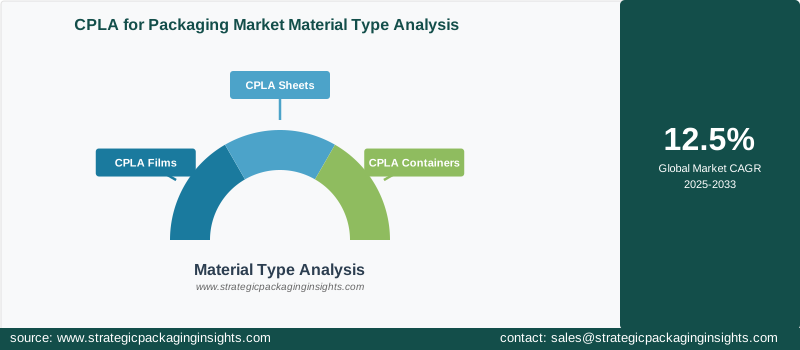
Trends in the material type segment indicate a growing preference for CPLA Films, as they offer a balance between performance and sustainability. The development of films with enhanced barrier properties and heat resistance is expanding their application scope, particularly in the food and beverage industry. CPLA Sheets are also witnessing increased demand, driven by their use in packaging applications that require rigidity and durability. The market for CPLA Containers is expected to grow as more food service providers adopt sustainable practices and seek alternatives to traditional plastic containers.
Application Analysis
The application segment of the CPLA for Packaging market includes Food Packaging, Beverage Packaging, Healthcare Packaging, and Personal Care Packaging. Food Packaging is the largest application segment, driven by the increasing demand for sustainable and compostable packaging solutions. CPLA's ability to withstand high temperatures and its compostable nature make it an ideal choice for food packaging applications. Beverage Packaging is also a significant segment, with CPLA being used for cups, lids, and straws. The healthcare and personal care sectors are emerging as potential growth areas, as companies seek to reduce their environmental footprint and comply with regulatory requirements.
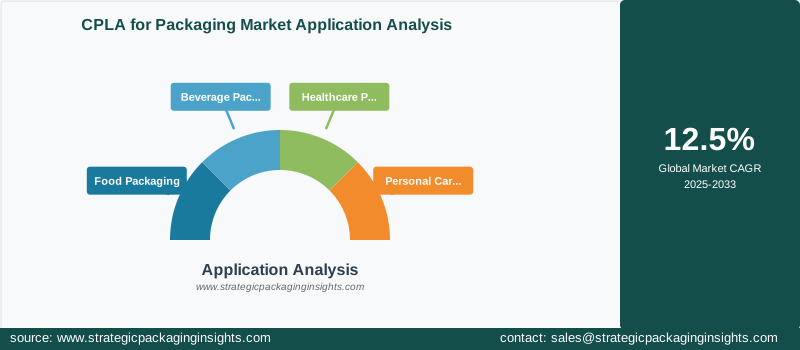
Trends in the application segment highlight the growing importance of sustainability in packaging decisions. The food and beverage industry is leading the charge, with companies adopting CPLA packaging to meet consumer expectations and regulatory mandates. The healthcare sector is also exploring the use of CPLA for packaging medical devices and pharmaceuticals, driven by the need for environmentally friendly solutions. Personal care packaging is another area of interest, as brands look to differentiate themselves by offering sustainable packaging options.
End-User Analysis
The end-user segment of the CPLA for Packaging market comprises the Food & Beverage Industry, Healthcare Industry, Personal Care Industry, and Retail Industry. The Food & Beverage Industry is the largest end-user segment, accounting for a significant share of the market. The industry's focus on sustainability and the increasing consumer demand for eco-friendly packaging solutions drive the adoption of CPLA. The Healthcare Industry is also a key end-user, with CPLA being used for packaging medical devices and pharmaceuticals. The Personal Care Industry is exploring the use of CPLA for packaging cosmetics and personal care products, driven by the need for sustainable solutions.
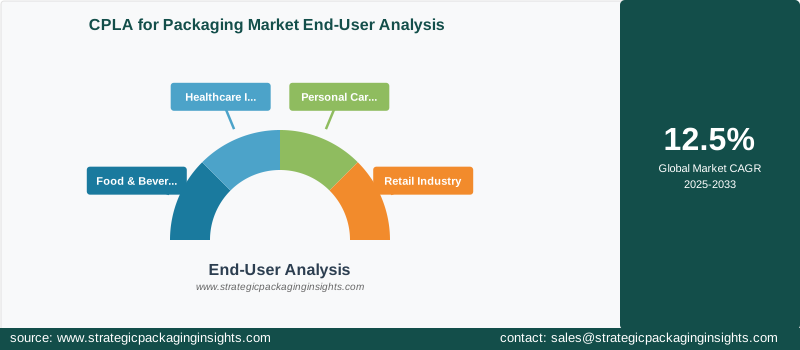
Trends in the end-user segment indicate a growing emphasis on sustainability and regulatory compliance. The Food & Beverage Industry is leading the way, with companies adopting CPLA packaging to meet consumer expectations and regulatory mandates. The Healthcare Industry is also exploring the use of CPLA for packaging medical devices and pharmaceuticals, driven by the need for environmentally friendly solutions. The Personal Care Industry is another area of interest, as brands look to differentiate themselves by offering sustainable packaging options. The Retail Industry is also adopting CPLA packaging, driven by the need to reduce plastic waste and comply with regulatory requirements.
Region Analysis
The CPLA for Packaging market is segmented by region into Asia Pacific, North America, Latin America, Europe, and Middle East & Africa. Asia Pacific is the largest market, driven by the increasing demand for sustainable packaging solutions and the presence of major players in the region. North America is also a significant market, with the United States being a key contributor to the market's growth. The region's strong regulatory framework and increasing consumer awareness about sustainability drive the demand for CPLA packaging. Europe is another key market, with countries like Germany and France leading the way in terms of regulatory support for CPLA adoption.
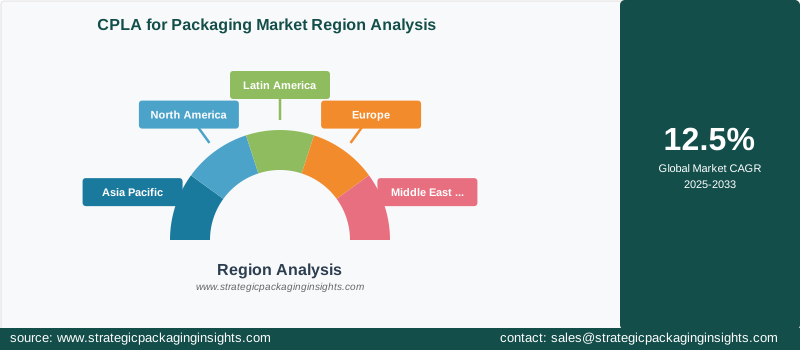
Trends in the regional segment highlight the growing importance of sustainability and regulatory compliance in packaging decisions. Asia Pacific is leading the charge, with companies adopting CPLA packaging to meet consumer expectations and regulatory mandates. North America is also a key market, with the United States being a major contributor to the market's growth. The region's strong regulatory framework and increasing consumer awareness about sustainability drive the demand for CPLA packaging. Europe is another key market, with countries like Germany and France leading the way in terms of regulatory support for CPLA adoption.
CPLA for Packaging Market Segments
The CPLA for Packaging market has been segmented on the basis ofMaterial Type
- CPLA Films
- CPLA Sheets
- CPLA Containers
Application
- Food Packaging
- Beverage Packaging
- Healthcare Packaging
- Personal Care Packaging
End-User
- Food & Beverage Industry
- Healthcare Industry
- Personal Care Industry
- Retail Industry
Region
- Asia Pacific
- North America
- Latin America
- Europe
- Middle East & Africa




