


Biodegradable Wrap Systems Market Outlook
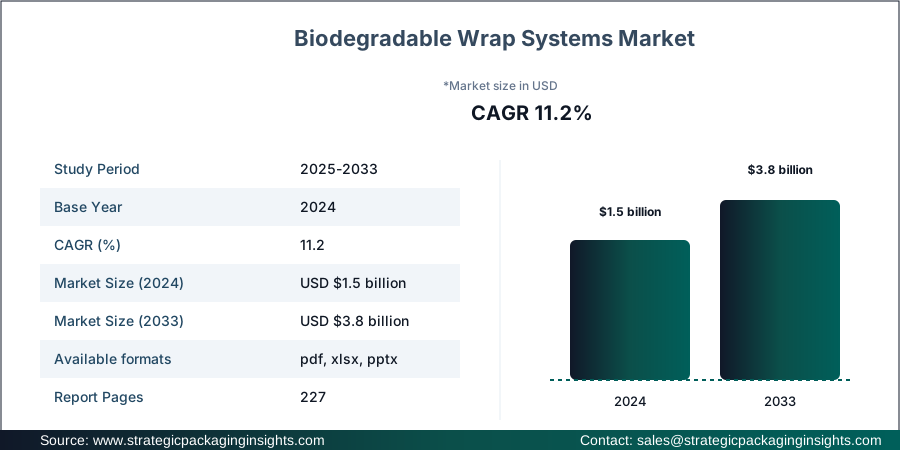
The Biodegradable Wrap Systems market was valued at $1.5 billion in 2024 and is projected to reach $3.8 billion by 2033, growing at a CAGR of 11.2% during the forecast period 2025-2033. This market is witnessing significant growth due to increasing environmental concerns and the rising demand for sustainable packaging solutions. The shift towards eco-friendly alternatives is driven by stringent regulations and consumer awareness about the environmental impact of traditional plastic wraps. The market is also fueled by advancements in biodegradable materials, which offer similar performance characteristics to conventional plastics but with reduced environmental footprints. As industries such as food packaging, healthcare, and consumer goods increasingly adopt biodegradable wraps, the market is poised for robust growth.
Report Scope
| Attributes | Details |
| Report Title | Biodegradable Wrap Systems Market Size, Future Growth and Forecast 2033 |
| Material Type | Starch-Based, Cellulose-Based |
| Application | Food Packaging, Healthcare |
| End-User | Retail, Food Service |
| Region | Asia Pacific, North America |
| Base Year | 2024 |
| Historic Period | 2017-2023 |
| Forecast Period | 2025-2033 |
| Number of Pages | 227 |
| Customization Available | Yes* |
Opportunities & Threats
One of the primary opportunities in the Biodegradable Wrap Systems market lies in the growing consumer preference for sustainable products. As awareness about environmental issues rises, consumers are increasingly opting for products that minimize ecological impact. This trend is particularly strong in developed regions where consumers are willing to pay a premium for eco-friendly products. Additionally, the expansion of e-commerce and online food delivery services presents a significant opportunity for biodegradable wraps, as these platforms require sustainable packaging solutions to meet consumer expectations and regulatory requirements.
Another opportunity is the increasing investment in research and development to enhance the performance and cost-effectiveness of biodegradable materials. Companies are focusing on developing innovative materials that offer superior barrier properties, durability, and flexibility, which are essential for various packaging applications. Collaborations between material scientists and packaging companies are leading to breakthroughs in biodegradable wrap technologies, further driving market growth. Moreover, government incentives and subsidies for sustainable packaging solutions are encouraging manufacturers to invest in biodegradable wrap systems.
However, the market faces certain threats, such as the high cost of biodegradable materials compared to conventional plastics. This cost disparity can be a significant barrier for small and medium-sized enterprises (SMEs) that operate on tight budgets. Additionally, the lack of standardized regulations and certifications for biodegradable products can create confusion among consumers and manufacturers, potentially hindering market growth. The threat of greenwashing, where companies falsely claim their products are environmentally friendly, also poses a challenge to the credibility of the biodegradable wrap systems market.
Drivers & Challenges
The primary driver of the Biodegradable Wrap Systems market is the increasing regulatory pressure to reduce plastic waste. Governments worldwide are implementing stringent regulations to curb plastic pollution, which is propelling the demand for biodegradable alternatives. For instance, the European Union's directive to ban single-use plastics by 2021 has accelerated the adoption of biodegradable wraps in the region. Similarly, countries like India and China are introducing policies to promote sustainable packaging solutions, further driving market growth.
Another significant driver is the growing consumer awareness about the environmental impact of plastic waste. As consumers become more environmentally conscious, they are demanding sustainable packaging solutions, which is encouraging manufacturers to adopt biodegradable wraps. The rise of social media and digital platforms has also played a crucial role in spreading awareness about the benefits of biodegradable products, influencing consumer purchasing decisions. Additionally, the increasing focus on corporate social responsibility (CSR) is prompting companies to adopt sustainable practices, including the use of biodegradable wraps.
Despite these drivers, the market faces challenges such as the limited availability of raw materials for biodegradable wraps. The production of biodegradable materials often relies on agricultural feedstocks, which can be affected by factors such as climate change and crop yield fluctuations. This dependency on agricultural inputs can lead to supply chain disruptions and price volatility, posing a challenge to market growth. Furthermore, the performance limitations of some biodegradable materials, such as reduced barrier properties and shorter shelf life, can hinder their adoption in certain applications.
Market Share Analysis
The competitive landscape of the Biodegradable Wrap Systems market is characterized by the presence of several key players who are actively investing in research and development to enhance their product offerings. These companies are focusing on strategic partnerships, mergers, and acquisitions to expand their market presence and gain a competitive edge. The market is moderately fragmented, with a mix of established players and emerging startups contributing to the industry's growth. The increasing demand for sustainable packaging solutions is encouraging companies to innovate and differentiate their products to capture a larger market share.
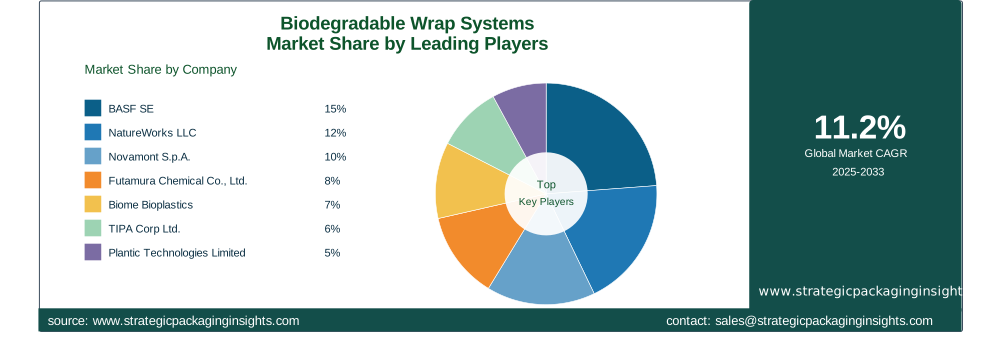
Some of the major companies operating in the Biodegradable Wrap Systems market include BASF SE, NatureWorks LLC, Novamont S.p.A., Futamura Chemical Co., Ltd., and Biome Bioplastics. These companies are leveraging their expertise in material science and packaging technologies to develop high-performance biodegradable wraps that meet the evolving needs of consumers and industries. For instance, BASF SE is focusing on developing biodegradable polymers that offer superior performance characteristics, while NatureWorks LLC is investing in the production of polylactic acid (PLA) materials for various packaging applications.
Other notable players in the market include TIPA Corp Ltd., Plantic Technologies Limited, and Cardia Bioplastics. TIPA Corp Ltd. is known for its innovative compostable packaging solutions that offer similar properties to conventional plastics. Plantic Technologies Limited specializes in starch-based biodegradable materials, while Cardia Bioplastics focuses on developing sustainable packaging solutions using renewable resources. These companies are actively collaborating with retailers, food service providers, and industrial clients to promote the adoption of biodegradable wraps.
In addition to these key players, several startups and small-scale manufacturers are entering the market with innovative biodegradable wrap solutions. These companies are focusing on niche applications and targeting specific customer segments to differentiate themselves from established players. The growing demand for eco-friendly packaging solutions is creating opportunities for new entrants to capture market share and contribute to the industry's growth. As the market continues to evolve, companies are expected to invest in research and development to enhance the performance and cost-effectiveness of biodegradable wraps.
Key Highlights
- The Biodegradable Wrap Systems market is projected to grow at a CAGR of 11.2% from 2025 to 2033.
- Increasing consumer awareness about environmental issues is driving the demand for sustainable packaging solutions.
- Government regulations and incentives are encouraging the adoption of biodegradable wraps.
- Advancements in biodegradable materials are enhancing the performance and cost-effectiveness of wraps.
- The market is characterized by a mix of established players and emerging startups.
- High costs and limited availability of raw materials pose challenges to market growth.
- Collaborations between material scientists and packaging companies are leading to technological breakthroughs.
- The rise of e-commerce and online food delivery services is boosting the demand for biodegradable wraps.
- Companies are focusing on strategic partnerships and acquisitions to expand their market presence.
- Performance limitations of some biodegradable materials can hinder their adoption in certain applications.
Top Countries Insights
In the Biodegradable Wrap Systems market, the United States is a leading player with a market size of $500 million and a CAGR of 10%. The country's growth is driven by stringent environmental regulations and a strong consumer preference for sustainable products. The presence of major packaging companies and a well-established supply chain further supports market growth. However, challenges such as high production costs and the need for technological advancements remain.
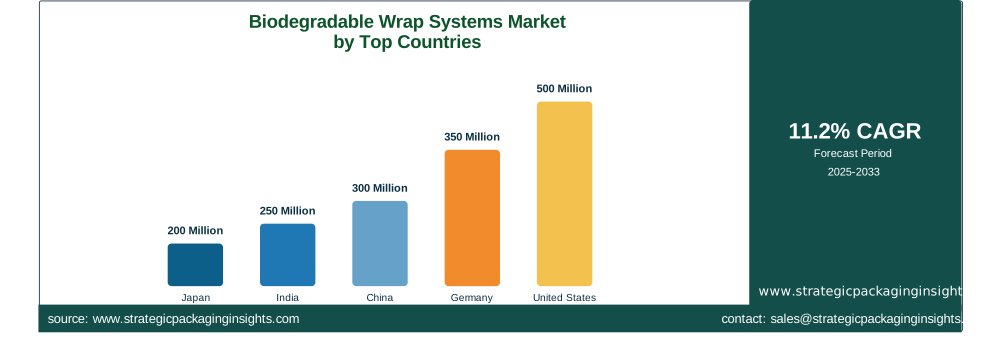
Germany is another key market, valued at $350 million with a CAGR of 9%. The country's focus on sustainability and innovation in packaging technologies is driving the demand for biodegradable wraps. Government initiatives to reduce plastic waste and promote eco-friendly alternatives are also contributing to market growth. However, the market faces challenges such as the high cost of biodegradable materials and the need for standardized regulations.
China, with a market size of $300 million and a CAGR of 12%, is experiencing rapid growth due to increasing environmental awareness and government policies promoting sustainable packaging solutions. The country's large consumer base and expanding e-commerce sector are also driving demand for biodegradable wraps. However, challenges such as supply chain disruptions and the need for technological advancements persist.
In India, the market is valued at $250 million with a CAGR of 14%. The country's growth is fueled by rising consumer awareness about environmental issues and government initiatives to reduce plastic waste. The increasing adoption of biodegradable wraps in the food packaging and healthcare sectors is also contributing to market growth. However, challenges such as high production costs and limited availability of raw materials remain.
Japan, with a market size of $200 million and a CAGR of 8%, is focusing on innovation and sustainability in packaging solutions. The country's strong regulatory framework and consumer preference for eco-friendly products are driving the demand for biodegradable wraps. However, challenges such as high costs and the need for technological advancements persist.
Biodegradable Wrap Systems Market Segments Insights

Material Type Analysis
The material type segment of the Biodegradable Wrap Systems market is dominated by starch-based materials, which are widely used due to their biodegradability and cost-effectiveness. Starch-based wraps are derived from renewable resources and offer excellent barrier properties, making them suitable for various packaging applications. The demand for starch-based materials is driven by their ability to decompose naturally without leaving harmful residues, aligning with the growing consumer preference for sustainable products. However, challenges such as limited availability of raw materials and performance limitations in certain applications can hinder their adoption.
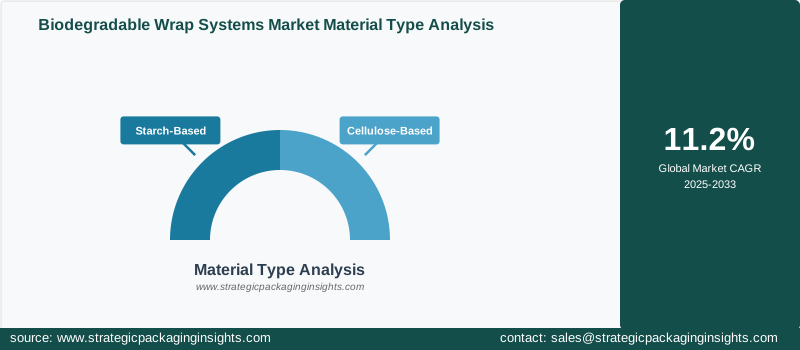
Cellulose-based materials are another significant segment, known for their biodegradability and versatility. These materials are derived from plant fibers and offer excellent transparency and flexibility, making them ideal for food packaging applications. The demand for cellulose-based wraps is driven by their ability to provide a natural and eco-friendly alternative to conventional plastics. However, challenges such as high production costs and the need for technological advancements to enhance their performance remain.
Application Analysis
The application segment of the Biodegradable Wrap Systems market is led by the food packaging sector, which accounts for a significant share of the market. The demand for biodegradable wraps in food packaging is driven by the increasing consumer preference for sustainable and eco-friendly products. The rise of e-commerce and online food delivery services is also boosting the demand for biodegradable wraps, as these platforms require sustainable packaging solutions to meet consumer expectations and regulatory requirements. However, challenges such as high costs and performance limitations of some biodegradable materials can hinder their adoption in certain applications.
The healthcare sector is another key application area, where biodegradable wraps are used for packaging medical devices and pharmaceuticals. The demand for biodegradable wraps in healthcare is driven by the need for sustainable packaging solutions that meet stringent regulatory requirements. The increasing focus on reducing plastic waste in healthcare settings is also contributing to market growth. However, challenges such as high production costs and the need for technological advancements to enhance the performance of biodegradable wraps remain.
End-User Analysis
The end-user segment of the Biodegradable Wrap Systems market is dominated by the retail sector, which accounts for a significant share of the market. The demand for biodegradable wraps in retail is driven by the increasing consumer preference for sustainable products and the need for eco-friendly packaging solutions. Retailers are increasingly adopting biodegradable wraps to meet consumer expectations and comply with regulatory requirements. However, challenges such as high costs and the need for technological advancements to enhance the performance of biodegradable wraps remain.
The food service sector is another key end-user, where biodegradable wraps are used for packaging food products and takeaway items. The demand for biodegradable wraps in food service is driven by the increasing focus on sustainability and the need for eco-friendly packaging solutions. The rise of online food delivery services is also boosting the demand for biodegradable wraps, as these platforms require sustainable packaging solutions to meet consumer expectations and regulatory requirements. However, challenges such as high costs and performance limitations of some biodegradable materials can hinder their adoption in certain applications.
Regional Market Intelligence Chart
Biodegradable Wrap Systems Market Segments
The Biodegradable Wrap Systems market has been segmented on the basis ofMaterial Type
- Starch-Based
- Cellulose-Based
Application
- Food Packaging
- Healthcare
End-User
- Retail
- Food Service
Region
- Asia Pacific
- North America




