


In-store refill stations Market Outlook
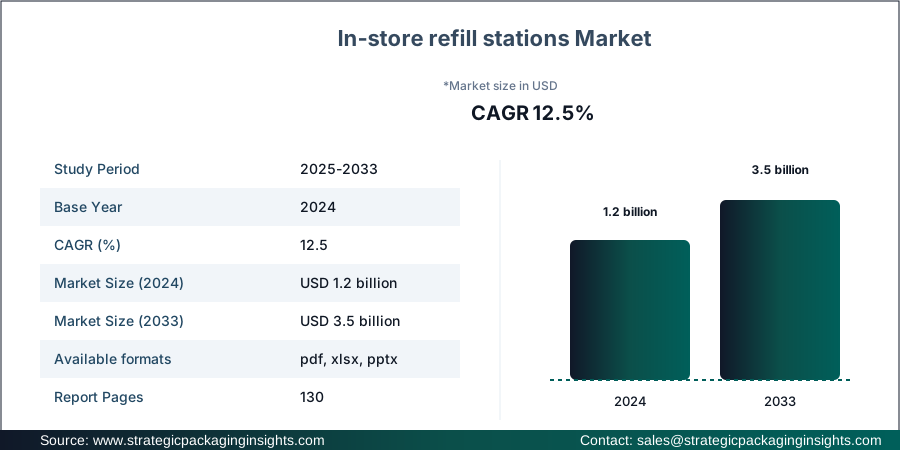
The in-store refill stations market was valued at $1.2 billion in 2024 and is projected to reach $3.5 billion by 2033, growing at a CAGR of 12.5% during the forecast period 2025-2033. This market is gaining traction as consumers become increasingly aware of the environmental impact of single-use plastics and seek sustainable alternatives. The demand for refill stations is driven by the growing emphasis on reducing plastic waste and the increasing adoption of circular economy practices by retailers and manufacturers. As more brands and retailers commit to sustainability goals, the adoption of refill stations is expected to accelerate, offering significant growth opportunities in the coming years.
Report Scope
| Attributes | Details |
| Report Title | In-store refill stations Market Size, Future Growth and Forecast 2033 |
| Product Type | Liquid, Powder, Granular |
| Application | Household, Personal Care, Food & Beverage, Healthcare |
| Distribution Channel | Supermarkets & Hypermarkets, Convenience Stores, Specialty Stores, Online Retail |
| Regional | Asia Pacific, North America, Latin America, Europe, Middle East & Africa |
| Base Year | 2024 |
| Historic Period | 2017-2023 |
| Forecast Period | 2025-2033 |
| Number of Pages | 130 |
| Customization Available | Yes* |
Opportunities & Threats
One of the primary opportunities in the in-store refill stations market is the increasing consumer demand for sustainable and eco-friendly packaging solutions. As awareness about environmental issues rises, consumers are actively seeking ways to reduce their carbon footprint, and refill stations offer a practical solution. Retailers and brands that adopt refill stations can enhance their brand image and attract environmentally conscious consumers, thereby gaining a competitive edge. Additionally, the integration of smart technology in refill stations, such as IoT-enabled systems for inventory management and customer engagement, presents a significant opportunity for innovation and differentiation in the market.
Another opportunity lies in the regulatory landscape, as governments worldwide implement stricter regulations on plastic usage and waste management. Policies promoting the reduction of single-use plastics and encouraging sustainable packaging solutions are expected to drive the adoption of refill stations. Retailers and manufacturers that proactively align with these regulations can benefit from incentives and subsidies, further boosting the market growth. Moreover, partnerships between brands and refill station providers can lead to the development of customized solutions that cater to specific consumer needs, enhancing the overall shopping experience.
However, the market faces certain threats, such as the initial investment costs associated with setting up refill stations. Retailers may be hesitant to invest in the necessary infrastructure and technology, especially in regions where consumer awareness and demand for refill solutions are still developing. Additionally, the market may encounter resistance from consumers who are accustomed to traditional packaging and may be reluctant to change their purchasing habits. Addressing these challenges requires effective consumer education and marketing strategies to highlight the benefits of refill stations and encourage adoption.
Drivers & Challenges
The primary driver of the in-store refill stations market is the growing consumer awareness and demand for sustainable packaging solutions. As environmental concerns become more prominent, consumers are increasingly seeking ways to reduce their environmental impact, and refill stations offer a viable solution. The shift towards a circular economy, where waste is minimized, and resources are reused, is further propelling the demand for refill stations. Retailers and brands that adopt refill stations can enhance their sustainability credentials and appeal to eco-conscious consumers, driving market growth.
Technological advancements are also driving the market, with the integration of smart technologies in refill stations. IoT-enabled systems allow for real-time inventory management, ensuring that refill stations are always stocked and operational. These technologies also enable personalized customer experiences, such as loyalty programs and targeted promotions, enhancing customer engagement and satisfaction. The ability to track and analyze consumer behavior through data analytics provides valuable insights for retailers and brands, enabling them to optimize their refill station offerings and improve customer service.
Despite the positive drivers, the market faces challenges such as the high initial investment costs for setting up refill stations. Retailers may be reluctant to invest in the necessary infrastructure and technology, particularly in regions where consumer demand for refill solutions is still emerging. Additionally, there may be logistical challenges in managing the supply chain for refill stations, ensuring that they are consistently stocked and operational. Overcoming these challenges requires strategic planning and collaboration between retailers, brands, and refill station providers to develop cost-effective and efficient solutions.
Market Share Analysis
The competitive landscape of the in-store refill stations market is characterized by the presence of several key players, each striving to capture a significant share of the market. Companies are focusing on innovation, strategic partnerships, and expansion to strengthen their market position. The market is witnessing increased collaboration between retailers and refill station providers to develop customized solutions that cater to specific consumer needs. As the demand for sustainable packaging solutions grows, companies are investing in research and development to enhance their product offerings and gain a competitive edge.
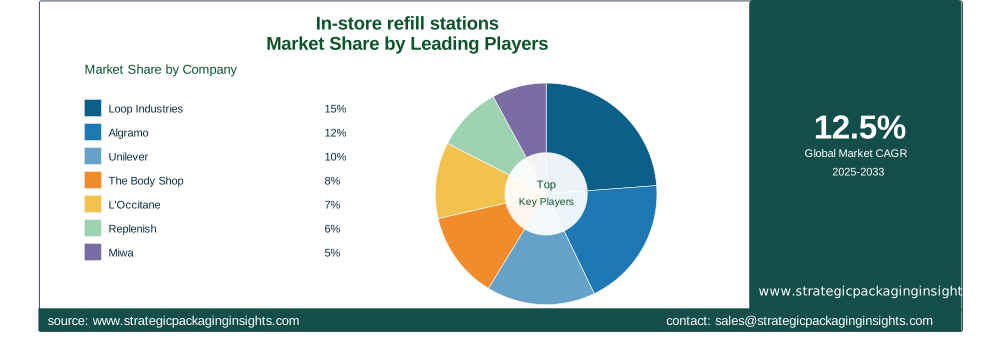
Among the major players in the market, Loop Industries is a prominent name, known for its innovative approach to sustainable packaging solutions. The company has developed a closed-loop system that allows consumers to refill their products in-store, reducing the need for single-use plastics. Another key player, Algramo, has gained recognition for its smart refill stations that offer consumers the convenience of refilling their products while tracking their environmental impact. Algramo's technology-driven approach has positioned it as a leader in the market, attracting partnerships with major retailers and brands.
Unilever is another significant player in the market, leveraging its extensive product portfolio and global presence to promote refill stations as part of its sustainability initiatives. The company has launched several pilot projects in collaboration with retailers to test the feasibility and consumer acceptance of refill stations. Similarly, The Body Shop has been at the forefront of promoting refill stations, aligning with its commitment to sustainability and ethical sourcing. The company's refill stations have been well-received by consumers, contributing to its brand reputation and market share.
Other notable companies in the market include L'Occitane, which has introduced refill stations in select stores as part of its sustainability strategy. The company's focus on eco-friendly packaging solutions has resonated with consumers, enhancing its brand image and market position. Additionally, companies like Replenish and Miwa are making strides in the market with their innovative refill station solutions, catering to the growing demand for sustainable packaging options. These companies are investing in technology and partnerships to expand their reach and capture a larger share of the market.
Key Highlights
- The in-store refill stations market is projected to grow at a CAGR of 12.5% from 2025 to 2033.
- Increasing consumer demand for sustainable packaging solutions is driving market growth.
- Technological advancements, such as IoT-enabled systems, are enhancing the functionality of refill stations.
- Regulatory support for reducing single-use plastics is boosting the adoption of refill stations.
- High initial investment costs pose a challenge for retailers in setting up refill stations.
- Strategic partnerships between retailers and refill station providers are key to market expansion.
- Customization and consumer engagement are critical factors for the success of refill stations.
Top Countries Insights
In the United States, the in-store refill stations market is valued at approximately $300 million, with a CAGR of 10%. The market is driven by increasing consumer awareness and regulatory support for sustainable packaging solutions. The presence of major retailers and brands committed to sustainability further boosts market growth. However, challenges such as high initial investment costs and consumer resistance to change remain.
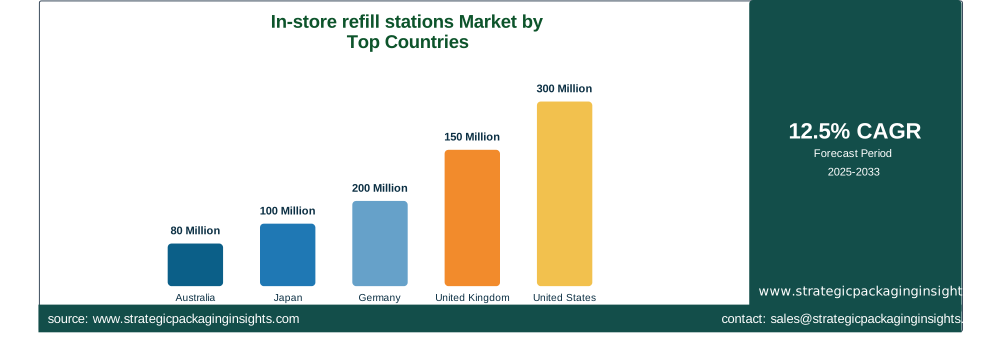
In the United Kingdom, the market is valued at around $150 million, with a CAGR of 12%. The government's initiatives to reduce plastic waste and promote sustainable packaging solutions are key drivers of market growth. The presence of eco-conscious consumers and retailers' commitment to sustainability further support the market. However, logistical challenges in managing refill stations pose a challenge.
Germany's market is valued at approximately $200 million, with a CAGR of 11%. The country's strong focus on environmental sustainability and circular economy practices drives the demand for refill stations. The presence of innovative companies and supportive regulatory framework further boost market growth. However, consumer education and awareness remain critical challenges.
In Japan, the market is valued at around $100 million, with a CAGR of 9%. The country's emphasis on reducing plastic waste and promoting sustainable packaging solutions drives market growth. The presence of technologically advanced refill stations and consumer demand for eco-friendly solutions further support the market. However, cultural preferences for traditional packaging pose a challenge.
Australia's market is valued at approximately $80 million, with a CAGR of 8%. The country's commitment to sustainability and reducing plastic waste drives the demand for refill stations. The presence of eco-conscious consumers and supportive regulatory framework further boost market growth. However, high initial investment costs and logistical challenges remain.
In-store refill stations Market Segments Insights

Product Type Analysis
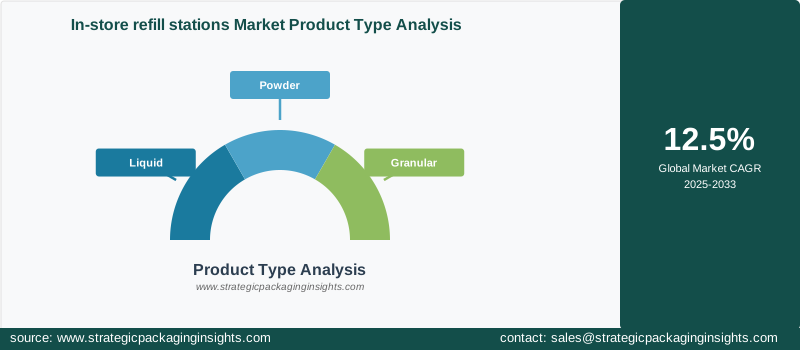
The product type segment of the in-store refill stations market is categorized into liquid, powder, and granular products. Liquid refill stations are the most prevalent, driven by the demand for household cleaning products, personal care items, and beverages. The convenience of refilling liquid products and the wide range of applications contribute to the dominance of this segment. Powder refill stations are gaining traction, particularly for products like laundry detergents and dry food items. The granular segment, although smaller, is expected to grow as consumers seek sustainable options for products like cereals and grains.
Technological advancements in refill station design and functionality are enhancing the consumer experience, making it easier and more convenient to refill products. The integration of smart technology, such as IoT-enabled systems, allows for real-time inventory management and personalized customer experiences. These innovations are driving the adoption of refill stations across various product types, catering to the diverse needs of consumers. As consumer awareness and demand for sustainable packaging solutions increase, the product type segment is expected to witness significant growth.
Application Analysis
The application segment of the in-store refill stations market includes household, personal care, food & beverage, and healthcare products. Household products, such as cleaning supplies and laundry detergents, are the largest application segment, driven by the demand for sustainable and cost-effective solutions. Personal care products, including shampoos, conditioners, and body washes, are also gaining popularity as consumers seek eco-friendly alternatives to traditional packaging.
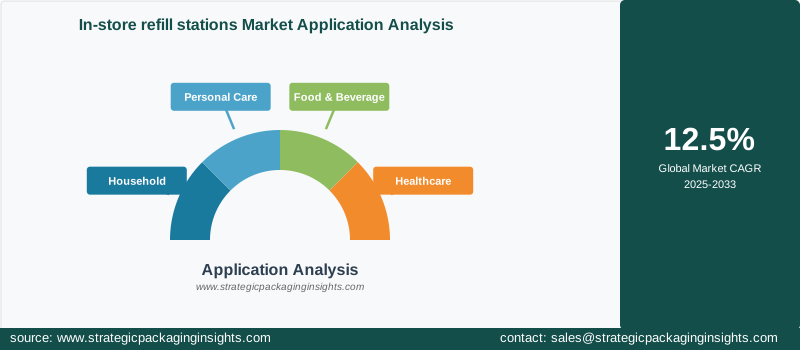
The food & beverage segment is witnessing growth, particularly for products like beverages, cereals, and grains. The demand for refill stations in this segment is driven by the increasing consumer preference for sustainable packaging solutions and the convenience of refilling products. The healthcare segment, although smaller, is expected to grow as consumers seek sustainable options for products like vitamins and supplements. The application segment is characterized by the diverse needs of consumers, with refill stations offering a practical solution for reducing packaging waste across various product categories.
Distribution Channel Analysis
The distribution channel segment of the in-store refill stations market includes supermarkets & hypermarkets, convenience stores, specialty stores, and online retail. Supermarkets & hypermarkets are the dominant distribution channel, driven by the wide range of products available and the convenience of refilling products during regular shopping trips. The presence of major retailers and their commitment to sustainability further boost the adoption of refill stations in this channel.
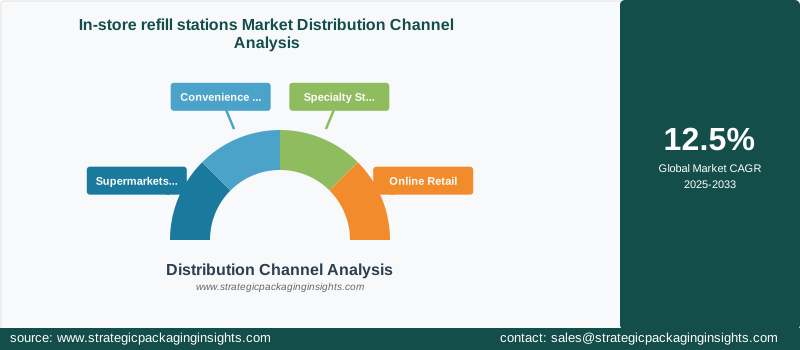
Convenience stores are gaining traction as a distribution channel, particularly in urban areas where consumers seek quick and easy access to refill stations. Specialty stores, such as eco-friendly and zero-waste stores, are also contributing to market growth, offering a curated selection of refillable products. Online retail is emerging as a distribution channel, with companies offering refill station solutions that can be integrated into e-commerce platforms. The distribution channel segment is characterized by the diverse needs of consumers, with refill stations offering a practical solution for reducing packaging waste across various retail formats.
Regional Analysis
The regional segment of the in-store refill stations market includes Asia Pacific, North America, Latin America, Europe, and the Middle East & Africa. North America is the largest market, driven by the presence of major retailers and brands committed to sustainability. The region's regulatory support for reducing plastic waste and promoting sustainable packaging solutions further boosts market growth. Europe is another significant market, characterized by the strong focus on environmental sustainability and circular economy practices.
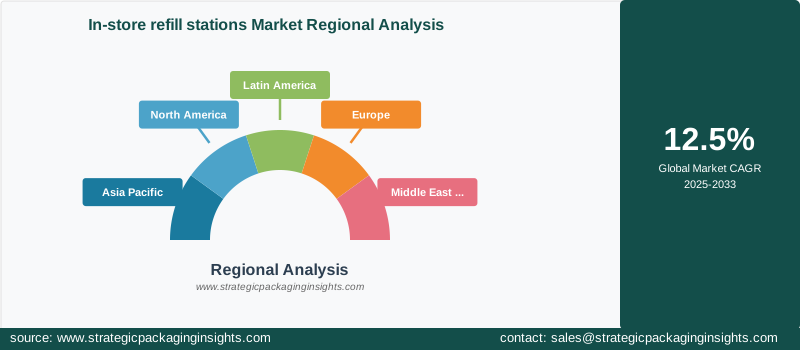
Asia Pacific is expected to witness significant growth, driven by the increasing consumer awareness and demand for sustainable packaging solutions. The presence of innovative companies and supportive regulatory framework further boost market growth. Latin America and the Middle East & Africa are emerging markets, with growing consumer awareness and demand for eco-friendly solutions. The regional segment is characterized by the diverse needs of consumers, with refill stations offering a practical solution for reducing packaging waste across various regions.
In-store refill stations Market Segments
The In-store refill stations market has been segmented on the basis ofProduct Type
- Liquid
- Powder
- Granular
Application
- Household
- Personal Care
- Food & Beverage
- Healthcare
Distribution Channel
- Supermarkets & Hypermarkets
- Convenience Stores
- Specialty Stores
- Online Retail
Regional
- Asia Pacific
- North America
- Latin America
- Europe
- Middle East & Africa




