


Healthcare and Laboratory Labels Market Outlook
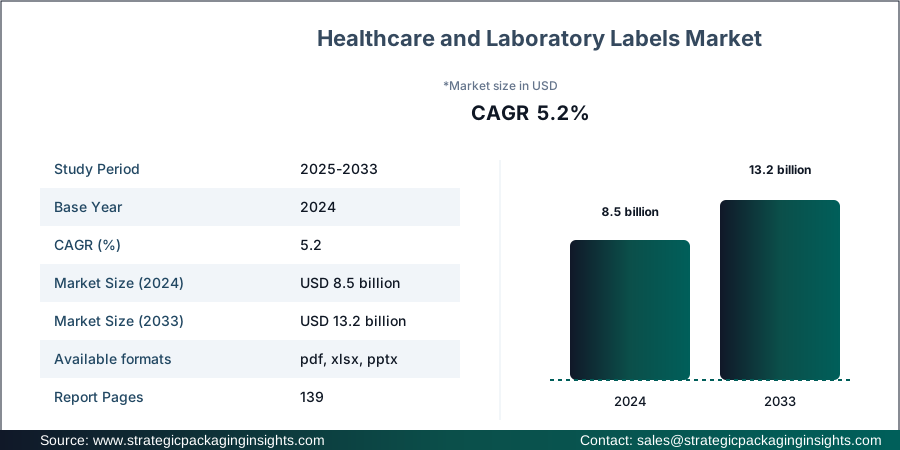
The healthcare and laboratory labels market was valued at $8.5 billion in 2024 and is projected to reach $13.2 billion by 2033, growing at a CAGR of 5.2% during the forecast period 2025-2033. This market is driven by the increasing demand for accurate and reliable labeling solutions in the healthcare sector, which is crucial for patient safety and regulatory compliance. The rise in pharmaceutical and biotechnology industries, coupled with advancements in labeling technologies, is expected to fuel market growth. Additionally, the growing emphasis on reducing medication errors and improving patient care is propelling the demand for innovative labeling solutions. The market is also witnessing a surge in demand for eco-friendly and sustainable labeling materials, aligning with global sustainability goals.
Report Scope
| Attributes | Details |
| Report Title | Healthcare and Laboratory Labels Market Size, Future Growth and Forecast 2033 |
| Material | Paper, Polymer, Metal |
| Application | Pharmaceuticals, Medical Devices |
| Printing Technology | Digital, Flexography |
| End-User | Pharmaceutical Companies, Hospitals |
| Base Year | 2024 |
| Historic Period | 2017-2023 |
| Forecast Period | 2025-2033 |
| Number of Pages | 139 |
| Customization Available | Yes* |
Opportunities & Threats
One of the significant opportunities in the healthcare and laboratory labels market is the increasing adoption of smart labeling technologies. These technologies, such as RFID and NFC, offer enhanced tracking and monitoring capabilities, which are crucial for maintaining the integrity of medical products throughout the supply chain. The integration of smart labels with IoT devices is expected to revolutionize inventory management and patient safety, providing real-time data and reducing the risk of counterfeit products. Furthermore, the growing trend of personalized medicine and the need for customized labeling solutions present lucrative opportunities for market players to innovate and expand their product offerings.
Another opportunity lies in the expansion of healthcare infrastructure in emerging economies. As countries invest in improving their healthcare systems, the demand for efficient labeling solutions is expected to rise. This is particularly true in regions where regulatory standards are becoming more stringent, necessitating the adoption of advanced labeling technologies. Companies that can offer cost-effective and compliant labeling solutions are likely to gain a competitive edge in these markets. Additionally, the increasing focus on patient-centric care and the need for clear and informative labels to enhance patient understanding and adherence to treatment regimens present further growth prospects.
However, the market faces certain threats, including the high cost of advanced labeling technologies and the complexity of regulatory compliance. The stringent regulations governing labeling in the healthcare sector require companies to invest significantly in research and development to ensure compliance, which can be a barrier for smaller players. Additionally, the rapid pace of technological advancements necessitates continuous innovation, which can be challenging for companies with limited resources. The threat of data breaches and cybersecurity concerns associated with smart labeling technologies also poses a risk to market growth.
Drivers & Challenges
The primary driver of the healthcare and laboratory labels market is the increasing demand for accurate and reliable labeling solutions to ensure patient safety and regulatory compliance. The growing prevalence of chronic diseases and the subsequent rise in pharmaceutical and biotechnology industries have led to an increased need for efficient labeling systems. Additionally, advancements in labeling technologies, such as digital printing and smart labeling, are driving market growth by offering enhanced functionality and efficiency. The shift towards personalized medicine and the need for customized labeling solutions are also significant drivers, as they cater to the specific needs of individual patients and healthcare providers.
Another key driver is the growing emphasis on sustainability and eco-friendly labeling solutions. With increasing awareness of environmental issues, there is a rising demand for labels made from recyclable and biodegradable materials. Companies are investing in research and development to create sustainable labeling solutions that meet regulatory standards and consumer expectations. The adoption of green labeling practices not only helps companies reduce their environmental footprint but also enhances their brand image and competitiveness in the market.
Despite these drivers, the market faces several challenges, including the high cost of advanced labeling technologies and the complexity of regulatory compliance. The stringent regulations governing labeling in the healthcare sector require companies to invest significantly in research and development to ensure compliance, which can be a barrier for smaller players. Additionally, the rapid pace of technological advancements necessitates continuous innovation, which can be challenging for companies with limited resources. The threat of data breaches and cybersecurity concerns associated with smart labeling technologies also poses a risk to market growth.
Market Share Analysis
The healthcare and laboratory labels market is characterized by intense competition, with several key players vying for market share. The competitive landscape is shaped by factors such as product innovation, technological advancements, and strategic partnerships. Companies are focusing on expanding their product portfolios and enhancing their production capabilities to meet the growing demand for labeling solutions. The market is also witnessing a trend towards mergers and acquisitions, as companies seek to strengthen their market position and expand their geographical reach.
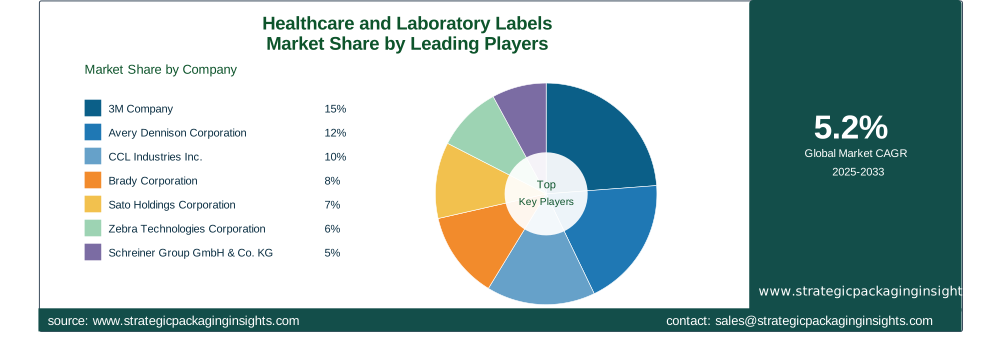
Among the major players in the market, 3M Company holds a significant share due to its extensive product range and strong distribution network. The company is known for its innovative labeling solutions that cater to various applications in the healthcare sector. Avery Dennison Corporation is another leading player, renowned for its advanced labeling technologies and commitment to sustainability. The company's focus on research and development has enabled it to offer cutting-edge solutions that meet the evolving needs of the market.
CCL Industries Inc. is a prominent player in the market, offering a wide range of labeling solutions for the healthcare and laboratory sectors. The company's strategic acquisitions and partnerships have strengthened its market position and expanded its product offerings. Brady Corporation is also a key player, known for its high-quality labeling solutions and strong customer focus. The company's emphasis on innovation and customer satisfaction has helped it maintain a competitive edge in the market.
Other notable companies in the market include Sato Holdings Corporation, Zebra Technologies Corporation, and Schreiner Group GmbH & Co. KG. These companies are recognized for their expertise in labeling technologies and their ability to provide customized solutions to meet specific customer requirements. The competitive landscape is further enriched by the presence of regional players who offer specialized solutions tailored to local market needs.
Key Highlights
- The healthcare and laboratory labels market is projected to grow at a CAGR of 5.2% from 2025 to 2033.
- Smart labeling technologies, such as RFID and NFC, are gaining traction for their enhanced tracking capabilities.
- There is a growing demand for eco-friendly and sustainable labeling materials in the market.
- Emerging economies present significant growth opportunities due to expanding healthcare infrastructure.
- Regulatory compliance and patient safety are key drivers of market growth.
- Companies are focusing on product innovation and strategic partnerships to gain a competitive edge.
- The market is witnessing a trend towards mergers and acquisitions to strengthen market position.
- Data breaches and cybersecurity concerns pose challenges to the adoption of smart labeling technologies.
- Personalized medicine and customized labeling solutions are driving demand in the market.
- Technological advancements in digital printing are enhancing labeling efficiency and functionality.
Top Countries Insights
The United States is a leading market for healthcare and laboratory labels, with a market size of $2.5 billion and a CAGR of 4%. The country's advanced healthcare infrastructure and stringent regulatory standards drive the demand for high-quality labeling solutions. The presence of major pharmaceutical companies and research institutions further boosts market growth. However, the high cost of advanced labeling technologies and regulatory compliance challenges are potential barriers.
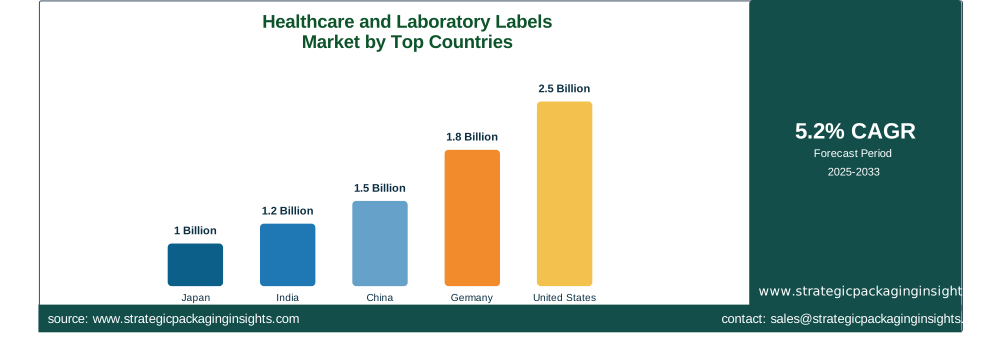
Germany is another significant market, with a market size of $1.8 billion and a CAGR of 5%. The country's strong focus on research and development, coupled with its robust healthcare system, drives the demand for innovative labeling solutions. The emphasis on sustainability and eco-friendly practices also contributes to market growth. However, the complexity of regulatory compliance and the high cost of advanced technologies pose challenges.
China is experiencing rapid growth in the healthcare and laboratory labels market, with a market size of $1.5 billion and a CAGR of 7%. The country's expanding healthcare infrastructure and increasing investment in the pharmaceutical sector drive market demand. The government's focus on improving healthcare standards and regulatory compliance further supports market growth. However, the lack of standardized regulations and the threat of counterfeit products are potential challenges.
India is emerging as a key market, with a market size of $1.2 billion and a CAGR of 6%. The country's growing population and increasing healthcare expenditure drive the demand for efficient labeling solutions. The government's initiatives to improve healthcare infrastructure and regulatory standards further support market growth. However, the high cost of advanced technologies and regulatory compliance challenges are potential barriers.
Japan is a mature market for healthcare and laboratory labels, with a market size of $1 billion and a CAGR of 3%. The country's advanced healthcare system and strong focus on research and development drive the demand for high-quality labeling solutions. The emphasis on patient safety and regulatory compliance further supports market growth. However, the high cost of advanced technologies and the complexity of regulatory compliance pose challenges.
Healthcare and Laboratory Labels Market Segments Insights

Material Analysis
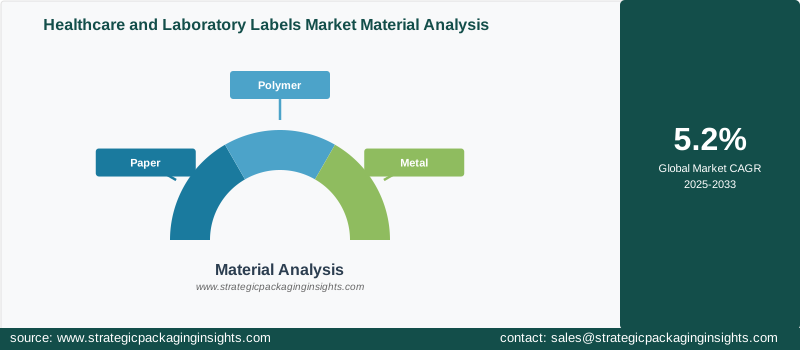
The material segment in the healthcare and laboratory labels market is primarily categorized into paper, polymer, and metal. Paper labels are widely used due to their cost-effectiveness and ease of printing. However, the demand for polymer labels is increasing due to their durability and resistance to harsh environmental conditions. Polymer labels are particularly favored in applications where labels are exposed to moisture, chemicals, or extreme temperatures. Metal labels, though less common, are used in specific applications where high durability and resistance to tampering are required. The shift towards eco-friendly materials is also influencing the material segment, with companies exploring biodegradable and recyclable options to meet sustainability goals.
In terms of competition, the material segment is characterized by the presence of several key players offering a wide range of products to cater to diverse customer needs. Companies are focusing on developing innovative materials that offer enhanced performance and sustainability. The demand for customized solutions is also driving competition, as companies strive to offer labels that meet specific application requirements. The increasing focus on sustainability is encouraging companies to invest in research and development to create eco-friendly materials that comply with regulatory standards and consumer expectations.
Application Analysis
The application segment of the healthcare and laboratory labels market includes pharmaceuticals, medical devices, research laboratories, and hospitals. The pharmaceutical sector is the largest application segment, driven by the need for accurate and reliable labeling solutions to ensure patient safety and regulatory compliance. The increasing prevalence of chronic diseases and the rise in pharmaceutical production are key drivers of demand in this segment. The medical devices segment is also experiencing significant growth, as the demand for labeling solutions that provide critical information about device usage and safety increases.
Research laboratories and hospitals are other important application segments, with the demand for labeling solutions driven by the need for accurate sample identification and tracking. The growing emphasis on patient-centric care and the need for clear and informative labels to enhance patient understanding and adherence to treatment regimens are also contributing to demand in these segments. The application segment is characterized by intense competition, with companies focusing on developing innovative solutions that meet the specific needs of each application.
Printing Technology Analysis
The printing technology segment in the healthcare and laboratory labels market includes digital, flexography, and offset printing. Digital printing is gaining popularity due to its ability to produce high-quality labels with quick turnaround times. The flexibility and cost-effectiveness of digital printing make it an attractive option for small to medium-sized print runs. Flexography is widely used for large-scale production, offering high-speed printing and the ability to print on a wide range of materials. Offset printing, though less common, is used for high-volume production where consistent quality is required.
The printing technology segment is characterized by rapid technological advancements, with companies investing in research and development to enhance printing capabilities and efficiency. The demand for customized and personalized labeling solutions is driving innovation in this segment, as companies strive to offer printing technologies that meet the specific needs of their customers. The increasing focus on sustainability is also influencing the printing technology segment, with companies exploring eco-friendly inks and printing processes to reduce their environmental impact.
End-User Analysis
The end-user segment of the healthcare and laboratory labels market includes pharmaceutical companies, hospitals, diagnostic laboratories, and research institutes. Pharmaceutical companies are the largest end-user segment, driven by the need for accurate and reliable labeling solutions to ensure patient safety and regulatory compliance. The increasing prevalence of chronic diseases and the rise in pharmaceutical production are key drivers of demand in this segment. Hospitals and diagnostic laboratories are also significant end-users, with the demand for labeling solutions driven by the need for accurate sample identification and tracking.
Research institutes are another important end-user segment, with the demand for labeling solutions driven by the need for accurate and reliable sample identification and tracking. The growing emphasis on patient-centric care and the need for clear and informative labels to enhance patient understanding and adherence to treatment regimens are also contributing to demand in these segments. The end-user segment is characterized by intense competition, with companies focusing on developing innovative solutions that meet the specific needs of each end-user.
Healthcare and Laboratory Labels Market Segments
The Healthcare and Laboratory Labels market has been segmented on the basis ofMaterial
- Paper
- Polymer
- Metal
Application
- Pharmaceuticals
- Medical Devices
Printing Technology
- Digital
- Flexography
End-User
- Pharmaceutical Companies
- Hospitals




