


Plastic Jar Packaging Market Outlook
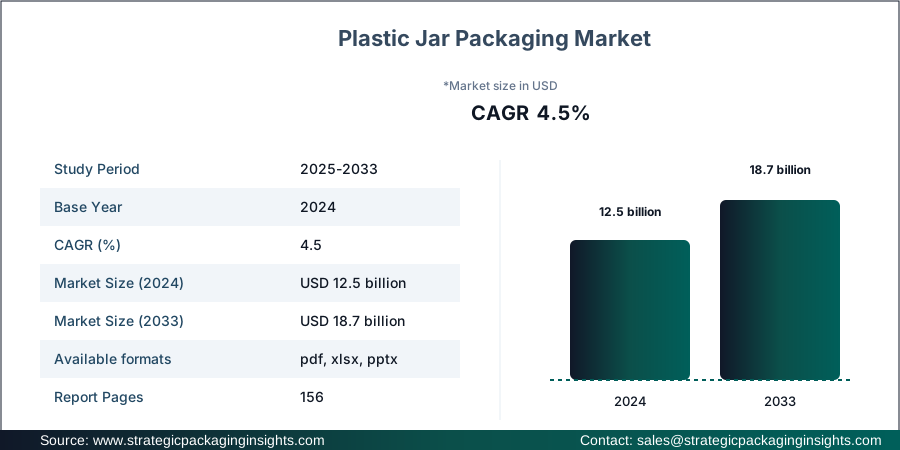
The plastic jar packaging market was valued at $12.5 billion in 2024 and is projected to reach $18.7 billion by 2033, growing at a CAGR of 4.5% during the forecast period 2025-2033. This market is driven by the increasing demand for lightweight and durable packaging solutions across various industries, including food and beverages, pharmaceuticals, and personal care. The versatility of plastic jars, which come in various shapes and sizes, makes them an attractive option for manufacturers looking to enhance product appeal and shelf life. Additionally, the growing trend of e-commerce and the need for efficient packaging solutions that can withstand transportation stresses further bolster the market's growth prospects.
Report Scope
| Attributes | Details |
| Report Title | Plastic Jar Packaging Market Size, Future Growth and Forecast 2033 |
| Material Type | PET, PP, HDPE, Others |
| End-User Industry | Food & Beverages, Pharmaceuticals, Personal Care & Cosmetics, Chemicals, Others |
| Capacity | Less than 100 ml, 100-500 ml, 500-1000 ml, More than 1000 ml |
| Region | Asia Pacific, North America, Latin America, Europe, Middle East & Africa |
| Base Year | 2024 |
| Historic Period | 2017-2023 |
| Forecast Period | 2025-2033 |
| Number of Pages | 156 |
| Customization Available | Yes* |
Opportunities & Threats
One of the significant opportunities in the plastic jar packaging market lies in the increasing consumer preference for sustainable and eco-friendly packaging solutions. As environmental concerns rise, manufacturers are focusing on developing recyclable and biodegradable plastic jars to meet regulatory standards and consumer expectations. This shift towards sustainability is expected to open new avenues for innovation and product development, allowing companies to differentiate themselves in a competitive market. Furthermore, the growing demand for personalized and aesthetically appealing packaging solutions presents an opportunity for manufacturers to offer customized plastic jars that cater to specific brand requirements.
Another opportunity is the expanding application of plastic jars in the pharmaceutical industry. With the increasing need for safe and secure packaging solutions for medicines and healthcare products, plastic jars offer a reliable option due to their lightweight, shatterproof, and moisture-resistant properties. The rise in healthcare awareness and the growing geriatric population are expected to drive the demand for pharmaceutical packaging, thereby boosting the plastic jar packaging market. Additionally, the development of advanced manufacturing technologies, such as injection molding and blow molding, enables the production of high-quality plastic jars with enhanced barrier properties, further supporting market growth.
However, the plastic jar packaging market faces challenges from stringent regulations and environmental concerns related to plastic waste. Governments worldwide are implementing policies to reduce plastic usage and promote recycling, which could impact the production and consumption of plastic jars. The increasing availability of alternative packaging materials, such as glass and metal, also poses a threat to the market. These materials are perceived as more environmentally friendly, and their adoption could hinder the growth of plastic jar packaging. Manufacturers need to invest in research and development to create sustainable solutions and comply with regulatory requirements to mitigate these challenges.
Drivers & Challenges
The primary driver of the plastic jar packaging market is the growing demand for convenient and lightweight packaging solutions. Consumers are increasingly seeking products that are easy to handle, store, and transport, making plastic jars an ideal choice. The food and beverage industry, in particular, is witnessing a surge in demand for plastic jars due to their ability to preserve product freshness and extend shelf life. Additionally, the rise of urbanization and changing lifestyles have led to an increased consumption of packaged goods, further propelling the market's growth.
Another significant driver is the technological advancements in plastic manufacturing processes. Innovations such as advanced blow molding and injection molding techniques have enabled the production of high-quality plastic jars with improved barrier properties and aesthetic appeal. These advancements allow manufacturers to offer a wide range of designs and sizes, catering to diverse consumer preferences. Moreover, the integration of smart packaging technologies, such as QR codes and RFID tags, enhances product traceability and consumer engagement, providing a competitive edge to market players.
Despite these drivers, the plastic jar packaging market faces challenges related to environmental sustainability and regulatory compliance. The increasing awareness of plastic pollution and its impact on the environment has led to a growing demand for eco-friendly packaging solutions. Manufacturers are under pressure to develop recyclable and biodegradable plastic jars to meet consumer expectations and comply with stringent regulations. Additionally, the volatility in raw material prices and the availability of alternative packaging materials, such as glass and metal, pose challenges to market growth. Companies need to focus on innovation and sustainability to overcome these challenges and maintain their competitive position.
Market Share Analysis
The plastic jar packaging market is characterized by intense competition, with several key players vying for market share. The competitive landscape is shaped by factors such as product innovation, pricing strategies, and distribution networks. Companies are focusing on expanding their product portfolios and enhancing their manufacturing capabilities to gain a competitive edge. The market is also witnessing strategic collaborations and partnerships aimed at strengthening market presence and expanding geographical reach.
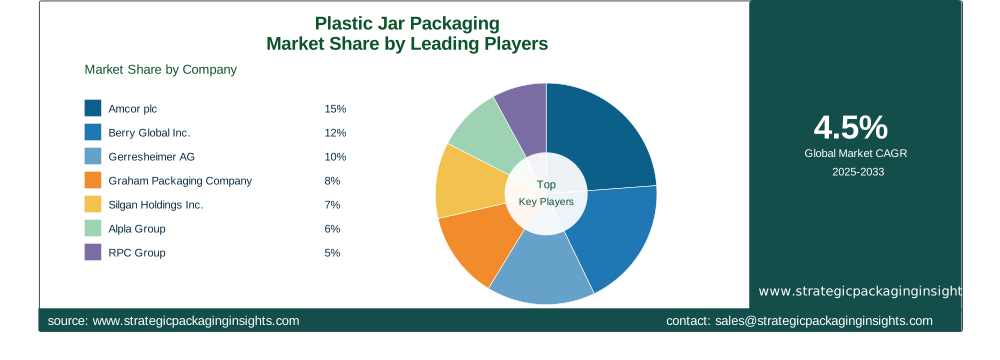
Some of the major companies operating in the plastic jar packaging market include Amcor plc, Berry Global Inc., Gerresheimer AG, Graham Packaging Company, and Silgan Holdings Inc. These companies are investing in research and development to create innovative and sustainable packaging solutions that cater to evolving consumer preferences. They are also focusing on expanding their production capacities and enhancing their distribution networks to meet the growing demand for plastic jars across various industries.
Amcor plc, a leading player in the plastic jar packaging market, is known for its commitment to sustainability and innovation. The company offers a wide range of plastic jars designed to meet the needs of different industries, including food and beverages, pharmaceuticals, and personal care. Amcor's focus on developing recyclable and lightweight packaging solutions has helped it maintain a strong market position.
Berry Global Inc. is another prominent player in the market, offering a diverse portfolio of plastic packaging solutions. The company's extensive manufacturing capabilities and global presence enable it to serve a wide range of customers across different regions. Berry Global's focus on sustainability and innovation has positioned it as a key player in the plastic jar packaging market.
Key Highlights
- The plastic jar packaging market is projected to grow at a CAGR of 4.5% from 2025 to 2033.
- Increasing demand for lightweight and durable packaging solutions is driving market growth.
- Technological advancements in manufacturing processes are enhancing product quality and design.
- Environmental concerns and regulatory compliance are key challenges for market players.
- The food and beverage industry is a major end-user of plastic jar packaging.
- Companies are focusing on developing sustainable and eco-friendly packaging solutions.
- Strategic collaborations and partnerships are shaping the competitive landscape.
- Asia Pacific is expected to witness significant growth due to rising consumer demand.
- Smart packaging technologies are gaining traction in the market.
- Alternative packaging materials pose a threat to the growth of plastic jar packaging.
Top Countries Insights
In the plastic jar packaging market, the United States holds a significant share, driven by the high demand for packaged food and beverages. The market in the U.S. is expected to grow at a CAGR of 3% due to the increasing adoption of sustainable packaging solutions and the presence of major market players. The country's stringent regulations on plastic usage are also encouraging manufacturers to develop eco-friendly alternatives.
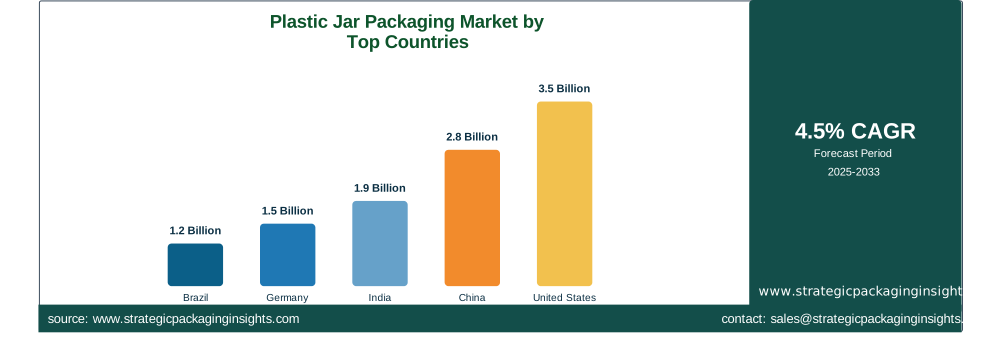
China is another key market for plastic jar packaging, with a projected CAGR of 6%. The country's booming e-commerce sector and growing consumer preference for convenient packaging solutions are driving market growth. Additionally, government initiatives to promote recycling and reduce plastic waste are influencing the development of sustainable packaging solutions.
India is witnessing rapid growth in the plastic jar packaging market, with a CAGR of 7%. The increasing demand for packaged food and personal care products, coupled with the rising middle-class population, is fueling market expansion. The government's focus on reducing plastic waste and promoting sustainable packaging is also contributing to market growth.
Germany is a prominent market in Europe, with a CAGR of 4%. The country's strong manufacturing base and emphasis on sustainability are driving the demand for plastic jar packaging. The presence of leading packaging companies and the growing trend of eco-friendly packaging solutions are further supporting market growth.
Brazil is experiencing steady growth in the plastic jar packaging market, with a CAGR of 5%. The country's expanding food and beverage industry and increasing consumer awareness of sustainable packaging are key growth drivers. The government's initiatives to promote recycling and reduce plastic waste are also influencing market dynamics.
Plastic Jar Packaging Market Segments Insights

Material Type Analysis
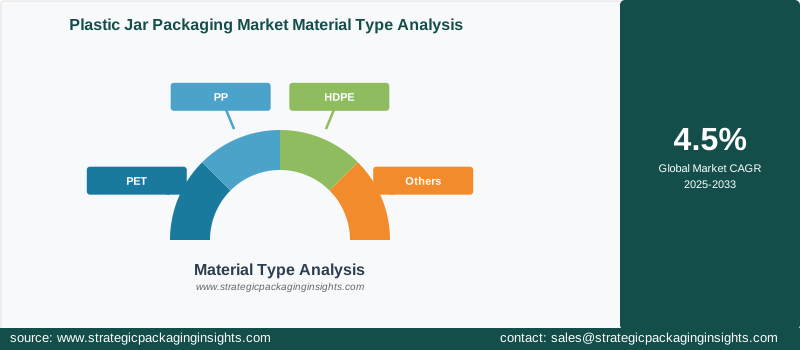
The plastic jar packaging market is segmented by material type, including PET, PP, HDPE, and others. PET is the most widely used material due to its excellent clarity, lightweight, and recyclability. The demand for PET jars is driven by the food and beverage industry, where transparency and product visibility are crucial. PP and HDPE are also popular materials, offering durability and resistance to chemicals, making them suitable for pharmaceutical and chemical packaging. The growing focus on sustainability is encouraging manufacturers to explore biodegradable and recyclable materials, further influencing material selection in the market.
Technological advancements in material science are enabling the development of innovative plastic materials with enhanced properties. For instance, the introduction of bio-based plastics and recycled materials is gaining traction as manufacturers strive to meet environmental regulations and consumer expectations. The increasing availability of alternative materials, such as glass and metal, is also impacting the material type segment, as these materials are perceived as more environmentally friendly. However, the cost-effectiveness and versatility of plastic jars continue to drive their demand across various industries.
End-User Industry Analysis
The end-user industry segment of the plastic jar packaging market includes food and beverages, pharmaceuticals, personal care and cosmetics, chemicals, and others. The food and beverage industry is the largest end-user, driven by the demand for convenient and lightweight packaging solutions that preserve product freshness and extend shelf life. The rise of e-commerce and the increasing consumption of packaged foods are further boosting the demand for plastic jars in this industry.
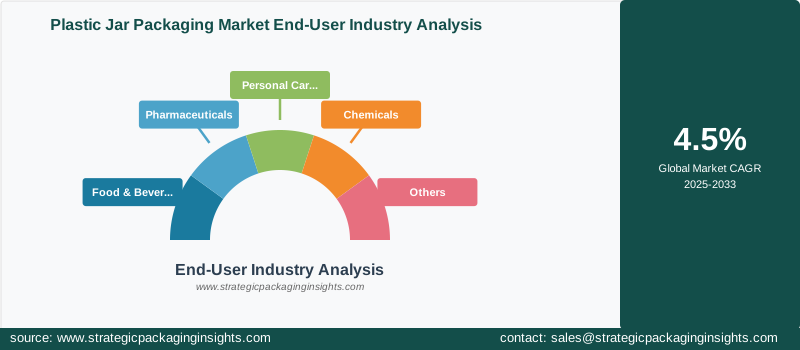
The pharmaceutical industry is another significant end-user, with plastic jars offering a safe and secure packaging solution for medicines and healthcare products. The growing geriatric population and increasing healthcare awareness are driving the demand for pharmaceutical packaging, supporting the growth of the plastic jar packaging market. The personal care and cosmetics industry is also witnessing a surge in demand for plastic jars, driven by the need for aesthetically appealing and customizable packaging solutions.
Capacity Analysis
The plastic jar packaging market is segmented by capacity, including less than 100 ml, 100-500 ml, 500-1000 ml, and more than 1000 ml. The demand for different capacities is influenced by the specific requirements of end-user industries. For instance, the food and beverage industry often requires larger capacity jars for bulk packaging, while the personal care and cosmetics industry prefers smaller jars for individual products.
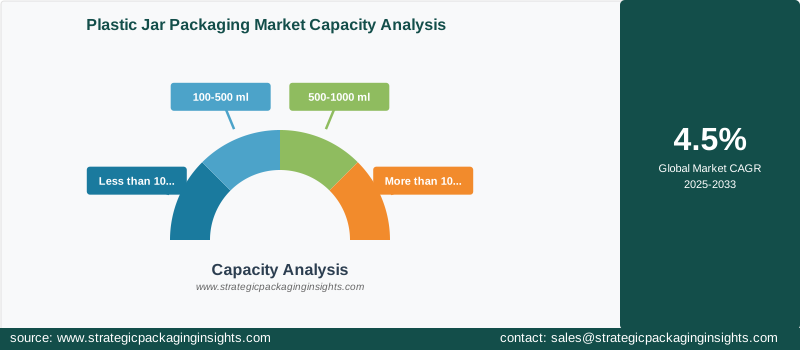
The increasing demand for personalized and convenient packaging solutions is driving the growth of the capacity segment. Manufacturers are focusing on offering a wide range of capacities to cater to diverse consumer preferences and industry requirements. The development of advanced manufacturing technologies, such as blow molding and injection molding, is enabling the production of high-quality plastic jars in various capacities, further supporting market growth.
Region Analysis
The plastic jar packaging market is segmented by region, including Asia Pacific, North America, Latin America, Europe, and Middle East & Africa. Asia Pacific is expected to witness significant growth due to rising consumer demand and the expanding food and beverage industry. The region's growing middle-class population and increasing urbanization are driving the demand for packaged goods, supporting market expansion.
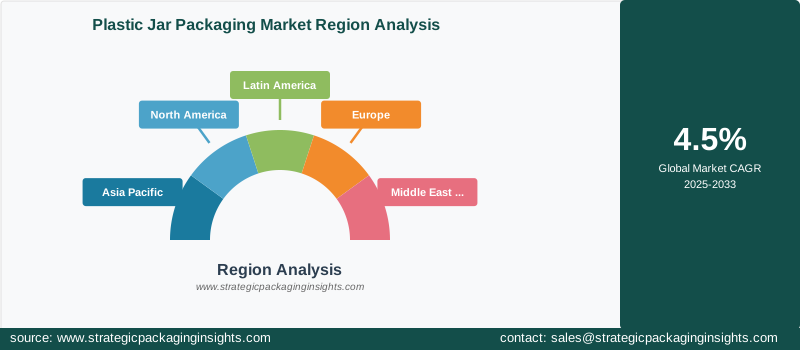
North America and Europe are mature markets, with a strong focus on sustainability and innovation. The presence of leading packaging companies and stringent regulations on plastic usage are influencing market dynamics in these regions. Latin America and Middle East & Africa are emerging markets, with increasing demand for plastic jar packaging driven by the growing food and beverage and personal care industries.
Plastic Jar Packaging Market Segments
The Plastic Jar Packaging market has been segmented on the basis ofMaterial Type
- PET
- PP
- HDPE
- Others
End-User Industry
- Food & Beverages
- Pharmaceuticals
- Personal Care & Cosmetics
- Chemicals
- Others
Capacity
- Less than 100 ml
- 100-500 ml
- 500-1000 ml
- More than 1000 ml
Region
- Asia Pacific
- North America
- Latin America
- Europe
- Middle East & Africa




