


Blister Packaging Market Outlook
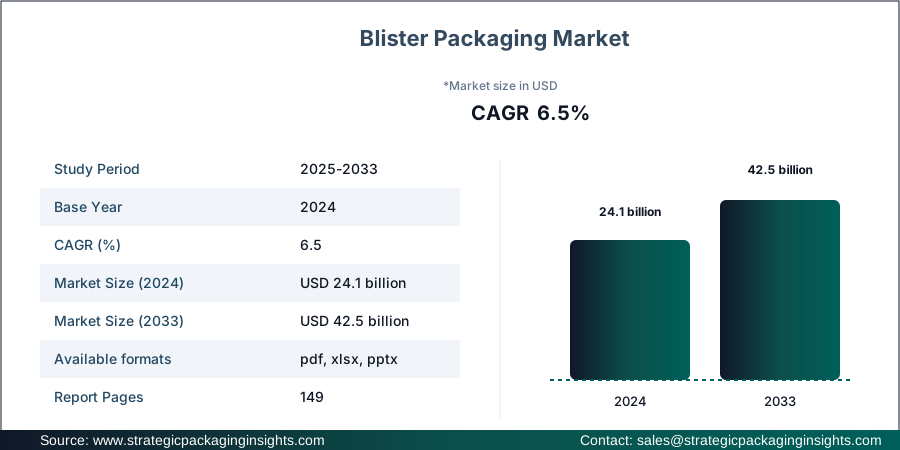
The blister packaging market was valued at $24.1 billion in 2024 and is projected to reach $42.5 billion by 2033, growing at a CAGR of 6.5% during the forecast period 2025-2033. This growth is driven by the increasing demand for convenient and tamper-evident packaging solutions across various industries, particularly in the pharmaceutical and consumer goods sectors. The rise in healthcare awareness and the need for safe medication packaging are significant contributors to the market's expansion. Additionally, the growing trend of sustainable packaging solutions is pushing manufacturers to innovate and adopt eco-friendly materials, further propelling market growth.
Report Scope
| Attributes | Details |
| Report Title | Blister Packaging Market Size, Future Growth and Forecast 2033 |
| Material | Plastic, Aluminum, Paper & Paperboard |
| Technology | Thermoforming, Cold Forming |
| Application | Pharmaceuticals, Consumer Goods, Food & Beverages, Industrial Goods |
| End-User | Healthcare, Consumer Goods, Food & Beverage, Industrial |
| Base Year | 2024 |
| Historic Period | 2017-2023 |
| Forecast Period | 2025-2033 |
| Number of Pages | 149 |
| Customization Available | Yes* |
Opportunities & Threats
The blister packaging market presents numerous opportunities, particularly in the pharmaceutical sector, where the demand for unit-dose packaging is on the rise. This trend is driven by the need for precise dosage and improved patient compliance, which blister packaging effectively addresses. Moreover, the increasing focus on sustainability offers opportunities for manufacturers to develop eco-friendly blister packs using biodegradable materials. This shift not only meets regulatory requirements but also aligns with consumer preferences for environmentally responsible products. Additionally, the expansion of e-commerce and online retailing provides a significant opportunity for blister packaging, as it offers enhanced product protection during transit, reducing the risk of damage and returns.
Another opportunity lies in the technological advancements in blister packaging machinery, which are enabling faster production rates and greater customization options. These innovations allow manufacturers to cater to diverse industry needs, from pharmaceuticals to consumer electronics, by offering tailored packaging solutions. The integration of smart technologies, such as QR codes and NFC tags, into blister packs is also gaining traction, providing consumers with additional information and enhancing the overall user experience. This trend is expected to drive further growth in the market as companies seek to differentiate their products and improve customer engagement.
However, the blister packaging market faces certain restraints, including the high cost of raw materials and the environmental concerns associated with plastic waste. The reliance on plastic as a primary material for blister packs poses a significant challenge, as regulatory bodies worldwide are imposing stricter guidelines to reduce plastic usage. This has led to increased research and development costs for manufacturers as they seek alternative materials that offer similar performance characteristics. Additionally, the complex recycling processes for multi-material blister packs can hinder the market's growth, as consumers and companies alike strive for more sustainable solutions.
Drivers & Challenges
One of the primary drivers of the blister packaging market is the growing demand for pharmaceutical products, which require secure and tamper-evident packaging solutions. Blister packaging offers several advantages, such as protection from moisture, contamination, and damage, making it an ideal choice for sensitive medications. The aging global population and the increasing prevalence of chronic diseases are further fueling the demand for pharmaceuticals, thereby driving the growth of the blister packaging market. Additionally, the rise in consumer awareness regarding product safety and hygiene is boosting the adoption of blister packaging across various industries.
Another significant driver is the increasing focus on sustainability and eco-friendly packaging solutions. Consumers and regulatory bodies are pushing for reduced plastic usage and the adoption of recyclable materials, prompting manufacturers to innovate and develop sustainable blister packaging options. This trend is supported by advancements in material science, which are enabling the production of biodegradable and compostable blister packs. The shift towards sustainable packaging is not only meeting regulatory requirements but also enhancing brand image and consumer loyalty, further driving market growth.
Despite these drivers, the blister packaging market faces several challenges, including the high cost of production and the complexity of recycling multi-material packs. The reliance on plastic materials poses environmental concerns, leading to increased regulatory scrutiny and the need for alternative solutions. Additionally, the competitive landscape of the packaging industry requires manufacturers to continuously innovate and differentiate their products, which can be resource-intensive. The need for specialized machinery and skilled labor for blister packaging production also adds to the operational costs, posing a challenge for smaller companies looking to enter the market.
Market Share Analysis
The blister packaging market is characterized by a competitive landscape with several key players dominating the industry. Companies such as Amcor plc, Sonoco Products Company, and WestRock Company hold significant market shares due to their extensive product portfolios and strong distribution networks. These companies are continuously investing in research and development to innovate and offer sustainable packaging solutions, which is a critical factor in maintaining their competitive edge. The market is also witnessing strategic collaborations and mergers among key players to expand their geographical presence and enhance their product offerings.
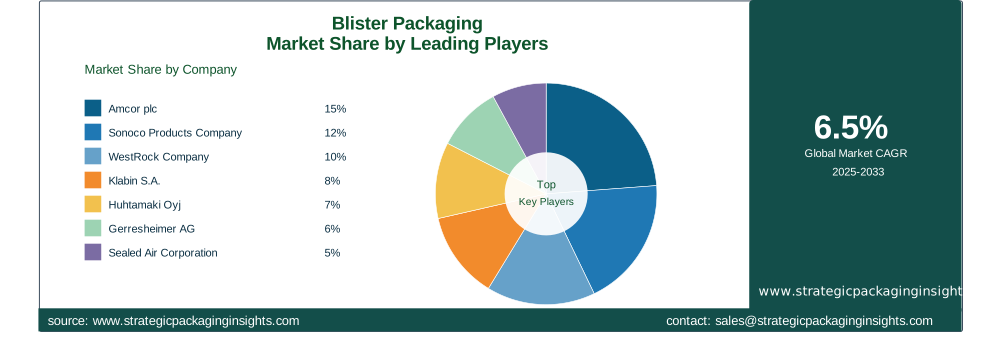
Amcor plc, a leading player in the blister packaging market, is known for its innovative packaging solutions and commitment to sustainability. The company offers a wide range of blister packs for various applications, including pharmaceuticals and consumer goods. With a strong focus on research and development, Amcor is at the forefront of developing eco-friendly packaging materials that meet regulatory standards and consumer preferences. The company's global presence and extensive distribution network further strengthen its position in the market.
Sonoco Products Company is another major player in the blister packaging market, offering a diverse range of packaging solutions for different industries. The company's expertise in material science and packaging design enables it to provide customized solutions that meet specific customer needs. Sonoco's commitment to sustainability is evident in its efforts to reduce plastic usage and develop recyclable packaging options. The company's strategic acquisitions and partnerships have also contributed to its growth and expansion in the global market.
WestRock Company, a prominent name in the blister packaging industry, is known for its innovative and sustainable packaging solutions. The company's focus on customer-centric design and advanced manufacturing technologies has enabled it to offer high-quality blister packs that cater to various industry requirements. WestRock's strong emphasis on sustainability and environmental responsibility is reflected in its use of renewable materials and efforts to minimize waste. The company's extensive global presence and robust supply chain further enhance its competitive position in the market.
Key Highlights
- The blister packaging market is projected to grow at a CAGR of 6.5% from 2025 to 2033.
- Increasing demand for pharmaceutical products is a major driver of market growth.
- Technological advancements in blister packaging machinery are enhancing production efficiency.
- Sustainability and eco-friendly packaging solutions are gaining traction in the market.
- Regulatory pressures to reduce plastic usage are driving innovation in alternative materials.
- The rise of e-commerce is boosting demand for protective packaging solutions.
- Integration of smart technologies in blister packs is enhancing consumer engagement.
Top Countries Insights
In the blister packaging market, the United States holds a significant share, with a market size of $6.5 billion and a CAGR of 5%. The country's robust pharmaceutical industry and stringent regulatory standards drive the demand for high-quality blister packaging solutions. Additionally, the focus on sustainability and eco-friendly materials is a key growth driver in the U.S. market.
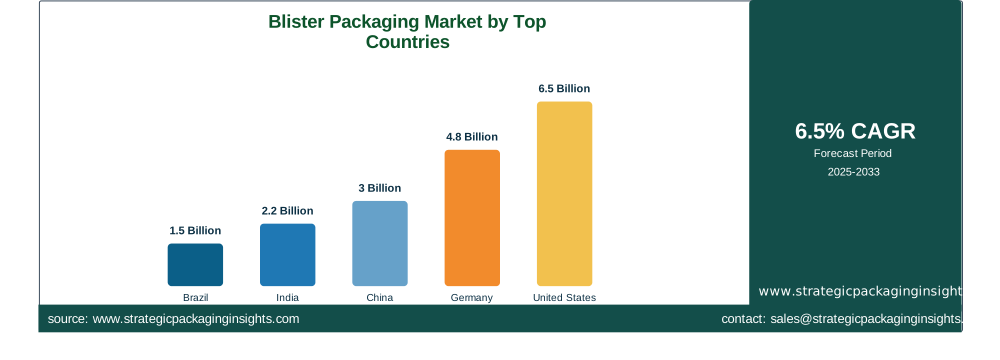
Germany is another leading market for blister packaging, with a market size of $4.8 billion and a CAGR of 4%. The country's strong manufacturing sector and emphasis on innovation and quality contribute to the demand for advanced packaging solutions. Germany's commitment to sustainability and recycling also supports the growth of eco-friendly blister packaging options.
China, with a market size of $3 billion and a CAGR of 7%, is experiencing rapid growth in the blister packaging market. The country's expanding pharmaceutical and consumer goods industries are driving the demand for convenient and protective packaging solutions. Additionally, government initiatives to promote sustainable packaging practices are boosting the adoption of eco-friendly blister packs.
India, with a market size of $2.2 billion and a CAGR of 8%, is a rapidly growing market for blister packaging. The country's booming pharmaceutical industry and increasing consumer awareness of product safety and hygiene are key growth drivers. The focus on sustainable packaging solutions is also gaining momentum in India, supported by government policies and consumer preferences.
Brazil, with a market size of $1.5 billion and a CAGR of 6%, is a significant market for blister packaging in Latin America. The country's growing healthcare sector and increasing demand for packaged consumer goods are driving the market's growth. Additionally, the emphasis on sustainability and environmental responsibility is encouraging the adoption of eco-friendly packaging solutions in Brazil.
Blister Packaging Market Segments Insights

Material Analysis
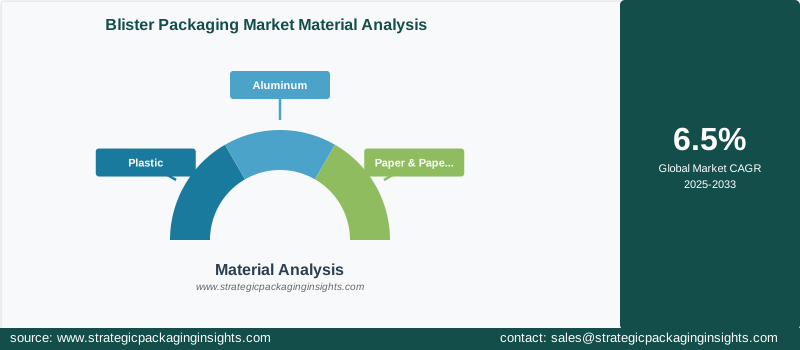
The blister packaging market is segmented by material into plastic, aluminum, and paper & paperboard. Plastic remains the dominant material due to its versatility, durability, and cost-effectiveness. It is widely used in pharmaceutical and consumer goods packaging for its excellent barrier properties and ability to be molded into various shapes. However, the environmental impact of plastic waste is driving the demand for alternative materials. Aluminum is gaining popularity for its recyclability and superior barrier properties, making it ideal for sensitive products. Paper & paperboard are also emerging as sustainable options, offering biodegradability and a reduced carbon footprint.
The shift towards sustainable materials is a significant trend in the blister packaging market. Manufacturers are investing in research and development to create eco-friendly materials that meet regulatory standards and consumer preferences. The use of biodegradable plastics and recycled materials is gaining traction, driven by the increasing focus on sustainability and environmental responsibility. This trend is expected to continue as companies seek to reduce their environmental impact and enhance their brand image.
Technology Analysis
The blister packaging market is segmented by technology into thermoforming and cold forming. Thermoforming is the most widely used technology due to its cost-effectiveness and ability to produce high-quality, detailed packaging. It is favored in the pharmaceutical and consumer goods industries for its flexibility and efficiency. Cold forming, on the other hand, offers superior barrier properties and is used for packaging sensitive products that require protection from moisture and light. This technology is gaining popularity in the pharmaceutical sector, where product integrity is paramount.
Technological advancements in blister packaging machinery are driving market growth by enhancing production efficiency and customization options. The integration of automation and smart technologies is enabling faster production rates and greater precision, allowing manufacturers to meet diverse industry needs. The development of advanced materials and coatings is also contributing to the growth of the blister packaging market, offering improved barrier properties and sustainability.
Application Analysis
The blister packaging market is segmented by application into pharmaceuticals, consumer goods, food & beverages, and industrial goods. The pharmaceutical sector is the largest application segment, driven by the need for secure and tamper-evident packaging solutions. Blister packaging offers several advantages for pharmaceuticals, including protection from contamination and precise dosage control. The consumer goods sector is also a significant market for blister packaging, with demand driven by the need for convenient and attractive packaging solutions.
The food & beverages segment is experiencing growth due to the increasing demand for portion-controlled and ready-to-eat products. Blister packaging offers excellent protection and shelf-life extension for food products, making it an ideal choice for this industry. The industrial goods segment is also seeing growth, driven by the need for protective packaging solutions that prevent damage during transit and storage.
End-User Analysis
The blister packaging market is segmented by end-user into healthcare, consumer goods, food & beverage, and industrial. The healthcare sector is the largest end-user segment, driven by the demand for secure and tamper-evident packaging solutions for pharmaceuticals and medical devices. The consumer goods sector is also a significant market for blister packaging, with demand driven by the need for convenient and attractive packaging solutions.
The food & beverage sector is experiencing growth due to the increasing demand for portion-controlled and ready-to-eat products. Blister packaging offers excellent protection and shelf-life extension for food products, making it an ideal choice for this industry. The industrial sector is also seeing growth, driven by the need for protective packaging solutions that prevent damage during transit and storage.
Blister Packaging Market Segments
The Blister Packaging market has been segmented on the basis ofMaterial
- Plastic
- Aluminum
- Paper & Paperboard
Technology
- Thermoforming
- Cold Forming
Application
- Pharmaceuticals
- Consumer Goods
- Food & Beverages
- Industrial Goods
End-User
- Healthcare
- Consumer Goods
- Food & Beverage
- Industrial




