


PCR-Compatible Printing and Labeling Market Outlook
The PCR-Compatible Printing and Labeling market was valued at $1.5 billion in 2024 and is projected to reach $3.2 billion by 2033, growing at a CAGR of 8.5% during the forecast period 2025-2033. This market is driven by the increasing demand for sustainable packaging solutions, as consumers and industries alike are becoming more environmentally conscious. The shift towards post-consumer recycled (PCR) materials in packaging is gaining momentum, as it helps reduce the carbon footprint and supports circular economy initiatives. The market is also benefiting from advancements in printing technologies that enhance the quality and efficiency of labeling processes, making them more compatible with PCR materials.
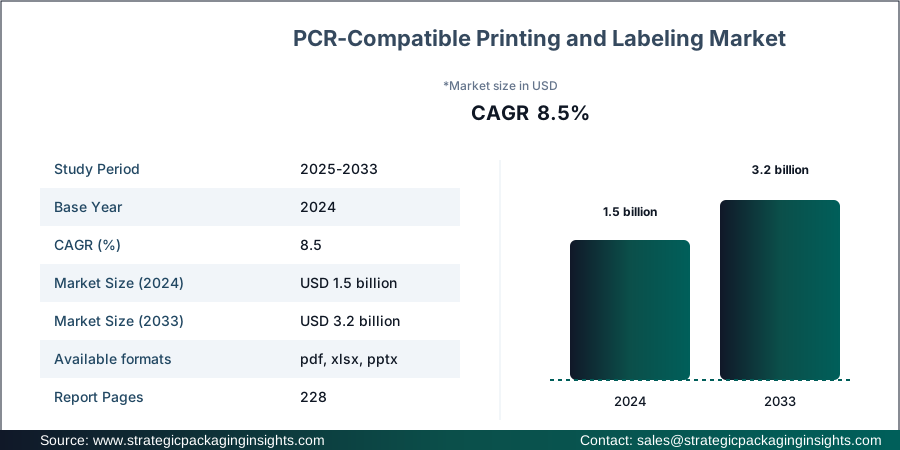
Report Scope
| Attributes | Details |
| Report Title | PCR-Compatible Printing and Labeling Market Size, Future Growth and Forecast 2033 |
| Material Type | Paper, Plastic, Others |
| Technology | Digital Printing, Flexographic Printing, Others |
| Application | Food & Beverage, Healthcare, Personal Care, Industrial, Others |
| Region | North America, Europe, Asia Pacific, Latin America, Middle East & Africa |
| Base Year | 2024 |
| Historic Period | 2017-2023 |
| Forecast Period | 2025-2033 |
| Number of Pages | 228 |
| Customization Available | Yes* |
Opportunities & Threats
One of the significant opportunities in the PCR-Compatible Printing and Labeling market is the growing consumer preference for eco-friendly products. As awareness about environmental issues rises, consumers are increasingly opting for products with sustainable packaging. This trend is pushing manufacturers to adopt PCR materials in their packaging solutions, thereby driving the demand for PCR-compatible printing and labeling. Additionally, regulatory frameworks promoting the use of recycled materials in packaging are creating a favorable environment for market growth. Governments across the globe are implementing policies that encourage the use of PCR materials, providing a significant boost to the market.
Another opportunity lies in technological advancements in printing and labeling technologies. Innovations such as digital printing and smart labeling are enhancing the compatibility of printing processes with PCR materials. These technologies offer improved print quality, faster production times, and reduced waste, making them highly attractive to manufacturers. The integration of smart technologies in labeling, such as QR codes and RFID tags, is also opening new avenues for market expansion, as they provide additional functionalities and enhance consumer engagement.
However, the market faces certain restrainers, such as the high cost of PCR materials compared to virgin materials. The production and processing of PCR materials can be more expensive, which may deter some manufacturers from adopting them. Additionally, the availability of high-quality PCR materials can be limited, posing a challenge for manufacturers looking to scale up their sustainable packaging solutions. These factors could potentially hinder the growth of the PCR-Compatible Printing and Labeling market.
Drivers & Challenges
The primary driver of the PCR-Compatible Printing and Labeling market is the increasing regulatory pressure to reduce plastic waste and promote recycling. Governments worldwide are implementing stringent regulations to curb plastic pollution, which is encouraging manufacturers to adopt PCR materials in their packaging solutions. This regulatory push is complemented by consumer demand for sustainable products, creating a strong market driver. Additionally, the growing trend of circular economy practices is driving the adoption of PCR materials, as they help close the loop in the lifecycle of packaging materials.
Another significant driver is the advancement in printing technologies that enhance the compatibility of printing processes with PCR materials. Digital printing technologies, for instance, offer high-quality prints with reduced waste, making them ideal for use with PCR materials. These technologies also allow for greater customization and flexibility in labeling, which is increasingly important in today's competitive market. The ability to produce high-quality labels that are compatible with PCR materials is a key driver for market growth.
Despite these drivers, the market faces challenges such as the limited availability of high-quality PCR materials. The recycling infrastructure in many regions is still underdeveloped, leading to a shortage of high-quality PCR materials. This can limit the ability of manufacturers to produce PCR-compatible packaging at scale. Additionally, the higher cost of PCR materials compared to virgin materials can be a deterrent for some manufacturers, especially those operating on tight margins. These challenges need to be addressed to fully realize the potential of the PCR-Compatible Printing and Labeling market.
PCR-Compatible Printing and Labeling Strategic Outlook
| Trend | Market Driver | Technological/Material Shift | Business Impact |
|---|---|---|---|
| Sustainability | Regulatory Pressure | Shift to PCR Materials | Increased Demand for Eco-Friendly Packaging |
| Smart Tech | Consumer Engagement | Integration of Smart Labels | Enhanced Consumer Interaction |
| Consumer Behavior | Eco-Consciousness | Adoption of Digital Printing | Growth in Sustainable Product Lines |
| Logistics | Efficiency Needs | Advanced Printing Technologies | Reduced Production Costs |
The PCR-Compatible Printing and Labeling market is poised for significant growth, driven by the increasing demand for sustainable packaging solutions. As of 2026, the market is experiencing a robust expansion, with regulatory frameworks and consumer preferences acting as key disruptors. The shift towards PCR materials is not just a trend but a necessity, as brands aim to meet regulatory requirements and consumer expectations. To maintain market share by 2033, brands need to pivot towards integrating advanced printing technologies and smart labeling solutions that enhance the functionality and sustainability of their packaging. Embracing these innovations will be crucial for brands to stay competitive in this evolving market landscape.
Market Share Analysis
The competitive landscape of the PCR-Compatible Printing and Labeling market is characterized by a mix of established players and emerging companies, all vying for market share in this rapidly growing sector. The market is witnessing increased consolidation as companies seek to enhance their capabilities and expand their product offerings. Key players are focusing on strategic partnerships, mergers, and acquisitions to strengthen their market position and gain a competitive edge. The emphasis on sustainability and innovation is driving companies to invest in research and development to develop advanced printing and labeling solutions that are compatible with PCR materials.
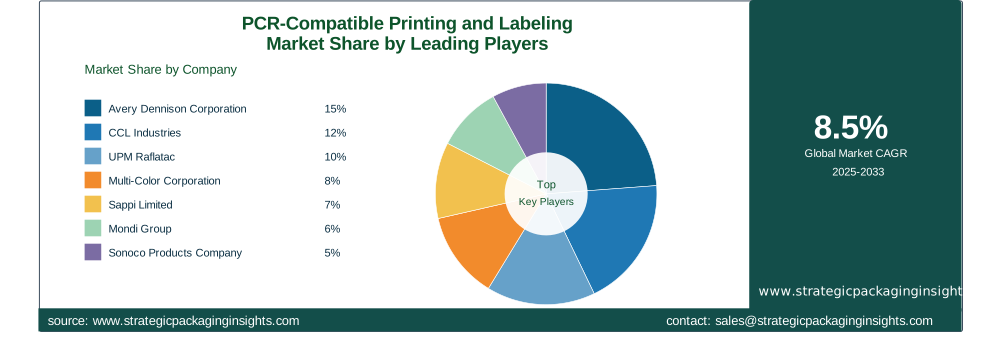
Among the major companies in the market, Avery Dennison Corporation holds a significant share, leveraging its extensive experience and expertise in labeling and packaging solutions. The company is known for its innovative products and commitment to sustainability, making it a leader in the PCR-compatible segment. Another key player, CCL Industries, is renowned for its comprehensive range of labeling solutions and its focus on sustainable practices. The company's strategic acquisitions and partnerships have bolstered its market presence and enabled it to offer a diverse portfolio of PCR-compatible products.
UPM Raflatac is another prominent player in the market, recognized for its sustainable labeling solutions and commitment to reducing environmental impact. The company's focus on innovation and sustainability has positioned it as a leader in the PCR-compatible segment. Similarly, Multi-Color Corporation is making significant strides in the market with its emphasis on sustainable labeling solutions and advanced printing technologies. The company's global presence and strong customer base have contributed to its success in the PCR-compatible market.
Other notable companies in the market include Sappi Limited, known for its sustainable paper-based packaging solutions, and Mondi Group, which offers a wide range of eco-friendly packaging products. These companies are investing in research and development to enhance their product offerings and meet the growing demand for PCR-compatible solutions. The competitive landscape is dynamic, with companies continuously innovating to stay ahead in this rapidly evolving market.
Key Highlights
- The PCR-Compatible Printing and Labeling market is projected to grow at a CAGR of 8.5% from 2025 to 2033.
- Increasing regulatory pressure to reduce plastic waste is driving the adoption of PCR materials.
- Technological advancements in digital printing are enhancing the compatibility of printing processes with PCR materials.
- Consumer demand for sustainable packaging solutions is a major driver of market growth.
- The market is witnessing increased consolidation as companies seek to enhance their capabilities.
- Smart labeling technologies are opening new avenues for market expansion.
- The high cost of PCR materials compared to virgin materials is a potential restrainer.
- Limited availability of high-quality PCR materials poses a challenge for manufacturers.
- Key players are focusing on strategic partnerships and acquisitions to strengthen their market position.
- Innovation and sustainability are key focus areas for companies in the PCR-compatible market.
Top Countries Insights
In the United States, the PCR-Compatible Printing and Labeling market is valued at approximately $500 million, with a CAGR of 7%. The country's strong regulatory framework promoting the use of recycled materials and the growing consumer demand for sustainable packaging are key growth drivers. The presence of major players and advanced recycling infrastructure further supports market expansion.
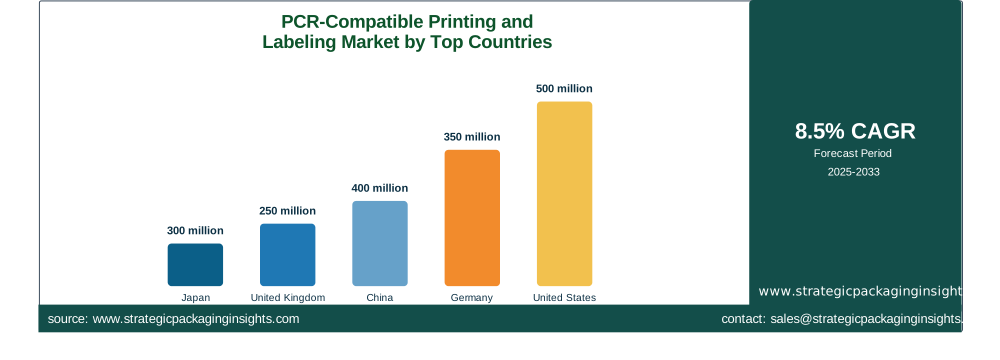
Germany is another significant market, with a value of $350 million and a CAGR of 6%. The country's stringent environmental regulations and commitment to sustainability are driving the adoption of PCR materials. Germany's advanced manufacturing capabilities and focus on innovation are also contributing to market growth.
China's market is valued at $400 million, with a CAGR of 9%. The country's rapid industrialization and increasing environmental awareness are fueling demand for PCR-compatible solutions. Government initiatives to promote recycling and reduce plastic waste are also supporting market growth.
In the United Kingdom, the market is valued at $250 million, with a CAGR of 5%. The country's strong focus on sustainability and circular economy practices is driving the adoption of PCR materials. The presence of innovative companies and advanced recycling infrastructure further supports market growth.
Japan's market is valued at $300 million, with a CAGR of 4%. The country's commitment to environmental sustainability and advanced technological capabilities are key growth drivers. Japan's focus on innovation and quality is also contributing to the expansion of the PCR-compatible market.
PCR-Compatible Printing and Labeling Market Segments Insights

Material Type Analysis
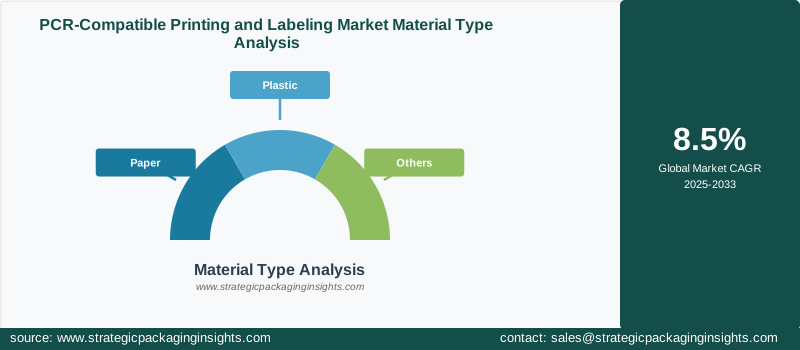
The material type segment in the PCR-Compatible Printing and Labeling market is primarily divided into paper, plastic, and others. Paper-based materials are gaining traction due to their biodegradability and ease of recycling, making them a preferred choice for eco-conscious consumers. The demand for paper materials is further driven by advancements in printing technologies that enhance print quality and durability. Plastic materials, on the other hand, are being increasingly used in PCR-compatible solutions due to their versatility and cost-effectiveness. However, the environmental impact of plastic is a concern, prompting manufacturers to focus on developing recyclable and biodegradable plastic options. The 'others' category includes materials like metal and glass, which are used in niche applications where durability and strength are paramount.
Technology Analysis
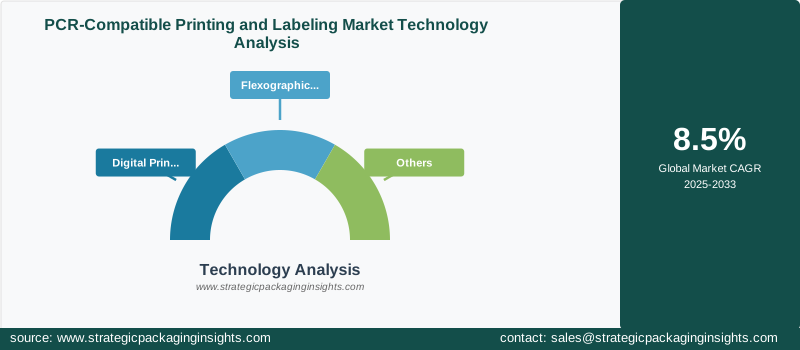
The technology segment encompasses digital printing, flexographic printing, and others. Digital printing is witnessing significant growth due to its ability to produce high-quality prints with minimal waste, making it ideal for PCR-compatible applications. The flexibility and customization offered by digital printing are also driving its adoption in the market. Flexographic printing, known for its efficiency and cost-effectiveness, remains a popular choice for large-scale production. However, the need for high-quality prints and reduced environmental impact is pushing manufacturers towards digital solutions. The 'others' category includes technologies like offset and screen printing, which are used in specific applications where unique printing requirements are needed.
Application Analysis
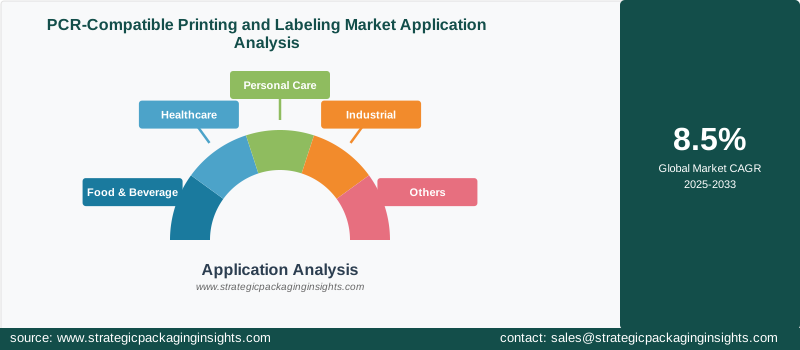
The application segment includes food & beverage, healthcare, personal care, industrial, and others. The food & beverage industry is a major driver of the PCR-Compatible Printing and Labeling market, as companies seek sustainable packaging solutions to meet consumer demand and regulatory requirements. The healthcare sector is also adopting PCR-compatible solutions to enhance the sustainability of medical packaging. In the personal care industry, the focus on eco-friendly packaging is driving the adoption of PCR materials. The industrial segment is witnessing growth as manufacturers seek durable and sustainable labeling solutions for their products. The 'others' category includes applications in sectors like electronics and automotive, where specific labeling requirements are needed.
Region Analysis
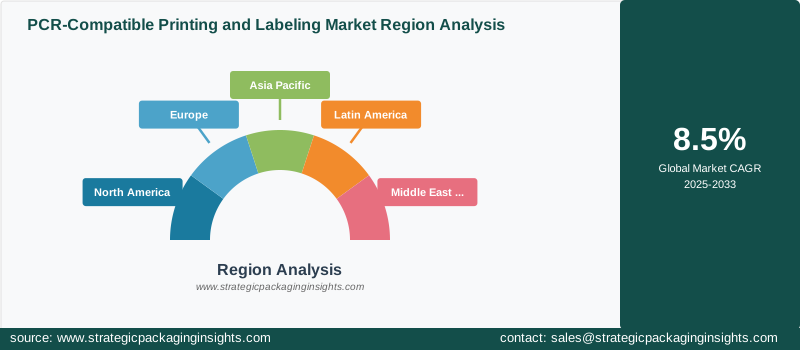
The regional analysis of the PCR-Compatible Printing and Labeling market highlights significant growth opportunities across different geographies. North America is a leading market, driven by strong regulatory frameworks and consumer demand for sustainable packaging. Europe is another key market, with countries like Germany and the UK leading the adoption of PCR materials. The Asia Pacific region is witnessing rapid growth, fueled by industrialization and increasing environmental awareness. Latin America and the Middle East & Africa are also emerging markets, with growing demand for sustainable packaging solutions. The regional dynamics are influenced by factors such as regulatory policies, consumer preferences, and technological advancements, shaping the future of the PCR-compatible market.
PCR-Compatible Printing and Labeling Market Segments
The PCR-Compatible Printing and Labeling market has been segmented on the basis ofMaterial Type
- Paper
- Plastic
- Others
Technology
- Digital Printing
- Flexographic Printing
- Others
Application
- Food & Beverage
- Healthcare
- Personal Care
- Industrial
- Others
Region
- North America
- Europe
- Asia Pacific
- Latin America
- Middle East & Africa




