


Capsule Filling Machine Market Outlook
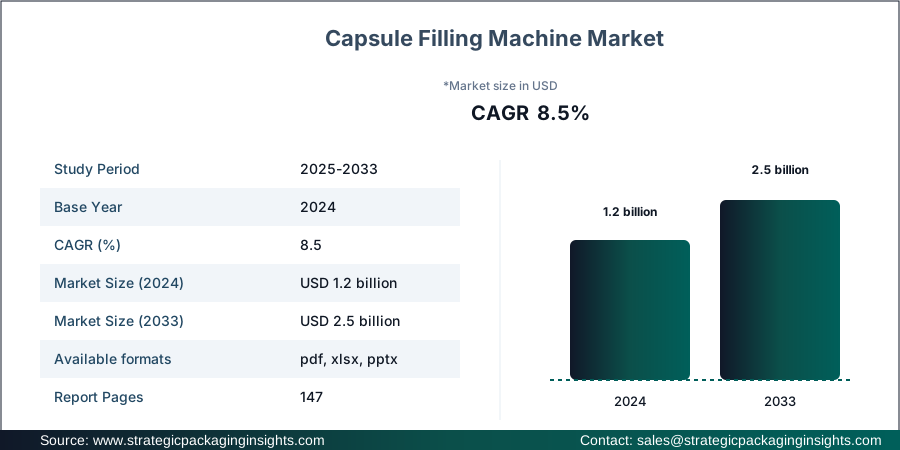
The Capsule Filling Machine market was valued at $1.85 billion in 2025 and is projected to reach $3.23 billion by 2034, growing at a CAGR of 6.4% during the forecast period 2026-2034. This growth is driven by the increasing demand for pharmaceutical and nutraceutical products, which require efficient and high-speed capsule filling solutions. The market is also benefiting from technological advancements in capsule filling machines, which enhance precision and reduce wastage. Additionally, the rising trend of personalized medicine and the expansion of contract development and manufacturing organizations (CDMOs) are further propelling market growth.
Report Scope
| Attributes | Details |
| Report Title | Capsule Filling Machine Market Size, Future Growth and Forecast 2034 |
| Machine Type | Manual, Semi-Automatic, Automatic |
| Capacity | Low-Speed, Medium-Speed, High-Speed |
| Capsule Type | Hard Gelatin, HPMC, Pullulan |
| End Use | Pharma, Nutraceuticals, CDMOs |
| Region | Asia Pacific, North America, Latin America, Europe, Middle East & Africa |
| Base Year | 2025 |
| Historic Period | 2018-2024 |
| Forecast Period | 2026-2034 |
| Number of Pages | 220 |
| Customization Available | Yes* |
Opportunities & Threats
The Capsule Filling Machine market presents significant opportunities, particularly in emerging economies where the pharmaceutical industry is rapidly expanding. The increasing prevalence of chronic diseases and the growing awareness of health and wellness are driving demand for nutraceuticals, thereby boosting the need for advanced capsule filling machines. Moreover, the shift towards vegetarian capsules, such as HPMC and pullulan, is creating new avenues for market players to innovate and capture market share. The integration of IoT and automation in capsule filling machines is another opportunity, offering enhanced efficiency and real-time monitoring capabilities.
Another opportunity lies in the customization of capsule filling machines to cater to specific customer requirements. As pharmaceutical companies focus on niche markets and personalized medicine, there is a growing demand for machines that can handle small batch sizes and diverse capsule types. This trend is encouraging manufacturers to develop flexible and versatile machines that can adapt to varying production needs. Additionally, the increasing investment in research and development by key players is expected to lead to the introduction of more advanced and efficient machines, further driving market growth.
However, the market faces certain threats, including stringent regulatory requirements and high initial investment costs. Compliance with Good Manufacturing Practices (GMP) and other regulatory standards can be challenging for manufacturers, particularly in regions with strict regulations. Additionally, the high cost of advanced capsule filling machines may deter small and medium-sized enterprises from adopting these technologies, limiting market growth. The competitive landscape is also intense, with numerous players vying for market share, which could lead to price wars and reduced profit margins.
Drivers & Challenges
The primary drivers of the Capsule Filling Machine market include the growing pharmaceutical and nutraceutical industries, which are demanding more efficient and high-capacity machines. The increasing prevalence of chronic diseases and the aging population are leading to higher consumption of medications, thereby boosting the demand for capsule filling machines. Additionally, the trend towards self-medication and over-the-counter (OTC) products is driving the need for machines that can produce a wide variety of capsule types and sizes. Technological advancements, such as the development of fully automatic machines with enhanced precision and speed, are also contributing to market growth.
Another significant driver is the expansion of CDMOs, which are increasingly being utilized by pharmaceutical companies to outsource their manufacturing processes. This trend is leading to a higher demand for capsule filling machines that can handle large volumes and diverse product lines. The growing focus on sustainability and eco-friendly packaging is also influencing the market, with manufacturers developing machines that can accommodate biodegradable and plant-based capsules. Furthermore, the increasing adoption of Industry 4.0 technologies, such as IoT and AI, is enhancing the efficiency and productivity of capsule filling machines, making them more attractive to end-users.
Despite these drivers, the market faces several challenges, including the high cost of advanced machines and the need for skilled operators. The initial investment required for purchasing and installing state-of-the-art capsule filling machines can be prohibitive for small and medium-sized enterprises. Additionally, the complexity of these machines necessitates skilled operators, which can be a barrier for companies with limited access to trained personnel. The rapid pace of technological advancements also poses a challenge, as manufacturers must continuously innovate to stay competitive. Moreover, fluctuations in raw material prices and supply chain disruptions can impact the production and pricing of capsule filling machines.
Market Share Analysis
The competitive landscape of the Capsule Filling Machine market is characterized by the presence of several key players, each striving to enhance their market share through innovation and strategic partnerships. IMA Group, a leading player in the market, holds a significant share due to its extensive product portfolio and strong global presence. The company is known for its advanced automatic capsule filling machines that offer high precision and efficiency. Syntegon, another major player, is recognized for its innovative solutions and commitment to sustainability, which have helped it capture a substantial market share.
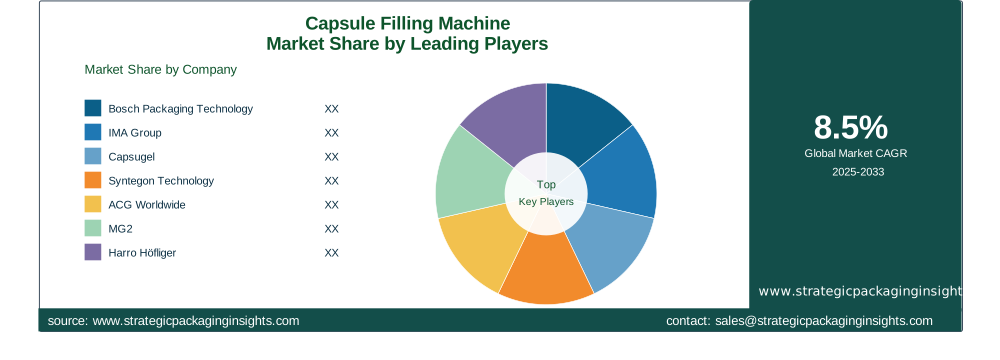
ACG and MG2 are also prominent players in the market, known for their high-quality machines and focus on customer satisfaction. ACG's comprehensive range of capsule filling machines caters to various end-use industries, while MG2's emphasis on research and development has led to the introduction of cutting-edge technologies. Romaco and Marchesini Group are other key players, with a strong presence in the European market. Their focus on automation and integration of Industry 4.0 technologies has enabled them to maintain a competitive edge.
Harro Höfliger and Lonza are notable for their innovative approaches and strategic collaborations, which have bolstered their market positions. Harro Höfliger's expertise in customized solutions and Lonza's focus on expanding its product offerings have contributed to their success. Capsugel, a subsidiary of Lonza, is renowned for its high-performance capsule filling machines and strong customer relationships. Zhejiang Fuchang Machinery, a key player in the Asia Pacific region, is gaining traction due to its cost-effective solutions and expanding distribution network.
Overall, the market is highly competitive, with companies continuously investing in research and development to introduce new and improved machines. Strategic partnerships, mergers, and acquisitions are common strategies employed by key players to enhance their market presence and expand their product portfolios. The focus on sustainability and eco-friendly solutions is also driving innovation, with companies developing machines that can accommodate biodegradable capsules and reduce energy consumption. As the market continues to evolve, companies that can adapt to changing customer demands and regulatory requirements are likely to maintain a competitive advantage.
Key Highlights
- The Capsule Filling Machine market is projected to grow at a CAGR of 6.4% from 2026 to 2034.
- Technological advancements in automation and IoT integration are driving market growth.
- Emerging economies present significant opportunities due to expanding pharmaceutical industries.
- Customization and flexibility in machine design are key trends in the market.
- Stringent regulatory requirements pose challenges for manufacturers.
- High initial investment costs may deter small and medium-sized enterprises.
- The shift towards vegetarian capsules is creating new market opportunities.
- Key players are focusing on sustainability and eco-friendly solutions.
- Strategic partnerships and collaborations are common strategies among market leaders.
- The market is characterized by intense competition and continuous innovation.
Top Countries Insights
In the Capsule Filling Machine market, the United States holds a significant share, driven by its robust pharmaceutical industry and high demand for advanced manufacturing technologies. The market in the U.S. is expected to grow at a CAGR of 5%, supported by favorable government policies and increasing investment in healthcare infrastructure. The presence of major pharmaceutical companies and a strong focus on research and development further contribute to market growth. However, stringent regulatory requirements and high operational costs pose challenges for manufacturers.
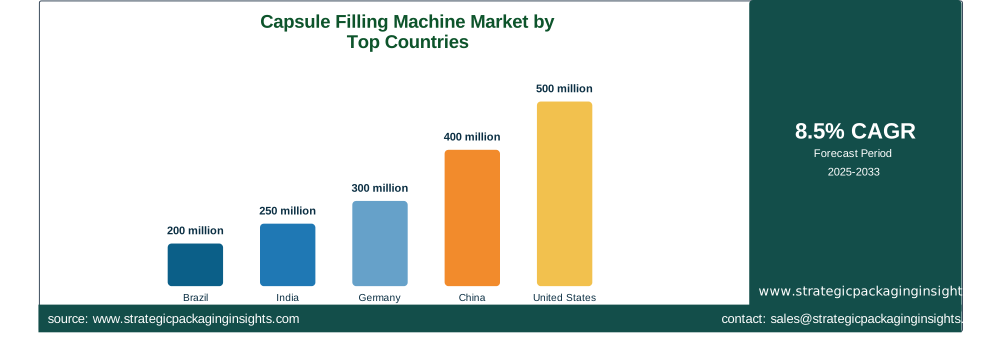
China is another key market, with a projected CAGR of 8%. The country's rapidly expanding pharmaceutical sector and increasing demand for nutraceuticals are driving the need for efficient capsule filling machines. Government initiatives to promote domestic manufacturing and reduce dependency on imports are also supporting market growth. However, the market faces challenges such as intense competition and fluctuating raw material prices. The focus on innovation and the adoption of advanced technologies are expected to enhance the competitiveness of Chinese manufacturers.
India is experiencing significant growth in the Capsule Filling Machine market, with a CAGR of 7%. The country's large population and increasing prevalence of chronic diseases are driving demand for pharmaceuticals and nutraceuticals. The government's focus on healthcare reforms and the expansion of the pharmaceutical industry are further boosting market growth. However, challenges such as regulatory compliance and the need for skilled labor may hinder market expansion. The increasing adoption of automation and digitalization is expected to improve operational efficiency and reduce costs.
Germany is a leading market in Europe, with a CAGR of 4%. The country's strong pharmaceutical industry and focus on innovation are driving demand for advanced capsule filling machines. The presence of key market players and a well-established healthcare infrastructure further support market growth. However, stringent regulatory requirements and high production costs pose challenges for manufacturers. The emphasis on sustainability and eco-friendly solutions is expected to drive innovation and enhance market competitiveness.
Brazil is a growing market in Latin America, with a CAGR of 6%. The country's expanding pharmaceutical and nutraceutical industries are driving demand for capsule filling machines. Government initiatives to improve healthcare access and promote domestic manufacturing are supporting market growth. However, challenges such as economic instability and regulatory hurdles may impact market expansion. The focus on cost-effective solutions and the adoption of advanced technologies are expected to enhance the competitiveness of Brazilian manufacturers.
Capsule Filling Machine Market Segments Insights

Machine Type Analysis
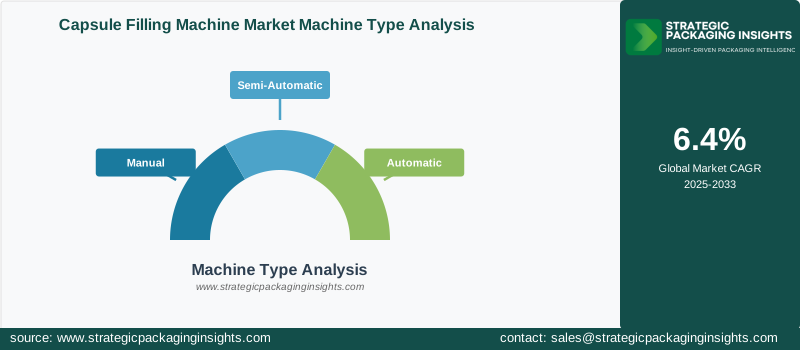
The Capsule Filling Machine market is segmented by machine type into manual, semi-automatic, and automatic machines. Automatic machines dominate the market due to their high efficiency, precision, and ability to handle large volumes. These machines are preferred by large pharmaceutical companies and CDMOs for their ability to reduce labor costs and minimize human error. The demand for semi-automatic machines is also significant, particularly among small and medium-sized enterprises that require flexibility and cost-effectiveness. Manual machines, while less popular, are still used in niche applications where small batch sizes and low production volumes are required.
Technological advancements in automation and IoT integration are driving the development of more sophisticated automatic machines. These machines offer real-time monitoring and data analysis capabilities, enhancing operational efficiency and product quality. The trend towards Industry 4.0 is further propelling the adoption of automatic machines, as manufacturers seek to optimize their production processes and reduce downtime. However, the high initial investment cost of automatic machines may deter some companies, particularly in emerging markets, from adopting these technologies.
Capacity Analysis
The market is also segmented by capacity into low-speed, medium-speed, and high-speed machines. High-speed machines are in high demand due to their ability to produce large quantities of capsules in a short period, making them ideal for large-scale production. Medium-speed machines are popular among mid-sized companies that require a balance between speed and cost. Low-speed machines, while less common, are used in applications where precision and quality are prioritized over volume.
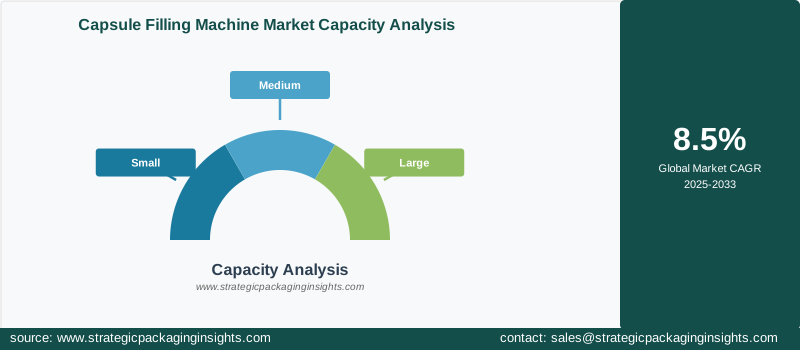
The increasing demand for high-speed machines is driven by the growing pharmaceutical and nutraceutical industries, which require efficient and high-capacity production solutions. Technological advancements have led to the development of high-speed machines with enhanced precision and reduced wastage, further boosting their adoption. However, the high cost of these machines may limit their accessibility to small and medium-sized enterprises. The focus on customization and flexibility is also driving the development of machines that can easily switch between different speeds and production requirements.
Capsule Type Analysis
The Capsule Filling Machine market is segmented by capsule type into hard gelatin, HPMC, and pullulan capsules. Hard gelatin capsules are the most commonly used type, favored for their versatility and cost-effectiveness. However, the demand for HPMC and pullulan capsules is growing due to the increasing preference for vegetarian and plant-based products. These capsules are particularly popular in the nutraceutical industry, where consumers are seeking natural and sustainable alternatives.
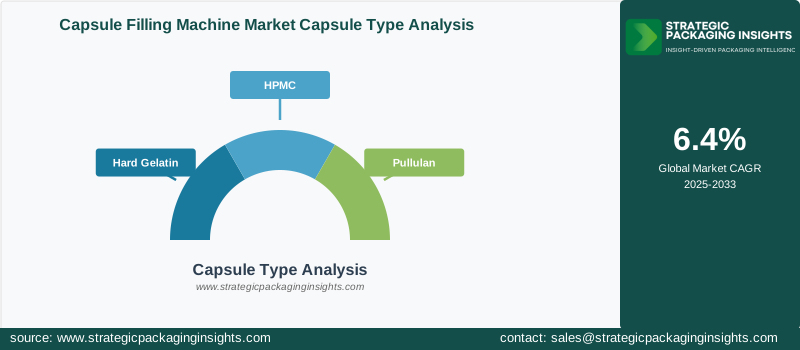
The shift towards vegetarian capsules is creating new opportunities for manufacturers to innovate and capture market share. The development of machines that can handle multiple capsule types and sizes is becoming increasingly important as companies seek to diversify their product offerings. The focus on sustainability and eco-friendly solutions is also driving the adoption of HPMC and pullulan capsules, as they are biodegradable and free from animal-derived ingredients. However, the higher cost of these capsules may pose a challenge for some manufacturers, particularly in price-sensitive markets.
End Use Analysis
The market is segmented by end use into pharma, nutraceuticals, and CDMOs. The pharmaceutical industry is the largest end-user of capsule filling machines, driven by the increasing demand for medications and the need for efficient production solutions. The nutraceutical industry is also a significant market, with growing consumer awareness of health and wellness driving demand for dietary supplements and functional foods. CDMOs are increasingly being utilized by pharmaceutical companies to outsource their manufacturing processes, leading to higher demand for capsule filling machines.
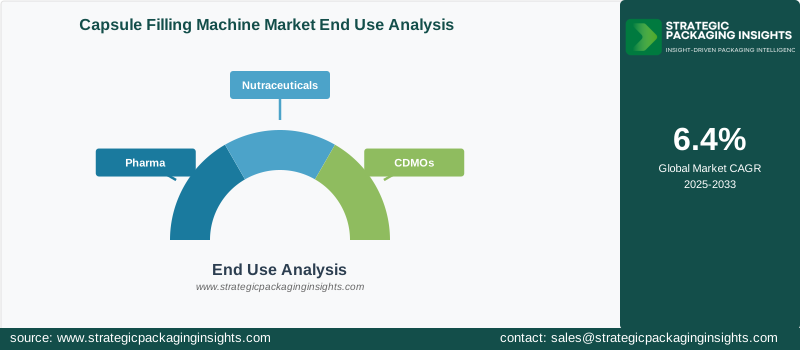
The expansion of the pharmaceutical and nutraceutical industries is driving the need for advanced capsule filling machines that can handle large volumes and diverse product lines. The focus on personalized medicine and niche markets is also influencing the development of machines that can produce small batch sizes and customized capsules. However, the market faces challenges such as regulatory compliance and the need for skilled operators. The increasing adoption of automation and digitalization is expected to improve operational efficiency and reduce costs, making capsule filling machines more accessible to a wider range of end-users.
Capsule Filling Machine Market Segments
The Capsule Filling Machine market has been segmented on the basis ofMachine Type
- Manual
- Semi-Automatic
- Automatic
Capacity
- Low-Speed
- Medium-Speed
- High-Speed
Capsule Type
- Hard Gelatin
- HPMC
- Pullulan
End Use
- Pharma
- Nutraceuticals
- CDMOs
Region
- Asia Pacific
- North America
- Latin America
- Europe
- Middle East & Africa




