


Paper Bag Market Outlook
The paper bag market was valued at $9.25 billion in 2025 and is projected to reach $15.24 billion by 2034, growing at a CAGR of 5.7% during the forecast period 2026-2034. This growth is driven by increasing consumer awareness regarding environmental sustainability and the rising demand for eco-friendly packaging solutions. The shift from plastic to paper bags is further fueled by stringent government regulations and policies aimed at reducing plastic waste. Additionally, the retail and foodservice sectors are increasingly adopting paper bags due to their biodegradability and recyclability, which aligns with the global trend towards sustainable practices.
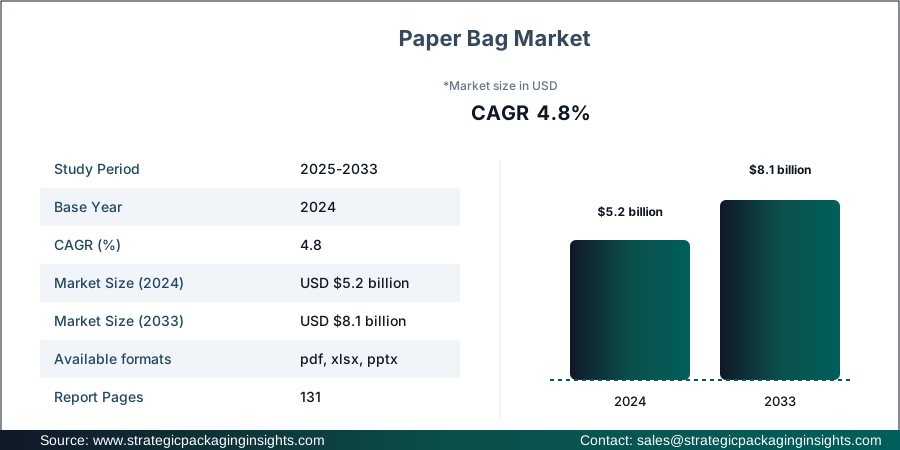
Despite the promising growth prospects, the paper bag market faces certain challenges. The high cost of raw materials, such as kraft paper and recycled paper, can impact profit margins for manufacturers. Moreover, the durability and strength of paper bags compared to plastic alternatives remain a concern for some end-users. However, advancements in paper bag manufacturing technologies are expected to address these issues, enhancing the strength and usability of paper bags. The market also presents significant opportunities for innovation, particularly in the development of coated paper bags that offer improved moisture resistance and durability.
Report Scope
| Attributes | Details |
| Report Title | Paper Bag Market Size, Future Growth and Forecast 2034 |
| By Product Type | Flat Paper Bags, SOS Bags, Handled Paper Bags |
| By Material Type | Kraft Paper, Recycled Paper, Coated Paper |
| By Application | Retail, Foodservice, Grocery, Pharmaceuticals |
| By End Use | Retailers, Restaurants, Grocery Chains |
| Region | Asia Pacific, North America, Latin America, Europe, Middle East & Africa |
| Base Year | 2025 |
| Historic Period | 2018-2024 |
| Forecast Period | 2026-2034 |
| Number of Pages | 140 |
| Customization Available | Yes* |
Opportunities & Threats
The paper bag market presents numerous opportunities, particularly in the realm of sustainability and eco-friendly packaging solutions. As consumers become more environmentally conscious, there is a growing demand for biodegradable and recyclable packaging options. This trend is particularly evident in the retail and foodservice sectors, where businesses are increasingly adopting paper bags to align with consumer preferences and regulatory requirements. Additionally, the rise of e-commerce and online grocery shopping has created new avenues for paper bag manufacturers to expand their product offerings and cater to the needs of digital consumers.
Another significant opportunity lies in the development of innovative paper bag designs and materials. Manufacturers are investing in research and development to create paper bags that are not only environmentally friendly but also durable and aesthetically appealing. This includes the use of coated paper and advanced printing techniques to enhance the visual appeal and functionality of paper bags. Furthermore, the growing trend of personalized and branded packaging presents an opportunity for paper bag manufacturers to offer customized solutions that cater to the unique needs of businesses and consumers.
However, the paper bag market also faces certain threats that could impact its growth trajectory. One of the primary challenges is the competition from alternative packaging materials, such as reusable cloth bags and biodegradable plastics. These alternatives offer similar environmental benefits and may appeal to consumers seeking more durable and long-lasting packaging solutions. Additionally, fluctuations in raw material prices and supply chain disruptions can pose significant risks to paper bag manufacturers, affecting their ability to meet demand and maintain competitive pricing.
Drivers & Challenges
The paper bag market is driven by several key factors, including the increasing focus on sustainability and environmental conservation. Governments worldwide are implementing stringent regulations to reduce plastic waste, which has led to a shift towards paper-based packaging solutions. This regulatory push, coupled with growing consumer awareness about the environmental impact of plastic, is driving the demand for paper bags. Additionally, the retail and foodservice industries are major contributors to the market's growth, as they seek to adopt eco-friendly packaging solutions to meet consumer expectations and comply with regulatory standards.
Technological advancements in paper bag manufacturing are also playing a crucial role in driving market growth. Innovations in material science and production techniques have led to the development of stronger and more durable paper bags, which can compete with plastic alternatives in terms of functionality and performance. Furthermore, the increasing adoption of digital printing technologies allows manufacturers to offer customized and branded paper bags, catering to the growing demand for personalized packaging solutions. These advancements are expected to enhance the appeal and usability of paper bags, further driving their adoption across various industries.
Despite the positive drivers, the paper bag market faces several challenges that could hinder its growth. One of the primary challenges is the high cost of raw materials, such as kraft paper and recycled paper, which can impact the profitability of manufacturers. Additionally, the durability and strength of paper bags compared to plastic alternatives remain a concern for some end-users, particularly in sectors that require robust packaging solutions. To address these challenges, manufacturers are focusing on developing innovative materials and production techniques that enhance the strength and durability of paper bags while maintaining their environmental benefits.
Market Share Analysis
The competitive landscape of the paper bag market is characterized by the presence of several key players, each striving to enhance their market share through strategic initiatives and product innovations. Companies such as Mondi, Smurfit Kappa, and Novolex are leading the market with their extensive product portfolios and strong distribution networks. These companies are focusing on expanding their production capacities and investing in research and development to introduce innovative and sustainable paper bag solutions. Additionally, strategic partnerships and collaborations with retailers and foodservice providers are helping these companies strengthen their market position and reach a wider customer base.
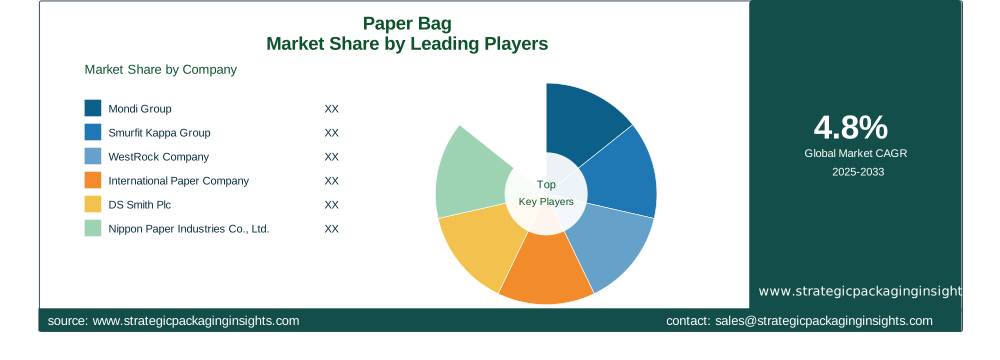
Smurfit Kappa, a prominent player in the paper bag market, is known for its commitment to sustainability and innovation. The company offers a wide range of paper bags made from recycled materials, catering to the growing demand for eco-friendly packaging solutions. Similarly, Novolex is focusing on expanding its product offerings and enhancing its manufacturing capabilities to meet the increasing demand for paper bags. The company's strategic acquisitions and partnerships have enabled it to strengthen its market presence and offer a diverse range of packaging solutions to its customers.
International Paper and WestRock are also key players in the paper bag market, leveraging their extensive experience and expertise in the packaging industry to offer high-quality and sustainable paper bag solutions. These companies are investing in advanced manufacturing technologies and sustainable practices to enhance their product offerings and meet the evolving needs of consumers and businesses. Additionally, companies like DS Smith and Ronpak are focusing on expanding their geographical presence and strengthening their distribution networks to capture a larger share of the market.
El Dorado Packaging and Welton Bibby & Baron are other notable players in the paper bag market, known for their innovative product offerings and commitment to sustainability. These companies are investing in research and development to create paper bags that are not only environmentally friendly but also durable and aesthetically appealing. By focusing on innovation and sustainability, these companies are well-positioned to capitalize on the growing demand for eco-friendly packaging solutions and strengthen their market position.
Key Highlights
- The paper bag market is projected to grow from $9.25 billion in 2025 to $15.24 billion by 2034, at a CAGR of 5.7%.
- Increasing consumer awareness and government regulations are driving the shift from plastic to paper bags.
- Technological advancements are enhancing the strength and usability of paper bags, making them a viable alternative to plastic.
- The retail and foodservice sectors are major contributors to the market's growth, adopting paper bags for their eco-friendly benefits.
- Innovations in material science and digital printing are enabling the development of customized and branded paper bags.
- Key players in the market include Mondi, Smurfit Kappa, Novolex, and WestRock, among others.
- Challenges include high raw material costs and competition from alternative packaging materials.
- Opportunities exist in the development of innovative paper bag designs and materials, as well as the rise of e-commerce.
- Strategic partnerships and collaborations are helping companies strengthen their market position and reach a wider customer base.
Top Countries Insights
In the paper bag market, the United States stands out as a key player, with a market size of approximately $2.5 billion and a CAGR of 4%. The country's strong retail sector and increasing consumer preference for sustainable packaging solutions are driving the demand for paper bags. Government regulations aimed at reducing plastic waste further support this growth, encouraging businesses to adopt eco-friendly alternatives. However, the market faces challenges such as competition from alternative packaging materials and fluctuations in raw material prices.
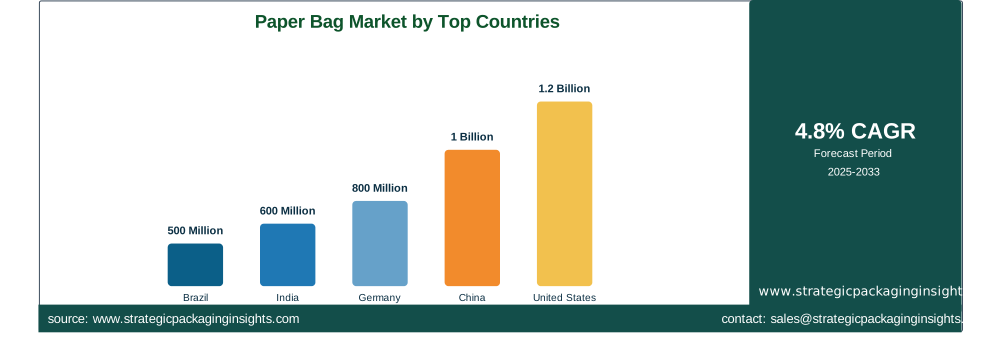
China is another significant market for paper bags, with a market size of around $1.8 billion and a CAGR of 6%. The country's booming e-commerce industry and growing awareness of environmental issues are key drivers of market growth. The Chinese government's initiatives to promote sustainable practices and reduce plastic waste are also contributing to the increased adoption of paper bags. However, the market faces challenges related to the availability of raw materials and the need for technological advancements to enhance the durability of paper bags.
Germany, with a market size of approximately $1.2 billion and a CAGR of 5%, is a leading market for paper bags in Europe. The country's strong focus on sustainability and environmental conservation is driving the demand for eco-friendly packaging solutions. The retail and foodservice sectors are major contributors to market growth, adopting paper bags to meet consumer expectations and comply with regulatory standards. However, the market faces challenges such as high raw material costs and competition from alternative packaging materials.
India, with a market size of around $1 billion and a CAGR of 7%, is an emerging market for paper bags. The country's growing middle class and increasing consumer awareness of environmental issues are driving the demand for sustainable packaging solutions. Government initiatives to reduce plastic waste and promote eco-friendly practices are also supporting market growth. However, the market faces challenges related to the availability of raw materials and the need for technological advancements to enhance the strength and durability of paper bags.
Brazil, with a market size of approximately $0.8 billion and a CAGR of 5%, is a key market for paper bags in Latin America. The country's strong retail sector and increasing consumer preference for sustainable packaging solutions are driving the demand for paper bags. Government regulations aimed at reducing plastic waste further support this growth, encouraging businesses to adopt eco-friendly alternatives. However, the market faces challenges such as competition from alternative packaging materials and fluctuations in raw material prices.
Paper Bag Market Segments Insights

Product Type Analysis
The paper bag market is segmented by product type into flat paper bags, SOS bags, and handled paper bags. Flat paper bags are widely used in the retail sector due to their simplicity and cost-effectiveness. They are ideal for packaging lightweight items and are often used by retailers for small purchases. The demand for flat paper bags is driven by their affordability and ease of use, making them a popular choice among small and medium-sized retailers. However, their limited durability compared to other types of paper bags can be a drawback for some applications.
SOS bags, or self-opening square bags, are gaining popularity in the foodservice industry due to their versatility and strength. These bags are designed to stand upright, making them ideal for carrying food items and groceries. The demand for SOS bags is driven by the growing trend of takeout and delivery services, as well as the increasing preference for eco-friendly packaging solutions. Handled paper bags, on the other hand, are favored by retailers and grocery chains for their convenience and ease of carrying. These bags are often used for larger purchases and are popular among consumers for their practicality and durability.
Material Type Analysis
The paper bag market is also segmented by material type into kraft paper, recycled paper, and coated paper. Kraft paper is the most commonly used material for paper bags due to its strength and durability. It is made from wood pulp and is known for its high tear resistance, making it ideal for carrying heavy items. The demand for kraft paper bags is driven by their robustness and eco-friendly nature, as they are biodegradable and recyclable. Recycled paper bags, on the other hand, are gaining popularity due to their environmental benefits and cost-effectiveness. These bags are made from recycled materials, reducing the need for virgin resources and minimizing environmental impact.
Coated paper bags are a relatively new addition to the market, offering enhanced moisture resistance and durability. These bags are coated with a thin layer of plastic or wax, making them suitable for packaging items that require protection from moisture and grease. The demand for coated paper bags is driven by the foodservice industry, where they are used for packaging items such as baked goods and fast food. However, the use of coatings can impact the recyclability of these bags, posing a challenge for manufacturers seeking to offer fully sustainable packaging solutions.
Application Analysis
The paper bag market is segmented by application into retail, foodservice, grocery, and pharmaceuticals. The retail sector is the largest application segment, driven by the increasing demand for eco-friendly packaging solutions. Retailers are adopting paper bags to align with consumer preferences and comply with regulatory requirements aimed at reducing plastic waste. The foodservice industry is another major application segment, with paper bags being used for takeout and delivery services. The demand for paper bags in this sector is driven by the growing trend of convenience and on-the-go consumption.
The grocery sector is also a significant application segment, with paper bags being used for packaging fresh produce and other grocery items. The demand for paper bags in this sector is driven by the increasing preference for sustainable packaging solutions and the need to reduce plastic waste. The pharmaceutical industry is a smaller application segment, with paper bags being used for packaging over-the-counter medications and other healthcare products. The demand for paper bags in this sector is driven by the need for secure and tamper-evident packaging solutions.
End Use Analysis
The paper bag market is segmented by end use into retailers, restaurants, and grocery chains. Retailers are the largest end-use segment, driven by the increasing demand for eco-friendly packaging solutions. Retailers are adopting paper bags to align with consumer preferences and comply with regulatory requirements aimed at reducing plastic waste. Restaurants are another major end-use segment, with paper bags being used for takeout and delivery services. The demand for paper bags in this sector is driven by the growing trend of convenience and on-the-go consumption.
Grocery chains are also a significant end-use segment, with paper bags being used for packaging fresh produce and other grocery items. The demand for paper bags in this sector is driven by the increasing preference for sustainable packaging solutions and the need to reduce plastic waste. The adoption of paper bags by grocery chains is further supported by government regulations and initiatives aimed at promoting eco-friendly practices. Overall, the end-use segments of the paper bag market are characterized by a strong focus on sustainability and environmental conservation, driving the demand for paper bags across various industries.
Paper Bag Market Segments
The Paper Bag market has been segmented on the basis ofBy Product Type
- Flat Paper Bags
- SOS Bags
- Handled Paper Bags
By Material Type
- Kraft Paper
- Recycled Paper
- Coated Paper
By Application
- Retail
- Foodservice
- Grocery
- Pharmaceuticals
By End Use
- Retailers
- Restaurants
- Grocery Chains
Region
- Asia Pacific
- North America
- Latin America
- Europe
- Middle East & Africa




