


Packaging Foam Market Outlook
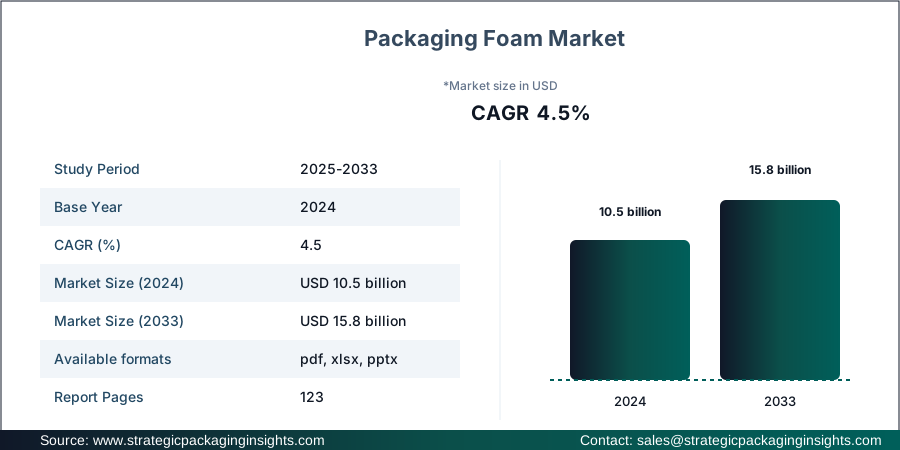
The packaging foam market was valued at $10.5 billion in 2024 and is projected to reach $15.8 billion by 2033, growing at a CAGR of 4.5% during the forecast period 2025-2033. This growth is driven by the increasing demand for protective packaging solutions across various industries such as electronics, automotive, and healthcare. The versatility of packaging foam, which includes materials like polyurethane, polystyrene, and polyolefin, allows it to cater to a wide range of applications, from cushioning delicate electronics to insulating automotive components. The market is also benefiting from the rise in e-commerce, which necessitates robust packaging solutions to ensure the safe delivery of goods. Additionally, advancements in foam technology, such as the development of eco-friendly and biodegradable foams, are expected to further propel market growth.
Report Scope
| Attributes | Details |
| Report Title | Packaging Foam Market Size, Future Growth and Forecast 2033 |
| Material | Polyurethane, Polystyrene, Polyolefin, Others |
| Application | Food & Beverage, Consumer Electronics, Automotive, Healthcare, Others |
| Type | Flexible Foam, Rigid Foam |
| End-User | Industrial, Commercial, Residential |
| Base Year | 2024 |
| Historic Period | 2017-2023 |
| Forecast Period | 2025-2033 |
| Number of Pages | 123 |
| Customization Available | Yes* |
Opportunities & Threats
One of the significant opportunities in the packaging foam market lies in the development of sustainable and biodegradable foam solutions. As environmental concerns continue to rise, there is a growing demand for eco-friendly packaging materials that can reduce the carbon footprint. Companies investing in research and development to create biodegradable foams are likely to gain a competitive edge. Furthermore, the increasing adoption of packaging foam in the healthcare sector, particularly for the safe transportation of medical devices and pharmaceuticals, presents a lucrative opportunity. The healthcare industry's stringent regulations regarding packaging safety and hygiene standards are driving the demand for high-quality foam solutions.
Another opportunity is the expansion of the e-commerce sector, which is fueling the demand for protective packaging solutions. With the surge in online shopping, there is a heightened need for packaging materials that can ensure the safe delivery of products. Packaging foam, with its excellent cushioning properties, is well-suited to meet this demand. Additionally, the growing trend of customization in packaging, where businesses seek unique and branded packaging solutions, is creating opportunities for packaging foam manufacturers to offer tailored products that cater to specific customer needs.
However, the packaging foam market faces certain restraints, primarily due to environmental regulations and the increasing scrutiny over plastic waste. Governments worldwide are implementing stringent regulations to curb plastic pollution, which poses a challenge for foam manufacturers. The need to comply with these regulations can increase production costs and limit the use of certain foam materials. Additionally, the volatility in raw material prices, particularly for petroleum-based foams, can impact profit margins and pose a threat to market growth.
Drivers & Challenges
The primary driver of the packaging foam market is the growing demand for protective packaging solutions across various industries. The electronics industry, in particular, relies heavily on packaging foam to safeguard delicate components during transportation. The automotive sector also contributes significantly to market growth, as foam is used for insulation and cushioning in vehicles. Furthermore, the rise in e-commerce has led to an increased need for packaging materials that can protect products during shipping. The versatility and cost-effectiveness of packaging foam make it an attractive choice for businesses looking to enhance their packaging solutions.
Technological advancements in foam production are another key driver of market growth. Innovations such as the development of lightweight and high-performance foams are expanding the application scope of packaging foam. Manufacturers are focusing on creating foams with enhanced properties, such as improved thermal insulation and shock absorption, to cater to the evolving needs of various industries. Additionally, the trend towards sustainable packaging solutions is driving the demand for eco-friendly foams, which are gaining popularity among environmentally conscious consumers and businesses.
Despite these drivers, the packaging foam market faces challenges, particularly in terms of environmental impact and regulatory compliance. The increasing awareness of plastic pollution and the push for sustainable packaging solutions are putting pressure on foam manufacturers to develop eco-friendly alternatives. This requires significant investment in research and development, which can be a barrier for smaller companies. Additionally, the fluctuating prices of raw materials, such as crude oil, can affect production costs and profitability. Companies need to navigate these challenges by adopting innovative production techniques and exploring alternative materials to remain competitive in the market.
Packaging Foam Strategic Outlook
| Trend | Market Driver | Technological/Material Shift | Business Impact |
|---|---|---|---|
| Sustainability | Eco-friendly Packaging Demand | Biodegradable Foam Development | Increased Market Share |
| Smart Tech | IoT Integration in Packaging | Smart Foam Solutions | Enhanced Product Tracking |
| Consumer Behavior | Customization Demand | 3D Printing in Foam Production | Tailored Packaging Solutions |
| Logistics | E-commerce Growth | Advanced Cushioning Technologies | Improved Product Safety |
The packaging foam market is poised for significant growth, driven by the increasing demand for protective and sustainable packaging solutions. As of 2026, the market is valued at approximately $11.2 billion, with sustainability being the primary regulatory disruptor. The push for eco-friendly packaging materials is reshaping the industry, with companies investing in biodegradable and recyclable foam solutions. To maintain market share by 2033, brands should pivot towards sustainable practices, leveraging technological advancements such as smart packaging and 3D printing to offer innovative and customized solutions. Embracing these trends will not only enhance product offerings but also align with consumer preferences for environmentally responsible packaging.
Market Share Analysis
The packaging foam market is characterized by a competitive landscape with several key players vying for market share. The market is dominated by a mix of multinational corporations and regional players, each offering a diverse range of foam products tailored to various applications. Companies are focusing on expanding their product portfolios and enhancing their production capabilities to meet the growing demand for packaging foam. Strategic partnerships and collaborations are common strategies employed by market players to strengthen their market position and expand their geographical reach.
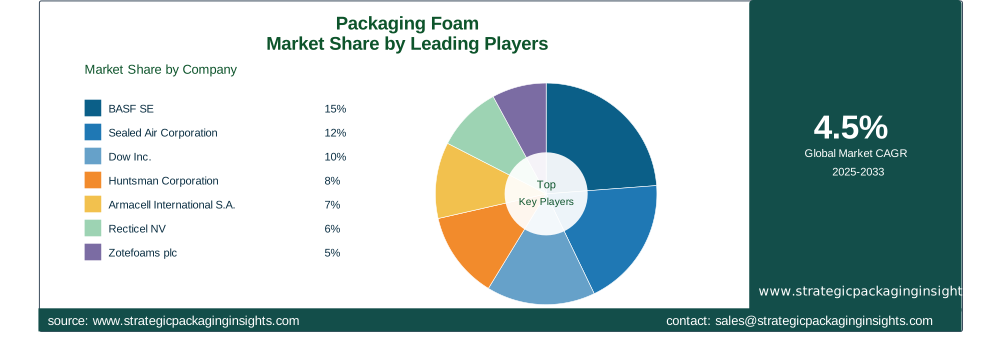
Among the major companies in the packaging foam market, BASF SE holds a significant share due to its extensive product offerings and strong global presence. The company is known for its innovative foam solutions that cater to a wide range of industries, including automotive, construction, and packaging. Similarly, Sealed Air Corporation is a prominent player, renowned for its protective packaging solutions and commitment to sustainability. The company's focus on developing eco-friendly foam products has positioned it as a leader in the market.
Dow Inc. is another key player, offering a comprehensive range of foam products that are widely used in packaging applications. The company's emphasis on research and development has led to the creation of high-performance foams that meet the evolving needs of customers. Additionally, companies like Huntsman Corporation and Armacell International S.A. are making significant contributions to the market with their innovative foam solutions and strategic expansions.
Other notable players in the market include Recticel NV, Zotefoams plc, and JSP Corporation, each of which has carved a niche in the packaging foam industry through their specialized products and customer-centric approaches. These companies are continuously investing in technology and sustainability to enhance their product offerings and maintain a competitive edge. The overall competitive landscape of the packaging foam market is dynamic, with companies striving to innovate and adapt to changing market demands.
Key Highlights
- The packaging foam market is projected to grow at a CAGR of 4.5% from 2025 to 2033.
- Increasing demand for eco-friendly and biodegradable foam solutions is driving market growth.
- The rise of e-commerce is fueling the demand for protective packaging materials.
- Technological advancements in foam production are expanding application scopes.
- Environmental regulations are challenging foam manufacturers to develop sustainable alternatives.
- Customization in packaging is creating opportunities for tailored foam solutions.
- Major players are focusing on strategic partnerships to enhance market presence.
Top Countries Insights
In the packaging foam market, the United States stands out as a leading country with a market size of approximately $3.2 billion and a CAGR of 5%. The country's robust e-commerce sector and the demand for protective packaging solutions are key growth drivers. Additionally, the focus on sustainability and the development of eco-friendly foams are contributing to market expansion. China, with a market size of $2.8 billion and a CAGR of 6%, is another significant player. The country's booming manufacturing sector and the increasing adoption of packaging foam in various industries are driving growth. Government initiatives to promote sustainable packaging are also playing a crucial role.
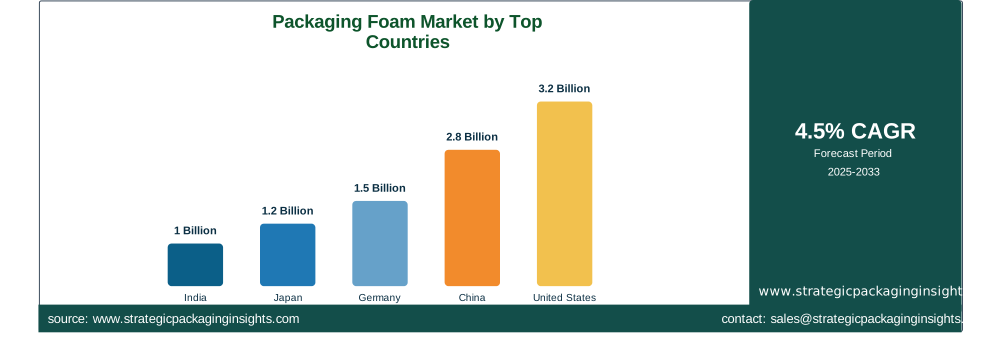
Germany, with a market size of $1.5 billion and a CAGR of 4%, is a prominent market in Europe. The country's strong automotive and electronics industries are major consumers of packaging foam. The emphasis on sustainability and the development of innovative foam solutions are further propelling market growth. Japan, with a market size of $1.2 billion and a CAGR of 3%, is witnessing steady growth due to the demand for high-quality packaging materials in the electronics and automotive sectors. The focus on technological advancements and eco-friendly solutions is driving market expansion.
India, with a market size of $1 billion and a CAGR of 7%, is emerging as a key market for packaging foam. The country's growing e-commerce sector and the increasing demand for protective packaging solutions are major growth drivers. Additionally, government initiatives to promote sustainable packaging practices are contributing to market growth. The focus on innovation and the development of cost-effective foam solutions are expected to further boost the market in the coming years.
Packaging Foam Market Segments Insights

Material Analysis
The material segment of the packaging foam market is dominated by polyurethane, polystyrene, and polyolefin. Polyurethane foam is widely used due to its excellent cushioning properties and versatility. It is favored in applications ranging from automotive to consumer electronics, where protection against impact and vibration is crucial. The demand for polyurethane foam is driven by its lightweight nature and cost-effectiveness, making it a preferred choice for manufacturers seeking efficient packaging solutions. Polystyrene foam, known for its thermal insulation properties, is extensively used in the food and beverage industry to maintain product freshness during transportation. The growing demand for temperature-sensitive packaging solutions is boosting the adoption of polystyrene foam.
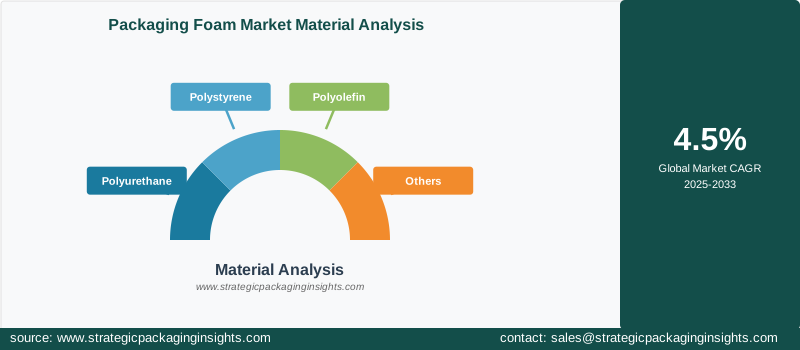
Polyolefin foam, on the other hand, is gaining traction due to its superior durability and resistance to moisture and chemicals. It is increasingly used in industrial applications where robust packaging is required. The trend towards sustainable packaging is also influencing the material segment, with manufacturers exploring biodegradable and recyclable foam options. The development of eco-friendly materials is expected to drive innovation and growth in this segment, as companies strive to meet consumer demand for environmentally responsible packaging solutions.
Application Analysis
The application segment of the packaging foam market encompasses food and beverage, consumer electronics, automotive, healthcare, and others. The food and beverage industry is a major consumer of packaging foam, utilizing it for the safe transportation of perishable goods. The demand for foam packaging in this sector is driven by the need to maintain product integrity and extend shelf life. In the consumer electronics industry, packaging foam is essential for protecting delicate components from damage during shipping. The rise in e-commerce and the increasing demand for electronic devices are fueling the growth of this segment.
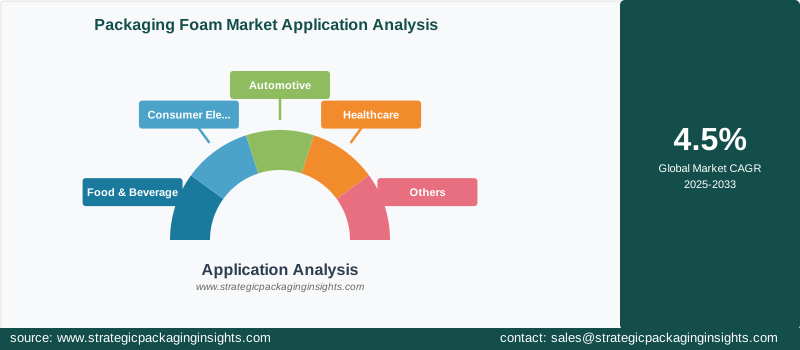
The automotive industry also relies heavily on packaging foam for insulation and cushioning purposes. Foam is used in various automotive components to enhance comfort and safety. The healthcare sector is another significant application area, where packaging foam is used for the safe transportation of medical devices and pharmaceuticals. The stringent regulations regarding packaging safety and hygiene standards in the healthcare industry are driving the demand for high-quality foam solutions. Overall, the application segment is witnessing growth across various industries, driven by the need for protective and efficient packaging solutions.
Type Analysis
The type segment of the packaging foam market is divided into flexible foam and rigid foam. Flexible foam is widely used due to its adaptability and cushioning properties. It is favored in applications where protection against impact and vibration is essential, such as in consumer electronics and automotive components. The demand for flexible foam is driven by its lightweight nature and cost-effectiveness, making it a preferred choice for manufacturers seeking efficient packaging solutions. Rigid foam, on the other hand, is known for its structural integrity and thermal insulation properties. It is extensively used in the construction and food and beverage industries, where durability and temperature control are crucial.
The trend towards sustainable packaging is also influencing the type segment, with manufacturers exploring biodegradable and recyclable foam options. The development of eco-friendly materials is expected to drive innovation and growth in this segment, as companies strive to meet consumer demand for environmentally responsible packaging solutions. The increasing focus on sustainability and the need for efficient packaging solutions are expected to drive the growth of both flexible and rigid foam segments in the coming years.
End-User Analysis
The end-user segment of the packaging foam market includes industrial, commercial, and residential sectors. The industrial sector is a major consumer of packaging foam, utilizing it for the safe transportation of machinery and equipment. The demand for foam packaging in this sector is driven by the need to protect valuable assets during shipping and storage. In the commercial sector, packaging foam is used for a variety of applications, including the packaging of consumer goods and electronics. The rise in e-commerce and the increasing demand for protective packaging solutions are fueling the growth of this segment.
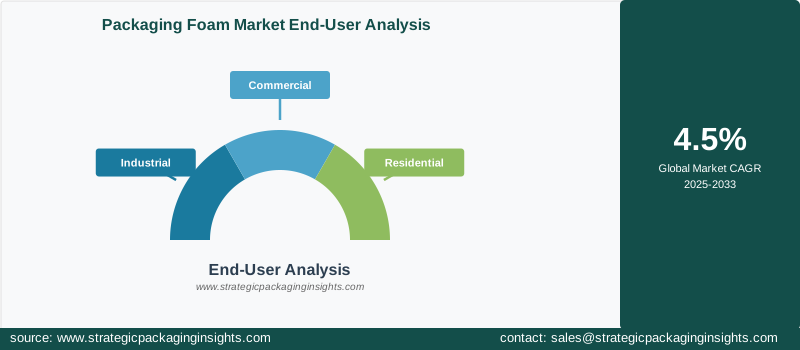
The residential sector is also witnessing growth, driven by the demand for packaging solutions for household items and personal care products. The trend towards customization in packaging is creating opportunities for tailored foam solutions that cater to specific consumer needs. The focus on sustainability and the development of eco-friendly foam products are expected to drive innovation and growth in the end-user segment, as companies strive to meet consumer demand for environmentally responsible packaging solutions. Overall, the end-user segment is witnessing growth across various sectors, driven by the need for protective and efficient packaging solutions.
Packaging Foam Market Segments
The Packaging Foam market has been segmented on the basis ofMaterial
- Polyurethane
- Polystyrene
- Polyolefin
- Others
Application
- Food & Beverage
- Consumer Electronics
- Automotive
- Healthcare
- Others
Type
- Flexible Foam
- Rigid Foam
End-User
- Industrial
- Commercial
- Residential




