


compostable and biodegradable refuse bags Market Outlook
The compostable and biodegradable refuse bags market was valued at $3.68 billion in 2025 and is projected to reach $8.93 billion by 2034, growing at a CAGR of 10.3% during the forecast period 2026-2034. This market is witnessing significant growth due to increasing environmental concerns and stringent regulations against plastic waste. The demand for sustainable waste management solutions is driving the adoption of compostable and biodegradable refuse bags across various sectors. The market is further fueled by advancements in material technology, which enhance the durability and functionality of these eco-friendly bags. As consumers become more environmentally conscious, the shift towards biodegradable alternatives is expected to accelerate, providing lucrative opportunities for market players.
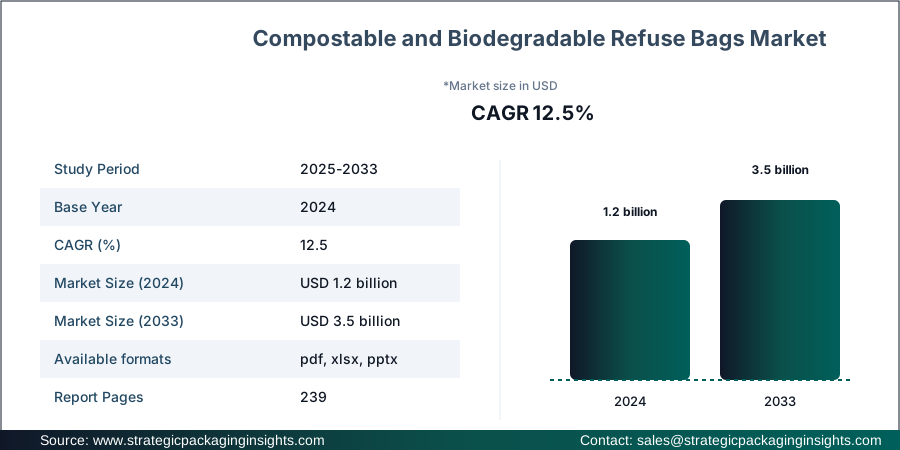
Despite the promising growth prospects, the compostable and biodegradable refuse bags market faces several challenges. High production costs and limited availability of raw materials are significant restraints that could hinder market expansion. Additionally, the lack of consumer awareness and misconceptions about the effectiveness of biodegradable products pose challenges to market penetration. However, ongoing research and development efforts aimed at improving product quality and reducing costs are expected to mitigate these challenges. The market also benefits from supportive government policies and initiatives promoting sustainable practices, which are likely to boost demand in the coming years.
Report Scope
| Attributes | Details |
| Report Title | compostable and biodegradable refuse bags Market Size, Future Growth and Forecast 2034 |
| Product Type | Compostable Refuse Bags, Biodegradable Refuse Bags, Heavy-Duty Refuse Sacks |
| Material Type | PLA Blends, PBAT Blends, Starch-Based Blends |
| End Use | Municipal Waste, Commercial Waste, Household Waste |
| Distribution Channel | Retail, Institutional Sales, Online |
| Region | Asia Pacific, North America, Latin America, Europe, Middle East & Africa |
| Base Year | 2025 |
| Historic Period | 2018-2024 |
| Forecast Period | 2026-2034 |
| Number of Pages | 117 |
| Customization Available | Yes* |
Opportunities & Threats
The compostable and biodegradable refuse bags market presents numerous opportunities for growth, primarily driven by the increasing global emphasis on sustainability and environmental conservation. As governments worldwide implement stricter regulations on plastic usage, there is a growing demand for eco-friendly alternatives. This shift is creating a favorable environment for the adoption of compostable and biodegradable refuse bags. Additionally, the rising awareness among consumers about the environmental impact of plastic waste is encouraging them to opt for sustainable products, further driving market growth. The expansion of e-commerce platforms also provides an opportunity for manufacturers to reach a broader audience and increase their market presence.
Another significant opportunity lies in the development of innovative materials and technologies that enhance the performance and cost-effectiveness of compostable and biodegradable refuse bags. Companies are investing in research and development to create products that meet consumer expectations for durability and functionality while maintaining environmental benefits. Collaborations and partnerships with research institutions and technology providers can accelerate the development of advanced materials, opening new avenues for market expansion. Furthermore, the growing trend of green certifications and eco-labeling is expected to boost consumer confidence and drive demand for certified compostable and biodegradable products.
However, the market also faces threats that could impede its growth. One of the primary challenges is the high cost of production associated with biodegradable materials, which can limit their affordability and accessibility. Additionally, the lack of standardized regulations and certifications for biodegradable products can lead to consumer skepticism and hinder market adoption. The presence of counterfeit products claiming to be biodegradable but failing to meet environmental standards poses a threat to the credibility of genuine products. To overcome these challenges, industry stakeholders must focus on educating consumers, improving product quality, and advocating for standardized regulations to ensure market integrity.
Drivers & Challenges
The compostable and biodegradable refuse bags market is driven by several key factors, including the increasing environmental awareness among consumers and the growing demand for sustainable waste management solutions. As the negative impact of plastic waste on the environment becomes more evident, consumers are actively seeking alternatives that minimize their ecological footprint. This shift in consumer behavior is a significant driver for the market, as it encourages the adoption of compostable and biodegradable refuse bags. Additionally, government regulations and policies aimed at reducing plastic waste and promoting sustainable practices are further propelling market growth. These regulations create a favorable environment for the development and adoption of eco-friendly products.
Technological advancements in material science are also driving the market by enabling the production of high-quality compostable and biodegradable refuse bags. Innovations in biodegradable materials, such as PLA blends and PBAT blends, have improved the performance and durability of these products, making them more appealing to consumers. The development of cost-effective production processes is another driver that is expected to enhance market growth. As manufacturers continue to invest in research and development, the availability of advanced materials and technologies will likely increase, providing a competitive edge to market players.
Despite the positive drivers, the market faces several challenges that could hinder its growth. One of the primary challenges is the high cost of biodegradable materials, which can make compostable and biodegradable refuse bags more expensive than traditional plastic bags. This price disparity can deter cost-conscious consumers and limit market penetration. Additionally, the lack of consumer awareness and understanding of the benefits of biodegradable products poses a challenge to market adoption. Misconceptions about the effectiveness and environmental impact of these products can lead to skepticism and reluctance to switch from conventional plastic bags. To address these challenges, industry stakeholders must focus on educating consumers and promoting the benefits of compostable and biodegradable refuse bags.
Market Share Analysis
The compostable and biodegradable refuse bags market is characterized by a competitive landscape with several key players vying for market share. Companies such as Novolex, Berry Global, and BioBag International are leading the market with their extensive product portfolios and strong distribution networks. These companies have established themselves as industry leaders by focusing on innovation, quality, and sustainability. Novolex, for instance, has made significant investments in research and development to enhance its product offerings and expand its market presence. Berry Global, on the other hand, leverages its global reach and expertise in packaging solutions to cater to a diverse customer base.
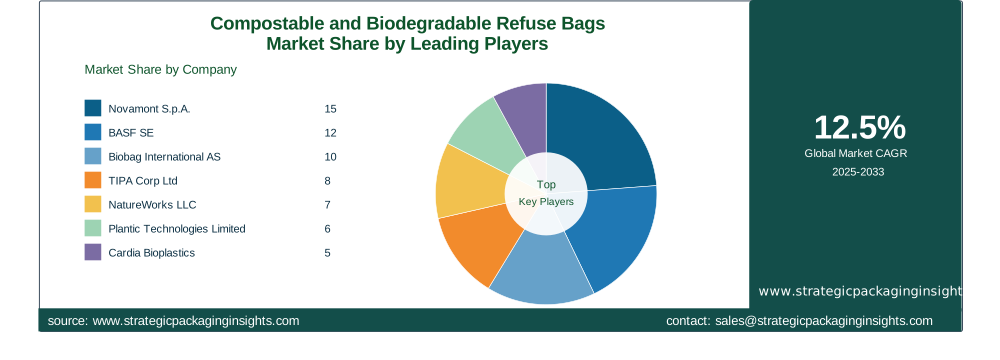
BioBag International is another prominent player in the market, known for its commitment to sustainability and environmental responsibility. The company offers a wide range of compostable and biodegradable products, including refuse bags, that meet stringent environmental standards. Plastiroll and Novamont are also key players in the market, with a strong focus on developing innovative materials and technologies. These companies have established strategic partnerships and collaborations to enhance their product offerings and expand their market reach. Inteplast Group and Symphony Environmental are other notable players that contribute to the competitive landscape of the market.
Abbey Polythene, Polykar, and Al-Pack Enterprises are emerging players in the market, gaining traction with their eco-friendly product offerings and customer-centric approaches. These companies are focused on expanding their product portfolios and strengthening their distribution networks to capture a larger share of the market. The competitive landscape is further intensified by the presence of regional players that cater to specific markets and customer segments. As the demand for compostable and biodegradable refuse bags continues to grow, companies are likely to invest in research and development, strategic partnerships, and marketing initiatives to gain a competitive edge.
Key Highlights
- The compostable and biodegradable refuse bags market is projected to grow at a CAGR of 10.3% from 2026 to 2034.
- Increasing environmental awareness and government regulations are driving market growth.
- Technological advancements in biodegradable materials are enhancing product performance.
- High production costs and limited raw material availability are key challenges.
- Key players include Novolex, Berry Global, and BioBag International.
- Innovative materials and technologies present significant growth opportunities.
- Consumer education and awareness are crucial for market adoption.
- Standardized regulations and certifications are needed to ensure product credibility.
- The market is characterized by a competitive landscape with several key players.
- Emerging players are gaining traction with eco-friendly product offerings.
Top Countries Insights
In the compostable and biodegradable refuse bags market, the United States stands out as a leading country, with a market size of approximately $1.2 billion and a CAGR of 8%. The country's strong regulatory framework and consumer awareness drive the demand for eco-friendly products. The presence of key market players and technological advancements further bolster market growth. However, challenges such as high production costs and limited consumer awareness persist, necessitating continued efforts in education and innovation.
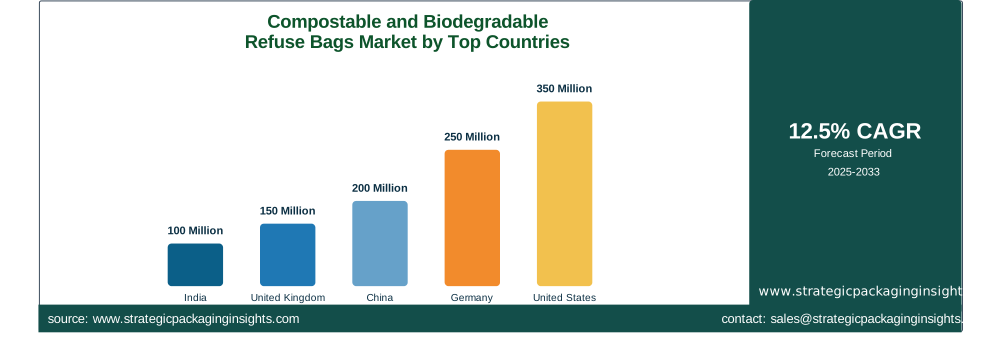
Germany is another significant player in the market, with a market size of around $900 million and a CAGR of 7%. The country's stringent environmental regulations and commitment to sustainability drive the demand for compostable and biodegradable refuse bags. The presence of established manufacturers and a strong focus on research and development contribute to market growth. However, the high cost of biodegradable materials remains a challenge, requiring ongoing efforts to improve cost-effectiveness.
China is emerging as a key market for compostable and biodegradable refuse bags, with a market size of approximately $800 million and a CAGR of 12%. The country's growing population and increasing environmental awareness drive the demand for sustainable waste management solutions. Government initiatives promoting eco-friendly products and the presence of local manufacturers further support market growth. However, challenges such as limited consumer awareness and the availability of raw materials persist, necessitating continued efforts in education and innovation.
In the United Kingdom, the market for compostable and biodegradable refuse bags is valued at around $700 million, with a CAGR of 6%. The country's strong regulatory framework and consumer demand for sustainable products drive market growth. The presence of key market players and technological advancements further bolster market expansion. However, challenges such as high production costs and limited consumer awareness persist, requiring ongoing efforts in education and innovation.
India is also a growing market for compostable and biodegradable refuse bags, with a market size of approximately $600 million and a CAGR of 10%. The country's increasing population and growing environmental awareness drive the demand for eco-friendly products. Government initiatives promoting sustainable practices and the presence of local manufacturers further support market growth. However, challenges such as limited consumer awareness and the availability of raw materials persist, necessitating continued efforts in education and innovation.
compostable and biodegradable refuse bags Market Segments Insights

Product Type Analysis
The compostable and biodegradable refuse bags market is segmented by product type into compostable refuse bags, biodegradable refuse bags, and heavy-duty refuse sacks. Compostable refuse bags are gaining popularity due to their ability to break down into natural elements, reducing environmental impact. These bags are particularly favored in regions with stringent environmental regulations and high consumer awareness. Biodegradable refuse bags, while similar, may not fully decompose into natural elements, but they offer a more sustainable alternative to traditional plastic bags. Heavy-duty refuse sacks are designed for robust applications, catering to commercial and industrial sectors where durability is crucial.
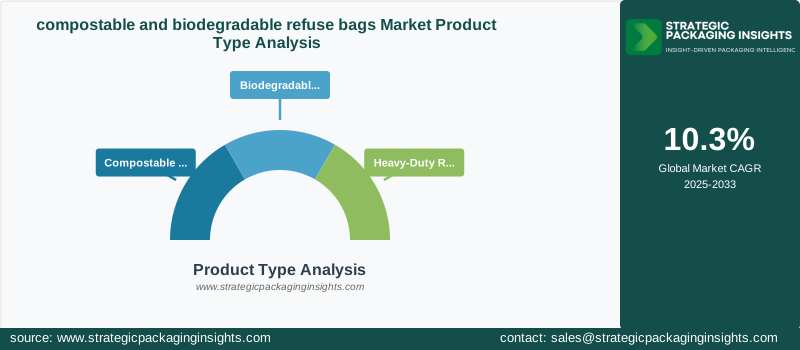
The demand for compostable refuse bags is driven by increasing environmental concerns and regulatory pressures to reduce plastic waste. Consumers are becoming more conscious of their ecological footprint, leading to a shift towards sustainable waste management solutions. Biodegradable refuse bags are also witnessing growth, particularly in regions with less stringent regulations but a growing awareness of environmental issues. Heavy-duty refuse sacks, while a smaller segment, are essential for sectors requiring durable and reliable waste management solutions. The competition in this segment is intense, with companies focusing on product innovation and quality to gain a competitive edge.
Material Type Analysis
The market is also segmented by material type, including PLA blends, PBAT blends, and starch-based blends. PLA blends are derived from renewable resources and are known for their compostability and biodegradability. These materials are favored in regions with strong environmental regulations and consumer demand for sustainable products. PBAT blends offer flexibility and durability, making them suitable for a wide range of applications. Starch-based blends are gaining traction due to their cost-effectiveness and biodegradability, appealing to cost-conscious consumers and regions with limited access to advanced materials.
The demand for PLA blends is driven by their environmental benefits and the increasing availability of raw materials. PBAT blends are popular in regions with diverse applications, offering a balance between performance and sustainability. Starch-based blends are particularly appealing in emerging markets where cost is a significant factor. The competition in this segment is driven by the need for innovation and cost reduction, with companies investing in research and development to enhance product performance and reduce production costs. The availability of raw materials and technological advancements are key factors influencing the growth of this segment.
End Use Analysis
The compostable and biodegradable refuse bags market is segmented by end use into municipal waste, commercial waste, and household waste. Municipal waste management is a significant driver for the market, with governments and municipalities seeking sustainable solutions to reduce landfill waste. Compostable and biodegradable refuse bags offer an eco-friendly alternative to traditional plastic bags, aligning with government initiatives and regulations. Commercial waste management is another key segment, with businesses increasingly adopting sustainable practices to meet regulatory requirements and consumer expectations.
Household waste management is also a growing segment, driven by increasing consumer awareness and demand for sustainable products. Consumers are becoming more conscious of their environmental impact, leading to a shift towards eco-friendly waste management solutions. The competition in this segment is driven by the need for innovation and quality, with companies focusing on product development and marketing to capture consumer interest. The availability of raw materials and technological advancements are key factors influencing the growth of this segment, with companies investing in research and development to enhance product performance and reduce costs.
Distribution Channel Analysis
The market is segmented by distribution channel into retail, institutional sales, and online. Retail is a significant distribution channel, with consumers increasingly purchasing compostable and biodegradable refuse bags from supermarkets and specialty stores. The convenience and accessibility of retail outlets make them a popular choice for consumers seeking sustainable products. Institutional sales are also a key distribution channel, with businesses and organizations increasingly adopting eco-friendly waste management solutions to meet regulatory requirements and consumer expectations.
Online sales are a growing distribution channel, driven by the increasing popularity of e-commerce platforms and the convenience of online shopping. Consumers are increasingly turning to online platforms to purchase compostable and biodegradable refuse bags, attracted by the wide range of products and competitive pricing. The competition in this segment is driven by the need for innovation and quality, with companies focusing on product development and marketing to capture consumer interest. The availability of raw materials and technological advancements are key factors influencing the growth of this segment, with companies investing in research and development to enhance product performance and reduce costs.
compostable and biodegradable refuse bags Market Segments
The compostable and biodegradable refuse bags market has been segmented on the basis ofProduct Type
- Compostable Refuse Bags
- Biodegradable Refuse Bags
- Heavy-Duty Refuse Sacks
Material Type
- PLA Blends
- PBAT Blends
- Starch-Based Blends
End Use
- Municipal Waste
- Commercial Waste
- Household Waste
Distribution Channel
- Retail
- Institutional Sales
- Online
Region
- Asia Pacific
- North America
- Latin America
- Europe
- Middle East & Africa




