


Promotional Packaging Market Outlook
The Promotional Packaging market size was valued at USD $54.00 Billion in 2025 and is anticipated to reach USD $96.25 Billion by 2035, growing at a CAGR of 5.95% % during the forecast period according to Strategic Packaging Insights.
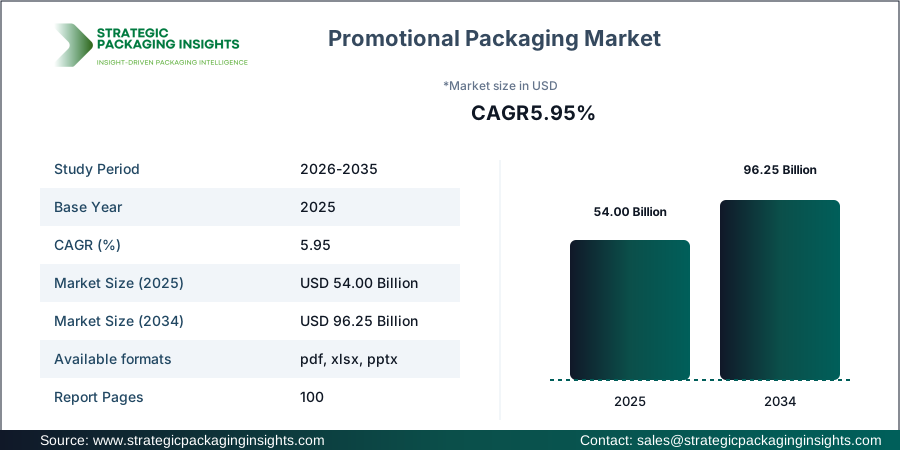
The increasing demand for customized and visually appealing packaging solutions is a significant driver for the Promotional Packaging market. Companies are focusing on innovative designs and sustainable materials to attract consumers and enhance brand visibility. The rise in e-commerce and direct-to-consumer brands is further propelling the demand for promotional packaging solutions.
Report Scope
| Attributes | Details |
| Report Title | Promotional Packaging Market Projected to Scale to 96.25 Billion by 2035, Assesses Strategic Packaging Insights |
| By material | Paper, Plastic, Glass, Metal, Cardboard, Corrugated Board, Flexible Materials |
| By packaging type | Promotional Boxes, Gift Packaging, Display Packaging, Promotional Bags, Promotional Pouches, Specialty Containers, Limited Edition Packaging, Custom Printed Packaging |
| By promotion type | Brand Promotion, Product Launch Promotion, Seasonal Promotion, Event Promotion, Corporate Promotion, Retail Promotion, Influencer Promotion |
| By application | Food and Beverages, Personal Care, Cosmetics, Pharmaceuticals, Electronics, Automotive, Consumer Goods |
| By end user | Hypermarkets, Supermarkets, Department Stores, Specialty Stores, Convenience Stores, E-Commerce, Direct-to-Consumer Brands |
| By region | North America, Europe, Asia Pacific, Latin America, Middle East and Africa |
| Base Year | 2025 |
| Historic Period | 2018-2024 |
| Forecast Period | 2026-2035 |
| Number of Pages | 100 |
| Customization Available | Yes* |
Market Trends Analysis
Promotional Packaging is witnessing a shift towards sustainable materials, with brands opting for recyclable and biodegradable options to meet consumer demand for eco-friendly products. This trend is influencing procurement strategies and driving innovation in material science, particularly in the development of bio-based plastics and recycled paperboard. The integration of digital printing technologies is enabling brands to offer personalized packaging solutions, enhancing consumer engagement and brand loyalty.
Another significant trend is the increasing use of smart packaging technologies, such as QR codes and NFC tags, which provide interactive experiences and valuable data insights. This trend is reshaping marketing strategies and creating new opportunities for brands to connect with consumers. The focus on reducing packaging waste and complying with extended producer responsibility (EPR) regulations is also driving the adoption of mono-material solutions and lightweighting strategies.
Industry Transformation Analysis
The Promotional Packaging industry is undergoing a transformation driven by advancements in manufacturing technologies and a shift towards localized production. Companies are investing in automation and digitalization to enhance operational efficiency and reduce lead times. The adoption of Industry 4.0 technologies is enabling real-time monitoring and predictive maintenance, optimizing production processes and minimizing downtime.
The value chain is evolving with increased collaboration between material suppliers, converters, and brand owners to develop innovative packaging solutions. The focus on sustainability is leading to the integration of recycled content and the development of closed-loop systems. The rise of e-commerce is reshaping distribution channels, with a growing emphasis on direct-to-consumer models and personalized delivery options.
Trends & Disruptions Impacting Customers' Customers
Downstream customers, including retailers and brand owners, are increasingly prioritizing sustainability and customization in their packaging choices. The demand for eco-friendly materials and designs that enhance brand differentiation is driving innovation in the Promotional Packaging market. Consumers are seeking packaging that aligns with their values, such as reduced environmental impact and ethical sourcing, influencing purchasing decisions and brand loyalty.
These changes are impacting product demand and supplier requirements, with brands seeking partners that can offer sustainable and innovative solutions. The focus on personalization and consumer engagement is driving the need for flexible packaging formats and digital printing technologies. As a result, companies are investing in research and development to meet evolving consumer expectations and capture new market opportunities.
Promotional Packaging Market Ecosystem
The Promotional Packaging market ecosystem involves a complex interplay of raw material suppliers, converters, and brand owners. The focus on sustainability is driving collaboration across the value chain to develop eco-friendly solutions. Material flows are optimized through strategic partnerships and investments in recycling infrastructure, ensuring a steady supply of recycled content.
Capacity constraints in resin production and converting are being addressed through technological advancements and capacity expansions. Downstream demand for customized and sustainable packaging is influencing procurement relationships and driving innovation in material science. The integration of digital technologies is enhancing value creation and enabling real-time supply chain visibility.
Analyst Perspective
Analyst Perspective: The Promotional Packaging market is poised for significant growth, driven by the increasing demand for sustainable and customized packaging solutions. The integration of digital technologies is reshaping the industry landscape and creating new opportunities for brands to engage with consumers.
Companies should focus on developing eco-friendly materials and leveraging digital printing technologies to enhance consumer engagement and brand loyalty. The shift towards localized production and direct-to-consumer models is reshaping distribution channels and creating new market opportunities.
Investors and market participants should monitor advancements in material science and digital technologies, as these will play a crucial role in shaping the future of the Promotional Packaging market. The focus on sustainability and customization will drive innovation and create new growth opportunities in the coming years.
Opportunities & Threats
The Promotional Packaging market presents significant opportunities for growth, driven by the increasing demand for sustainable and customized packaging solutions. The rise of e-commerce and direct-to-consumer brands is creating new market opportunities for innovative packaging formats and designs. Companies that invest in eco-friendly materials and digital printing technologies will be well-positioned to capture market share and enhance brand visibility.
Technological advancements in material science and digital printing are opening new avenues for product differentiation and consumer engagement. The focus on sustainability is driving the development of bio-based plastics and recycled paperboard, creating opportunities for companies to meet consumer demand for eco-friendly products. The integration of smart packaging technologies is also creating new opportunities for brands to connect with consumers and gather valuable data insights.
However, the Promotional Packaging market also faces challenges, including raw material volatility and regulatory uncertainty. The focus on sustainability and compliance with extended producer responsibility (EPR) regulations is driving the need for mono-material solutions and lightweighting strategies. Companies must navigate these challenges to remain competitive and meet evolving consumer expectations.
Supply chain constraints and capacity limitations in resin production and converting are also potential threats to market growth. Companies must invest in capacity expansions and technological advancements to address these challenges and ensure a steady supply of materials. The focus on reducing packaging waste and complying with regulatory requirements will also impact market dynamics and create new challenges for industry participants.
Drivers & Challenges
The Promotional Packaging market is driven by the increasing demand for customized and visually appealing packaging solutions. Companies are focusing on innovative designs and sustainable materials to attract consumers and enhance brand visibility. The rise in e-commerce and direct-to-consumer brands is further propelling the demand for promotional packaging solutions. The focus on sustainability is driving the adoption of eco-friendly materials and designs, creating new opportunities for market growth.
The integration of digital printing technologies is enabling brands to offer personalized packaging solutions, enhancing consumer engagement and brand loyalty. The focus on reducing packaging waste and complying with extended producer responsibility (EPR) regulations is also driving the adoption of mono-material solutions and lightweighting strategies. The rise of e-commerce is reshaping distribution channels, with a growing emphasis on direct-to-consumer models and personalized delivery options.
However, the Promotional Packaging market also faces challenges, including raw material volatility and regulatory uncertainty. The focus on sustainability and compliance with extended producer responsibility (EPR) regulations is driving the need for mono-material solutions and lightweighting strategies. Companies must navigate these challenges to remain competitive and meet evolving consumer expectations.
Packaging Market Economics
The economics of the Promotional Packaging market are influenced by raw material costs, resin pricing, and conversion costs. The focus on sustainability is driving the adoption of eco-friendly materials, impacting procurement strategies and cost structures. The integration of digital printing technologies is enhancing operational efficiency and reducing lead times, optimizing production processes and minimizing downtime.
Energy costs and logistics are also significant factors in the economics of the Promotional Packaging market. Companies are investing in automation and digitalization to enhance operational efficiency and reduce lead times. The focus on sustainability is leading to the integration of recycled content and the development of closed-loop systems, optimizing material flows and reducing waste.
Packaging Value Chain & Cost Analysis
The value chain of the Promotional Packaging market involves multiple tiers, including resin synthesis, film extrusion, converting, and printing. The focus on sustainability is driving collaboration across the value chain to develop eco-friendly solutions. Material flows are optimized through strategic partnerships and investments in recycling infrastructure, ensuring a steady supply of recycled content.
Capacity constraints in resin production and converting are being addressed through technological advancements and capacity expansions. Downstream demand for customized and sustainable packaging is influencing procurement relationships and driving innovation in material science. The integration of digital technologies is enhancing value creation and enabling real-time supply chain visibility.
Unit Economics & Substrate Cost Analysis
The unit economics of the Promotional Packaging market are influenced by raw material costs, resin/feedstock pricing, and energy costs. The focus on sustainability is driving the adoption of eco-friendly materials, impacting procurement strategies and cost structures. The integration of digital printing technologies is enhancing operational efficiency and reducing lead times, optimizing production processes and minimizing downtime.
Energy costs and logistics are also significant factors in the economics of the Promotional Packaging market. Companies are investing in automation and digitalization to enhance operational efficiency and reduce lead times. The focus on sustainability is leading to the integration of recycled content and the development of closed-loop systems, optimizing material flows and reducing waste.
Packaging Regulatory & Sustainability Analysis
The Promotional Packaging market is subject to various regulations and sustainability initiatives, including extended producer responsibility (EPR) and packaging waste regulations. The focus on sustainability is driving the adoption of eco-friendly materials and designs, creating new opportunities for market growth. Companies must comply with regulatory requirements and meet consumer demand for sustainable products to remain competitive.
The integration of digital printing technologies is enabling brands to offer personalized packaging solutions, enhancing consumer engagement and brand loyalty. The focus on reducing packaging waste and complying with extended producer responsibility (EPR) regulations is also driving the adoption of mono-material solutions and lightweighting strategies. The rise of e-commerce is reshaping distribution channels, with a growing emphasis on direct-to-consumer models and personalized delivery options.
Strategic Mergers, Acquisitions & Capacity Expansions
Recent strategic developments in the Promotional Packaging market include mergers, acquisitions, and capacity expansions. Companies are investing in technological advancements and capacity expansions to address supply chain constraints and meet growing demand for sustainable packaging solutions. The focus on sustainability is driving collaboration across the value chain to develop eco-friendly solutions.
Strategic partnerships and investments in recycling infrastructure are ensuring a steady supply of recycled content and optimizing material flows. The integration of digital technologies is enhancing value creation and enabling real-time supply chain visibility. Companies are also investing in research and development to meet evolving consumer expectations and capture new market opportunities.
Strategic Action Directives
Brand Packaging Engineers & Sustainability Directors should focus on material selection, mono-material qualification, and barrier performance to enhance recyclability and integrate PCR. Converter Operations & Extrusion Leads should optimize line speed, tooling, and changeover to reduce scrap and improve capacity utilization.
Procurement & Material Sourcing Managers should diversify suppliers, secure resin contracts, and index prices to manage EPR exposure and PCR variability. Investors should monitor capacity, margin structure, and M&A activity to identify growth opportunities and assess market concentration.
Market Share Analysis
The Promotional Packaging market is characterized by a competitive landscape with several key players, including Smurfit WestRock, Sealed Air, Sonoco Products, Amcor, International Paper, Mondi, DS Smith, Georgia-Pacific, Menasha Packaging, and FFR Merchandising. These companies are investing in technological advancements and capacity expansions to address supply chain constraints and meet growing demand for sustainable packaging solutions.
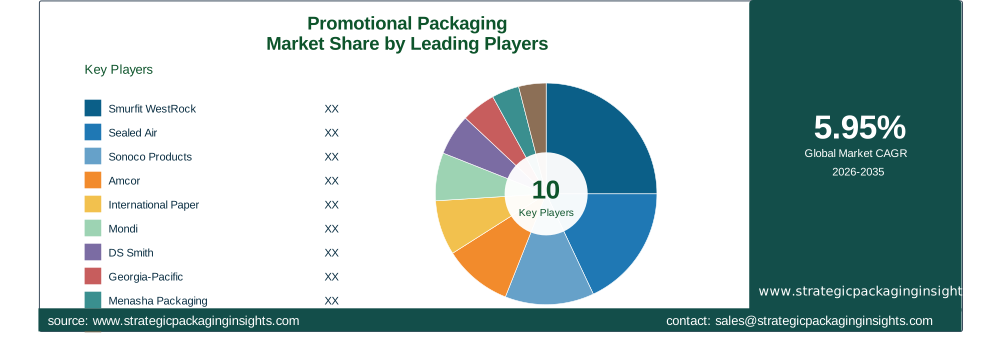
Smurfit WestRock and Sealed Air are leading players in the market, focusing on innovative designs and sustainable materials to enhance brand visibility and consumer engagement. Sonoco Products and Amcor are investing in digital printing technologies and eco-friendly materials to meet consumer demand for personalized and sustainable packaging solutions.
International Paper and Mondi are focusing on capacity expansions and strategic partnerships to optimize material flows and ensure a steady supply of recycled content. DS Smith and Georgia-Pacific are investing in research and development to meet evolving consumer expectations and capture new market opportunities.
Menasha Packaging and FFR Merchandising are focusing on strategic partnerships and investments in recycling infrastructure to enhance value creation and enable real-time supply chain visibility. The focus on sustainability and customization is driving innovation and creating new growth opportunities in the Promotional Packaging market.
Key Highlights
- Largest Region: North America
- Fastest-Growing Region: Asia Pacific
- Largest Segment: Food and Beverages
- Fastest-Growing Segment: Personal Care
- Base-year market size: USD 54.00 Billion
- Forecast-year market size: USD 96.25 Billion
- CAGR: 5.95%
- Important application: Brand Promotion
- Major end-use industry: Consumer Goods
- Major market driver: Demand for sustainable packaging solutions
Regional Insights
The Promotional Packaging market is witnessing significant growth across major regions, with North America being the largest market and Asia Pacific emerging as the fastest-growing region. The demand for sustainable and customized packaging solutions is driving market growth in these regions.
North America
North America is the largest market for Promotional Packaging, driven by the demand for innovative and sustainable packaging solutions. The focus on eco-friendly materials and designs is influencing procurement strategies and driving market growth. The rise of e-commerce and direct-to-consumer brands is also propelling the demand for promotional packaging solutions.
The integration of digital printing technologies is enabling brands to offer personalized packaging solutions, enhancing consumer engagement and brand loyalty. The focus on reducing packaging waste and complying with extended producer responsibility (EPR) regulations is also driving the adoption of mono-material solutions and lightweighting strategies.
Europe
Europe is a significant market for Promotional Packaging, with a strong focus on sustainability and innovation. The demand for eco-friendly materials and designs is driving market growth, with companies investing in research and development to meet evolving consumer expectations.
The integration of digital technologies is enhancing value creation and enabling real-time supply chain visibility. The focus on reducing packaging waste and complying with regulatory requirements is also driving the adoption of mono-material solutions and lightweighting strategies.
Asia Pacific
Asia Pacific is the fastest-growing region for Promotional Packaging, driven by the increasing demand for sustainable and customized packaging solutions. The rise of e-commerce and direct-to-consumer brands is creating new market opportunities for innovative packaging formats and designs.
The focus on sustainability is driving the adoption of eco-friendly materials and designs, creating new opportunities for market growth. The integration of digital printing technologies is enabling brands to offer personalized packaging solutions, enhancing consumer engagement and brand loyalty.
Latin America
Latin America is witnessing significant growth in the Promotional Packaging market, driven by the demand for innovative and sustainable packaging solutions. The focus on eco-friendly materials and designs is influencing procurement strategies and driving market growth.
The integration of digital technologies is enhancing value creation and enabling real-time supply chain visibility. The focus on reducing packaging waste and complying with regulatory requirements is also driving the adoption of mono-material solutions and lightweighting strategies.
Middle East & Africa
The Middle East & Africa region is experiencing growth in the Promotional Packaging market, driven by the demand for sustainable and customized packaging solutions. The focus on eco-friendly materials and designs is influencing procurement strategies and driving market growth.
The integration of digital printing technologies is enabling brands to offer personalized packaging solutions, enhancing consumer engagement and brand loyalty. The focus on reducing packaging waste and complying with regulatory requirements is also driving the adoption of mono-material solutions and lightweighting strategies.
Promotional Packaging Market Segments Insights

By Material Analysis
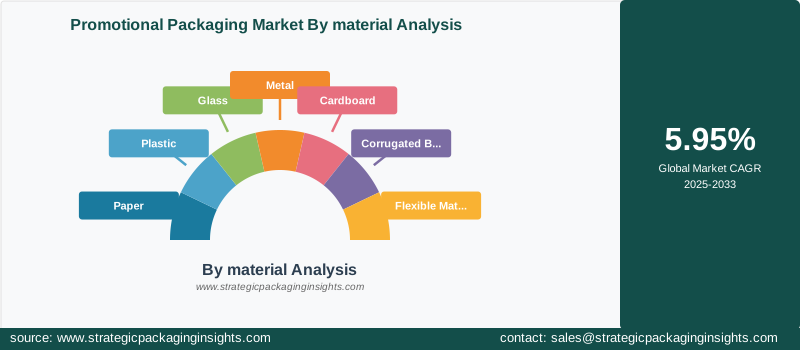
The Promotional Packaging market is segmented by material, including paper, plastic, glass, metal, cardboard, corrugated board, and flexible materials. The demand for sustainable materials is driving the adoption of eco-friendly options, such as recycled paperboard and bio-based plastics. The focus on sustainability is influencing procurement strategies and driving innovation in material science.
The integration of digital printing technologies is enabling brands to offer personalized packaging solutions, enhancing consumer engagement and brand loyalty. The focus on reducing packaging waste and complying with extended producer responsibility (EPR) regulations is also driving the adoption of mono-material solutions and lightweighting strategies.
By Packaging Type Analysis
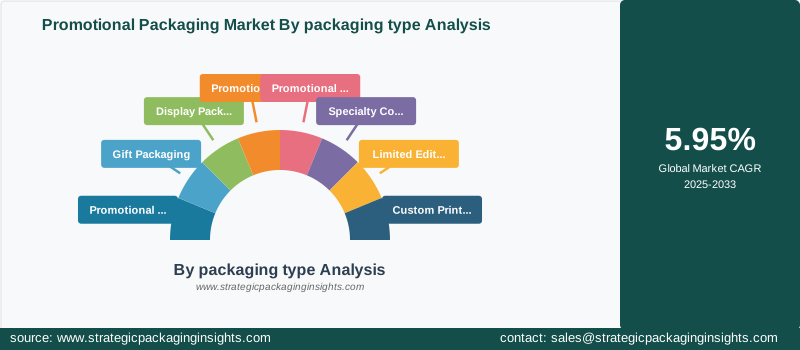
The Promotional Packaging market is segmented by packaging type, including promotional boxes, gift packaging, display packaging, promotional bags, promotional pouches, specialty containers, limited edition packaging, and custom printed packaging. The demand for innovative and customized packaging solutions is driving market growth, with companies investing in research and development to meet evolving consumer expectations.
The integration of digital printing technologies is enabling brands to offer personalized packaging solutions, enhancing consumer engagement and brand loyalty. The focus on reducing packaging waste and complying with extended producer responsibility (EPR) regulations is also driving the adoption of mono-material solutions and lightweighting strategies.
By Promotion Type Analysis
The Promotional Packaging market is segmented by promotion type, including brand promotion, product launch promotion, seasonal promotion, event promotion, corporate promotion, retail promotion, and influencer promotion. The demand for innovative and customized packaging solutions is driving market growth, with companies investing in research and development to meet evolving consumer expectations.
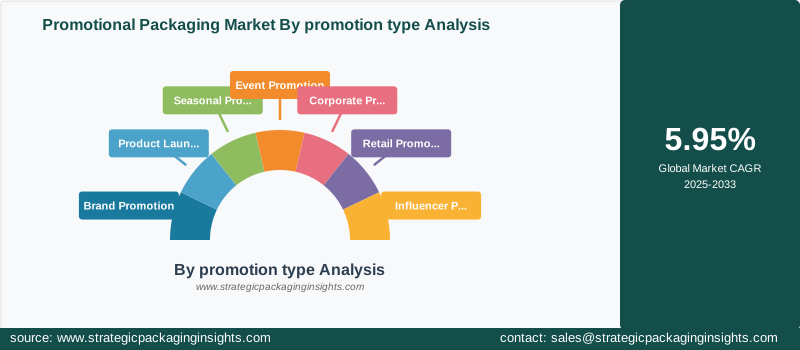
The integration of digital printing technologies is enabling brands to offer personalized packaging solutions, enhancing consumer engagement and brand loyalty. The focus on reducing packaging waste and complying with extended producer responsibility (EPR) regulations is also driving the adoption of mono-material solutions and lightweighting strategies.
By Application Analysis
The Promotional Packaging market is segmented by application, including food and beverages, personal care, cosmetics, pharmaceuticals, electronics, automotive, and consumer goods. The demand for innovative and customized packaging solutions is driving market growth, with companies investing in research and development to meet evolving consumer expectations.
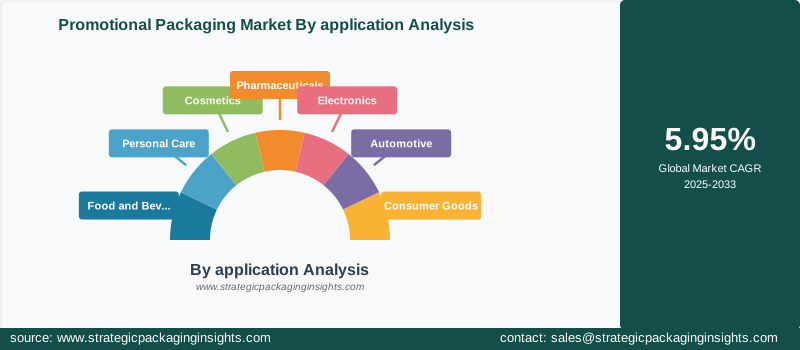
The integration of digital printing technologies is enabling brands to offer personalized packaging solutions, enhancing consumer engagement and brand loyalty. The focus on reducing packaging waste and complying with extended producer responsibility (EPR) regulations is also driving the adoption of mono-material solutions and lightweighting strategies.
By End User Analysis
The Promotional Packaging market is segmented by end user, including hypermarkets, supermarkets, department stores, specialty stores, convenience stores, e-commerce, and direct-to-consumer brands. The demand for innovative and customized packaging solutions is driving market growth, with companies investing in research and development to meet evolving consumer expectations.
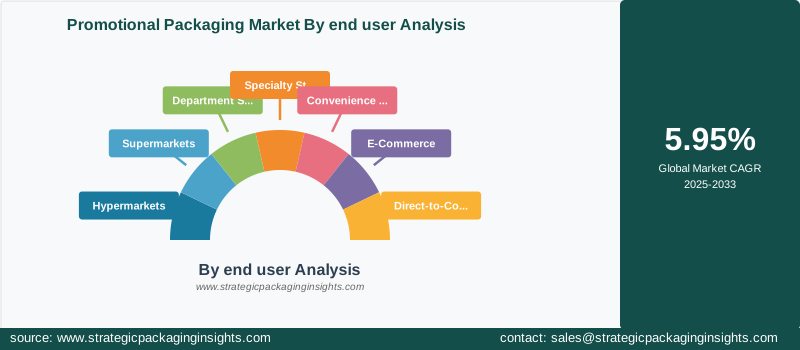
The integration of digital printing technologies is enabling brands to offer personalized packaging solutions, enhancing consumer engagement and brand loyalty. The focus on reducing packaging waste and complying with extended producer responsibility (EPR) regulations is also driving the adoption of mono-material solutions and lightweighting strategies.
Promotional Packaging Market Segments
The Promotional Packaging market has been segmented on the basis ofBy material
- Paper
- Plastic
- Glass
- Metal
- Cardboard
- Corrugated Board
- Flexible Materials
By packaging type
- Promotional Boxes
- Gift Packaging
- Display Packaging
- Promotional Bags
- Promotional Pouches
- Specialty Containers
- Limited Edition Packaging
- Custom Printed Packaging
By promotion type
- Brand Promotion
- Product Launch Promotion
- Seasonal Promotion
- Event Promotion
- Corporate Promotion
- Retail Promotion
- Influencer Promotion
By application
- Food and Beverages
- Personal Care
- Cosmetics
- Pharmaceuticals
- Electronics
- Automotive
- Consumer Goods
By end user
- Hypermarkets
- Supermarkets
- Department Stores
- Specialty Stores
- Convenience Stores
- E-Commerce
- Direct-to-Consumer Brands
By region
- North America
- Europe
- Asia Pacific
- Latin America
- Middle East and Africa




