


Cement Paper Sack Packaging Market Outlook
The cement paper sack packaging market was valued at $5.2 billion in 2024 and is projected to reach $7.8 billion by 2033, growing at a CAGR of 4.5% during the forecast period 2025-2033. This market is driven by the increasing demand for sustainable and eco-friendly packaging solutions in the construction industry. Cement paper sacks are preferred due to their biodegradability and recyclability, aligning with global environmental goals. The rise in construction activities, especially in emerging economies, is a significant factor contributing to the market's growth. Additionally, advancements in paper sack manufacturing technologies, which enhance durability and reduce material usage, are expected to further propel market expansion.
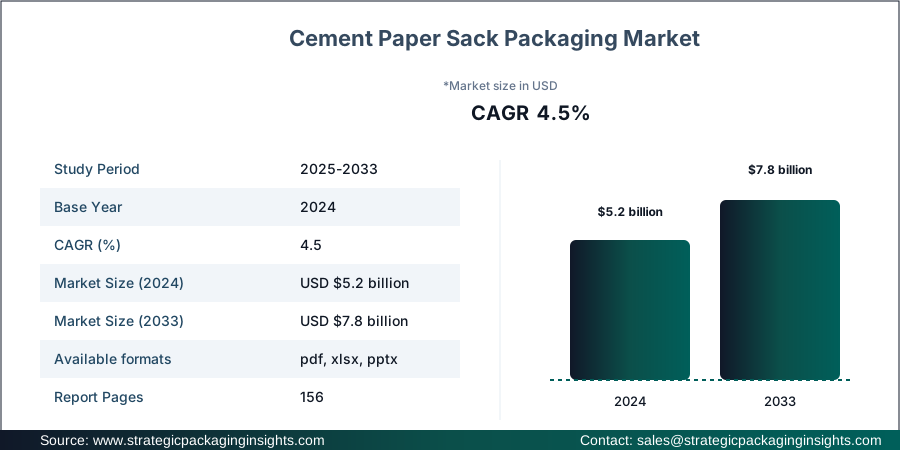
However, the market faces challenges such as fluctuating raw material prices and stringent environmental regulations that could impact production costs. Despite these challenges, the market holds substantial growth potential due to the increasing adoption of green building practices and the shift towards sustainable packaging solutions. The regulatory landscape is also evolving, with governments worldwide promoting the use of biodegradable materials, which is expected to create new opportunities for market players. The market's growth is further supported by innovations in sack design and the development of high-strength paper sacks that can withstand harsh handling conditions.
Report Scope
| Attributes | Details |
| Report Title | Cement Paper Sack Packaging Market Size, Future Growth and Forecast 2033 |
| Material Type | Kraft Paper, Bleached Paper, Others |
| Sack Type | Open Mouth Sack, Valve Sack, Others |
| End-Use Industry | Construction, Chemicals, Agriculture, Others |
| Region | Asia Pacific, North America, Latin America, Europe, Middle East & Africa |
| Base Year | 2024 |
| Historic Period | 2017-2023 |
| Forecast Period | 2025-2033 |
| Number of Pages | 156 |
| Customization Available | Yes* |
Opportunities & Threats
The cement paper sack packaging market presents numerous opportunities, primarily driven by the growing emphasis on sustainability and environmental conservation. As industries worldwide shift towards eco-friendly practices, the demand for biodegradable and recyclable packaging solutions is on the rise. Cement paper sacks, being made from natural fibers, offer a sustainable alternative to plastic sacks, which are increasingly being phased out due to environmental concerns. This shift is particularly pronounced in regions with stringent environmental regulations, where companies are compelled to adopt greener packaging solutions. Furthermore, the increasing construction activities in developing countries present a lucrative opportunity for market expansion, as these regions seek cost-effective and sustainable packaging solutions for cement and other construction materials.
Another significant opportunity lies in the technological advancements in paper sack manufacturing. Innovations such as the development of high-strength, lightweight paper sacks that offer superior durability and protection are gaining traction. These advancements not only enhance the performance of paper sacks but also reduce material usage, thereby lowering production costs. Additionally, the integration of digital printing technologies in paper sack manufacturing allows for customization and branding, providing companies with a competitive edge. As consumer preferences shift towards aesthetically appealing and branded packaging, the demand for customized cement paper sacks is expected to grow, offering further growth prospects for market players.
Despite the promising opportunities, the market faces certain threats that could hinder its growth. One of the primary challenges is the volatility in raw material prices, particularly the cost of kraft paper, which is a key component in cement paper sack production. Fluctuations in raw material prices can significantly impact production costs and profit margins for manufacturers. Additionally, the market is subject to stringent environmental regulations that mandate the use of sustainable materials and processes. Compliance with these regulations can increase operational costs and pose a challenge for small and medium-sized enterprises. Moreover, the competition from alternative packaging solutions, such as woven polypropylene sacks, which offer superior strength and moisture resistance, poses a threat to the market's growth.
Drivers & Challenges
The cement paper sack packaging market is primarily driven by the increasing demand for sustainable packaging solutions in the construction industry. As environmental concerns continue to rise, there is a growing preference for biodegradable and recyclable packaging materials. Cement paper sacks, made from natural fibers, align with these sustainability goals, making them a preferred choice for packaging cement and other construction materials. Additionally, the rise in construction activities, particularly in emerging economies, is a significant driver of market growth. The rapid urbanization and infrastructure development in countries such as India, China, and Brazil are fueling the demand for cement, thereby boosting the need for efficient and sustainable packaging solutions.
Another key driver is the technological advancements in paper sack manufacturing. Innovations in manufacturing processes have led to the development of high-strength, lightweight paper sacks that offer enhanced durability and protection. These advancements not only improve the performance of paper sacks but also reduce material usage, resulting in cost savings for manufacturers. Furthermore, the integration of digital printing technologies in paper sack production allows for customization and branding, providing companies with a competitive edge. As consumer preferences shift towards aesthetically appealing and branded packaging, the demand for customized cement paper sacks is expected to grow, driving market expansion.
Despite the positive drivers, the market faces several challenges that could impede its growth. One of the primary challenges is the volatility in raw material prices, particularly the cost of kraft paper, which is a key component in cement paper sack production. Fluctuations in raw material prices can significantly impact production costs and profit margins for manufacturers. Additionally, the market is subject to stringent environmental regulations that mandate the use of sustainable materials and processes. Compliance with these regulations can increase operational costs and pose a challenge for small and medium-sized enterprises. Moreover, the competition from alternative packaging solutions, such as woven polypropylene sacks, which offer superior strength and moisture resistance, poses a threat to the market's growth.
Market Share Analysis
The competitive landscape of the cement paper sack packaging market is characterized by the presence of several key players who dominate the market. These companies are engaged in strategic initiatives such as mergers and acquisitions, partnerships, and collaborations to strengthen their market position and expand their product offerings. The market is highly competitive, with players focusing on innovation and sustainability to gain a competitive edge. The leading companies in the market are investing in research and development to develop advanced and eco-friendly packaging solutions that meet the evolving needs of the construction industry.
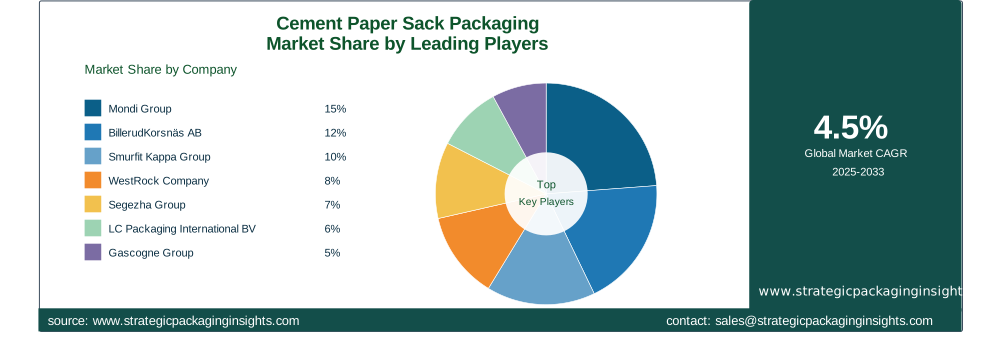
Some of the major companies operating in the cement paper sack packaging market include Mondi Group, BillerudKorsnäs AB, Smurfit Kappa Group, WestRock Company, and Segezha Group. Mondi Group is a leading player in the market, known for its innovative and sustainable packaging solutions. The company offers a wide range of paper sacks for various applications, including cement packaging. BillerudKorsnäs AB is another prominent player, recognized for its high-quality kraft paper and paper sack solutions. The company focuses on sustainability and innovation, offering eco-friendly packaging solutions that cater to the needs of the construction industry.
Smurfit Kappa Group is a global leader in paper-based packaging solutions, offering a comprehensive range of cement paper sacks. The company is committed to sustainability and innovation, investing in research and development to develop advanced packaging solutions. WestRock Company is another key player in the market, known for its high-quality paper sacks and commitment to sustainability. The company offers a wide range of packaging solutions for the construction industry, focusing on innovation and customer satisfaction.
Segezha Group is a leading manufacturer of paper sacks, offering a wide range of products for various applications, including cement packaging. The company is committed to sustainability and innovation, focusing on developing eco-friendly packaging solutions that meet the needs of the construction industry. Other notable players in the market include LC Packaging International BV, Gascogne Group, and Simpac S.A., all of which are engaged in strategic initiatives to strengthen their market position and expand their product offerings.
Key Highlights
- The cement paper sack packaging market is projected to grow at a CAGR of 4.5% from 2025 to 2033.
- Increasing demand for sustainable and eco-friendly packaging solutions is driving market growth.
- Technological advancements in paper sack manufacturing are enhancing product performance and reducing costs.
- Fluctuations in raw material prices pose a challenge to market growth.
- Stringent environmental regulations are promoting the use of biodegradable materials.
- Emerging economies are witnessing significant growth in construction activities, boosting demand for cement paper sacks.
- Customization and branding opportunities are driving demand for digital printing technologies in paper sack manufacturing.
- Competition from alternative packaging solutions, such as woven polypropylene sacks, poses a threat to market growth.
- Key players are focusing on innovation and sustainability to gain a competitive edge.
Top Countries Insights
In the cement paper sack packaging market, China stands out as a leading country with a market size of $1.2 billion and a CAGR of 6%. The country's rapid urbanization and infrastructure development are driving the demand for cement, thereby boosting the need for efficient packaging solutions. Government initiatives promoting sustainable construction practices further support market growth.
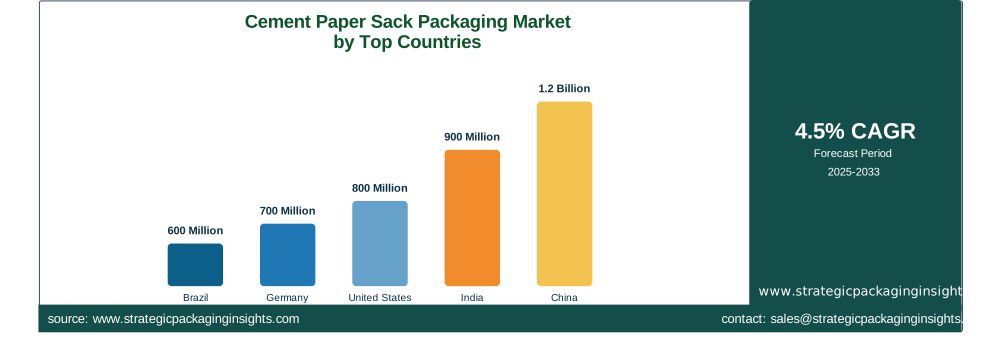
India is another significant player in the market, with a market size of $900 million and a CAGR of 7%. The country's booming construction industry, coupled with increasing environmental awareness, is driving the demand for eco-friendly packaging solutions. The government's focus on sustainable development and green building practices is expected to create new opportunities for market players.
The United States, with a market size of $800 million and a CAGR of 4%, is a key market for cement paper sack packaging. The country's well-established construction industry and increasing emphasis on sustainability are driving the demand for biodegradable packaging solutions. Technological advancements in paper sack manufacturing are also contributing to market growth.
Germany, with a market size of $700 million and a CAGR of 3%, is a prominent market in Europe. The country's stringent environmental regulations and focus on sustainable packaging solutions are driving the demand for cement paper sacks. The presence of leading packaging companies and advancements in manufacturing technologies further support market growth.
Brazil, with a market size of $600 million and a CAGR of 5%, is a key market in Latin America. The country's growing construction industry and increasing environmental awareness are driving the demand for sustainable packaging solutions. Government initiatives promoting eco-friendly practices are expected to create new opportunities for market players.
Evolving Market Dynamics (2018-2024) and Strategic Foresight (2025-2033)
| Metric | 2018-2024 | 2025-2033 |
|---|---|---|
| CAGR | 3.5% | 4.5% |
| Market Size Evolution | $4.5 billion to $5.2 billion | $5.2 billion to $7.8 billion |
| Segment Distribution Shifts | Increased demand for kraft paper sacks | Rising preference for customized and branded sacks |
| Regional Contribution Changes | Growth in Asia Pacific and Latin America | Continued expansion in emerging economies |
| Technological Impact Factors | Advancements in manufacturing processes | Integration of digital printing technologies |
| Client Demand Transformations | Shift towards sustainable packaging | Increased demand for eco-friendly and customized solutions |
Cement Paper Sack Packaging Market Segments Insights

Material Type Analysis
The material type segment in the cement paper sack packaging market is primarily dominated by kraft paper, which is favored for its strength and durability. Kraft paper is a preferred choice due to its high tear resistance and ability to withstand heavy loads, making it ideal for cement packaging. The demand for kraft paper is driven by its eco-friendly nature, as it is biodegradable and recyclable, aligning with global sustainability goals. Additionally, advancements in kraft paper manufacturing technologies have led to the development of high-strength, lightweight paper that offers superior performance and cost-effectiveness. The bleached paper segment, although smaller, is gaining traction due to its aesthetic appeal and suitability for branding and customization. As consumer preferences shift towards visually appealing packaging, the demand for bleached paper sacks is expected to grow.
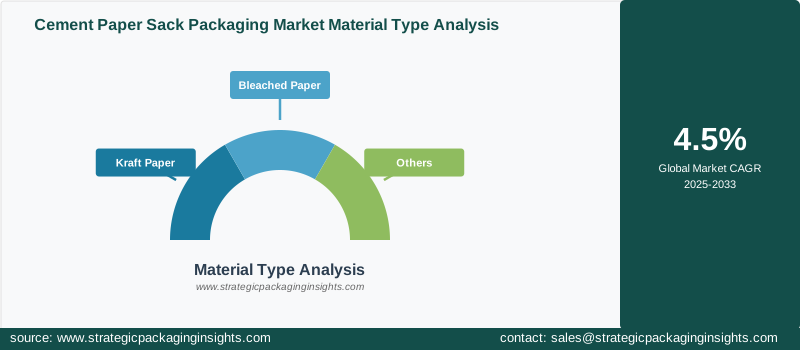
Another significant material type in the market is the use of composite materials, which combine the strength of kraft paper with the moisture resistance of other materials. These composite sacks are particularly popular in regions with high humidity, where moisture resistance is a critical factor. The development of innovative composite materials that offer enhanced performance and sustainability is expected to drive growth in this segment. Overall, the material type segment is characterized by a strong focus on sustainability and innovation, with manufacturers investing in research and development to create advanced materials that meet the evolving needs of the construction industry.
Sack Type Analysis
The sack type segment in the cement paper sack packaging market is categorized into open mouth sacks and valve sacks, each serving distinct applications. Open mouth sacks are widely used for manual filling operations, offering ease of use and cost-effectiveness. These sacks are preferred in regions with limited automation in the construction industry, where manual handling is prevalent. The demand for open mouth sacks is driven by their simplicity and versatility, making them suitable for various applications beyond cement packaging. However, the valve sack segment is witnessing significant growth due to its advantages in automated filling operations. Valve sacks are designed for high-speed filling lines, offering superior efficiency and reduced spillage. The demand for valve sacks is particularly strong in developed regions with advanced construction practices, where automation is a key focus.
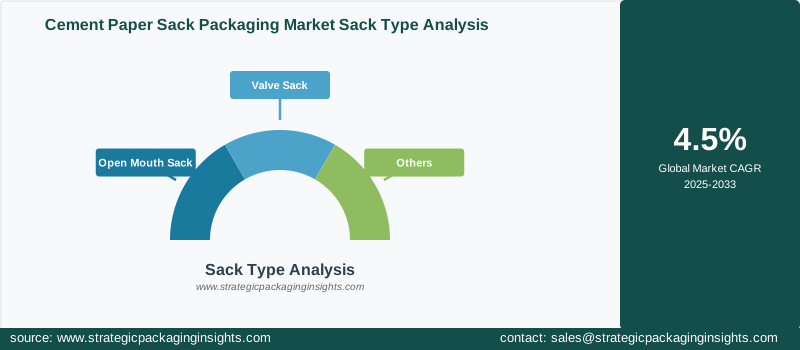
Innovations in sack design, such as the development of self-closing valves and anti-slip coatings, are enhancing the performance of valve sacks, making them increasingly popular in the market. The integration of digital printing technologies in sack manufacturing is also driving demand for customized and branded valve sacks, providing companies with a competitive edge. As the construction industry continues to evolve, the demand for advanced sack types that offer superior performance and sustainability is expected to grow, driving further innovation in this segment.
End-Use Industry Analysis
The end-use industry segment in the cement paper sack packaging market is dominated by the construction industry, which accounts for the majority of the demand for cement paper sacks. The construction industry's growth, particularly in emerging economies, is a significant driver of market expansion. The increasing focus on sustainable construction practices and the adoption of green building standards are driving the demand for eco-friendly packaging solutions, such as cement paper sacks. Additionally, the rise in infrastructure development projects, including roads, bridges, and residential buildings, is boosting the demand for cement and, consequently, cement paper sacks.
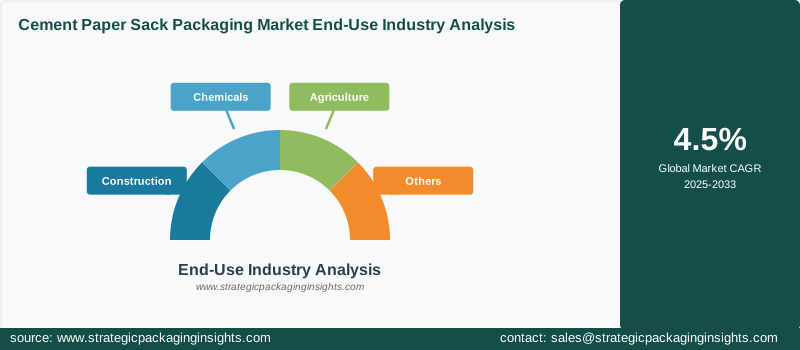
Other end-use industries, such as chemicals and agriculture, also contribute to the demand for cement paper sacks. In the chemicals industry, paper sacks are used for packaging various powdered and granular products, offering protection and ease of handling. The agriculture industry uses paper sacks for packaging fertilizers and other agricultural products, benefiting from the sacks' strength and durability. As these industries continue to grow, the demand for cement paper sacks is expected to increase, driving further market expansion. Overall, the end-use industry segment is characterized by a strong focus on sustainability and innovation, with manufacturers developing advanced packaging solutions to meet the evolving needs of various industries.
Regional Analysis
The regional analysis of the cement paper sack packaging market reveals significant growth opportunities in Asia Pacific, which is the largest and fastest-growing market. The region's rapid urbanization and infrastructure development are driving the demand for cement, boosting the need for efficient packaging solutions. Countries such as China and India are witnessing significant growth in construction activities, supported by government initiatives promoting sustainable development. The presence of leading packaging companies and advancements in manufacturing technologies further support market growth in the region.
North America and Europe are also key markets for cement paper sack packaging, driven by the increasing emphasis on sustainability and environmental conservation. The well-established construction industries in these regions, coupled with stringent environmental regulations, are driving the demand for biodegradable packaging solutions. Technological advancements in paper sack manufacturing and the integration of digital printing technologies are also contributing to market growth. Latin America and the Middle East & Africa are emerging markets, with significant growth potential due to the increasing construction activities and rising environmental awareness. Government initiatives promoting eco-friendly practices are expected to create new opportunities for market players in these regions.
Cement Paper Sack Packaging Market Segments
The Cement Paper Sack Packaging market has been segmented on the basis ofMaterial Type
- Kraft Paper
- Bleached Paper
- Others
Sack Type
- Open Mouth Sack
- Valve Sack
- Others
End-Use Industry
- Construction
- Chemicals
- Agriculture
- Others
Region
- Asia Pacific
- North America
- Latin America
- Europe
- Middle East & Africa




