


Void Fill Packaging Market Outlook
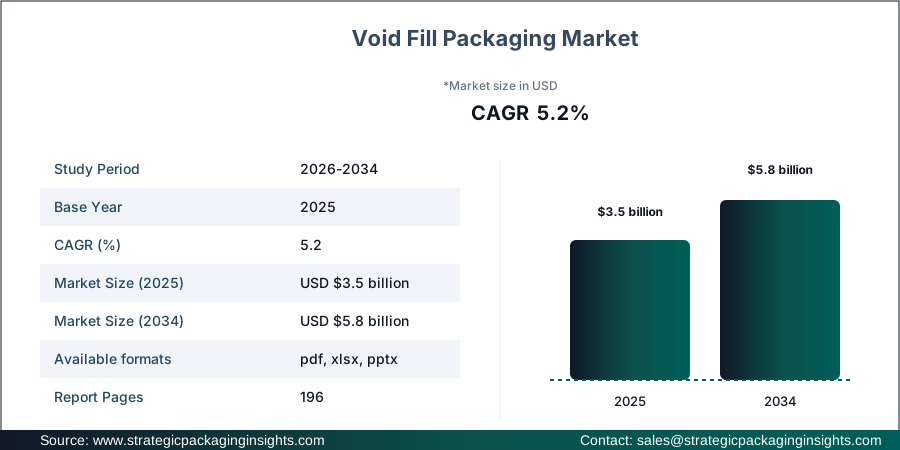
The void fill packaging market was valued at $3.5 billion in 2024 and is projected to reach $5.8 billion by 2033, growing at a CAGR of 5.2% during the forecast period 2025-2033. This market is experiencing significant growth due to the increasing demand for protective packaging solutions in the e-commerce sector. As online shopping continues to surge, the need for efficient and cost-effective packaging solutions that ensure product safety during transit has become paramount. The rise in consumer awareness regarding sustainable packaging options is also driving the market, with many companies opting for eco-friendly void fill materials. Additionally, technological advancements in packaging machinery and materials are further propelling market growth, offering innovative solutions that enhance packaging efficiency and reduce material waste.
Report Scope
| Attributes | Details |
| Report Title | Void Fill Packaging Market Size, Future Growth and Forecast 2034 |
| Material | Paper, Plastic, Foam, Others |
| Application | E-commerce, Electronics, Automotive, Consumer Goods, Others |
| End-User | Retail, Manufacturing, Logistics, Others |
| Region | Asia Pacific, North America, Latin America, Europe, Middle East & Africa |
| Base Year | 2025 |
| Historic Period | 2018-2024 |
| Forecast Period | 2026-2034 |
| Number of Pages | 196 |
| Customization Available | Yes* |
Opportunities & Threats
One of the primary opportunities in the void fill packaging market lies in the growing e-commerce industry. As more consumers turn to online shopping, the demand for protective packaging solutions that ensure product safety during transit is increasing. This trend is particularly pronounced in emerging markets where e-commerce is rapidly expanding. Companies that can offer innovative, cost-effective, and sustainable void fill solutions are well-positioned to capitalize on this growth. Additionally, the increasing focus on sustainability presents an opportunity for manufacturers to develop eco-friendly void fill materials that appeal to environmentally conscious consumers and businesses.
Another significant opportunity is the advancement in packaging technologies. Innovations in materials and machinery are enabling the development of more efficient and effective void fill solutions. For instance, the use of biodegradable and recyclable materials is gaining traction, driven by regulatory pressures and consumer demand for sustainable packaging. Companies that invest in research and development to create advanced void fill solutions that meet these demands can gain a competitive edge in the market. Furthermore, the integration of automation in packaging processes is enhancing operational efficiency, reducing costs, and improving product protection, thereby offering additional growth opportunities.
However, the void fill packaging market faces several threats, including the volatility of raw material prices. Fluctuations in the cost of materials such as paper, plastic, and foam can impact the profitability of packaging manufacturers. Additionally, stringent environmental regulations regarding packaging waste and the use of non-biodegradable materials pose challenges for companies in this market. Compliance with these regulations often requires significant investment in sustainable materials and processes, which can increase operational costs. Moreover, the intense competition in the packaging industry, with numerous players offering similar products, can lead to price wars and reduced profit margins.
Drivers & Challenges
The primary driver of the void fill packaging market is the booming e-commerce industry. As online shopping becomes increasingly popular, the demand for protective packaging solutions that ensure product safety during transit is rising. This trend is particularly evident in regions with high internet penetration and a growing middle class, such as Asia Pacific and North America. Additionally, the increasing consumer preference for sustainable packaging solutions is driving the demand for eco-friendly void fill materials. Companies that can offer innovative, cost-effective, and environmentally friendly packaging solutions are well-positioned to capitalize on this growing demand.
Another significant driver is the advancement in packaging technologies. Innovations in materials and machinery are enabling the development of more efficient and effective void fill solutions. For instance, the use of biodegradable and recyclable materials is gaining traction, driven by regulatory pressures and consumer demand for sustainable packaging. Companies that invest in research and development to create advanced void fill solutions that meet these demands can gain a competitive edge in the market. Furthermore, the integration of automation in packaging processes is enhancing operational efficiency, reducing costs, and improving product protection, thereby offering additional growth opportunities.
Despite these drivers, the void fill packaging market faces several challenges. One of the primary challenges is the volatility of raw material prices. Fluctuations in the cost of materials such as paper, plastic, and foam can impact the profitability of packaging manufacturers. Additionally, stringent environmental regulations regarding packaging waste and the use of non-biodegradable materials pose challenges for companies in this market. Compliance with these regulations often requires significant investment in sustainable materials and processes, which can increase operational costs. Moreover, the intense competition in the packaging industry, with numerous players offering similar products, can lead to price wars and reduced profit margins.
Market Share Analysis
The void fill packaging market is characterized by a highly competitive landscape with numerous players vying for market share. Key companies in this market include Sealed Air Corporation, Ranpak Holdings Corp., Storopack Hans Reichenecker GmbH, Pregis LLC, and Intertape Polymer Group Inc. These companies are focusing on product innovation, strategic partnerships, and mergers and acquisitions to strengthen their market position. For instance, Sealed Air Corporation is known for its innovative packaging solutions and has a significant market share due to its strong product portfolio and global presence. Similarly, Ranpak Holdings Corp. is a leader in sustainable packaging solutions and has gained a competitive edge through its focus on eco-friendly products.
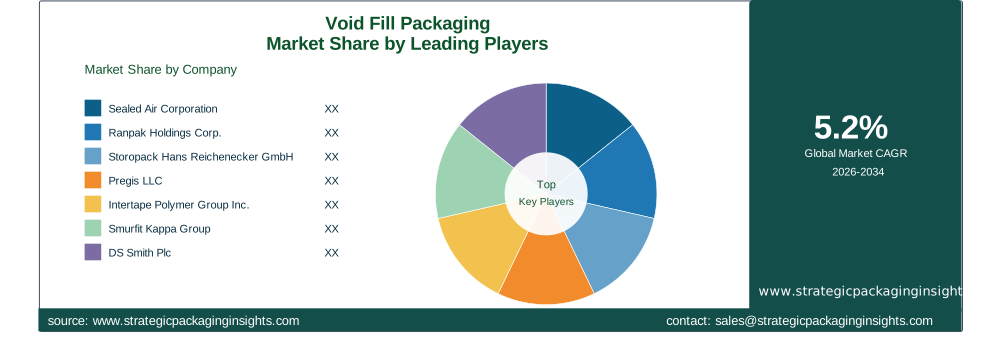
Storopack Hans Reichenecker GmbH is another major player in the void fill packaging market, known for its diverse range of protective packaging solutions. The company has a strong presence in Europe and is expanding its operations in other regions to capture a larger market share. Pregis LLC is also a key player, offering a wide range of packaging solutions, including air cushioning and foam packaging. The company's focus on innovation and customer-centric solutions has helped it maintain a strong market position. Intertape Polymer Group Inc. is known for its comprehensive range of packaging products and has a significant market share due to its extensive distribution network and strong customer relationships.
Other notable companies in the void fill packaging market include Smurfit Kappa Group, DS Smith Plc, and Mondi Group. Smurfit Kappa Group is a leading provider of paper-based packaging solutions and has a strong presence in Europe and the Americas. The company's focus on sustainability and innovation has helped it maintain a competitive edge in the market. DS Smith Plc is known for its innovative packaging solutions and has a significant market share due to its strong product portfolio and global presence. Mondi Group is a leading provider of sustainable packaging solutions and has gained a competitive edge through its focus on eco-friendly products and strategic partnerships.
Overall, the competitive landscape of the void fill packaging market is characterized by a mix of large multinational corporations and small to medium-sized enterprises. Companies are focusing on product innovation, strategic partnerships, and mergers and acquisitions to strengthen their market position. The increasing demand for sustainable packaging solutions is driving companies to invest in research and development to create advanced void fill solutions that meet consumer and regulatory demands. As the market continues to grow, companies that can offer innovative, cost-effective, and environmentally friendly packaging solutions are well-positioned to capture a larger market share.
Key Highlights
- The void fill packaging market is projected to grow at a CAGR of 5.2% from 2025 to 2033.
- Increasing demand for protective packaging solutions in the e-commerce sector is driving market growth.
- Technological advancements in packaging machinery and materials are propelling market growth.
- The rise in consumer awareness regarding sustainable packaging options is driving demand for eco-friendly void fill materials.
- Volatility of raw material prices poses a challenge for packaging manufacturers.
- Stringent environmental regulations regarding packaging waste are impacting market dynamics.
- Companies are focusing on product innovation, strategic partnerships, and mergers and acquisitions to strengthen their market position.
- The competitive landscape is characterized by a mix of large multinational corporations and small to medium-sized enterprises.
- Asia Pacific and North America are key regions driving market growth due to high internet penetration and a growing middle class.
- The integration of automation in packaging processes is enhancing operational efficiency and reducing costs.
Top Countries Insights
In the void fill packaging market, the United States is a leading player, with a market size of $1.2 billion and a CAGR of 4%. The country's robust e-commerce sector and high consumer demand for sustainable packaging solutions are key growth drivers. Additionally, technological advancements in packaging machinery and materials are further propelling market growth. However, stringent environmental regulations regarding packaging waste pose challenges for companies operating in this market.
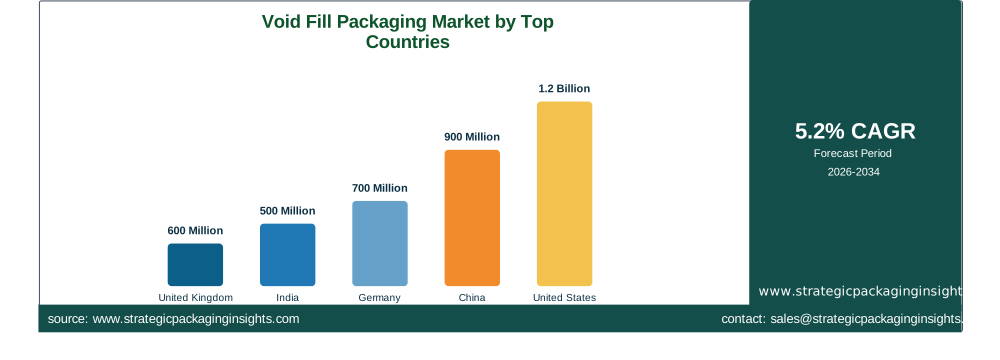
China is another significant market for void fill packaging, with a market size of $900 million and a CAGR of 6%. The country's rapidly expanding e-commerce industry and increasing consumer awareness regarding sustainable packaging options are driving demand for void fill solutions. Additionally, government initiatives to promote sustainable packaging practices are further boosting market growth. However, the volatility of raw material prices poses a challenge for packaging manufacturers in China.
Germany is a key player in the European void fill packaging market, with a market size of $700 million and a CAGR of 5%. The country's strong manufacturing sector and focus on sustainability are driving demand for eco-friendly void fill materials. Additionally, technological advancements in packaging machinery and materials are further propelling market growth. However, stringent environmental regulations regarding packaging waste pose challenges for companies operating in this market.
India is an emerging market for void fill packaging, with a market size of $500 million and a CAGR of 7%. The country's rapidly growing e-commerce industry and increasing consumer awareness regarding sustainable packaging options are driving demand for void fill solutions. Additionally, government initiatives to promote sustainable packaging practices are further boosting market growth. However, the volatility of raw material prices poses a challenge for packaging manufacturers in India.
The United Kingdom is a significant market for void fill packaging, with a market size of $600 million and a CAGR of 4%. The country's strong retail sector and focus on sustainability are driving demand for eco-friendly void fill materials. Additionally, technological advancements in packaging machinery and materials are further propelling market growth. However, stringent environmental regulations regarding packaging waste pose challenges for companies operating in this market.
Evolving Market Dynamics (2018-2024) and Strategic Foresight (2025-2033)
| Metric | 2018-2024 | 2025-2033 |
|---|---|---|
| CAGR | 4.5% | 5.2% |
| Market Size Evolution | $2.8 billion to $3.5 billion | $3.5 billion to $5.8 billion |
| Segment Distribution Shifts | Increased demand in e-commerce | Further growth in e-commerce and sustainability focus |
| Regional Contribution Changes | Strong growth in North America and Europe | Increased growth in Asia Pacific |
| Technological Impact Factors | Advancements in packaging machinery | Integration of automation and sustainable materials |
| Client Demand Transformations | Shift towards eco-friendly solutions | Continued demand for sustainable and efficient packaging |
Void Fill Packaging Market Segments Insights

Material Analysis
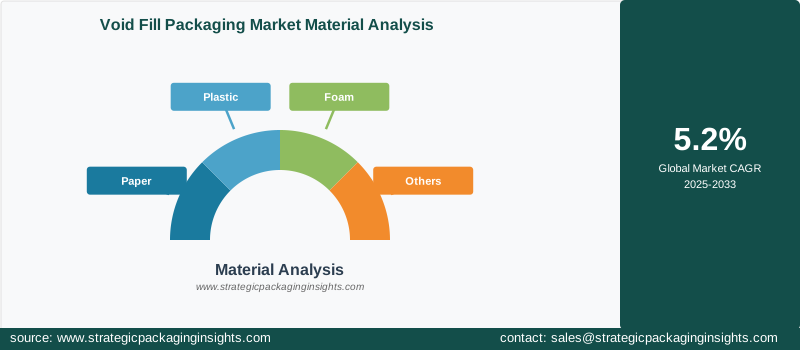
The material segment of the void fill packaging market is primarily driven by the increasing demand for sustainable and eco-friendly packaging solutions. Paper-based void fill materials are gaining popularity due to their recyclability and biodegradability, aligning with the growing consumer preference for environmentally friendly products. Plastic materials, while still widely used due to their cost-effectiveness and durability, are facing scrutiny due to environmental concerns. Foam materials, known for their excellent cushioning properties, are also being re-evaluated for their environmental impact, leading to innovations in biodegradable foam solutions. Companies are investing in research and development to create advanced materials that meet both performance and sustainability criteria, offering a competitive edge in the market.
In terms of competition, the material segment is characterized by a mix of large multinational corporations and small to medium-sized enterprises. Companies are focusing on product innovation and strategic partnerships to strengthen their market position. The increasing demand for sustainable packaging solutions is driving companies to invest in research and development to create advanced void fill materials that meet consumer and regulatory demands. As the market continues to grow, companies that can offer innovative, cost-effective, and environmentally friendly packaging solutions are well-positioned to capture a larger market share.
Application Analysis
The application segment of the void fill packaging market is dominated by the e-commerce sector, which is experiencing significant growth due to the increasing popularity of online shopping. As more consumers turn to e-commerce platforms for their shopping needs, the demand for protective packaging solutions that ensure product safety during transit is rising. Electronics and automotive industries are also key application areas, requiring specialized void fill solutions to protect delicate and high-value products. Consumer goods, including cosmetics and personal care products, are another important application segment, with companies seeking innovative packaging solutions that enhance product presentation and protection.
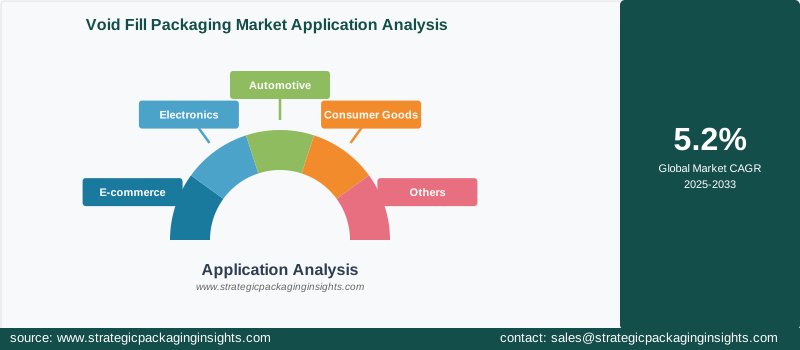
Trends in the application segment are driven by the increasing focus on sustainability and efficiency. Companies are investing in research and development to create advanced void fill solutions that meet the specific needs of different industries while minimizing environmental impact. The integration of automation in packaging processes is enhancing operational efficiency, reducing costs, and improving product protection, offering additional growth opportunities. As the market continues to evolve, companies that can offer innovative, cost-effective, and environmentally friendly packaging solutions tailored to specific application needs are well-positioned to capture a larger market share.
End-User Analysis
The end-user segment of the void fill packaging market is primarily driven by the retail and manufacturing sectors, which are experiencing significant growth due to the increasing demand for protective packaging solutions. The logistics industry is also a key end-user, requiring specialized void fill solutions to ensure product safety during transit. Companies in these sectors are seeking innovative packaging solutions that enhance product protection and presentation while minimizing environmental impact. The increasing focus on sustainability is driving demand for eco-friendly void fill materials, with companies investing in research and development to create advanced solutions that meet consumer and regulatory demands.
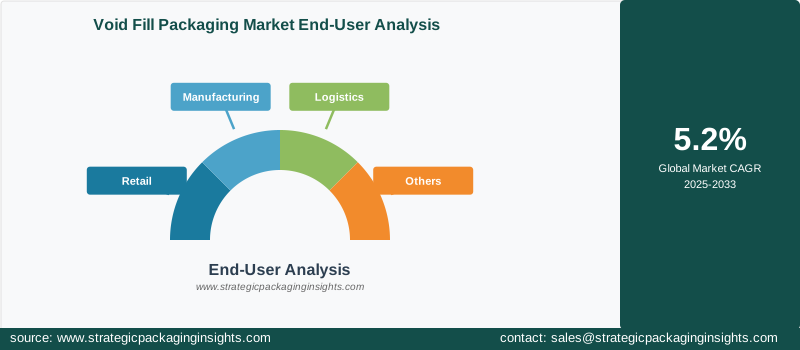
In terms of competition, the end-user segment is characterized by a mix of large multinational corporations and small to medium-sized enterprises. Companies are focusing on product innovation and strategic partnerships to strengthen their market position. The increasing demand for sustainable packaging solutions is driving companies to invest in research and development to create advanced void fill solutions that meet consumer and regulatory demands. As the market continues to grow, companies that can offer innovative, cost-effective, and environmentally friendly packaging solutions tailored to specific end-user needs are well-positioned to capture a larger market share.
Region Analysis
The regional segment of the void fill packaging market is characterized by significant growth in Asia Pacific and North America, driven by the increasing demand for protective packaging solutions in the e-commerce sector. Europe is also a key region, with a strong focus on sustainability and innovation driving demand for eco-friendly void fill materials. Latin America and the Middle East & Africa are emerging markets, with increasing consumer awareness regarding sustainable packaging options driving demand for void fill solutions. Companies in these regions are investing in research and development to create advanced solutions that meet consumer and regulatory demands, offering a competitive edge in the market.
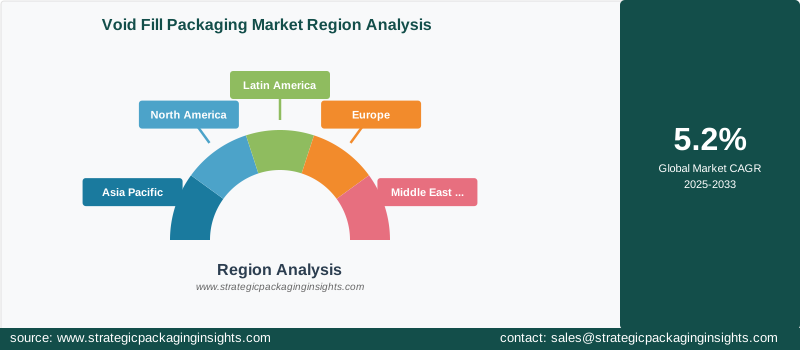
In terms of competition, the regional segment is characterized by a mix of large multinational corporations and small to medium-sized enterprises. Companies are focusing on product innovation and strategic partnerships to strengthen their market position. The increasing demand for sustainable packaging solutions is driving companies to invest in research and development to create advanced void fill solutions that meet consumer and regulatory demands. As the market continues to grow, companies that can offer innovative, cost-effective, and environmentally friendly packaging solutions tailored to specific regional needs are well-positioned to capture a larger market share.
Void Fill Packaging Market Segments
The Void Fill Packaging market has been segmented on the basis ofMaterial
- Paper
- Plastic
- Foam
- Others
Application
- E-commerce
- Electronics
- Automotive
- Consumer Goods
- Others
End-User
- Retail
- Manufacturing
- Logistics
- Others
Region
- Asia Pacific
- North America
- Latin America
- Europe
- Middle East & Africa




