


Flexible Tube Packaging Market Outlook
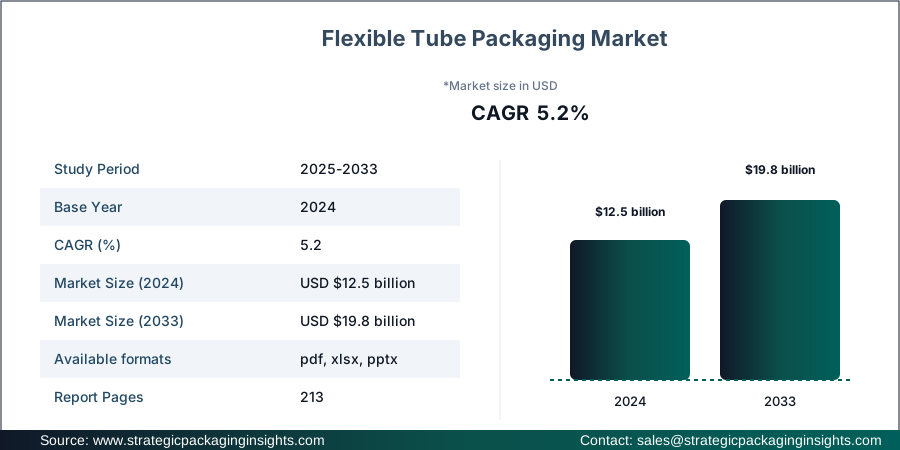
The flexible tube packaging market was valued at $12.5 billion in 2024 and is projected to reach $19.8 billion by 2033, growing at a CAGR of 5.2% during the forecast period 2025-2033. This market is experiencing robust growth due to the increasing demand for lightweight, durable, and cost-effective packaging solutions across various industries. The rise in consumer preference for convenient and sustainable packaging options is driving the adoption of flexible tube packaging. Additionally, advancements in material technology and the growing trend of e-commerce are further propelling market expansion. The market is also benefiting from the increasing use of flexible tubes in the cosmetics and personal care sectors, where aesthetic appeal and functionality are paramount.
Despite the promising growth trajectory, the flexible tube packaging market faces certain challenges. Regulatory constraints related to environmental concerns and the recyclability of packaging materials pose significant hurdles. However, the market holds substantial growth potential, driven by innovations in biodegradable and eco-friendly materials. The increasing focus on reducing carbon footprints and enhancing product shelf life is encouraging manufacturers to invest in research and development. Furthermore, the expanding pharmaceutical and healthcare sectors are expected to offer lucrative opportunities for market players, as flexible tubes provide excellent barrier properties and protection for sensitive products.
Report Scope
| Attributes | Details |
| Report Title | Flexible Tube Packaging Market Size, Future Growth and Forecast 2033 |
| Material | Plastic, Aluminum, Laminated |
| Application | Cosmetics, Pharmaceuticals, Food & Beverages, Personal Care, Industrial |
| End-User | Healthcare, Food & Beverage, Personal Care, Industrial |
| Region | Asia Pacific, North America, Latin America, Europe, Middle East & Africa |
| Base Year | 2024 |
| Historic Period | 2017-2023 |
| Forecast Period | 2025-2033 |
| Number of Pages | 213 |
| Customization Available | Yes* |
Opportunities & Threats
The flexible tube packaging market presents numerous opportunities, particularly in the realm of sustainable packaging solutions. As consumers become more environmentally conscious, there is a growing demand for packaging that minimizes environmental impact. This trend is driving manufacturers to develop innovative materials that are biodegradable and recyclable, offering significant growth potential. Additionally, the rise of e-commerce and online retailing is creating new avenues for flexible tube packaging, as these platforms require lightweight and durable packaging solutions to ensure product safety during transit. The increasing adoption of flexible tubes in the cosmetics and personal care industries, where packaging aesthetics and functionality are crucial, further underscores the market's growth prospects.
Another opportunity lies in the expanding pharmaceutical and healthcare sectors. Flexible tube packaging is gaining traction in these industries due to its excellent barrier properties, which protect sensitive products from contamination and extend their shelf life. The growing demand for convenient and user-friendly packaging solutions in the healthcare sector is expected to drive the adoption of flexible tubes. Moreover, the increasing focus on reducing packaging waste and enhancing product safety is encouraging manufacturers to invest in advanced technologies and materials, further boosting market growth.
However, the flexible tube packaging market is not without its challenges. One of the primary restrainers is the stringent regulatory landscape surrounding packaging materials, particularly concerning environmental impact and recyclability. Manufacturers must navigate complex regulations and standards to ensure compliance, which can increase production costs and limit market entry for new players. Additionally, the volatility in raw material prices, particularly for plastics and aluminum, poses a significant threat to market stability. Companies must adopt strategic sourcing and cost management practices to mitigate these risks and maintain competitive pricing.
Market Share Analysis
The flexible tube packaging market is characterized by a highly competitive landscape, with numerous players vying for market share. Leading companies are focusing on product innovation, strategic partnerships, and mergers and acquisitions to strengthen their market position. The market is dominated by a few key players who hold significant shares, while numerous small and medium-sized enterprises contribute to the competitive dynamics. The presence of a diverse range of products and materials further intensifies competition, as companies strive to differentiate themselves through unique offerings and value-added services.
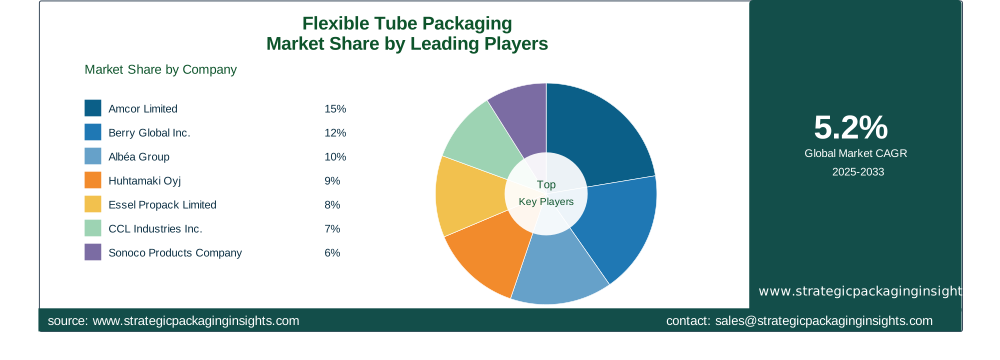
Among the major players in the flexible tube packaging market, Amcor Limited stands out with a substantial market share. The company is renowned for its innovative packaging solutions and commitment to sustainability, offering a wide range of flexible tubes for various applications. Another key player, Berry Global Inc., is known for its extensive product portfolio and strong focus on customer-centric solutions. The company's strategic acquisitions and investments in advanced manufacturing technologies have bolstered its market presence.
Albéa Group is another prominent player in the market, recognized for its expertise in cosmetic and personal care packaging. The company's emphasis on design and functionality has earned it a significant share in the flexible tube packaging market. Additionally, Huhtamaki Oyj, with its strong global presence and diverse product offerings, is a key competitor in the market. The company's focus on sustainability and innovation has positioned it as a leader in the flexible packaging industry.
Other notable companies in the market include Essel Propack Limited, known for its advanced tube packaging solutions and global reach, and CCL Industries Inc., which offers a wide range of packaging products across various sectors. The competitive landscape is further enriched by companies like Sonoco Products Company, Constantia Flexibles, and Montebello Packaging, each contributing to the market's growth through strategic initiatives and product innovations.
Key Highlights
- The flexible tube packaging market is projected to grow at a CAGR of 5.2% from 2025 to 2033.
- Increasing demand for sustainable and eco-friendly packaging solutions is driving market growth.
- The cosmetics and personal care sectors are significant contributors to the market's expansion.
- Advancements in material technology are enhancing the functionality and appeal of flexible tubes.
- The pharmaceutical and healthcare industries offer lucrative opportunities for market players.
- Regulatory constraints and raw material price volatility pose challenges to market growth.
- Leading companies are focusing on innovation and strategic partnerships to strengthen their market position.
- The rise of e-commerce is creating new avenues for flexible tube packaging solutions.
- Manufacturers are investing in research and development to develop biodegradable and recyclable materials.
Top Countries Insights
In the flexible tube packaging market, the United States holds a significant share, with a market size of $3.5 billion and a CAGR of 4%. The country's robust demand for convenient and sustainable packaging solutions, coupled with advancements in material technology, drives market growth. The presence of major players and a strong focus on innovation further bolster the market's expansion.
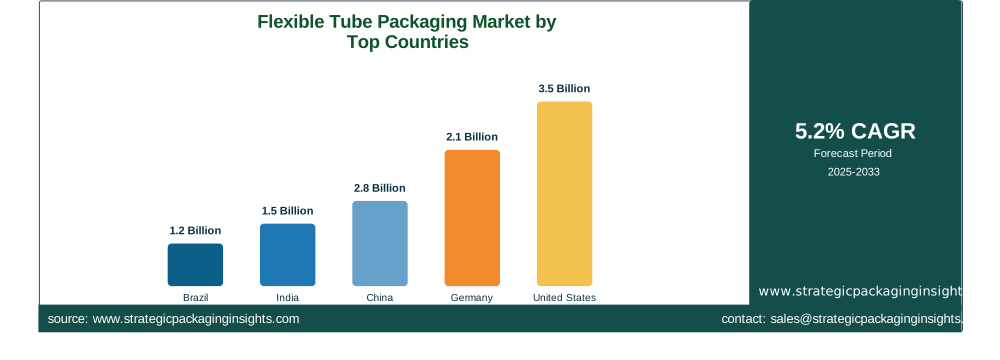
Germany is another key player in the market, with a market size of $2.1 billion and a CAGR of 3%. The country's emphasis on sustainability and eco-friendly packaging solutions aligns with the growing consumer demand for environmentally conscious products. Additionally, Germany's strong industrial base and technological advancements contribute to the market's growth.
China, with a market size of $2.8 billion and a CAGR of 6%, is experiencing rapid growth in the flexible tube packaging market. The country's expanding e-commerce sector and increasing consumer preference for convenient packaging solutions drive market demand. Moreover, China's focus on reducing packaging waste and enhancing product safety supports market expansion.
India, with a market size of $1.5 billion and a CAGR of 7%, is witnessing significant growth in the flexible tube packaging market. The country's growing middle-class population and increasing demand for personal care and cosmetic products drive market growth. Additionally, India's focus on sustainable packaging solutions and government initiatives to promote eco-friendly practices further boost the market.
Brazil, with a market size of $1.2 billion and a CAGR of 5%, is a key player in the flexible tube packaging market. The country's expanding food and beverage industry and increasing demand for convenient packaging solutions drive market growth. Moreover, Brazil's focus on reducing packaging waste and enhancing product safety supports market expansion.
Evolving Market Dynamics (2018-2024) and Strategic Foresight (2025-2033)
| Metrics | 2018-2024 | 2025-2033 |
|---|---|---|
| CAGR | 4.5% | 5.2% |
| Market Size Evolution | $10 billion to $12.5 billion | $12.5 billion to $19.8 billion |
| Segment Distribution Shifts | High demand in cosmetics and personal care | Increased focus on pharmaceuticals and healthcare |
| Regional Contribution Changes | Dominance of North America and Europe | Rising influence of Asia Pacific |
| Technological Impact Factors | Advancements in material technology | Focus on biodegradable and recyclable materials |
| Client Demand Transformations | Preference for convenience and aesthetics | Emphasis on sustainability and eco-friendliness |
Flexible Tube Packaging Market Segments Insights

Material Analysis
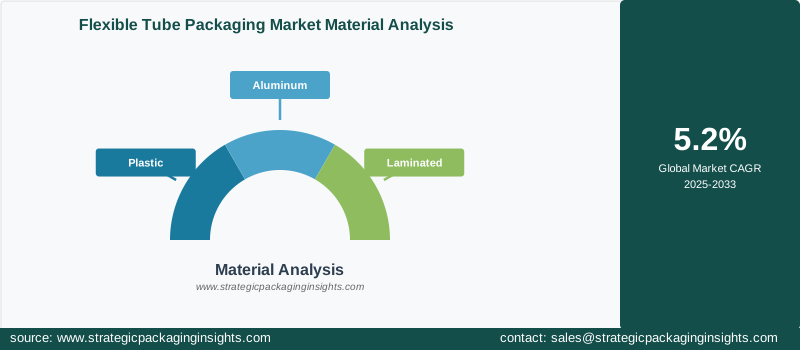
The material segment of the flexible tube packaging market is primarily driven by the demand for plastic, aluminum, and laminated tubes. Plastic tubes dominate the market due to their lightweight, cost-effectiveness, and versatility. They are widely used in the cosmetics and personal care industries, where packaging aesthetics and functionality are crucial. However, the growing environmental concerns and regulatory constraints are pushing manufacturers to explore alternative materials, such as biodegradable plastics and recycled materials. Aluminum tubes, known for their excellent barrier properties and recyclability, are gaining traction in the pharmaceutical and food sectors. Laminated tubes, offering a combination of durability and aesthetic appeal, are also witnessing increased adoption across various applications.
The competition within the material segment is intense, with companies focusing on innovation and sustainability to gain a competitive edge. The development of advanced materials that offer enhanced barrier properties, reduced environmental impact, and improved functionality is a key trend in this segment. Additionally, the increasing consumer preference for eco-friendly packaging solutions is driving manufacturers to invest in research and development to create sustainable alternatives. The material segment is expected to witness significant growth, driven by the rising demand for lightweight, durable, and environmentally friendly packaging solutions.
Application Analysis
The application segment of the flexible tube packaging market is diverse, encompassing cosmetics, pharmaceuticals, food and beverages, personal care, and industrial applications. The cosmetics and personal care industries are major contributors to the market's growth, driven by the increasing demand for convenient and aesthetically appealing packaging solutions. Flexible tubes are favored in these industries for their ability to protect sensitive products, enhance shelf life, and offer user-friendly dispensing options. The pharmaceutical sector is also witnessing significant growth, as flexible tubes provide excellent barrier properties and protection for sensitive products.
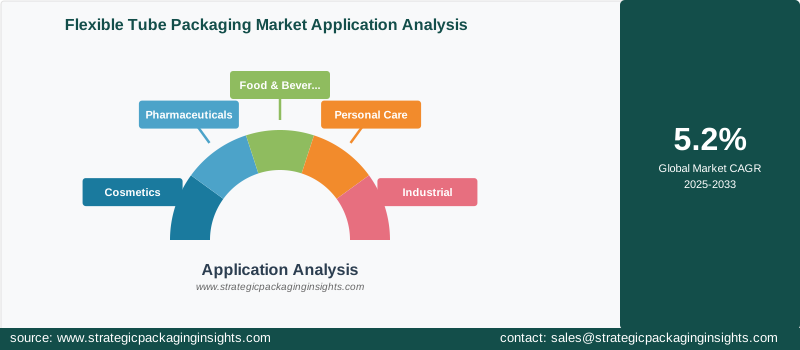
The food and beverage industry is another key application area, where flexible tubes are used for packaging sauces, condiments, and other liquid products. The demand for convenient and lightweight packaging solutions in this sector is driving the adoption of flexible tubes. Additionally, the industrial sector is witnessing increased use of flexible tubes for packaging adhesives, sealants, and other industrial products. The application segment is characterized by intense competition, with companies focusing on innovation and customization to meet the diverse needs of end-users.
End-User Analysis
The end-user segment of the flexible tube packaging market includes healthcare, food and beverage, personal care, and industrial sectors. The healthcare sector is a significant end-user, driven by the increasing demand for convenient and user-friendly packaging solutions. Flexible tubes are favored in this sector for their excellent barrier properties, which protect sensitive products from contamination and extend their shelf life. The food and beverage industry is another major end-user, where flexible tubes are used for packaging sauces, condiments, and other liquid products.
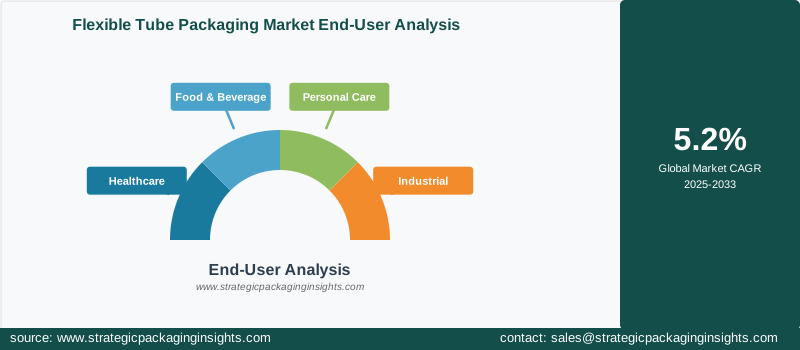
The personal care industry is witnessing significant growth, driven by the increasing demand for convenient and aesthetically appealing packaging solutions. Flexible tubes are favored in this industry for their ability to protect sensitive products, enhance shelf life, and offer user-friendly dispensing options. The industrial sector is also witnessing increased use of flexible tubes for packaging adhesives, sealants, and other industrial products. The end-user segment is characterized by intense competition, with companies focusing on innovation and customization to meet the diverse needs of end-users.
Region Analysis
The regional analysis of the flexible tube packaging market reveals significant growth opportunities across various regions. North America and Europe are dominant markets, driven by the presence of major players and a strong focus on innovation and sustainability. The Asia Pacific region is witnessing rapid growth, driven by the expanding e-commerce sector and increasing consumer preference for convenient packaging solutions. The region's focus on reducing packaging waste and enhancing product safety supports market expansion.
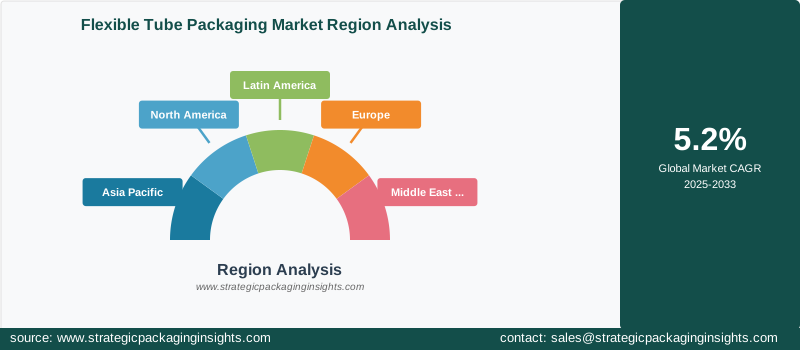
Latin America and the Middle East & Africa are also witnessing significant growth, driven by the expanding food and beverage industry and increasing demand for convenient packaging solutions. The regional segment is characterized by intense competition, with companies focusing on innovation and customization to meet the diverse needs of end-users. The regional analysis highlights the importance of understanding regional dynamics and consumer preferences to capitalize on growth opportunities in the flexible tube packaging market.
Flexible Tube Packaging Market Segments
The Flexible Tube Packaging market has been segmented on the basis ofMaterial
- Plastic
- Aluminum
- Laminated
Application
- Cosmetics
- Pharmaceuticals
- Food & Beverages
- Personal Care
- Industrial
End-User
- Healthcare
- Food & Beverage
- Personal Care
- Industrial
Region
- Asia Pacific
- North America
- Latin America
- Europe
- Middle East & Africa




