


Pizza Box Packaging Market Outlook
The pizza box packaging market was valued at $2.5 billion in 2024 and is projected to reach $4.1 billion by 2033, growing at a CAGR of 5.5% during the forecast period 2025-2033. This growth is driven by the increasing global demand for pizza, which remains a staple in fast food consumption. The rise of online food delivery services has further fueled the need for efficient and sustainable pizza packaging solutions. As consumer preferences shift towards eco-friendly and recyclable materials, the market is witnessing a surge in demand for innovative packaging solutions that not only preserve the quality of the pizza but also align with environmental sustainability goals.
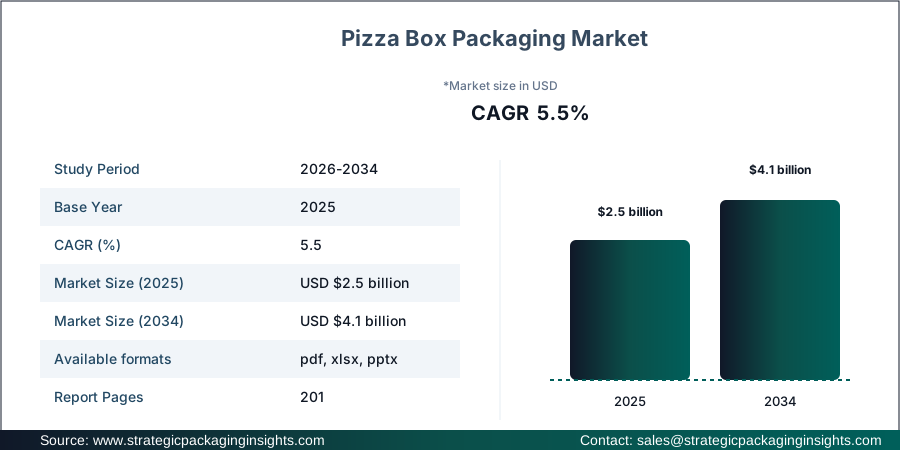
Report Scope
| Attributes | Details |
| Report Title | Pizza Box Packaging Market Size, Future Growth and Forecast 2034 |
| Material | Corrugated Board, Clay Coated Cardboard |
| Box Type | Whole Pizza Boxes, Pizza Slice Boxes |
| Printing Technology | Flexographic, Digital |
| End-User | Restaurants, Food Chains |
| Base Year | 2025 |
| Historic Period | 2018-2024 |
| Forecast Period | 2026-2034 |
| Number of Pages | 201 |
| Customization Available | Yes* |
Opportunities & Threats
One of the significant opportunities in the pizza box packaging market is the growing trend towards sustainable packaging. With increasing environmental awareness, consumers and businesses are seeking packaging solutions that minimize environmental impact. This has led to a rise in demand for biodegradable and recyclable pizza boxes. Companies that invest in developing eco-friendly packaging solutions are likely to gain a competitive edge. Additionally, the expansion of the food delivery industry, particularly in emerging markets, presents a lucrative opportunity for growth. As more consumers opt for home delivery, the demand for durable and heat-retaining pizza boxes is expected to rise significantly.
Another opportunity lies in technological advancements in printing and packaging. The ability to customize pizza boxes with high-quality graphics and branding offers businesses a unique marketing tool. This customization not only enhances brand visibility but also improves customer engagement. Companies that leverage digital printing technologies to offer personalized packaging solutions can tap into new customer segments and increase their market share. Furthermore, the integration of smart packaging technologies, such as QR codes and NFC tags, can provide consumers with additional information and interactive experiences, further driving market growth.
However, the market faces certain restraints, such as the volatility in raw material prices. The cost of materials like corrugated board and clay-coated cardboard can fluctuate due to supply chain disruptions and changes in demand. This volatility can impact the profitability of manufacturers and lead to increased prices for end consumers. Additionally, stringent regulations regarding food safety and packaging materials can pose challenges for market players. Companies must ensure compliance with these regulations, which may require additional investments in research and development to meet the required standards.
Drivers & Challenges
The primary driver of the pizza box packaging market is the increasing consumption of pizza worldwide. As a popular fast food item, pizza continues to see high demand across various demographics, leading to a consistent need for packaging solutions. The rise of online food delivery platforms has further accelerated this demand, as consumers increasingly prefer the convenience of having meals delivered to their doorstep. This trend is particularly prominent in urban areas, where busy lifestyles drive the need for quick and easy meal options.
Another significant driver is the shift towards sustainable and eco-friendly packaging solutions. With growing environmental concerns, both consumers and businesses are prioritizing sustainability in their purchasing decisions. This has led to increased demand for pizza boxes made from recyclable and biodegradable materials. Companies that offer sustainable packaging solutions are likely to attract environmentally conscious consumers and gain a competitive advantage in the market. Additionally, advancements in packaging technology, such as improved insulation and heat retention, are enhancing the functionality of pizza boxes, further driving market growth.
Despite these drivers, the market faces challenges such as intense competition and price sensitivity. The pizza box packaging market is highly competitive, with numerous players vying for market share. This competition can lead to price wars, impacting the profitability of manufacturers. Additionally, consumers are often price-sensitive, particularly in emerging markets, which can limit the ability of companies to pass on increased costs to end consumers. To overcome these challenges, companies must focus on innovation and differentiation, offering unique value propositions that set them apart from competitors.
Market Share Analysis
The pizza box packaging market is characterized by a competitive landscape with several key players dominating the industry. Companies such as Smurfit Kappa Group, WestRock Company, International Paper Company, and DS Smith Plc hold significant market shares due to their extensive product portfolios and strong distribution networks. These companies have established themselves as leaders in the market by consistently delivering high-quality packaging solutions and investing in sustainable practices.
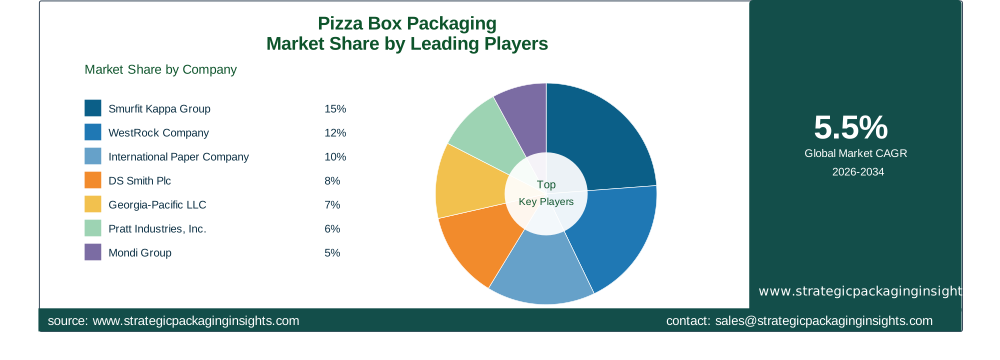
Smurfit Kappa Group, for instance, is renowned for its innovative and sustainable packaging solutions. The company has a strong focus on research and development, enabling it to offer a wide range of eco-friendly pizza boxes that meet the evolving needs of consumers. Similarly, WestRock Company is a major player in the market, known for its comprehensive packaging solutions and commitment to sustainability. The company's extensive global presence and strategic partnerships have helped it maintain a competitive edge.
International Paper Company is another key player, with a strong emphasis on sustainability and innovation. The company offers a diverse range of pizza box packaging solutions, catering to various customer needs. Its focus on sustainable practices and efficient supply chain management has contributed to its strong market position. DS Smith Plc, on the other hand, is known for its customer-centric approach and ability to deliver customized packaging solutions. The company's focus on innovation and sustainability has helped it capture a significant share of the market.
Other notable players in the market include Georgia-Pacific LLC, Pratt Industries, Inc., Mondi Group, and Huhtamaki Oyj. These companies have established themselves as key players through strategic acquisitions, partnerships, and investments in research and development. Their focus on sustainability and innovation has enabled them to meet the changing demands of consumers and maintain a competitive edge in the market.
Key Highlights
- The pizza box packaging market is projected to grow at a CAGR of 5.5% from 2025 to 2033.
- Increasing demand for eco-friendly and sustainable packaging solutions is driving market growth.
- Technological advancements in printing and packaging offer opportunities for customization and branding.
- Volatility in raw material prices poses a challenge for market players.
- Key players include Smurfit Kappa Group, WestRock Company, and International Paper Company.
- The rise of online food delivery services is boosting demand for pizza box packaging.
- Stringent regulations regarding food safety and packaging materials impact market dynamics.
Top Countries Insights
The United States is a leading market for pizza box packaging, with a market size of approximately $1 billion and a CAGR of 4%. The country's strong demand for pizza, coupled with the rise of online food delivery services, drives market growth. Additionally, the focus on sustainable packaging solutions aligns with consumer preferences, further boosting demand.
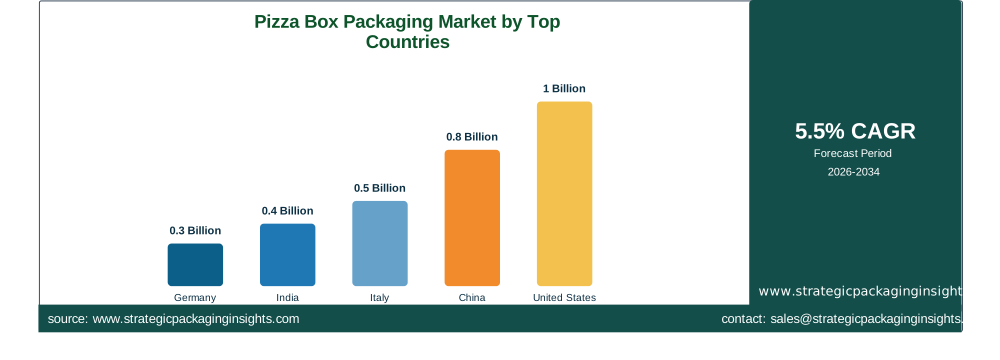
In China, the pizza box packaging market is experiencing rapid growth, with a CAGR of 8%. The increasing popularity of Western fast food, along with the expansion of food delivery services, contributes to this growth. The government's emphasis on environmental sustainability also drives demand for eco-friendly packaging solutions.
Italy, known for its rich pizza culture, has a market size of $500 million and a CAGR of 3%. The country's strong tradition of pizza consumption, combined with the rise of artisanal and gourmet pizza outlets, supports market growth. However, stringent regulations regarding food safety and packaging materials pose challenges for market players.
In India, the pizza box packaging market is growing at a CAGR of 7%, driven by the increasing popularity of pizza among the younger population. The expansion of food delivery services and the focus on sustainable packaging solutions further contribute to market growth. However, price sensitivity among consumers can impact market dynamics.
Germany, with a market size of $300 million and a CAGR of 5%, is another key market for pizza box packaging. The country's strong demand for pizza, coupled with the focus on sustainability, drives market growth. However, the market faces challenges such as intense competition and regulatory requirements.
Evolving Market Dynamics (2018-2024) and Strategic Foresight (2025-2033)
| Metrics | 2018-2024 | 2025-2033 |
|---|---|---|
| CAGR | 4.5% | 5.5% |
| Market Size Evolution | $2 billion to $2.5 billion | $2.5 billion to $4.1 billion |
| Segment Distribution Shifts | High demand for corrugated board | Increased demand for eco-friendly materials |
| Regional Contribution Changes | Dominance of North America | Rising contribution from Asia Pacific |
| Technological Impact Factors | Basic printing technologies | Advanced digital printing and smart packaging |
| Client Demand Transformations | Focus on cost-effectiveness | Emphasis on sustainability and customization |
Pizza Box Packaging Market Segments Insights

Material Analysis
The material segment of the pizza box packaging market is primarily dominated by corrugated board, which is favored for its durability and cost-effectiveness. Corrugated board offers excellent protection and insulation, making it ideal for pizza packaging. However, there is a growing shift towards eco-friendly materials, driven by increasing environmental awareness. Companies are investing in research and development to create biodegradable and recyclable materials that meet consumer demand for sustainable packaging solutions. This trend is expected to continue, with eco-friendly materials gaining a larger share of the market in the coming years.
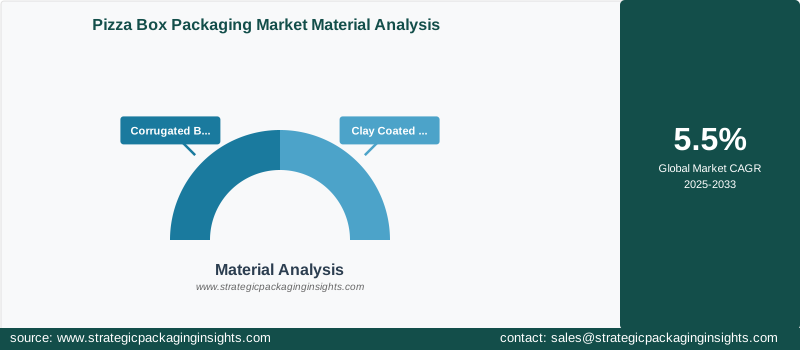
Clay-coated cardboard is another significant material used in pizza box packaging. It offers a smooth surface for high-quality printing, making it suitable for branding and customization. The demand for clay-coated cardboard is driven by the need for visually appealing packaging that enhances brand visibility. However, the environmental impact of clay-coated cardboard is a concern, leading to increased interest in alternative materials. Companies that can offer sustainable alternatives to clay-coated cardboard are likely to gain a competitive advantage in the market.
Box Type Analysis
The box type segment of the pizza box packaging market is divided into whole pizza boxes and pizza slice boxes. Whole pizza boxes dominate the market, driven by the high demand for full-sized pizzas. These boxes are designed to provide excellent protection and insulation, ensuring that the pizza remains fresh and hot during delivery. The rise of online food delivery services has further boosted demand for whole pizza boxes, as consumers increasingly opt for home delivery.
Pizza slice boxes, on the other hand, cater to the growing trend of single-serve and takeaway options. These boxes are designed for convenience, allowing consumers to enjoy a single slice of pizza on the go. The demand for pizza slice boxes is driven by the increasing popularity of quick-service restaurants and food trucks, which offer single-serve options. As consumer preferences shift towards convenience and portability, the demand for pizza slice boxes is expected to grow.
Printing Technology Analysis
The printing technology segment of the pizza box packaging market is witnessing significant advancements, driven by the need for customization and branding. Flexographic printing is the most commonly used technology, offering cost-effective and high-quality printing solutions. It is favored for its ability to produce large volumes of printed boxes quickly and efficiently. However, digital printing is gaining traction, offering greater flexibility and customization options. Digital printing allows for high-quality graphics and personalized designs, making it ideal for branding and marketing purposes.
Lithography is another printing technology used in pizza box packaging, known for its high-quality and detailed printing capabilities. It is often used for premium and high-end packaging solutions, where quality and aesthetics are a priority. As consumer preferences shift towards personalized and visually appealing packaging, the demand for advanced printing technologies is expected to grow. Companies that invest in digital and lithographic printing technologies are likely to gain a competitive edge in the market.
End-User Analysis
The end-user segment of the pizza box packaging market is dominated by restaurants and food chains, which account for the majority of demand. These establishments require large volumes of pizza boxes to meet the needs of their customers, particularly in the context of online food delivery. The rise of food delivery platforms has further increased demand from this segment, as more consumers opt for home delivery.
Independent pizza outlets are another significant end-user segment, driven by the growing trend of artisanal and gourmet pizzas. These outlets often require customized and branded packaging solutions to enhance their brand visibility and appeal to consumers. The demand for personalized packaging solutions is expected to grow, as independent pizza outlets seek to differentiate themselves in a competitive market. Other end-users include quick-service restaurants and food trucks, which offer single-serve and takeaway options, driving demand for pizza slice boxes.
Pizza Box Packaging Market Segments
The Pizza Box Packaging market has been segmented on the basis ofMaterial
- Corrugated Board
- Clay Coated Cardboard
Box Type
- Whole Pizza Boxes
- Pizza Slice Boxes
Printing Technology
- Flexographic
- Digital
End-User
- Restaurants
- Food Chains




