


Printed Signage Market Outlook
The printed signage market was valued at $42.1 billion in 2024 and is projected to reach $54.3 billion by 2033, growing at a CAGR of 2.8% during the forecast period 2025-2033. This market is driven by the increasing demand for effective advertising and branding solutions across various industries. The retail sector, in particular, is a significant contributor to the market's growth, as businesses continue to invest in printed signage to enhance customer engagement and brand visibility. Additionally, technological advancements in printing techniques and materials have led to more durable and visually appealing signage solutions, further propelling market expansion.
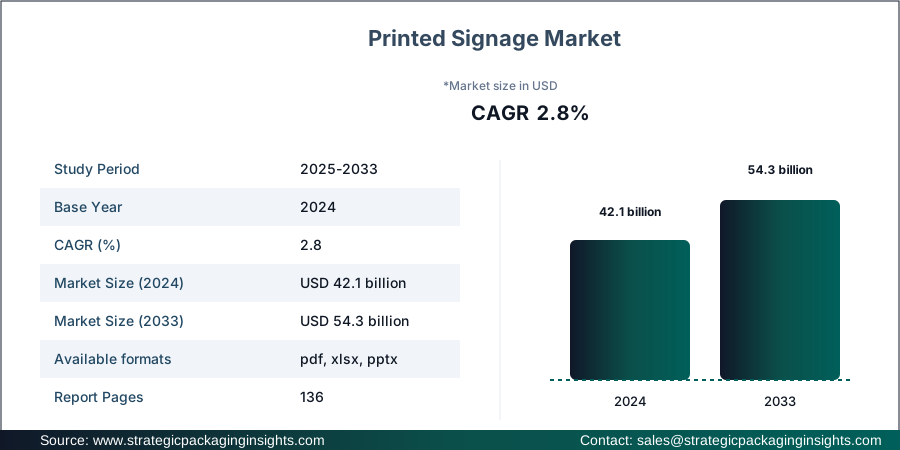
Report Scope
| Attributes | Details |
| Report Title | Printed Signage Market Size, Future Growth and Forecast 2033 |
| Type | Indoor, Outdoor |
| Application | Retail, Corporate, Institutional, Transportation, Healthcare, Others |
| Material | Paper, Plastic, Metal, Others |
| Region | Asia Pacific, North America, Latin America, Europe, Middle East & Africa |
| Base Year | 2024 |
| Historic Period | 2017-2023 |
| Forecast Period | 2025-2033 |
| Number of Pages | 136 |
| Customization Available | Yes* |
Opportunities & Threats
One of the key opportunities in the printed signage market lies in the growing trend of customization and personalization. Businesses are increasingly seeking unique and tailored signage solutions to differentiate themselves in a competitive market. This demand for bespoke signage is driving innovation in printing technologies, allowing for more intricate designs and vibrant colors. Moreover, the rise of eco-friendly materials presents a significant opportunity for market players to cater to environmentally conscious consumers. By offering sustainable signage options, companies can tap into a growing segment of the market that prioritizes environmental responsibility.
Another opportunity is the expansion of the retail sector in emerging economies. As these regions experience economic growth and urbanization, there is a corresponding increase in retail establishments, which drives the demand for printed signage. The proliferation of shopping malls, supermarkets, and specialty stores in countries like India, China, and Brazil presents a lucrative market for signage manufacturers. Additionally, the integration of digital elements with traditional printed signage, such as QR codes and NFC technology, offers new avenues for interactive and engaging customer experiences.
However, the printed signage market faces challenges from the increasing adoption of digital signage solutions. As businesses seek more dynamic and easily updatable advertising options, digital signage is becoming a preferred choice for many. This shift poses a threat to traditional printed signage, as it may lead to a decline in demand. Additionally, the high cost of raw materials and printing processes can be a restraining factor for market growth, particularly for small and medium-sized enterprises that may struggle to compete with larger players in terms of pricing and production capabilities.
Drivers & Challenges
The printed signage market is primarily driven by the need for effective advertising and brand communication. In an era where visual appeal plays a crucial role in consumer decision-making, businesses are investing heavily in signage to capture attention and convey their brand message. The versatility of printed signage, which can be used in various settings such as retail stores, corporate offices, and public spaces, makes it an indispensable tool for marketers. Furthermore, advancements in printing technology have enabled the production of high-quality, durable signage that can withstand environmental factors, thereby increasing its lifespan and effectiveness.
Another significant driver is the cost-effectiveness of printed signage compared to digital alternatives. For many businesses, especially small and medium-sized enterprises, printed signage offers a more affordable solution for advertising and promotion. The lower initial investment and maintenance costs associated with printed signage make it an attractive option for companies looking to maximize their marketing budget. Additionally, the ability to produce signage in bulk further reduces costs, making it a viable choice for large-scale advertising campaigns.
Despite these drivers, the printed signage market faces challenges from the growing preference for digital signage. The ability to easily update content and incorporate interactive elements makes digital signage an appealing option for businesses looking to engage with tech-savvy consumers. Moreover, the increasing focus on sustainability and environmental impact is pushing companies to explore digital alternatives that reduce paper and material waste. This shift in consumer preferences and corporate strategies poses a challenge for the printed signage market, as it must adapt to changing demands while maintaining its relevance in the advertising landscape.
Printed Signage Strategic Outlook
| Trend | Market Driver | Technological/Material Shift | Business Impact |
|---|---|---|---|
| Sustainability | Eco-friendly Materials | Biodegradable Inks | Increased Consumer Appeal |
| Smart Tech | Integration with Digital Elements | QR Codes, NFC | Enhanced Customer Engagement |
| Consumer Behavior | Customization Demand | Advanced Printing Techniques | Higher Market Penetration |
| Logistics | Cost Efficiency | Bulk Production Capabilities | Competitive Pricing |
The printed signage market, valued at $42.1 billion in 2026, is poised for transformation driven by regulatory and economic disruptors. The primary disruptor in this niche is the increasing emphasis on sustainability, with Extended Producer Responsibility (EPR) compliance becoming a critical factor for market players. As brands navigate this evolving landscape, strategic foresight suggests a pivot towards integrating eco-friendly materials and digital elements to maintain market share by 2033. Companies that embrace these changes and invest in innovative printing technologies will be better positioned to meet consumer demands and regulatory requirements, ensuring their continued relevance and competitiveness in the market.
Market Share Analysis
The printed signage market is characterized by a diverse competitive landscape, with numerous players vying for market share. The market is dominated by a mix of established companies and emerging players, each offering a range of products and services to cater to different customer needs. The competitive dynamics are influenced by factors such as product quality, pricing strategies, technological advancements, and customer service. Companies that can effectively differentiate themselves through innovation and customer-centric approaches are likely to gain a competitive edge in this market.
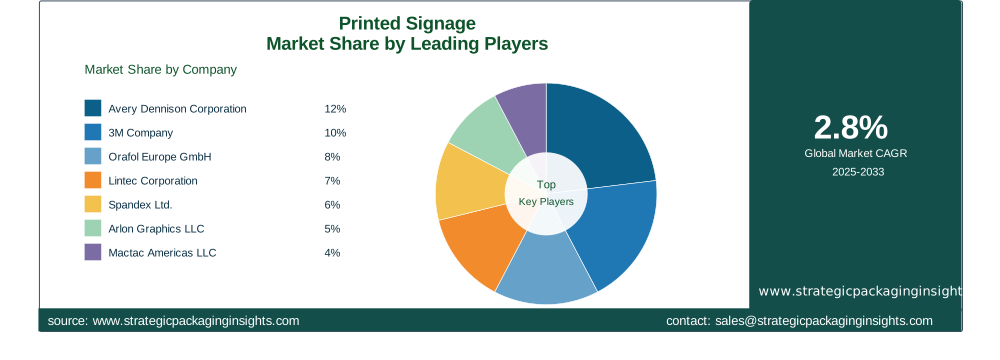
Among the major players in the printed signage market, companies like Avery Dennison Corporation, 3M Company, and Orafol Europe GmbH hold significant market shares. These companies have established themselves as leaders through their extensive product portfolios, strong distribution networks, and commitment to research and development. Their ability to offer high-quality, durable signage solutions has earned them a loyal customer base and a strong market presence.
Avery Dennison Corporation, for instance, is renowned for its innovative adhesive technologies and sustainable product offerings. The company's focus on eco-friendly materials and advanced printing techniques has positioned it as a leader in the market. Similarly, 3M Company is known for its cutting-edge solutions that combine functionality with aesthetic appeal. The company's investment in research and development has resulted in a range of products that meet the evolving needs of customers across various industries.
Orafol Europe GmbH, a key player in the market, is recognized for its high-performance films and graphic products. The company's commitment to quality and customer satisfaction has enabled it to build a strong reputation in the industry. With a global presence and a focus on innovation, Orafol continues to expand its market share by offering customized solutions that cater to specific customer requirements. Other notable companies in the market include Lintec Corporation, Spandex Ltd., and Arlon Graphics LLC, each contributing to the competitive landscape with their unique offerings and strategic initiatives.
Key Highlights
- The printed signage market is projected to grow at a CAGR of 2.8% from 2025 to 2033.
- Customization and personalization are key trends driving market growth.
- Eco-friendly materials are gaining traction among environmentally conscious consumers.
- The retail sector remains a significant contributor to market demand.
- Integration of digital elements with printed signage offers new opportunities for engagement.
- Cost-effectiveness of printed signage makes it an attractive option for SMEs.
- Technological advancements in printing techniques enhance product quality and durability.
Top Countries Insights
In the printed signage market, the United States stands out with a market size of $12.5 billion and a CAGR of 3%. The country's robust retail sector and emphasis on branding and advertising drive demand for printed signage. Additionally, the presence of major market players and technological advancements in printing contribute to the market's growth. However, the shift towards digital signage poses a challenge, prompting companies to innovate and offer integrated solutions.
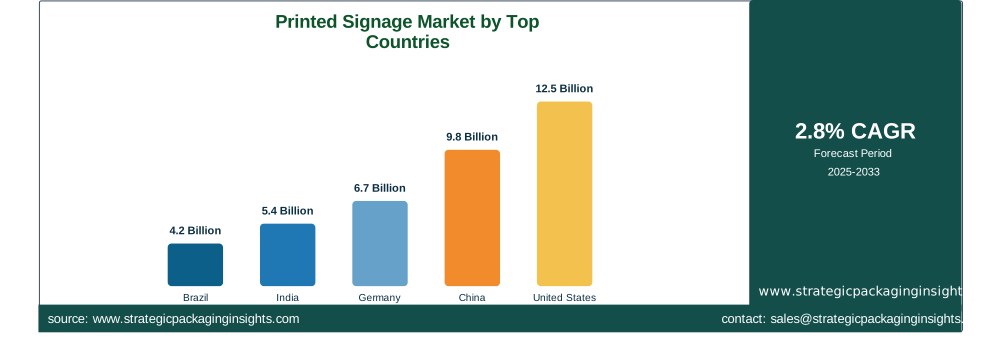
China, with a market size of $9.8 billion and a CAGR of 4%, is another key player in the printed signage market. The country's rapid urbanization and expanding retail sector fuel demand for signage solutions. Government initiatives to promote domestic manufacturing and technological innovation further support market growth. However, environmental regulations and the push for sustainable practices present challenges that companies must navigate to remain competitive.
Germany, with a market size of $6.7 billion and a CAGR of 2%, is a significant market for printed signage in Europe. The country's strong industrial base and focus on quality and innovation drive demand for high-performance signage solutions. The integration of digital elements with traditional signage is a growing trend, offering new opportunities for customer engagement. However, the market faces challenges from stringent environmental regulations and the need for sustainable materials.
India, with a market size of $5.4 billion and a CAGR of 5%, is an emerging market for printed signage. The country's growing retail sector and increasing consumer spending drive demand for signage solutions. The government's focus on infrastructure development and urbanization further supports market growth. However, the market faces challenges from the high cost of raw materials and the need for technological advancements to meet evolving customer demands.
Brazil, with a market size of $4.2 billion and a CAGR of 3%, is a key market in Latin America. The country's expanding retail sector and focus on branding and advertising drive demand for printed signage. The integration of digital elements with traditional signage is a growing trend, offering new opportunities for customer engagement. However, the market faces challenges from economic instability and the need for sustainable practices.
Printed Signage Market Segments Insights

Type Analysis
The printed signage market is segmented by type into indoor and outdoor signage. Indoor signage, which includes point-of-sale displays, banners, and posters, is widely used in retail environments to attract customers and promote products. The demand for indoor signage is driven by the need for effective in-store advertising and brand communication. Retailers are increasingly investing in high-quality, visually appealing signage to enhance the shopping experience and drive sales. Additionally, advancements in printing technology have enabled the production of durable indoor signage that can withstand environmental factors such as humidity and temperature changes.
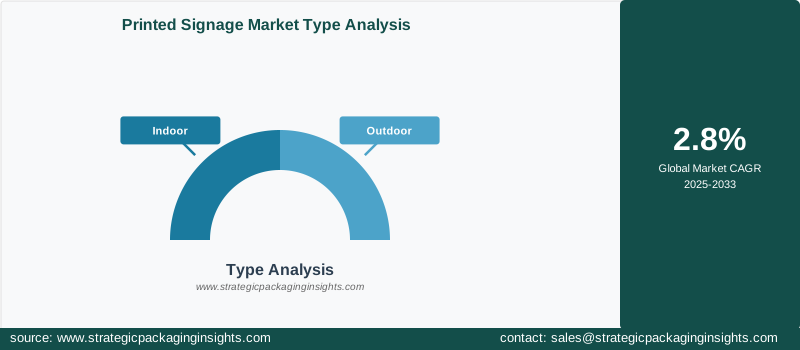
Outdoor signage, on the other hand, is used for advertising and promotional purposes in public spaces. This segment includes billboards, banners, and transit signage, which are designed to capture the attention of passersby and convey brand messages. The demand for outdoor signage is driven by the need for effective advertising solutions that can reach a wide audience. Businesses are investing in large-format, high-impact signage to enhance brand visibility and drive customer engagement. However, the outdoor signage segment faces challenges from the increasing adoption of digital signage, which offers dynamic and easily updatable content.
Application Analysis
The printed signage market is segmented by application into retail, corporate, institutional, transportation, healthcare, and others. The retail sector is the largest application segment, driven by the need for effective in-store advertising and brand communication. Retailers are investing in high-quality signage to enhance the shopping experience and drive sales. The corporate sector is another significant application segment, with businesses using signage for branding, wayfinding, and communication purposes. The demand for corporate signage is driven by the need for effective communication solutions that can enhance brand visibility and employee engagement.
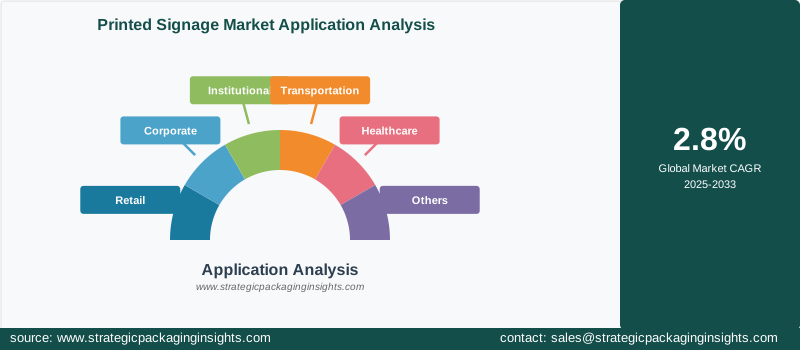
The institutional sector, which includes educational institutions and government organizations, is also a key application segment. The demand for institutional signage is driven by the need for effective communication and wayfinding solutions. The transportation sector, which includes airports, train stations, and bus terminals, is another significant application segment. The demand for transportation signage is driven by the need for effective wayfinding and information solutions that can enhance the passenger experience. The healthcare sector is also a key application segment, with hospitals and clinics using signage for wayfinding, communication, and branding purposes.
Material Analysis
The printed signage market is segmented by material into paper, plastic, metal, and others. Paper signage is widely used for indoor applications, such as posters and point-of-sale displays, due to its cost-effectiveness and ease of production. The demand for paper signage is driven by the need for affordable advertising solutions that can be easily produced and replaced. However, the paper signage segment faces challenges from the increasing focus on sustainability and the need for eco-friendly materials.
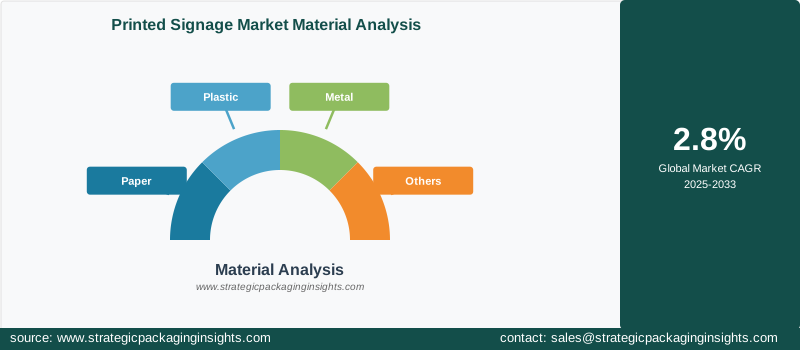
Plastic signage, which includes materials such as PVC and acrylic, is widely used for both indoor and outdoor applications. The demand for plastic signage is driven by its durability, versatility, and ability to withstand environmental factors. However, the plastic signage segment faces challenges from environmental regulations and the need for sustainable materials. Metal signage, which includes materials such as aluminum and steel, is widely used for outdoor applications due to its durability and ability to withstand harsh weather conditions. The demand for metal signage is driven by the need for high-performance advertising solutions that can enhance brand visibility and customer engagement.
Region Analysis
The printed signage market is segmented by region into Asia Pacific, North America, Latin America, Europe, and Middle East & Africa. The Asia Pacific region is the largest market for printed signage, driven by the rapid urbanization and expanding retail sector in countries like China and India. The demand for printed signage in this region is driven by the need for effective advertising solutions that can enhance brand visibility and customer engagement. However, the market faces challenges from the increasing adoption of digital signage and the need for sustainable materials.
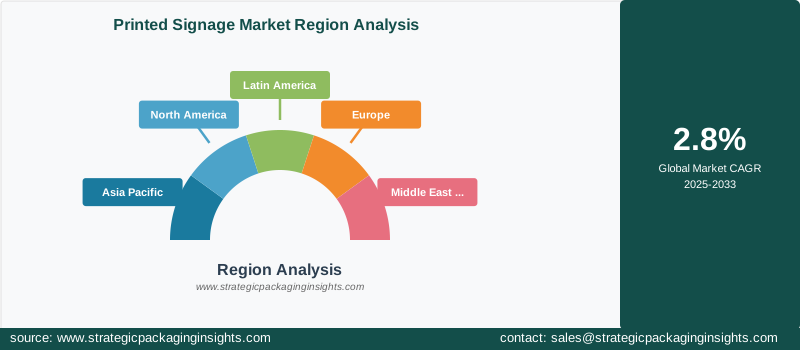
North America is another significant market for printed signage, driven by the robust retail sector and emphasis on branding and advertising. The demand for printed signage in this region is driven by the need for effective communication solutions that can enhance brand visibility and customer engagement. However, the market faces challenges from the shift towards digital signage and the need for sustainable practices. Europe is also a key market for printed signage, driven by the strong industrial base and focus on quality and innovation. The demand for printed signage in this region is driven by the need for high-performance advertising solutions that can enhance brand visibility and customer engagement.
Printed Signage Market Segments
The Printed Signage market has been segmented on the basis ofType
- Indoor
- Outdoor
Application
- Retail
- Corporate
- Institutional
- Transportation
- Healthcare
- Others
Material
- Paper
- Plastic
- Metal
- Others
Region
- Asia Pacific
- North America
- Latin America
- Europe
- Middle East & Africa




