


Plastic Bottles And Containers Market Outlook
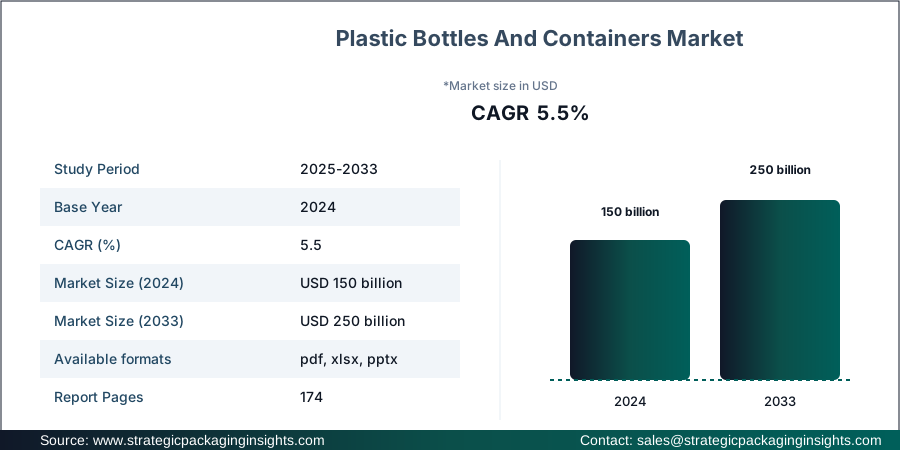
The plastic bottles and containers market was valued at $150 billion in 2024 and is projected to reach $250 billion by 2033, growing at a CAGR of 5.5% during the forecast period 2025-2033. This market is driven by the increasing demand for lightweight and durable packaging solutions across various industries such as food and beverages, pharmaceuticals, and personal care. The versatility of plastic materials, which allows for the creation of containers in various shapes and sizes, further fuels market growth. Additionally, the rising trend of on-the-go consumption and the need for convenient packaging solutions are significant contributors to the market's expansion.
Report Scope
| Attributes | Details |
| Report Title | Plastic Bottles And Containers Market Size, Future Growth and Forecast 2033 |
| Material | PET, HDPE, PP, PVC, LDPE, Others |
| End-User | Beverage, Food, Personal Care, Pharmaceutical, Household, Industrial |
| Capacity | Up to 500 ml, 500 ml to 1000 ml, 1000 ml to 2000 ml, More than 2000 ml |
| Base Year | 2024 |
| Historic Period | 2017-2023 |
| Forecast Period | 2025-2033 |
| Number of Pages | 174 |
| Customization Available | Yes* |
Opportunities & Threats
One of the primary opportunities in the plastic bottles and containers market is the growing demand for sustainable packaging solutions. With increasing environmental awareness, consumers and manufacturers are shifting towards eco-friendly materials, such as biodegradable plastics and recycled content. This shift presents a significant opportunity for companies to innovate and develop new products that meet these sustainability criteria. Furthermore, advancements in technology, such as improved recycling processes and the development of bio-based plastics, are expected to create new avenues for growth in the market.
Another opportunity lies in the expanding e-commerce sector, which has led to an increased demand for protective and lightweight packaging solutions. As online shopping continues to grow, the need for durable and efficient packaging that can withstand the rigors of shipping and handling becomes more critical. Plastic bottles and containers, with their lightweight and robust nature, are well-suited to meet these demands, providing a lucrative opportunity for market players to capitalize on this trend.
However, the market faces significant threats from stringent regulations and environmental concerns. Governments worldwide are implementing policies to reduce plastic waste and promote recycling, which can pose challenges for manufacturers. The introduction of bans on single-use plastics and increased taxes on plastic products can impact the market negatively. Companies need to adapt to these regulatory changes by investing in sustainable practices and materials to mitigate these threats and remain competitive in the market.
Drivers & Challenges
The primary driver of the plastic bottles and containers market is the increasing demand for packaged beverages and food products. As urbanization and disposable incomes rise, consumers are increasingly opting for convenient and ready-to-consume products, which require efficient packaging solutions. Plastic bottles and containers offer the ideal solution due to their lightweight, durability, and cost-effectiveness. Additionally, the growing pharmaceutical industry, which requires safe and secure packaging for medicines and healthcare products, further propels market growth.
Technological advancements in plastic manufacturing processes also drive the market. Innovations such as blow molding and injection molding have enabled the production of high-quality plastic containers with enhanced features like tamper-evidence and improved barrier properties. These advancements not only improve the functionality of plastic bottles and containers but also reduce production costs, making them more attractive to manufacturers and consumers alike.
Despite these drivers, the market faces challenges such as environmental concerns and fluctuating raw material prices. The increasing awareness of plastic pollution and its impact on the environment has led to a growing demand for alternative packaging solutions. This shift in consumer preference poses a challenge for traditional plastic bottle and container manufacturers. Additionally, the volatility in crude oil prices, which directly affects the cost of plastic resins, can lead to increased production costs and impact profit margins for manufacturers.
Market Share Analysis
The competitive landscape of the plastic bottles and containers market is characterized by the presence of several key players who dominate the market. These companies are continuously investing in research and development to innovate and offer sustainable packaging solutions. The market is highly fragmented, with numerous regional and international players competing for market share. The top companies in this market are focusing on strategic partnerships, mergers, and acquisitions to expand their product portfolios and geographical presence.
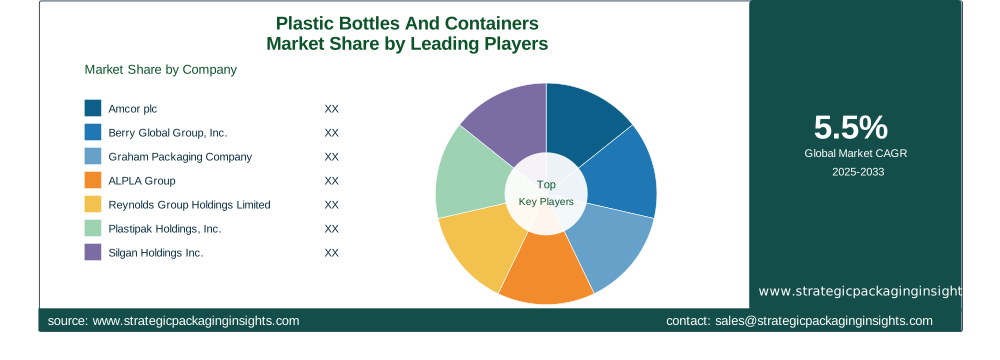
Amcor plc is a leading player in the plastic bottles and containers market, known for its innovative packaging solutions and commitment to sustainability. The company has a significant market share and offers a wide range of products catering to various industries, including food and beverages, healthcare, and personal care. Amcor's focus on developing eco-friendly packaging solutions has strengthened its position in the market.
Berry Global Group, Inc. is another major player in the market, offering a diverse range of plastic packaging products. The company has a strong presence in North America and Europe and is known for its advanced manufacturing capabilities and extensive product portfolio. Berry Global's strategic acquisitions and focus on sustainability have contributed to its growth and market leadership.
Graham Packaging Company is a prominent player in the plastic bottles and containers market, specializing in custom blow-molded plastic containers. The company serves various industries, including food and beverages, personal care, and household products. Graham Packaging's emphasis on innovation and customer-centric solutions has helped it maintain a competitive edge in the market.
Key Highlights
- The plastic bottles and containers market is projected to grow at a CAGR of 5.5% from 2025 to 2033.
- Increasing demand for sustainable and eco-friendly packaging solutions is driving market growth.
- Technological advancements in plastic manufacturing processes are enhancing product quality and reducing costs.
- The expanding e-commerce sector is boosting demand for lightweight and durable packaging solutions.
- Stringent regulations and environmental concerns pose challenges for market players.
- Key players are focusing on strategic partnerships and acquisitions to expand their market presence.
- Innovations in bio-based plastics and improved recycling processes are creating new growth opportunities.
Top Countries Insights
In the plastic bottles and containers market, the United States holds a significant share, with a market size of $45 billion and a CAGR of 4%. The country's robust food and beverage industry, coupled with the growing demand for convenient packaging solutions, drives market growth. Additionally, the presence of major market players and advancements in recycling technologies contribute to the market's expansion.
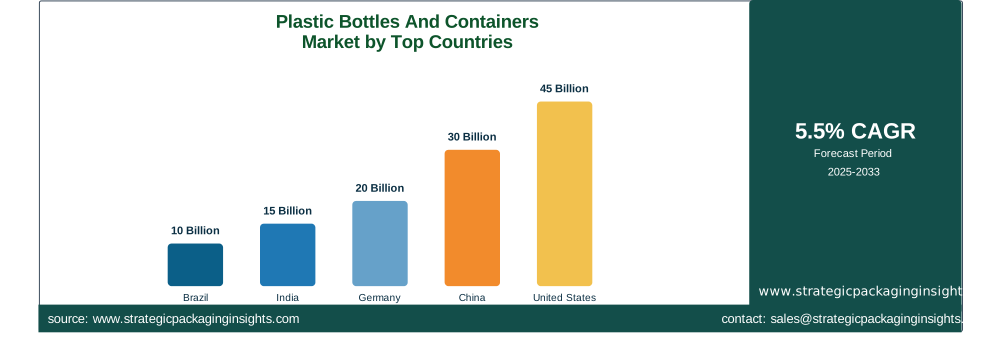
China is another key player in the market, with a market size of $30 billion and a CAGR of 6%. The country's rapid industrialization and urbanization have led to increased demand for packaged goods, boosting the market for plastic bottles and containers. Government initiatives promoting recycling and sustainable practices further support market growth.
Germany, with a market size of $20 billion and a CAGR of 5%, is a leading market in Europe. The country's strong focus on sustainability and recycling, along with its advanced manufacturing capabilities, drives the demand for plastic bottles and containers. The presence of key market players and a well-established packaging industry further contribute to market growth.
India, with a market size of $15 billion and a CAGR of 7%, is experiencing rapid growth in the plastic bottles and containers market. The country's expanding middle class and increasing disposable incomes are driving demand for packaged goods. Government initiatives to promote sustainable packaging and reduce plastic waste are also supporting market growth.
Brazil, with a market size of $10 billion and a CAGR of 5%, is a significant market in Latin America. The country's growing food and beverage industry, along with increasing consumer awareness of sustainable packaging, drives market growth. The presence of regional market players and advancements in recycling technologies further support the market's expansion.
Plastic Bottles And Containers Market Segments Insights

Material Analysis
The material segment of the plastic bottles and containers market is dominated by PET (Polyethylene Terephthalate), which is widely used due to its excellent clarity, strength, and recyclability. PET is favored in the beverage industry for packaging water, soft drinks, and juices, owing to its lightweight and shatterproof properties. The demand for PET is further driven by its suitability for recycling, aligning with the growing trend towards sustainable packaging solutions. HDPE (High-Density Polyethylene) is another significant material, known for its robustness and resistance to chemicals, making it ideal for packaging household and industrial products. The versatility of HDPE in producing containers of various shapes and sizes enhances its demand across different end-user industries.
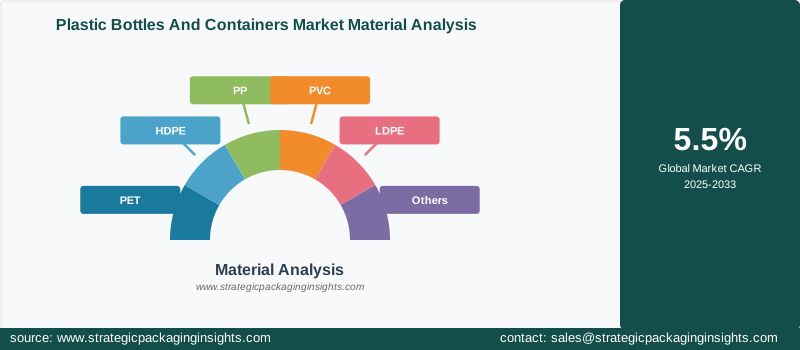
PP (Polypropylene) and PVC (Polyvinyl Chloride) are also important materials in the market, each offering unique benefits. PP is valued for its high melting point and resistance to heat, making it suitable for packaging hot-fill products. PVC, on the other hand, is known for its excellent barrier properties and flexibility, making it ideal for packaging pharmaceuticals and personal care products. The demand for these materials is influenced by their specific applications and the need for specialized packaging solutions. The market is witnessing a shift towards bio-based and biodegradable plastics, driven by environmental concerns and regulatory pressures, which is expected to impact the material segment significantly.
End-User Analysis
The end-user segment of the plastic bottles and containers market is led by the beverage industry, which accounts for a significant share of the market. The demand for bottled water, soft drinks, and alcoholic beverages drives the need for plastic bottles, particularly those made from PET. The food industry is another major end-user, utilizing plastic containers for packaging a wide range of products, including sauces, condiments, and ready-to-eat meals. The convenience and cost-effectiveness of plastic packaging make it a preferred choice for food manufacturers.
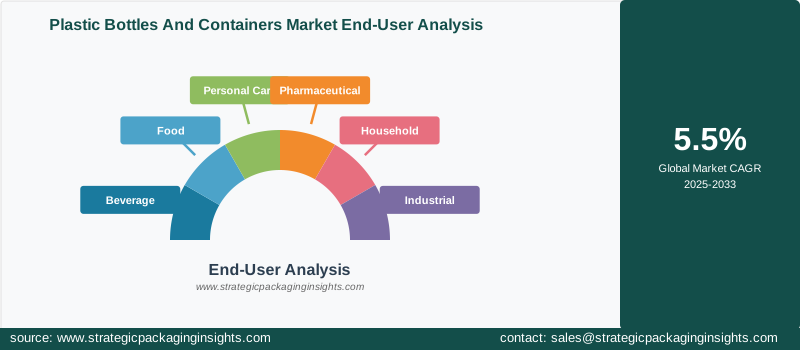
The personal care and pharmaceutical industries also contribute significantly to the market, with a growing demand for plastic bottles and containers for packaging cosmetics, toiletries, and medicines. The need for tamper-evident and child-resistant packaging in these industries drives innovation and the development of specialized plastic containers. The household and industrial sectors also utilize plastic bottles and containers for packaging cleaning agents, chemicals, and other products, further contributing to market growth. The diverse applications across various end-user industries highlight the versatility and importance of plastic bottles and containers in the global packaging market.
Capacity Analysis
The capacity segment of the plastic bottles and containers market is categorized based on the volume of the containers, with the 'Up to 500 ml' category being the most prominent. This segment is driven by the demand for small-sized bottles used in the beverage and personal care industries, where convenience and portability are key factors. The '500 ml to 1000 ml' category is also significant, catering to the packaging needs of beverages, food products, and household items. The versatility of this capacity range makes it suitable for a wide variety of applications, contributing to its popularity.
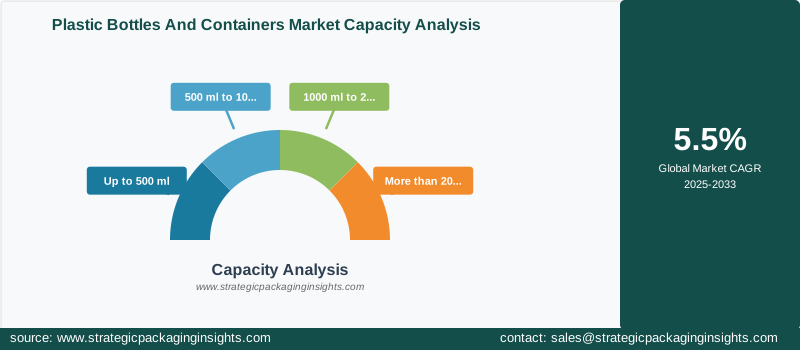
The '1000 ml to 2000 ml' and 'More than 2000 ml' categories are primarily used in the food and industrial sectors, where larger volumes are required for packaging bulk products. The demand for these larger capacities is influenced by the need for cost-effective and efficient packaging solutions for bulk storage and transportation. The capacity segment is expected to witness growth across all categories, driven by the increasing demand for packaged goods and the need for diverse packaging solutions to meet the varying requirements of different industries.
Regional Market Intelligence Chart
The plastic bottles and containers market is witnessing significant growth across various regions, with Asia Pacific leading the market due to its large population and growing demand for packaged goods. The region's market is characterized by a high CAGR of 15%, driven by rapid industrialization and urbanization. North America and Europe also hold substantial market shares, with CAGRs of 12% and 9%, respectively, supported by the presence of major market players and advancements in recycling technologies. Latin America and the Middle East & Africa are emerging markets, with CAGRs of 7% and 5%, respectively, driven by increasing consumer awareness of sustainable packaging and the growing food and beverage industry.
Plastic Bottles And Containers Market Segments
The Plastic Bottles And Containers market has been segmented on the basis ofMaterial
- PET
- HDPE
- PP
- PVC
- LDPE
- Others
End-User
- Beverage
- Food
- Personal Care
- Pharmaceutical
- Household
- Industrial
Capacity
- Up to 500 ml
- 500 ml to 1000 ml
- 1000 ml to 2000 ml
- More than 2000 ml




