


Linerboard Packaging Market Outlook
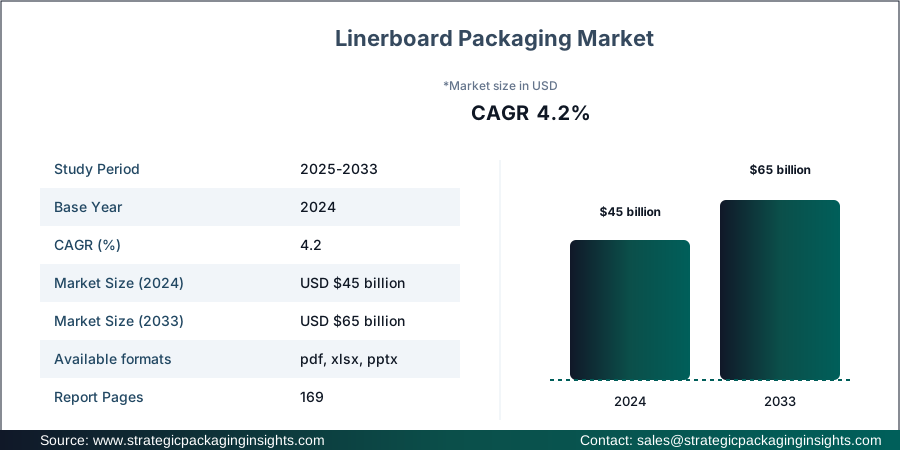
The linerboard packaging market was valued at $45 billion in 2024 and is projected to reach $65 billion by 2033, growing at a CAGR of 4.2% during the forecast period 2025-2033. This growth is driven by the increasing demand for sustainable and recyclable packaging solutions across various industries. The rise in e-commerce and the need for efficient packaging solutions to ensure product safety during transit are significant contributors to the market's expansion. Additionally, the growing awareness among consumers regarding environmental issues has led to a preference for eco-friendly packaging options, further propelling the market growth.
Report Scope
| Attributes | Details |
| Report Title | Linerboard Packaging Market Size, Future Growth and Forecast 2033 |
| Material Type | Virgin, Recycled |
| Application | Food & Beverages, Consumer Goods, Industrial, E-commerce, Others |
| End-User | Retail, Manufacturing, Logistics, Others |
| Base Year | 2024 |
| Historic Period | 2017-2023 |
| Forecast Period | 2025-2033 |
| Number of Pages | 169 |
| Customization Available | Yes* |
Opportunities & Threats
The linerboard packaging market presents numerous opportunities, particularly in the realm of sustainability. As consumers and businesses alike become more environmentally conscious, there is a growing demand for packaging solutions that minimize environmental impact. This trend is driving innovation in the development of linerboard products that are not only recyclable but also biodegradable. Companies that can offer such solutions are likely to gain a competitive edge in the market. Furthermore, the rise of e-commerce presents another significant opportunity. With more consumers shopping online, the demand for durable and protective packaging is on the rise, providing a lucrative market for linerboard manufacturers.
Another opportunity lies in the technological advancements in packaging materials. The development of stronger, lighter, and more cost-effective linerboard materials can significantly enhance product offerings. Innovations such as water-resistant and grease-proof linerboards are gaining traction, particularly in the food and beverage industry. These advancements not only improve the functionality of packaging but also open up new application areas, thereby expanding market reach. Companies investing in research and development to create such innovative products are likely to see substantial growth in the coming years.
However, the market is not without its threats. One of the primary challenges is the volatility in raw material prices, particularly for recycled paper. Fluctuations in supply and demand can lead to price instability, affecting profit margins for manufacturers. Additionally, stringent environmental regulations regarding waste management and recycling can pose compliance challenges for companies. These regulations often require significant investment in technology and processes to meet the required standards, which can be a barrier for smaller players in the market.
Drivers & Challenges
The linerboard packaging market is primarily driven by the increasing demand for sustainable packaging solutions. As environmental concerns continue to rise, both consumers and businesses are seeking packaging options that reduce carbon footprints and are easily recyclable. This shift in consumer behavior is encouraging manufacturers to innovate and produce linerboard products that meet these demands. Additionally, the growth of the e-commerce sector is a significant driver, as it necessitates robust packaging solutions to ensure the safe delivery of goods. The need for efficient and protective packaging in logistics and transportation further fuels the demand for linerboard packaging.
Another key driver is the advancement in packaging technologies. The development of high-performance linerboard materials that offer enhanced strength and durability is gaining popularity. These materials are particularly beneficial in industries such as food and beverages, where packaging needs to withstand various environmental conditions. Moreover, the increasing focus on reducing packaging waste and improving recyclability is pushing manufacturers to adopt innovative production techniques, thereby driving market growth.
Despite these drivers, the market faces several challenges. One of the major challenges is the high cost of raw materials, particularly for virgin linerboard. The production of virgin linerboard requires significant energy and resources, leading to higher costs compared to recycled alternatives. Additionally, the market is highly competitive, with numerous players vying for market share. This competition can lead to price wars, affecting profitability. Furthermore, the need to comply with stringent environmental regulations can be a significant hurdle for manufacturers, requiring substantial investment in compliance measures.
Market Share Analysis
The linerboard packaging market is characterized by a competitive landscape with several key players dominating the market. Companies such as International Paper, WestRock Company, and Smurfit Kappa Group hold significant market shares due to their extensive product portfolios and strong distribution networks. These companies have established themselves as leaders in the industry by continuously investing in research and development to innovate and improve their product offerings. Their focus on sustainability and eco-friendly packaging solutions has further strengthened their market position.
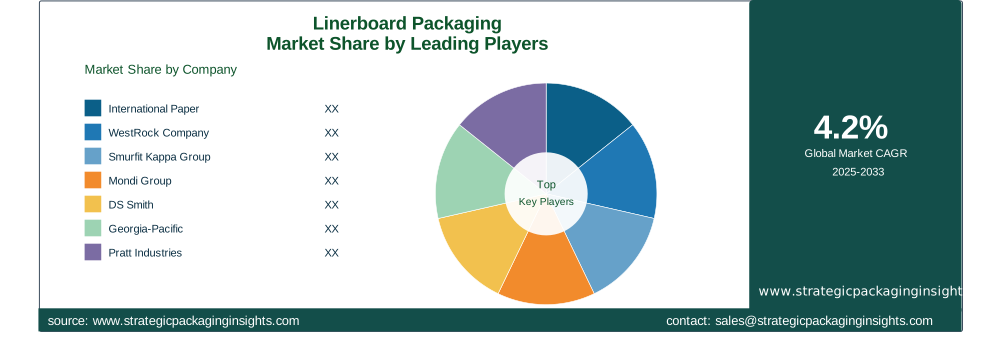
International Paper, a leading player in the linerboard packaging market, is known for its comprehensive range of packaging products. The company has a strong presence in North America and Europe, with a focus on sustainable packaging solutions. WestRock Company, another major player, offers a wide array of packaging solutions, including linerboard products. The company's commitment to innovation and sustainability has helped it maintain a competitive edge in the market. Smurfit Kappa Group, with its extensive global network, provides a diverse range of packaging solutions, catering to various industries.
Other notable players in the market include Mondi Group, DS Smith, and Georgia-Pacific. Mondi Group is recognized for its innovative packaging solutions and strong emphasis on sustainability. The company operates in multiple regions, providing customized packaging solutions to meet specific customer needs. DS Smith, a leading provider of sustainable packaging solutions, has a strong presence in Europe and is expanding its operations globally. Georgia-Pacific, known for its high-quality linerboard products, has a significant market share in North America.
These companies, along with others such as Pratt Industries, Cascades Inc., and Packaging Corporation of America, contribute to the competitive dynamics of the linerboard packaging market. Their focus on innovation, sustainability, and customer-centric solutions enables them to maintain a strong market presence. As the demand for eco-friendly packaging continues to rise, these companies are well-positioned to capitalize on the growth opportunities in the market.
Key Highlights
- The linerboard packaging market is projected to grow at a CAGR of 4.2% from 2025 to 2033.
- Increasing demand for sustainable and recyclable packaging solutions is a major market driver.
- Technological advancements in packaging materials are opening new application areas.
- Volatility in raw material prices poses a significant challenge for manufacturers.
- Key players include International Paper, WestRock Company, and Smurfit Kappa Group.
- The rise of e-commerce is boosting demand for durable and protective packaging solutions.
- Stringent environmental regulations require significant investment in compliance measures.
Top Countries Insights
In the linerboard packaging market, the United States holds a significant share, with a market size of $12 billion and a CAGR of 3%. The country's strong e-commerce sector and emphasis on sustainable packaging solutions drive market growth. Government policies promoting recycling and waste reduction further support the market. China, with a market size of $10 billion and a CAGR of 5%, is another key player. The country's booming e-commerce industry and increasing consumer awareness about environmental issues are major growth drivers. However, regulatory challenges related to waste management pose a threat.
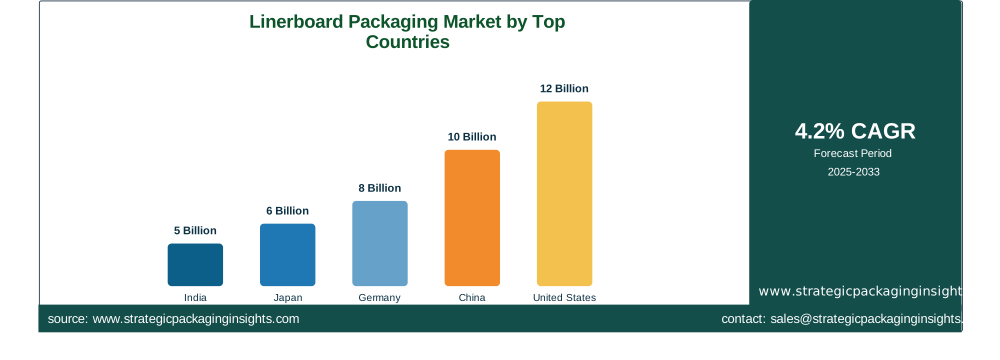
Germany, with a market size of $8 billion and a CAGR of 4%, is a leading market in Europe. The country's focus on sustainability and innovation in packaging materials drives market growth. The presence of major packaging companies and government initiatives promoting eco-friendly packaging solutions further boost the market. In Japan, the market size is $6 billion, with a CAGR of 2%. The country's advanced packaging technologies and strong demand for high-quality packaging solutions contribute to market growth. However, the high cost of raw materials is a challenge.
India, with a market size of $5 billion and a CAGR of 6%, is an emerging market for linerboard packaging. The country's growing e-commerce sector and increasing consumer preference for sustainable packaging solutions drive market growth. Government initiatives promoting recycling and waste management further support the market. However, the lack of infrastructure for recycling poses a challenge.
Linerboard Packaging Market Segments Insights

Material Type Analysis
The linerboard packaging market is segmented by material type into virgin and recycled linerboard. Virgin linerboard, made from fresh wood fibers, offers superior strength and durability, making it ideal for heavy-duty packaging applications. However, the high cost of production and environmental concerns associated with deforestation are driving the shift towards recycled linerboard. Recycled linerboard, made from recovered paper, is gaining popularity due to its cost-effectiveness and eco-friendly nature. The increasing focus on sustainability and the growing demand for recyclable packaging solutions are driving the growth of the recycled linerboard segment.
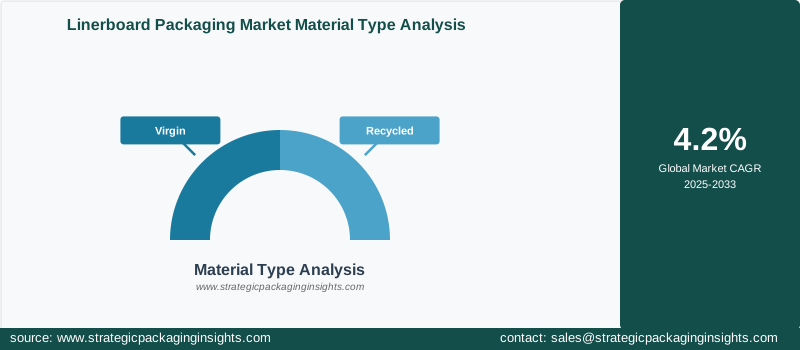
In the recycled linerboard segment, technological advancements in recycling processes are enhancing the quality and performance of recycled products. Innovations such as improved deinking and cleaning techniques are enabling manufacturers to produce high-quality recycled linerboard that meets the performance standards of virgin products. This trend is expected to continue, with recycled linerboard gaining a larger share of the market. Companies that can offer high-quality recycled products at competitive prices are likely to gain a competitive edge in the market.
Application Analysis
The linerboard packaging market is segmented by application into food & beverages, consumer goods, industrial, e-commerce, and others. The food & beverages segment holds a significant share of the market, driven by the increasing demand for safe and hygienic packaging solutions. Linerboard packaging is widely used in the food industry due to its strength, durability, and ability to protect products from contamination. The growing trend of online food delivery and the need for efficient packaging solutions to ensure product safety during transit are further boosting the demand for linerboard packaging in this segment.
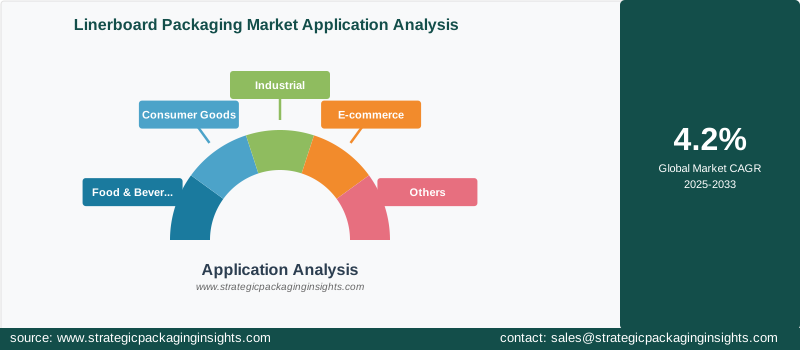
In the e-commerce segment, the demand for linerboard packaging is driven by the need for durable and protective packaging solutions. With the rise of online shopping, there is an increasing demand for packaging that can withstand the rigors of transportation and handling. Linerboard packaging, with its strength and durability, is well-suited for e-commerce applications. The growing popularity of subscription boxes and the need for customized packaging solutions are further driving the demand for linerboard packaging in this segment.
End-User Analysis
The linerboard packaging market is segmented by end-user into retail, manufacturing, logistics, and others. The retail segment holds a significant share of the market, driven by the increasing demand for attractive and sustainable packaging solutions. Linerboard packaging is widely used in the retail industry due to its versatility and ability to enhance product presentation. The growing trend of eco-friendly packaging and the need for packaging solutions that align with brand values are further boosting the demand for linerboard packaging in this segment.
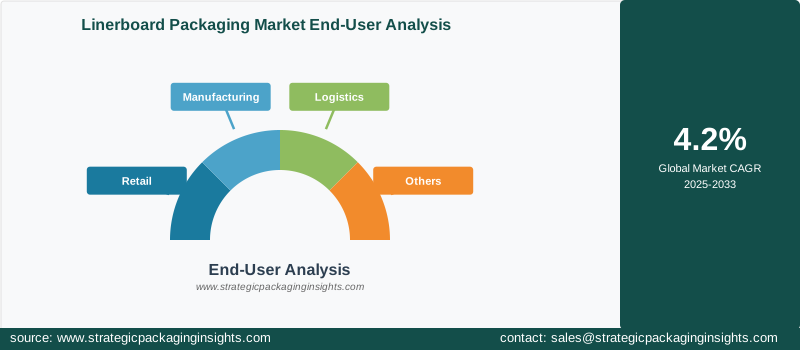
In the logistics segment, the demand for linerboard packaging is driven by the need for efficient and protective packaging solutions. Linerboard packaging is widely used in the logistics industry due to its strength and durability, which ensure the safe delivery of goods. The growing focus on reducing packaging waste and improving recyclability is further driving the demand for linerboard packaging in this segment. Companies that can offer innovative and sustainable packaging solutions are likely to gain a competitive edge in the market.
Regional Market Intelligence Chart
The linerboard packaging market is segmented by region into North America, Europe, Asia Pacific, Latin America, and Middle East & Africa. North America holds a significant share of the market, driven by the strong demand for sustainable packaging solutions and the presence of major packaging companies. The region's focus on innovation and technological advancements in packaging materials further supports market growth. Europe is another key market, with a strong emphasis on sustainability and eco-friendly packaging solutions. The presence of stringent environmental regulations and government initiatives promoting recycling and waste management further boost the market.
In Asia Pacific, the market is driven by the growing e-commerce sector and increasing consumer awareness about environmental issues. The region's focus on reducing packaging waste and improving recyclability is further driving market growth. Latin America and Middle East & Africa are emerging markets for linerboard packaging, driven by the increasing demand for sustainable packaging solutions and the growing focus on reducing packaging waste. The presence of major packaging companies and government initiatives promoting recycling and waste management further support market growth in these regions.
Linerboard Packaging Market Segments
The Linerboard Packaging market has been segmented on the basis ofMaterial Type
- Virgin
- Recycled
Application
- Food & Beverages
- Consumer Goods
- Industrial
- E-commerce
- Others
End-User
- Retail
- Manufacturing
- Logistics
- Others




