


Barrier-Coated Paper Packaging Market Outlook
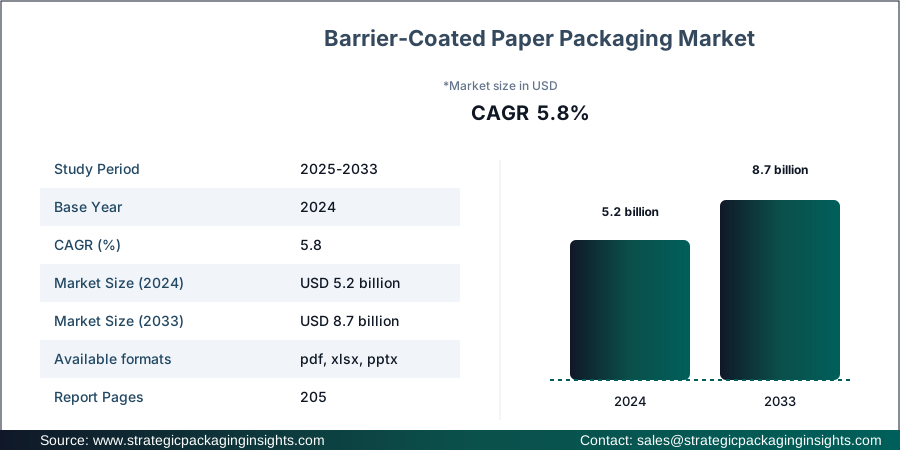
The Barrier-Coated Paper Packaging market was valued at $5.2 billion in 2024 and is projected to reach $8.7 billion by 2033, growing at a CAGR of 5.8% during the forecast period 2025-2033. This market is witnessing significant growth due to the increasing demand for sustainable and eco-friendly packaging solutions. As consumers become more environmentally conscious, the shift towards biodegradable and recyclable materials is driving the adoption of barrier-coated paper packaging. The food and beverage industry, in particular, is a major contributor to this growth, as it seeks to replace traditional plastic packaging with more sustainable alternatives. Additionally, advancements in coating technologies are enhancing the barrier properties of paper packaging, making it more competitive with plastic in terms of performance.
Report Scope
| Attributes | Details |
| Report Title | Barrier-Coated Paper Packaging Market Size, Future Growth and Forecast 2033 |
| Material Type | Polyethylene, Polypropylene, Others |
| Application | Food & Beverage, Healthcare, Personal Care, Others |
| Coating Type | Water-Based, Solvent-Based, Others |
| End-User | Retail, Industrial, Institutional, Others |
| Base Year | 2024 |
| Historic Period | 2017-2023 |
| Forecast Period | 2025-2033 |
| Number of Pages | 205 |
| Customization Available | Yes* |
Opportunities & Threats
One of the key opportunities in the barrier-coated paper packaging market is the growing consumer preference for sustainable packaging solutions. As environmental concerns continue to rise, consumers are increasingly opting for products that are packaged in eco-friendly materials. This trend is particularly evident in the food and beverage industry, where companies are under pressure to reduce their carbon footprint and meet sustainability goals. The development of innovative coating technologies that enhance the barrier properties of paper packaging without compromising its recyclability presents a significant opportunity for market players. Furthermore, the increasing adoption of e-commerce is driving demand for protective and sustainable packaging solutions, providing another avenue for growth in this market.
Another opportunity lies in the regulatory landscape, which is increasingly favoring sustainable packaging solutions. Governments around the world are implementing stricter regulations on the use of plastic packaging, which is driving companies to seek alternative materials. The European Union, for example, has set ambitious targets for reducing plastic waste, which is expected to boost demand for barrier-coated paper packaging. Additionally, the introduction of extended producer responsibility (EPR) schemes is encouraging manufacturers to adopt more sustainable packaging solutions, further driving market growth. Companies that can offer innovative, compliant, and cost-effective barrier-coated paper packaging solutions are well-positioned to capitalize on these regulatory trends.
However, the market faces certain threats, such as the high cost of raw materials and the complexity of the recycling process for barrier-coated paper. The cost of producing barrier-coated paper packaging can be higher than traditional plastic packaging, which may deter some companies from making the switch. Additionally, while barrier-coated paper is more sustainable than plastic, the recycling process can be complex due to the presence of coatings. This can pose a challenge for recycling facilities and may limit the market's growth potential. Companies need to invest in research and development to create coatings that are easier to recycle and do not compromise the sustainability of the packaging.
Drivers & Challenges
The primary driver of the barrier-coated paper packaging market is the increasing demand for sustainable packaging solutions. As consumers become more environmentally conscious, there is a growing preference for packaging materials that are biodegradable and recyclable. This trend is particularly strong in the food and beverage industry, where companies are under pressure to reduce their environmental impact. The development of advanced coating technologies that enhance the barrier properties of paper packaging is also driving market growth. These technologies allow paper packaging to compete with plastic in terms of performance, making it a viable alternative for a wide range of applications.
Another significant driver is the regulatory environment, which is increasingly favoring sustainable packaging solutions. Governments around the world are implementing stricter regulations on the use of plastic packaging, which is driving companies to seek alternative materials. The European Union, for example, has set ambitious targets for reducing plastic waste, which is expected to boost demand for barrier-coated paper packaging. Additionally, the introduction of extended producer responsibility (EPR) schemes is encouraging manufacturers to adopt more sustainable packaging solutions, further driving market growth. Companies that can offer innovative, compliant, and cost-effective barrier-coated paper packaging solutions are well-positioned to capitalize on these regulatory trends.
Despite these drivers, the market faces several challenges. One of the main challenges is the high cost of raw materials, which can make barrier-coated paper packaging more expensive than traditional plastic packaging. This cost difference may deter some companies from making the switch, particularly in price-sensitive markets. Additionally, the recycling process for barrier-coated paper can be complex due to the presence of coatings, which can pose a challenge for recycling facilities. Companies need to invest in research and development to create coatings that are easier to recycle and do not compromise the sustainability of the packaging. Furthermore, the market is highly competitive, with numerous players vying for market share, which can make it difficult for new entrants to establish themselves.
Market Share Analysis
The barrier-coated paper packaging market is characterized by a competitive landscape with several key players vying for market share. The market is dominated by a few large companies, but there is also a significant presence of small and medium-sized enterprises that contribute to the market's diversity. These companies are focusing on innovation and sustainability to differentiate themselves from their competitors. The competitive landscape is further intensified by the presence of numerous regional players who cater to local markets and offer customized solutions to meet specific customer needs.
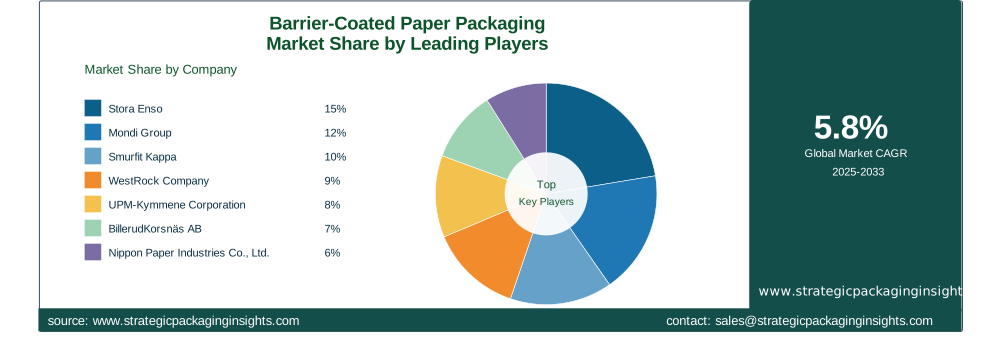
Among the major players in the market, Stora Enso holds a significant share due to its extensive product portfolio and strong focus on sustainability. The company has been at the forefront of developing innovative barrier-coated paper solutions that meet the evolving needs of consumers and regulatory requirements. Similarly, Mondi Group is another key player that has made significant investments in research and development to enhance the performance and sustainability of its barrier-coated paper products. The company's focus on customer-centric solutions and its global presence have helped it maintain a strong position in the market.
Other notable companies in the market include Smurfit Kappa, which has a strong focus on sustainability and innovation. The company has developed a range of barrier-coated paper solutions that cater to various industries, including food and beverage, healthcare, and personal care. Similarly, WestRock Company is a major player that offers a wide range of sustainable packaging solutions, including barrier-coated paper products. The company's commitment to sustainability and its extensive distribution network have helped it maintain a competitive edge in the market.
In addition to these major players, there are several other companies that contribute to the market's competitiveness. For example, UPM-Kymmene Corporation is known for its innovative approach to sustainable packaging solutions, while BillerudKorsnäs AB focuses on developing high-performance barrier-coated paper products. These companies, along with others such as Nippon Paper Industries Co., Ltd., and Sappi Limited, play a crucial role in driving innovation and sustainability in the barrier-coated paper packaging market.
Key Highlights
- The barrier-coated paper packaging market is projected to grow at a CAGR of 5.8% from 2025 to 2033.
- Increasing consumer preference for sustainable packaging solutions is a major driver of market growth.
- Advancements in coating technologies are enhancing the barrier properties of paper packaging.
- Regulatory trends favoring sustainable packaging solutions are boosting market demand.
- The food and beverage industry is a major contributor to the market's growth.
- High raw material costs and complex recycling processes pose challenges to market growth.
- Key players in the market include Stora Enso, Mondi Group, and Smurfit Kappa.
Top Countries Insights
In the barrier-coated paper packaging market, the United States holds a significant share due to its large consumer base and strong demand for sustainable packaging solutions. The market in the U.S. is driven by stringent regulations on plastic packaging and a growing preference for eco-friendly alternatives. The country's market size is projected to reach $2.1 billion by 2033, with a CAGR of 6%.
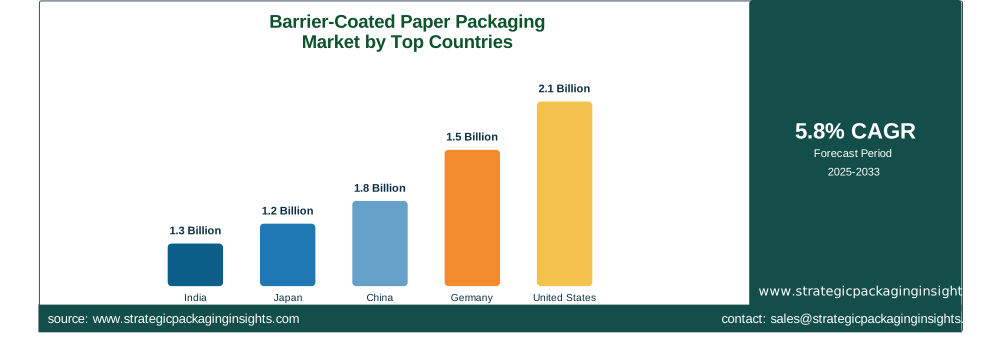
Germany is another key market for barrier-coated paper packaging, driven by the country's strong focus on sustainability and innovation. The German market is expected to grow at a CAGR of 5%, reaching a market size of $1.5 billion by 2033. The country's regulatory environment, which favors sustainable packaging solutions, is a major growth driver.
China is experiencing rapid growth in the barrier-coated paper packaging market, driven by increasing consumer awareness of environmental issues and government initiatives to reduce plastic waste. The market in China is projected to grow at a CAGR of 7%, reaching a market size of $1.8 billion by 2033.
In Japan, the barrier-coated paper packaging market is driven by the country's strong focus on innovation and sustainability. The market is expected to grow at a CAGR of 4%, reaching a market size of $1.2 billion by 2033. Japan's regulatory environment and consumer demand for eco-friendly packaging solutions are key growth drivers.
India is also emerging as a significant market for barrier-coated paper packaging, driven by increasing consumer awareness and government initiatives to promote sustainable packaging solutions. The market in India is projected to grow at a CAGR of 8%, reaching a market size of $1.3 billion by 2033.
Barrier-Coated Paper Packaging Market Segments Insights

Material Type Analysis
The material type segment of the barrier-coated paper packaging market is primarily categorized into polyethylene, polypropylene, and others. Polyethylene is the most widely used material due to its excellent barrier properties and cost-effectiveness. It is particularly favored in the food and beverage industry, where it provides effective protection against moisture and oxygen. The demand for polyethylene-coated paper is driven by its versatility and ability to be recycled, aligning with the growing trend towards sustainable packaging solutions. Polypropylene, on the other hand, is gaining traction due to its superior strength and resistance to chemicals, making it suitable for a wide range of applications, including healthcare and personal care packaging.
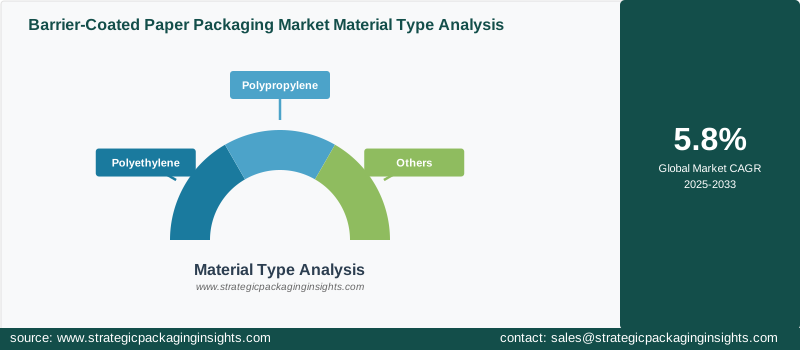
The 'others' category includes materials such as bioplastics and wax, which are increasingly being used as alternatives to traditional coatings. Bioplastics, in particular, are gaining popularity due to their biodegradable nature and reduced environmental impact. The development of innovative bioplastic coatings that offer comparable barrier properties to traditional materials is expected to drive growth in this segment. As companies continue to invest in research and development, the material type segment is likely to witness significant advancements, further enhancing the performance and sustainability of barrier-coated paper packaging.
Application Analysis
The application segment of the barrier-coated paper packaging market is dominated by the food and beverage industry, which accounts for the largest share. The demand for barrier-coated paper packaging in this industry is driven by the need for sustainable and effective packaging solutions that can protect products from moisture, oxygen, and other external factors. The shift towards eco-friendly packaging materials is particularly strong in this segment, as companies seek to reduce their environmental impact and meet consumer demand for sustainable products. The healthcare and personal care industries are also significant contributors to the market, with barrier-coated paper packaging being used for a variety of applications, including pharmaceutical packaging and personal care product packaging.
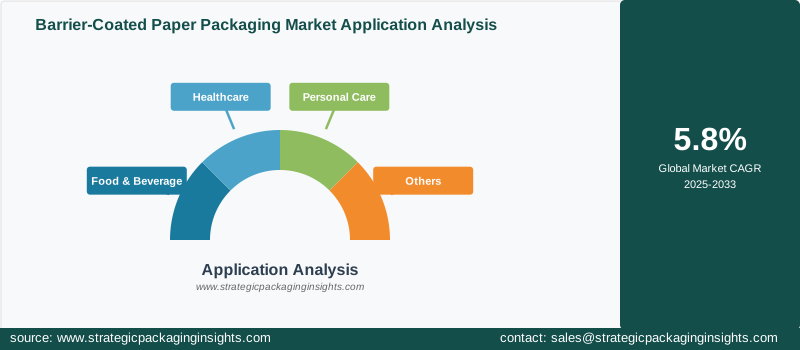
In addition to these industries, the barrier-coated paper packaging market is also witnessing growth in other applications, such as industrial and institutional packaging. The demand for protective and sustainable packaging solutions in these sectors is driving the adoption of barrier-coated paper packaging. As companies continue to innovate and develop new applications for barrier-coated paper packaging, the application segment is expected to witness significant growth, further driving the overall market.
Coating Type Analysis
The coating type segment of the barrier-coated paper packaging market is categorized into water-based, solvent-based, and others. Water-based coatings are the most widely used due to their environmental benefits and regulatory compliance. These coatings are favored for their low volatile organic compound (VOC) emissions and ability to provide effective barrier properties without compromising the recyclability of the paper. The demand for water-based coatings is driven by the increasing focus on sustainability and the need for eco-friendly packaging solutions.
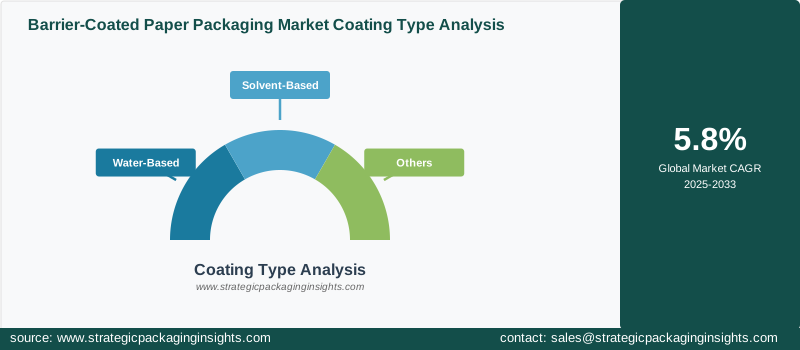
Solvent-based coatings, while less environmentally friendly, offer superior barrier properties and are used in applications where high performance is required. However, the use of solvent-based coatings is declining due to regulatory restrictions and the growing preference for sustainable alternatives. The 'others' category includes innovative coatings such as biopolymer and wax coatings, which are gaining popularity due to their biodegradability and reduced environmental impact. As companies continue to invest in research and development, the coating type segment is expected to witness significant advancements, further enhancing the performance and sustainability of barrier-coated paper packaging.
End-User Analysis
The end-user segment of the barrier-coated paper packaging market is primarily categorized into retail, industrial, institutional, and others. The retail sector is the largest end-user of barrier-coated paper packaging, driven by the increasing demand for sustainable packaging solutions in the food and beverage industry. Retailers are under pressure to reduce their environmental impact and meet consumer demand for eco-friendly products, driving the adoption of barrier-coated paper packaging. The industrial sector is also a significant end-user, with barrier-coated paper packaging being used for a variety of applications, including protective packaging and shipping materials.
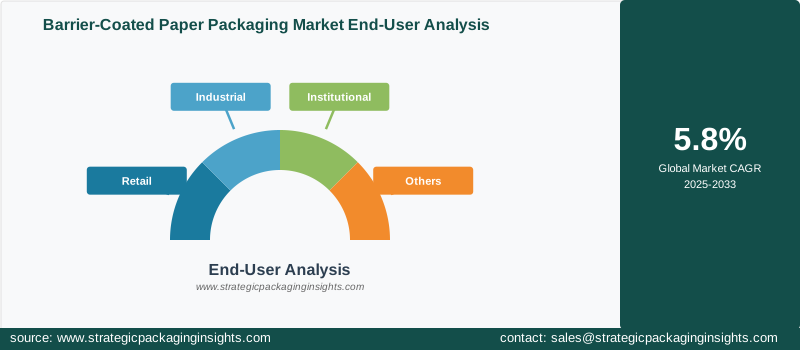
The institutional sector, which includes healthcare and educational institutions, is another key end-user of barrier-coated paper packaging. The demand for sustainable and effective packaging solutions in these sectors is driving the adoption of barrier-coated paper packaging. As companies continue to innovate and develop new applications for barrier-coated paper packaging, the end-user segment is expected to witness significant growth, further driving the overall market.
Barrier-Coated Paper Packaging Market Segments
The Barrier-Coated Paper Packaging market has been segmented on the basis ofMaterial Type
- Polyethylene
- Polypropylene
- Others
Application
- Food & Beverage
- Healthcare
- Personal Care
- Others
Coating Type
- Water-Based
- Solvent-Based
- Others
End-User
- Retail
- Industrial
- Institutional
- Others




