


High-Barrier Flexible Packaging Market Outlook
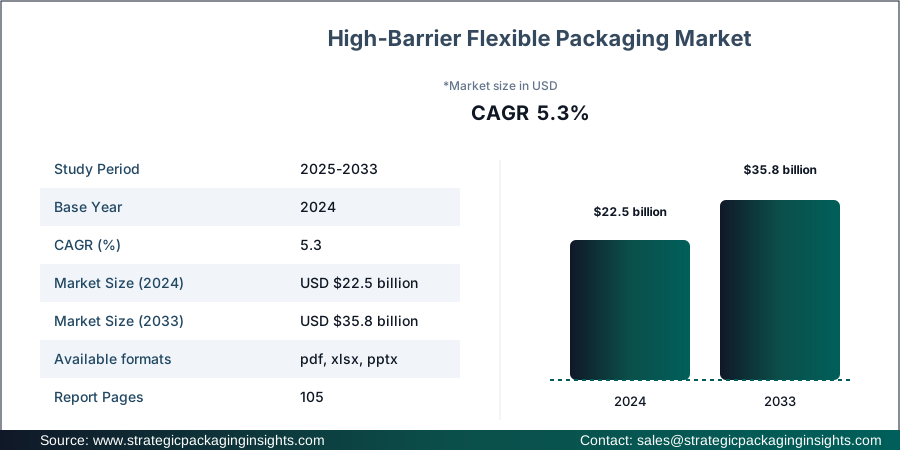
The High-Barrier Flexible Packaging market was valued at $22.5 billion in 2024 and is projected to reach $35.8 billion by 2033, growing at a CAGR of 5.3% during the forecast period 2025-2033. This market is driven by the increasing demand for packaging solutions that extend the shelf life of products, particularly in the food and beverage industry. The rise in consumer preference for convenient and lightweight packaging options is also contributing to the market's growth. Additionally, advancements in packaging technologies, such as the development of biodegradable and recyclable materials, are expected to further propel the market.
However, the market faces certain restraints, including stringent environmental regulations and the high cost of raw materials. Despite these challenges, the market holds significant growth potential due to the increasing adoption of high-barrier flexible packaging in emerging economies. The growing awareness about food safety and hygiene is also expected to drive the demand for these packaging solutions. Furthermore, the expansion of e-commerce and the need for efficient packaging solutions to ensure product safety during transit are likely to create new opportunities for market players.
Report Scope
| Attributes | Details |
| Report Title | High-Barrier Flexible Packaging Market Size, Future Growth and Forecast 2033 |
| Material | Plastics, Aluminum Foil, Others |
| Application | Food & Beverages, Pharmaceuticals |
| Technology | Vacuum, Modified Atmosphere |
| End-User | Retail, Industrial |
| Base Year | 2024 |
| Historic Period | 2017-2023 |
| Forecast Period | 2025-2033 |
| Number of Pages | 105 |
| Customization Available | Yes* |
Opportunities & Threats
The High-Barrier Flexible Packaging market presents numerous opportunities, particularly in the food and beverage sector, where the demand for packaging solutions that can extend product shelf life is on the rise. The increasing consumer preference for ready-to-eat meals and packaged foods is driving the need for high-barrier packaging that can preserve freshness and prevent contamination. Additionally, the growing trend of sustainable packaging is opening up new avenues for market players to develop eco-friendly high-barrier solutions. Companies that can innovate and offer biodegradable or recyclable packaging options are likely to gain a competitive edge in the market.
Another significant opportunity lies in the pharmaceutical industry, where high-barrier flexible packaging is essential for protecting sensitive products from moisture, oxygen, and other environmental factors. The increasing demand for pharmaceuticals, driven by an aging population and the rise of chronic diseases, is expected to boost the market for high-barrier packaging solutions. Moreover, the expansion of the e-commerce sector is creating a need for robust packaging solutions that can withstand the rigors of shipping and handling, further driving the demand for high-barrier flexible packaging.
Despite these opportunities, the market faces threats from stringent environmental regulations and the high cost of raw materials. The production of high-barrier flexible packaging often involves the use of plastics and other materials that are subject to regulatory scrutiny due to their environmental impact. Companies in this market must navigate these regulations and invest in sustainable practices to remain competitive. Additionally, fluctuations in raw material prices can affect profit margins, posing a challenge for market players.
Market Share Analysis
The competitive landscape of the High-Barrier Flexible Packaging market is characterized by the presence of several key players who hold significant market shares. These companies are engaged in strategic initiatives such as mergers and acquisitions, partnerships, and product innovations to strengthen their market position. The market is highly competitive, with players focusing on expanding their product portfolios and enhancing their production capabilities to meet the growing demand for high-barrier packaging solutions.
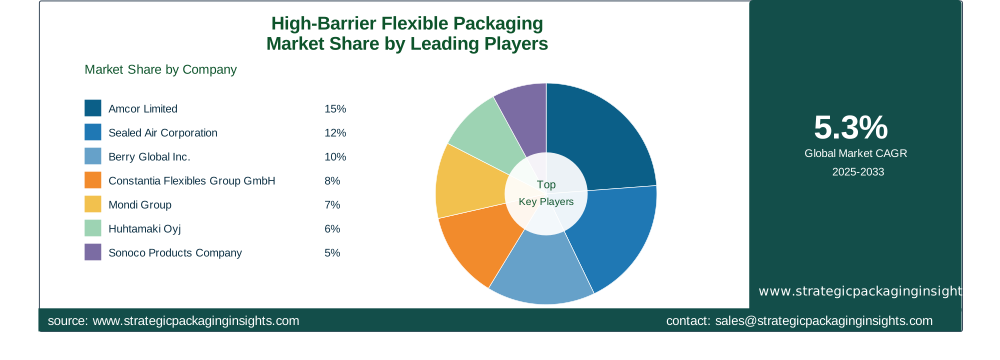
Amcor Limited is a leading player in the market, known for its extensive range of high-barrier flexible packaging solutions. The company has a strong global presence and is committed to sustainability, with initiatives aimed at reducing its environmental footprint. Another major player, Sealed Air Corporation, offers innovative packaging solutions that cater to various industries, including food and pharmaceuticals. The company's focus on research and development has enabled it to introduce advanced packaging technologies that enhance product protection and extend shelf life.
Berry Global Inc. is another prominent player in the market, offering a wide range of high-barrier flexible packaging products. The company has a strong focus on sustainability and has made significant investments in developing recyclable and biodegradable packaging solutions. Constantia Flexibles Group GmbH is also a key player, known for its high-quality packaging solutions that cater to the food, pharmaceutical, and personal care industries. The company's commitment to innovation and sustainability has helped it maintain a competitive edge in the market.
Other notable companies in the market include Mondi Group, Huhtamaki Oyj, and Sonoco Products Company. Mondi Group is recognized for its sustainable packaging solutions and has a strong presence in Europe and North America. Huhtamaki Oyj offers a diverse range of packaging products and has a strong focus on innovation and sustainability. Sonoco Products Company is known for its comprehensive packaging solutions and has a strong presence in the Americas and Europe.
Key Highlights
- The High-Barrier Flexible Packaging market is projected to grow at a CAGR of 5.3% from 2025 to 2033.
- Increasing demand for packaging solutions that extend product shelf life is driving market growth.
- Advancements in packaging technologies are expected to propel the market.
- Stringent environmental regulations pose a challenge for market players.
- The food and beverage sector is a major driver of demand for high-barrier packaging.
- Emerging economies present significant growth opportunities for market players.
- The expansion of e-commerce is creating a need for robust packaging solutions.
- Companies are focusing on sustainability and innovation to gain a competitive edge.
- Fluctuations in raw material prices can affect profit margins.
- Key players are engaged in strategic initiatives to strengthen their market position.
Top Countries Insights
In the High-Barrier Flexible Packaging market, the United States holds a significant share, with a market size of $5.8 billion and a CAGR of 4%. The country's strong demand for packaged foods and beverages, coupled with advancements in packaging technologies, drives market growth. Additionally, the focus on sustainability and the presence of major market players contribute to the market's expansion.
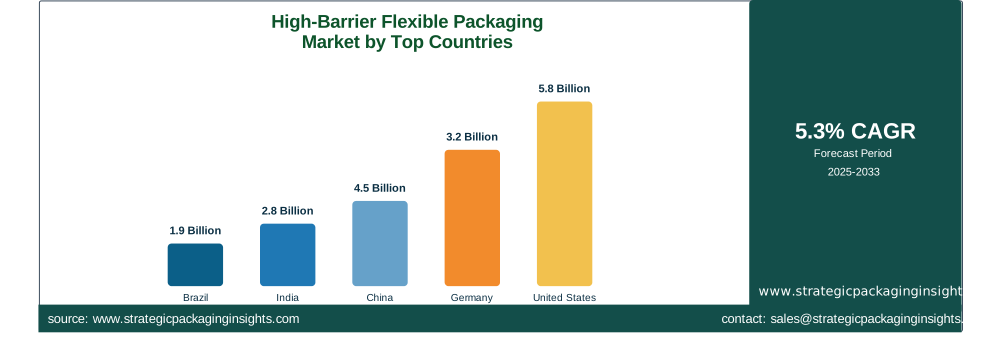
Germany is another key market, with a market size of $3.2 billion and a CAGR of 5%. The country's robust food and beverage industry, along with stringent regulations on packaging materials, drives the demand for high-barrier flexible packaging. The emphasis on sustainability and innovation further supports market growth.
China, with a market size of $4.5 billion and a CAGR of 7%, is a rapidly growing market for high-barrier flexible packaging. The country's expanding food and beverage sector, coupled with increasing consumer awareness about food safety, drives demand. Additionally, government initiatives to promote sustainable packaging solutions support market growth.
India, with a market size of $2.8 billion and a CAGR of 8%, presents significant growth opportunities for the market. The country's growing population and increasing demand for packaged foods drive the need for high-barrier packaging solutions. The focus on sustainability and the expansion of the e-commerce sector further contribute to market growth.
Brazil, with a market size of $1.9 billion and a CAGR of 6%, is an emerging market for high-barrier flexible packaging. The country's growing food and beverage industry, along with increasing consumer preference for convenient packaging solutions, drives demand. The emphasis on sustainability and innovation supports market growth.
Evolving Market Dynamics (2018-2024) and Strategic Foresight (2025-2033)
| Metric | 2018-2024 | 2025-2033 |
|---|---|---|
| CAGR | 4.5% | 5.3% |
| Market Size Evolution | $18.2 billion to $22.5 billion | $22.5 billion to $35.8 billion |
| Segment Distribution Shifts | Food & Beverages dominant | Increased share for Pharmaceuticals |
| Regional Contribution Changes | North America and Europe lead | Asia Pacific gains prominence |
| Technological Impact Factors | Focus on barrier properties | Emphasis on sustainability |
| Client Demand Transformations | Convenience-driven | Sustainability-driven |
High-Barrier Flexible Packaging Market Segments Insights

Material Analysis
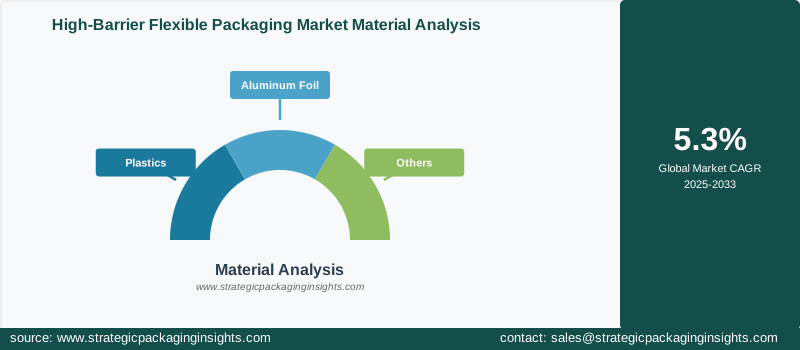
The material segment of the High-Barrier Flexible Packaging market is primarily dominated by plastics, which offer excellent barrier properties and versatility. Plastics are widely used in the food and beverage industry due to their ability to preserve freshness and extend shelf life. However, the environmental impact of plastic waste has led to increased demand for alternative materials, such as biodegradable and recyclable options. Aluminum foil is another key material, known for its superior barrier properties against moisture, oxygen, and light. The demand for aluminum foil is particularly high in the pharmaceutical industry, where product protection is critical. Other materials, such as paper and bioplastics, are gaining traction as sustainable alternatives, driven by consumer demand for eco-friendly packaging solutions.
The market for high-barrier flexible packaging materials is characterized by continuous innovation, with companies investing in research and development to enhance the performance and sustainability of their products. The development of multi-layer films and coatings that offer enhanced barrier properties is a key trend in the market. Additionally, the focus on reducing the environmental impact of packaging materials is driving the adoption of biodegradable and recyclable options. Companies that can offer innovative and sustainable material solutions are likely to gain a competitive edge in the market.
Application Analysis
The application segment of the High-Barrier Flexible Packaging market is dominated by the food and beverage industry, which accounts for a significant share of the market. The demand for high-barrier packaging solutions in this sector is driven by the need to preserve freshness, prevent contamination, and extend shelf life. The increasing consumer preference for ready-to-eat meals and packaged foods is further driving demand. The pharmaceutical industry is another key application area, where high-barrier packaging is essential for protecting sensitive products from environmental factors. The growing demand for pharmaceuticals, driven by an aging population and the rise of chronic diseases, is expected to boost the market for high-barrier packaging solutions.
The personal care and cosmetics industry is also a significant application area, where high-barrier packaging is used to protect products from moisture, oxygen, and light. The demand for premium packaging solutions in this sector is driven by the increasing consumer preference for high-quality and aesthetically appealing packaging. Other application areas, such as industrial and institutional, are also contributing to market growth, driven by the need for robust packaging solutions that can withstand the rigors of shipping and handling.
Technology Analysis
The technology segment of the High-Barrier Flexible Packaging market is characterized by continuous innovation, with companies investing in research and development to enhance the performance and sustainability of their products. Vacuum packaging is a widely used technology, known for its ability to preserve freshness and extend shelf life by removing air from the packaging. Modified atmosphere packaging is another key technology, which involves altering the composition of gases inside the packaging to enhance product preservation. This technology is particularly popular in the food and beverage industry, where it is used to extend the shelf life of perishable products.
Other technologies, such as active and intelligent packaging, are gaining traction in the market, driven by the need for innovative solutions that can enhance product protection and consumer engagement. Active packaging involves the use of materials that interact with the product to enhance preservation, while intelligent packaging incorporates sensors and indicators to provide real-time information about the product's condition. The focus on sustainability is also driving the development of technologies that reduce the environmental impact of packaging, such as biodegradable and recyclable options.
End-User Analysis
The end-user segment of the High-Barrier Flexible Packaging market is dominated by the retail sector, which accounts for a significant share of the market. The demand for high-barrier packaging solutions in this sector is driven by the need to preserve freshness, prevent contamination, and extend shelf life. The increasing consumer preference for ready-to-eat meals and packaged foods is further driving demand. The industrial sector is another key end-user, where high-barrier packaging is used to protect products from environmental factors during shipping and handling. The demand for robust packaging solutions in this sector is driven by the need to ensure product safety and integrity during transit.
The institutional sector, which includes healthcare and hospitality, is also a significant end-user of high-barrier flexible packaging. The demand for packaging solutions in this sector is driven by the need to protect sensitive products, such as pharmaceuticals and medical devices, from environmental factors. The focus on sustainability and the increasing demand for eco-friendly packaging solutions are also driving the adoption of high-barrier flexible packaging in this sector. Companies that can offer innovative and sustainable packaging solutions are likely to gain a competitive edge in the market.
High-Barrier Flexible Packaging Market Segments
The High-Barrier Flexible Packaging market has been segmented on the basis ofMaterial
- Plastics
- Aluminum Foil
- Others
Application
- Food & Beverages
- Pharmaceuticals
Technology
- Vacuum
- Modified Atmosphere
End-User
- Retail
- Industrial




