


Nicotine Pouches Market Outlook
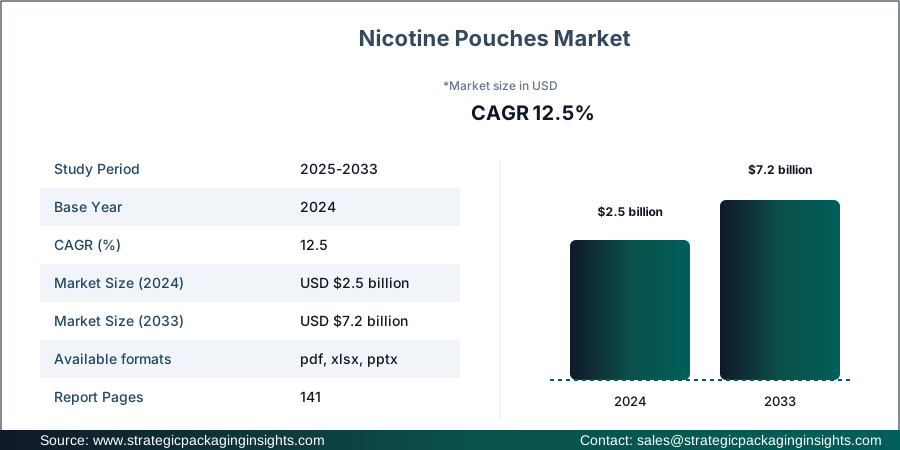
The nicotine pouches market was valued at $2.5 billion in 2024 and is projected to reach $7.2 billion by 2033, growing at a CAGR of 12.5% during the forecast period 2025-2033. This market is experiencing significant growth due to the increasing demand for smokeless tobacco alternatives. As consumers become more health-conscious, nicotine pouches offer a tobacco-free option that appeals to both current smokers looking to quit and new users seeking a less harmful nicotine experience. The market is also driven by the growing acceptance of nicotine pouches in regions where traditional tobacco products face regulatory challenges. The rise in online retailing and the availability of a wide range of flavors further contribute to the market's expansion.
Report Scope
| Attributes | Details |
| Report Title | Nicotine Pouches Market Size, Future Growth and Forecast 2033 |
| Product Type | Flavored, Unflavored |
| Distribution Channel | Online, Offline |
| End-User | Adults, Youth |
| Region | Asia Pacific, North America, Latin America, Europe, Middle East & Africa |
| Base Year | 2024 |
| Historic Period | 2017-2023 |
| Forecast Period | 2025-2033 |
| Number of Pages | 141 |
| Customization Available | Yes* |
Opportunities & Threats
One of the primary opportunities in the nicotine pouches market is the increasing consumer shift towards healthier lifestyle choices. As awareness about the health risks associated with smoking rises, more individuals are seeking alternatives that provide nicotine without the harmful effects of tobacco. This shift is particularly evident among younger demographics who are more health-conscious and open to trying new products. Additionally, the expansion of e-commerce platforms has made it easier for consumers to access a wide variety of nicotine pouch products, further driving market growth. Companies that can effectively leverage digital marketing strategies to reach these consumers stand to gain a significant competitive advantage.
Another opportunity lies in the potential for product innovation. The nicotine pouches market is still relatively new, and there is ample room for companies to differentiate themselves through unique flavors, packaging, and formulations. By investing in research and development, companies can create products that cater to specific consumer preferences, such as organic or vegan options, which can attract niche markets. Furthermore, partnerships with retailers and distributors can enhance product visibility and accessibility, particularly in regions where nicotine pouches are not yet widely available.
However, the market also faces significant threats, primarily from regulatory challenges. As nicotine pouches gain popularity, they are coming under increased scrutiny from health authorities and regulatory bodies. In some regions, there are calls for stricter regulations on nicotine content, marketing practices, and sales to minors. Companies operating in this space must navigate a complex regulatory landscape and ensure compliance to avoid potential fines and restrictions. Additionally, the market could face competition from other nicotine replacement products, such as patches and gums, which are well-established and trusted by consumers.
Drivers & Challenges
The primary driver of the nicotine pouches market is the growing consumer demand for tobacco-free nicotine products. As public awareness of the health risks associated with smoking increases, more individuals are seeking alternatives that offer the satisfaction of nicotine without the harmful effects of tobacco. Nicotine pouches provide a discreet and convenient option that appeals to both current smokers looking to quit and new users seeking a less harmful nicotine experience. The availability of a wide range of flavors and the convenience of use further enhance their appeal, driving market growth.
Another significant driver is the increasing acceptance of nicotine pouches in regions where traditional tobacco products face regulatory challenges. In many countries, smoking bans and restrictions on tobacco advertising have created a favorable environment for nicotine pouches. These products are often perceived as a safer alternative to smoking, and their use is less restricted in public spaces. This has led to a growing consumer base and increased market penetration, particularly in Europe and North America, where smoking rates are declining.
Despite these drivers, the nicotine pouches market faces several challenges. One of the main challenges is the need for companies to navigate a complex regulatory landscape. As nicotine pouches gain popularity, they are coming under increased scrutiny from health authorities and regulatory bodies. Companies must ensure compliance with regulations regarding nicotine content, marketing practices, and sales to minors to avoid potential fines and restrictions. Additionally, the market could face competition from other nicotine replacement products, such as patches and gums, which are well-established and trusted by consumers.
Nicotine Pouches Strategic Outlook
| Trend | Market Driver | Technological/Material Shift | Business Impact |
|---|---|---|---|
| Sustainability | Consumer demand for eco-friendly products | Biodegradable packaging | Increased brand loyalty and market share |
| Smart Tech | Integration of digital marketing strategies | AI-driven consumer insights | Enhanced customer engagement and sales |
| Consumer Behavior | Shift towards healthier lifestyle choices | Development of organic formulations | Expansion into niche markets |
| Logistics | Growth of e-commerce platforms | Efficient supply chain management | Broader market reach and reduced costs |
The nicotine pouches market is poised for significant growth over the next decade, driven by increasing consumer demand for tobacco-free nicotine products and the expansion of e-commerce platforms. As of 2026, the market is valued at approximately $3.1 billion, with a strong growth trajectory expected as more consumers seek healthier alternatives to traditional tobacco products. A primary disruptor in this niche is the evolving regulatory landscape, which presents both challenges and opportunities for market players. Companies must navigate complex regulations while capitalizing on the growing acceptance of nicotine pouches as a safer alternative to smoking. To maintain market share by 2033, brands should focus on product innovation, leveraging digital marketing strategies, and ensuring compliance with regulatory requirements. Emphasizing sustainability and consumer health will be key to capturing the attention of health-conscious consumers and expanding into new markets.
Market Share Analysis
The competitive landscape of the nicotine pouches market is characterized by the presence of several key players who are driving innovation and expansion. These companies are leveraging their expertise in tobacco and nicotine products to capture a significant share of the market. The market is highly competitive, with companies focusing on product differentiation, flavor innovation, and strategic partnerships to enhance their market position. The increasing demand for nicotine pouches has led to the entry of new players, further intensifying competition. Established companies are investing in research and development to create unique products that cater to diverse consumer preferences, while new entrants are focusing on niche markets and innovative marketing strategies to gain a foothold.
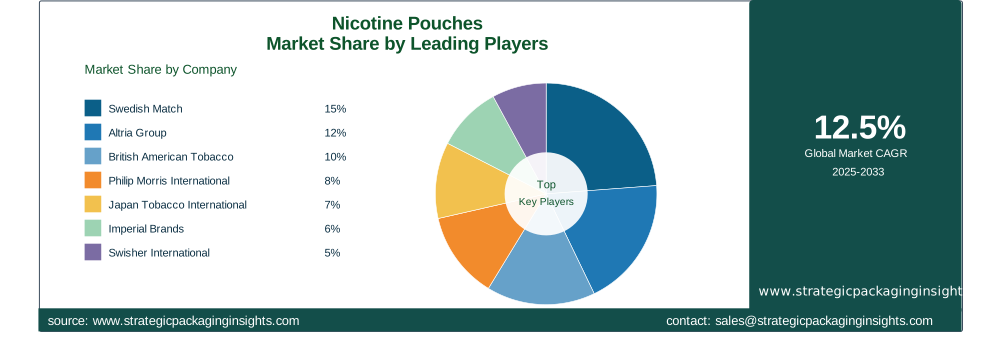
One of the major players in the nicotine pouches market is Swedish Match, which holds a significant market share due to its strong brand presence and extensive product portfolio. The company is known for its innovative approach to product development and its commitment to quality, which has helped it maintain a competitive edge. Another key player is Altria Group, which has expanded its presence in the nicotine pouches market through strategic acquisitions and partnerships. The company's focus on research and development has enabled it to introduce new products that meet the evolving needs of consumers.
British American Tobacco is another prominent player in the market, known for its extensive distribution network and strong brand recognition. The company has been actively expanding its product offerings and investing in marketing campaigns to increase consumer awareness and drive sales. Similarly, Philip Morris International has made significant strides in the nicotine pouches market, leveraging its expertise in tobacco products to develop innovative nicotine alternatives. The company's focus on sustainability and consumer health has resonated with health-conscious consumers, contributing to its market success.
Other notable companies in the nicotine pouches market include Japan Tobacco International, Imperial Brands, and Swisher International. These companies are focusing on expanding their product portfolios and enhancing their distribution networks to capture a larger share of the market. By investing in research and development, these companies are able to introduce new products that cater to changing consumer preferences and regulatory requirements. The competitive landscape is expected to remain dynamic, with companies continuously seeking new opportunities for growth and expansion.
Key Highlights
- The nicotine pouches market is projected to grow at a CAGR of 12.5% from 2025 to 2033.
- Increasing consumer demand for tobacco-free nicotine products is a major market driver.
- Regulatory challenges present both opportunities and threats to market players.
- Product innovation and flavor differentiation are key strategies for market success.
- The expansion of e-commerce platforms is enhancing product accessibility and visibility.
- Companies are focusing on sustainability and consumer health to capture market share.
- The market is characterized by intense competition and the entry of new players.
Top Countries Insights
In the nicotine pouches market, the United States is a leading player, with a market size of approximately $1.2 billion and a CAGR of 10%. The growth in the U.S. is driven by increasing consumer awareness of the health risks associated with smoking and the availability of a wide range of nicotine pouch products. Regulatory support for tobacco harm reduction products also contributes to market growth. However, the market faces challenges from stringent regulations on nicotine content and marketing practices.
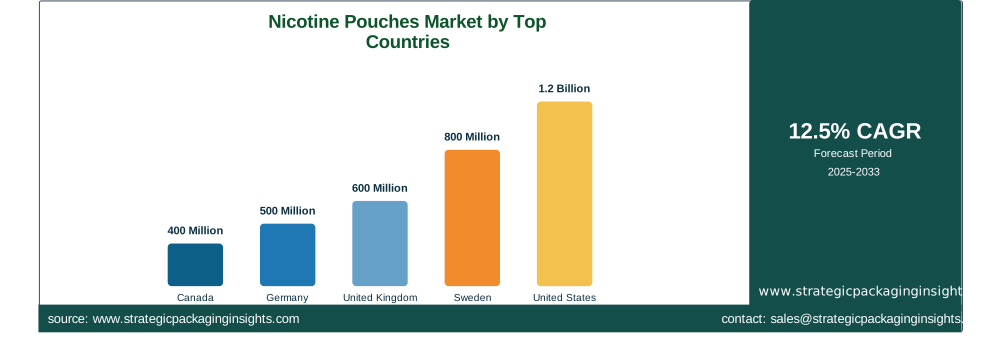
Sweden is another key market, with a market size of $800 million and a CAGR of 8%. The country's long-standing tradition of using smokeless tobacco products, such as snus, has paved the way for the acceptance of nicotine pouches. The market is driven by consumer demand for tobacco-free alternatives and the availability of innovative products. However, regulatory challenges related to nicotine content and marketing restrictions pose potential hurdles.
In the United Kingdom, the nicotine pouches market is valued at $600 million, with a CAGR of 9%. The market is driven by increasing consumer demand for tobacco-free nicotine products and the expansion of e-commerce platforms. Regulatory support for tobacco harm reduction products and the availability of a wide range of flavors further contribute to market growth. However, the market faces challenges from stringent regulations on nicotine content and marketing practices.
Germany is another significant market, with a market size of $500 million and a CAGR of 7%. The market is driven by increasing consumer awareness of the health risks associated with smoking and the availability of a wide range of nicotine pouch products. Regulatory support for tobacco harm reduction products also contributes to market growth. However, the market faces challenges from stringent regulations on nicotine content and marketing practices.
In Canada, the nicotine pouches market is valued at $400 million, with a CAGR of 6%. The market is driven by increasing consumer demand for tobacco-free nicotine products and the expansion of e-commerce platforms. Regulatory support for tobacco harm reduction products and the availability of a wide range of flavors further contribute to market growth. However, the market faces challenges from stringent regulations on nicotine content and marketing practices.
Nicotine Pouches Market Segments Insights

Product Type Analysis
The nicotine pouches market is segmented by product type into flavored and unflavored options. Flavored nicotine pouches dominate the market due to their wide appeal among consumers seeking a variety of taste experiences. The availability of diverse flavors, such as mint, berry, and citrus, attracts a broad consumer base, including those transitioning from traditional tobacco products. Companies are investing in flavor innovation to differentiate their products and capture market share. The unflavored segment, while smaller, appeals to consumers who prefer a more traditional nicotine experience without added flavors. This segment is expected to grow as more consumers seek tobacco-free alternatives that offer a pure nicotine experience.

Flavored nicotine pouches are particularly popular among younger demographics who are more open to trying new products and flavors. The availability of a wide range of flavors enhances the appeal of nicotine pouches as a tobacco-free alternative, driving market growth. Companies are focusing on developing unique and innovative flavors to cater to diverse consumer preferences and capture a larger share of the market. The unflavored segment, while smaller, appeals to consumers who prefer a more traditional nicotine experience without added flavors. This segment is expected to grow as more consumers seek tobacco-free alternatives that offer a pure nicotine experience.
Distribution Channel Analysis
The nicotine pouches market is segmented by distribution channel into online and offline channels. The online segment is experiencing significant growth due to the increasing popularity of e-commerce platforms and the convenience they offer to consumers. Online retailing allows consumers to access a wide variety of nicotine pouch products from the comfort of their homes, driving market growth. Companies are leveraging digital marketing strategies to reach a broader audience and enhance product visibility. The offline segment, which includes convenience stores, supermarkets, and specialty shops, remains an important distribution channel, particularly in regions where online shopping is less prevalent.

The online segment is expected to continue its growth trajectory as more consumers turn to e-commerce platforms for their nicotine pouch purchases. The convenience of online shopping, coupled with the availability of a wide range of products, enhances the appeal of this distribution channel. Companies are focusing on optimizing their online presence and leveraging digital marketing strategies to reach a broader audience and enhance product visibility. The offline segment, while facing competition from online channels, remains an important distribution channel, particularly in regions where online shopping is less prevalent.
End-User Analysis
The nicotine pouches market is segmented by end-user into adults and youth. The adult segment dominates the market, driven by increasing consumer demand for tobacco-free nicotine products among current smokers looking to quit. Nicotine pouches offer a discreet and convenient alternative to traditional tobacco products, appealing to adults seeking a less harmful nicotine experience. The youth segment, while smaller, is growing as more young consumers seek tobacco-free alternatives that offer a unique and enjoyable experience. Companies are focusing on developing products that cater to the preferences of both segments to capture a larger share of the market.

The adult segment is expected to continue its dominance as more consumers seek tobacco-free alternatives to traditional tobacco products. Nicotine pouches offer a discreet and convenient option that appeals to adults seeking a less harmful nicotine experience. The youth segment, while smaller, is growing as more young consumers seek tobacco-free alternatives that offer a unique and enjoyable experience. Companies are focusing on developing products that cater to the preferences of both segments to capture a larger share of the market.
Region Analysis
The nicotine pouches market is segmented by region into Asia Pacific, North America, Latin America, Europe, and Middle East & Africa. North America and Europe are the leading regions in the market, driven by increasing consumer demand for tobacco-free nicotine products and the availability of a wide range of flavors. The market in these regions is characterized by strong regulatory support for tobacco harm reduction products and the expansion of e-commerce platforms. Asia Pacific is expected to experience significant growth due to increasing consumer awareness of the health risks associated with smoking and the availability of innovative nicotine pouch products.

North America and Europe are the leading regions in the market, driven by increasing consumer demand for tobacco-free nicotine products and the availability of a wide range of flavors. The market in these regions is characterized by strong regulatory support for tobacco harm reduction products and the expansion of e-commerce platforms. Asia Pacific is expected to experience significant growth due to increasing consumer awareness of the health risks associated with smoking and the availability of innovative nicotine pouch products.
Nicotine Pouches Market Segments
The Nicotine Pouches market has been segmented on the basis ofProduct Type
- Flavored
- Unflavored
Distribution Channel
- Online
- Offline
End-User
- Adults
- Youth
Region
- Asia Pacific
- North America
- Latin America
- Europe
- Middle East & Africa




