


Contract Packaging Market Outlook
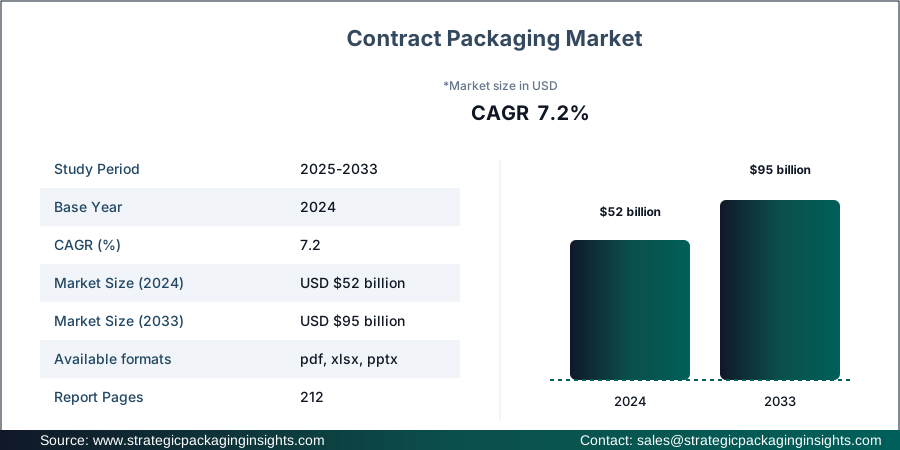
The contract packaging market was valued at $52 billion in 2024 and is projected to reach $95 billion by 2033, growing at a CAGR of 7.2% during the forecast period 2025-2033. This growth is driven by the increasing demand for flexible packaging solutions and the rising trend of outsourcing packaging operations to third-party service providers. The market is witnessing significant traction due to the growing e-commerce sector, which requires efficient and scalable packaging solutions to meet the diverse needs of online retailers. Additionally, the pharmaceutical and food & beverage industries are increasingly relying on contract packaging services to ensure compliance with stringent regulatory standards and to focus on their core competencies.
Report Scope
| Attributes | Details |
| Report Title | Contract Packaging Market Size, Future Growth and Forecast 2033 |
| Service Type | Primary Packaging, Secondary Packaging, Tertiary Packaging |
| End-User Industry | Food & Beverage, Pharmaceuticals |
| Packaging Type | Bottles, Pouches |
| Region | North America, Europe |
| Base Year | 2024 |
| Historic Period | 2017-2023 |
| Forecast Period | 2025-2033 |
| Number of Pages | 212 |
| Customization Available | Yes* |
Opportunities & Threats
The contract packaging market presents numerous opportunities, particularly in the realm of sustainability. As consumers and regulatory bodies push for eco-friendly packaging solutions, contract packagers have the chance to innovate with biodegradable and recyclable materials. This shift not only aligns with global sustainability goals but also offers a competitive edge to companies that can provide green packaging solutions. Furthermore, the rise of smart packaging technologies, which incorporate elements like QR codes and NFC tags, offers contract packagers the opportunity to enhance product traceability and consumer engagement, thereby adding value to their services.
Another significant opportunity lies in the customization of packaging solutions. With the increasing demand for personalized products, contract packagers can capitalize on this trend by offering bespoke packaging services that cater to specific client needs. This includes the ability to handle small batch sizes and rapid turnaround times, which are crucial for brands looking to differentiate themselves in a crowded market. Additionally, the expansion of e-commerce and direct-to-consumer models provides a fertile ground for contract packagers to offer specialized services that cater to the unique logistics and packaging requirements of online retail.
However, the contract packaging market is not without its challenges. One of the primary restrainers is the volatility in raw material prices, which can significantly impact the cost structure of packaging services. Fluctuations in the prices of materials such as plastics, paper, and metals can lead to increased operational costs, which may be difficult to pass on to clients in a competitive market. Moreover, the industry faces challenges related to regulatory compliance, as different regions have varying standards and requirements for packaging materials and processes. This necessitates continuous investment in compliance and quality assurance measures, which can strain the resources of contract packaging companies.
Drivers & Challenges
The contract packaging market is primarily driven by the increasing trend of outsourcing non-core activities by companies across various industries. By leveraging the expertise of contract packagers, businesses can focus on their core competencies while ensuring that their packaging needs are met efficiently and cost-effectively. This trend is particularly prevalent in the pharmaceutical and food & beverage sectors, where stringent regulatory requirements necessitate specialized packaging solutions that contract packagers are well-equipped to provide. Additionally, the growing demand for convenience and ready-to-eat food products is driving the need for innovative packaging solutions that enhance product shelf life and consumer convenience.
Another key driver is the rapid growth of the e-commerce sector, which has transformed the packaging landscape. The need for secure, efficient, and visually appealing packaging solutions that can withstand the rigors of shipping and handling is paramount in the online retail space. Contract packagers are increasingly being called upon to provide solutions that not only protect products during transit but also enhance the unboxing experience for consumers. This has led to a surge in demand for secondary and tertiary packaging solutions that offer both functionality and aesthetic appeal.
Despite these drivers, the contract packaging market faces several challenges. One of the most significant is the need for continuous innovation to keep pace with changing consumer preferences and technological advancements. As the market becomes increasingly competitive, contract packagers must invest in new technologies and processes to remain relevant. This includes adopting automation and digitalization to improve efficiency and reduce costs. Additionally, the industry must navigate the complexities of global supply chains, which can be disrupted by geopolitical tensions, trade policies, and other external factors. These challenges require contract packagers to be agile and adaptable in their operations.
Market Share Analysis
The contract packaging market is characterized by a diverse competitive landscape, with numerous players ranging from small, specialized firms to large, multinational corporations. The market is highly fragmented, with no single company dominating the space, which fosters a competitive environment where innovation and customer service are key differentiators. Companies in this market are continually seeking to expand their service offerings and geographic reach to capture a larger share of the market. Strategic partnerships, mergers, and acquisitions are common strategies employed by companies to enhance their capabilities and market presence.
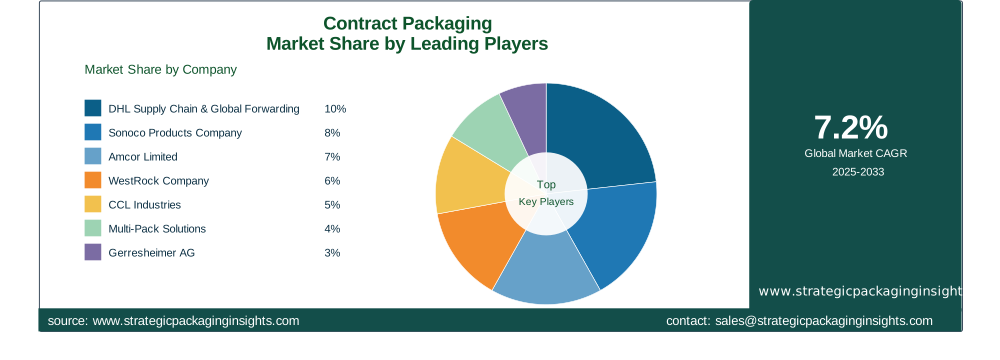
Among the major players in the contract packaging market, several companies stand out due to their extensive service portfolios and global reach. For instance, DHL Supply Chain & Global Forwarding is a prominent player known for its comprehensive logistics and packaging solutions that cater to a wide range of industries. Similarly, Sonoco Products Company offers a diverse array of packaging services, including custom packaging design and supply chain management, which have positioned it as a leader in the market. Other notable companies include Amcor Limited, which is renowned for its innovative packaging solutions and commitment to sustainability, and WestRock Company, which provides integrated packaging solutions that enhance product visibility and consumer engagement.
In addition to these established players, the market is also witnessing the emergence of new entrants that are leveraging technology and innovation to disrupt traditional packaging models. Companies like CCL Industries and Multi-Pack Solutions are gaining traction by offering specialized services that cater to niche markets, such as personal care and pharmaceuticals. These companies are focusing on developing eco-friendly packaging solutions and incorporating smart technologies to enhance product traceability and consumer interaction. As the market continues to evolve, the competitive landscape is expected to become even more dynamic, with companies vying for market share through innovation and strategic collaborations.
Overall, the contract packaging market is poised for significant growth, driven by the increasing demand for flexible and sustainable packaging solutions. Companies that can adapt to changing market dynamics and offer value-added services are likely to thrive in this competitive environment. As the market continues to expand, the focus will be on enhancing operational efficiency, leveraging technology, and meeting the evolving needs of consumers and businesses alike.
Key Highlights
- The contract packaging market is projected to grow at a CAGR of 7.2% from 2025 to 2033.
- Increasing demand for eco-friendly and sustainable packaging solutions is a major market driver.
- The e-commerce sector is a significant contributor to the growth of the contract packaging market.
- Customization and personalization of packaging solutions are key trends in the market.
- Regulatory compliance and quality assurance are critical challenges for contract packagers.
- Technological advancements, such as smart packaging, are creating new opportunities for market players.
- The market is highly fragmented, with numerous players competing for market share.
- Strategic partnerships and acquisitions are common strategies for market expansion.
- Emerging markets in Asia Pacific and Latin America offer significant growth potential.
- Innovation and customer service are key differentiators in the competitive landscape.
Top Countries Insights
In the contract packaging market, the United States stands out as a leading player, with a market size of approximately $15 billion and a CAGR of 6%. The country's robust e-commerce sector and stringent regulatory standards in the pharmaceutical and food industries drive demand for contract packaging services. Additionally, the focus on sustainability and innovation in packaging solutions further propels market growth.
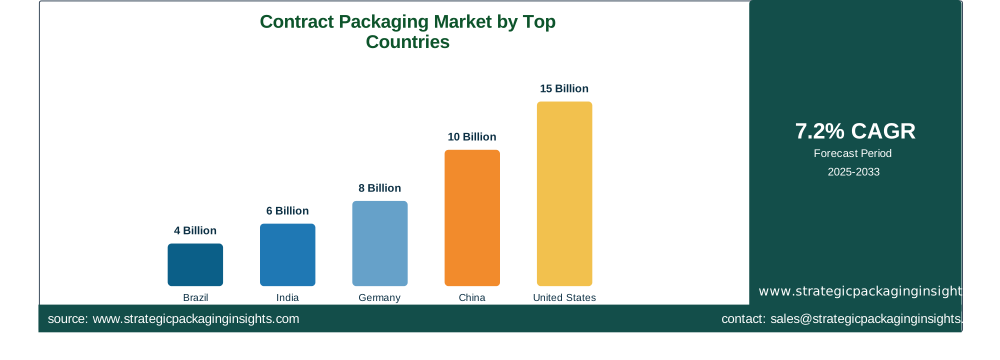
China is another significant market, with a market size of $10 billion and a CAGR of 8%. The country's booming manufacturing sector and growing consumer demand for packaged goods fuel the need for efficient and scalable packaging solutions. Government initiatives promoting sustainable packaging practices also contribute to market expansion.
Germany, with a market size of $8 billion and a CAGR of 5%, is a key player in the European contract packaging market. The country's strong industrial base and emphasis on quality and precision in packaging solutions drive demand. Additionally, the focus on eco-friendly packaging materials aligns with the country's sustainability goals.
India, with a market size of $6 billion and a CAGR of 9%, presents significant growth opportunities in the contract packaging market. The country's expanding middle class and increasing consumer spending on packaged goods drive demand for packaging services. The government's push for 'Make in India' and sustainable packaging practices further supports market growth.
Brazil, with a market size of $4 billion and a CAGR of 7%, is a key player in the Latin American contract packaging market. The country's growing food and beverage industry and increasing demand for packaged consumer goods drive market expansion. Additionally, the focus on improving supply chain efficiency and reducing packaging waste supports market growth.
Contract Packaging Market Segments Insights

Service Type Analysis
The contract packaging market is segmented by service type into primary, secondary, and tertiary packaging. Primary packaging involves the direct containment of products, ensuring their protection and preservation. This segment is driven by the increasing demand for convenience and ready-to-eat food products, which require innovative packaging solutions to enhance shelf life and consumer convenience. Secondary packaging, which involves the bundling of products for distribution, is gaining traction due to the rise of e-commerce and the need for secure and efficient packaging solutions that can withstand the rigors of shipping and handling. Tertiary packaging, which involves the bulk handling and transportation of goods, is essential for optimizing supply chain efficiency and reducing logistics costs.
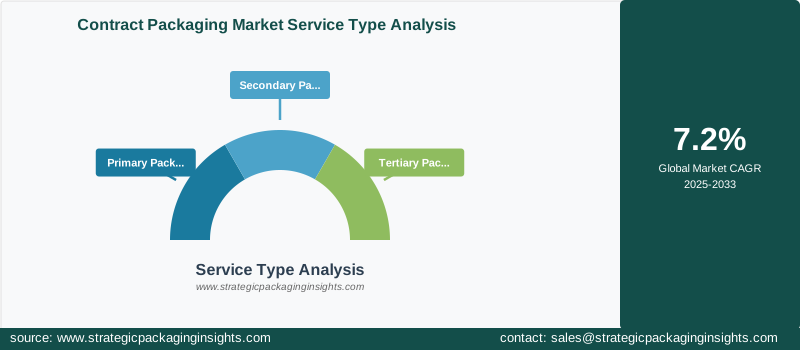
Within the primary packaging segment, the focus is on developing eco-friendly and sustainable packaging solutions that align with global sustainability goals. This includes the use of biodegradable and recyclable materials, as well as the incorporation of smart technologies to enhance product traceability and consumer engagement. In the secondary packaging segment, the emphasis is on customization and personalization of packaging solutions to cater to specific client needs. This includes the ability to handle small batch sizes and rapid turnaround times, which are crucial for brands looking to differentiate themselves in a crowded market. The tertiary packaging segment is driven by the need for efficient and scalable packaging solutions that can optimize supply chain operations and reduce logistics costs.
End-User Industry Analysis
The contract packaging market is segmented by end-user industry into food & beverage, pharmaceuticals, personal care, electronics, and others. The food & beverage industry is a major driver of the contract packaging market, with increasing demand for convenience and ready-to-eat food products driving the need for innovative packaging solutions. The pharmaceutical industry is another key driver, with stringent regulatory requirements necessitating specialized packaging solutions that contract packagers are well-equipped to provide. The personal care industry is also a significant contributor to the market, with the increasing demand for personalized and customized packaging solutions driving growth.
Within the food & beverage industry, the focus is on developing packaging solutions that enhance product shelf life and consumer convenience. This includes the use of innovative materials and technologies that can preserve the freshness and quality of products. In the pharmaceutical industry, the emphasis is on compliance with regulatory standards and ensuring the safety and efficacy of products. This includes the use of tamper-evident and child-resistant packaging solutions, as well as the incorporation of smart technologies to enhance product traceability and consumer engagement. The personal care industry is driven by the increasing demand for personalized and customized packaging solutions that cater to specific client needs.
Packaging Type Analysis
The contract packaging market is segmented by packaging type into bottles, pouches, cartons, and others. Bottles are a popular packaging type in the market, driven by the increasing demand for convenience and ready-to-eat food products. Pouches are gaining traction due to their versatility and ability to provide secure and efficient packaging solutions that can withstand the rigors of shipping and handling. Cartons are also a significant contributor to the market, with the increasing demand for eco-friendly and sustainable packaging solutions driving growth.
Within the bottles segment, the focus is on developing innovative packaging solutions that enhance product shelf life and consumer convenience. This includes the use of smart technologies to enhance product traceability and consumer engagement. In the pouches segment, the emphasis is on customization and personalization of packaging solutions to cater to specific client needs. This includes the ability to handle small batch sizes and rapid turnaround times, which are crucial for brands looking to differentiate themselves in a crowded market. The cartons segment is driven by the need for efficient and scalable packaging solutions that can optimize supply chain operations and reduce logistics costs.
Contract Packaging Market Segments
The Contract Packaging market has been segmented on the basis ofService Type
- Primary Packaging
- Secondary Packaging
- Tertiary Packaging
End-User Industry
- Food & Beverage
- Pharmaceuticals
Packaging Type
- Bottles
- Pouches
Region
- North America
- Europe




