


Copier Paper Market Outlook
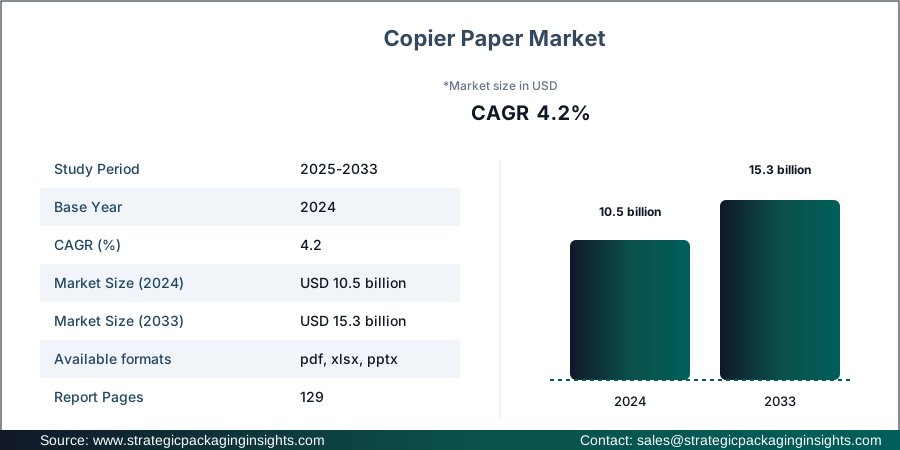
The copier paper market was valued at $10.5 billion in 2024 and is projected to reach $15.3 billion by 2033, growing at a CAGR of 4.2% during the forecast period 2025-2033. This growth is driven by the increasing demand for paper in educational institutions and corporate offices, where the need for high-quality printing and copying is paramount. The market is also influenced by the rise in digital documentation, which paradoxically increases the demand for hard copies for legal and archival purposes. Additionally, the expansion of the e-commerce sector has led to a surge in packaging needs, indirectly boosting the copier paper market as businesses require more paper for invoices and documentation.
Report Scope
| Attributes | Details |
| Report Title | Copier Paper Market Size, Future Growth and Forecast 2033 |
| Type | Uncoated, Coated |
| Application | Commercial, Educational, Home |
| End-User | Offices, Schools, Households |
| Region | Asia Pacific, North America, Latin America, Europe, Middle East & Africa |
| Base Year | 2024 |
| Historic Period | 2017-2023 |
| Forecast Period | 2025-2033 |
| Number of Pages | 129 |
| Customization Available | Yes* |
Opportunities & Threats
One of the significant opportunities in the copier paper market is the growing trend towards sustainable and eco-friendly products. With increasing environmental awareness, consumers and businesses are shifting towards recycled and sustainably sourced paper. This shift is creating a niche market for eco-friendly copier paper, which is expected to see substantial growth. Companies that invest in sustainable practices and certifications are likely to gain a competitive edge. Furthermore, technological advancements in paper production, such as the development of lighter and stronger paper, present opportunities for innovation and differentiation in the market.
Another opportunity lies in the expanding markets of Asia Pacific and Latin America, where economic growth and urbanization are driving increased demand for office supplies, including copier paper. As businesses and educational institutions in these regions grow, the need for copier paper is expected to rise. Additionally, the increasing penetration of digital printing technologies in these regions is likely to boost the demand for high-quality copier paper, providing further growth opportunities for market players.
However, the copier paper market faces threats from the increasing digitization of documents and the push towards paperless offices. As more businesses and institutions adopt digital solutions, the demand for physical paper is expected to decline. This trend is particularly pronounced in developed regions where digital infrastructure is well-established. Moreover, fluctuations in raw material prices, particularly pulp, can impact the profitability of copier paper manufacturers, posing a significant challenge to market growth.
Drivers & Challenges
The primary driver of the copier paper market is the consistent demand from the educational sector. Schools, colleges, and universities require large volumes of paper for printing educational materials, assignments, and administrative documents. This demand is further amplified by the increasing number of educational institutions worldwide, particularly in developing regions. Additionally, the corporate sector remains a significant driver, with businesses requiring copier paper for day-to-day operations, including printing reports, memos, and other documents.
Another key driver is the rise in home office setups, especially post-pandemic, which has led to increased demand for copier paper. As more individuals work from home, the need for office supplies, including paper, has surged. This trend is expected to continue as remote work becomes a permanent fixture in many industries. Furthermore, the growth of the e-commerce sector has indirectly boosted the copier paper market, as businesses require more paper for packaging, invoices, and documentation.
Despite these drivers, the copier paper market faces challenges such as the increasing adoption of digital solutions and the push towards paperless environments. As more organizations move towards digital documentation, the demand for physical paper is expected to decline. Additionally, environmental concerns and regulations regarding deforestation and waste management pose challenges for paper manufacturers. Companies need to invest in sustainable practices and innovations to mitigate these challenges and remain competitive in the market.
Copier Paper Strategic Outlook
| Trend | Market Driver | Technological/Material Shift | Business Impact |
|---|---|---|---|
| Sustainability | Eco-friendly Products | Recycled Paper | Competitive Advantage |
| Smart Tech | Digital Printing | High-Quality Paper | Increased Demand |
| Consumer Behavior | Remote Work | Home Office Supplies | Market Expansion |
| Logistics | E-commerce Growth | Efficient Packaging | Indirect Demand Boost |
In 2026, the copier paper market is poised at a critical juncture, with sustainability and digital transformation as pivotal themes. The market's valuation reflects a steady demand, yet the primary disruptor remains the shift towards digital solutions and environmental regulations. Brands must pivot towards sustainable practices, embracing recycled materials and eco-friendly certifications to maintain market share by 2033. Strategic foresight suggests that companies investing in innovation and sustainability will not only survive but thrive in this evolving landscape.
Market Share Analysis
The copier paper market is characterized by a competitive landscape with several key players vying for market share. The market is dominated by a mix of global giants and regional players, each bringing unique strengths to the table. The competitive dynamics are influenced by factors such as product quality, pricing strategies, distribution networks, and brand reputation. Companies that can effectively leverage these factors are likely to gain a competitive edge in the market.
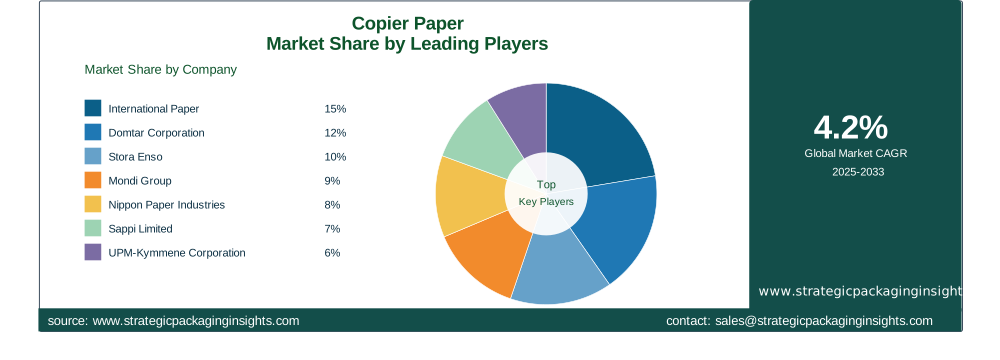
Among the major players, International Paper holds a significant share due to its extensive product portfolio and strong distribution network. The company has a robust presence in both developed and developing regions, allowing it to cater to a diverse customer base. Similarly, Domtar Corporation is a key player known for its focus on sustainability and innovation. The company's commitment to eco-friendly practices has helped it capture a substantial share of the market.
Another notable player is Stora Enso, which has made significant investments in sustainable paper production. The company's focus on renewable materials and circular economy principles has resonated well with environmentally conscious consumers. Additionally, Mondi Group is a prominent player with a strong emphasis on product innovation and customer-centric solutions. The company's ability to adapt to changing market dynamics has enabled it to maintain a competitive position.
Other key players in the market include Nippon Paper Industries, Sappi Limited, and UPM-Kymmene Corporation. These companies have established themselves as leaders through strategic acquisitions, partnerships, and investments in R&D. Their focus on expanding product offerings and enhancing operational efficiencies has contributed to their market success. Overall, the copier paper market is expected to remain competitive, with companies striving to differentiate themselves through innovation and sustainability.
Key Highlights
- The copier paper market is projected to grow at a CAGR of 4.2% from 2025 to 2033.
- Increasing demand from educational institutions and corporate offices is driving market growth.
- Sustainability and eco-friendly products are emerging as key trends in the market.
- Asia Pacific and Latin America are expected to witness significant market growth.
- Technological advancements in paper production are creating new opportunities.
- Digital transformation and paperless initiatives pose challenges to market growth.
- Key players are focusing on innovation and sustainability to maintain competitiveness.
Top Countries Insights
In the copier paper market, the United States holds a significant share, with a market size of $2.5 billion and a CAGR of 3%. The demand is driven by the extensive use of paper in corporate offices and educational institutions. The country's focus on sustainability and eco-friendly products is also influencing market dynamics. In China, the market is valued at $1.8 billion with a CAGR of 5%, driven by rapid urbanization and the expansion of the educational sector. The government's initiatives to promote sustainable practices are further boosting market growth.
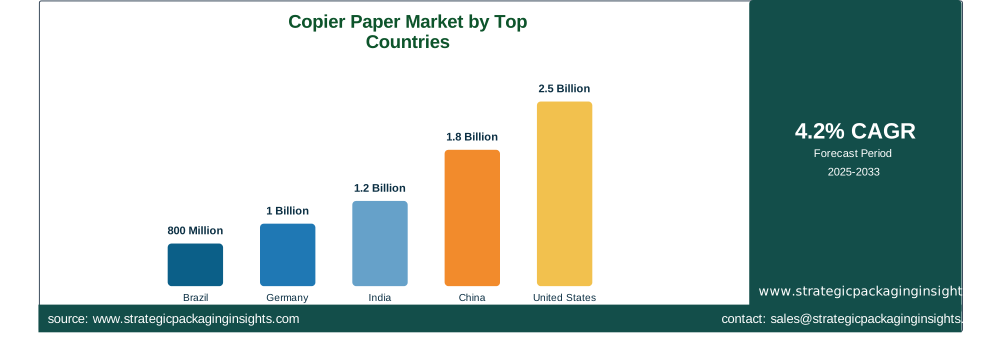
India's copier paper market is experiencing robust growth, with a market size of $1.2 billion and a CAGR of 6%. The increasing number of educational institutions and the rise of the corporate sector are key growth drivers. Additionally, the government's push towards digital literacy is creating opportunities for high-quality copier paper. In Germany, the market is valued at $1 billion with a CAGR of 2%, driven by the demand for premium quality paper in the corporate sector. The country's strong focus on sustainability is also shaping market trends.
Brazil's copier paper market is valued at $800 million with a CAGR of 4%. The growth is attributed to the expanding educational sector and the increasing adoption of digital printing technologies. The government's efforts to promote sustainable practices are also contributing to market growth. Overall, these countries are expected to play a significant role in the global copier paper market, driven by a combination of demand shifts, policy initiatives, and innovation factors.
Copier Paper Market Segments Insights

Type Analysis
The copier paper market is segmented into uncoated and coated types. Uncoated paper is widely used due to its affordability and versatility, making it a popular choice for everyday printing and copying needs. The demand for uncoated paper is driven by its widespread use in offices, schools, and homes. Additionally, the increasing focus on sustainability is boosting the demand for recycled uncoated paper, as consumers and businesses seek eco-friendly options.

Coated paper, on the other hand, is preferred for high-quality printing applications, such as brochures, catalogs, and marketing materials. The demand for coated paper is driven by the need for superior print quality and durability. Technological advancements in coating techniques are enhancing the performance of coated paper, making it more appealing to consumers. As businesses increasingly focus on branding and marketing, the demand for coated paper is expected to rise, providing growth opportunities for market players.
Application Analysis
The application segment of the copier paper market includes commercial, educational, and home use. The commercial segment is the largest, driven by the extensive use of copier paper in corporate offices for printing reports, memos, and other documents. The demand for copier paper in the commercial sector is further boosted by the growth of the e-commerce industry, which requires paper for packaging and documentation.

The educational segment is also significant, with schools, colleges, and universities requiring large volumes of paper for printing educational materials and administrative documents. The increasing number of educational institutions worldwide is driving the demand for copier paper in this segment. The home segment, although smaller, is experiencing growth due to the rise in home office setups and remote work, which has increased the demand for office supplies, including copier paper.
End-User Analysis
The end-user segment of the copier paper market includes offices, schools, and households. Offices are the largest end-user segment, with businesses requiring copier paper for day-to-day operations. The demand for copier paper in offices is driven by the need for printing reports, memos, and other documents. The increasing adoption of digital printing technologies in offices is also boosting the demand for high-quality copier paper.
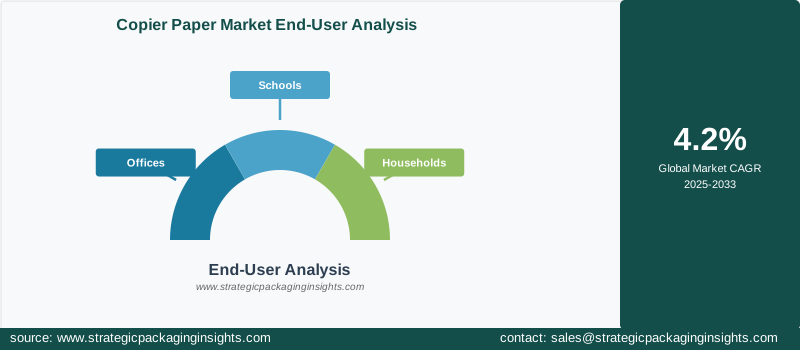
Schools are another significant end-user segment, with educational institutions requiring large volumes of paper for printing educational materials and administrative documents. The growth of the educational sector, particularly in developing regions, is driving the demand for copier paper in this segment. Households, although a smaller segment, are experiencing growth due to the rise in home office setups and remote work, which has increased the demand for office supplies, including copier paper.
Region Analysis
The copier paper market is segmented into regions, including Asia Pacific, North America, Latin America, Europe, and the Middle East & Africa. Asia Pacific is the largest market, driven by rapid urbanization and the expansion of the educational sector. The region's growing middle class and increasing disposable income are also contributing to market growth. North America is another significant market, with the demand for copier paper driven by the extensive use of paper in corporate offices and educational institutions.

Europe is a mature market, with a strong focus on sustainability and eco-friendly products. The demand for premium quality paper in the corporate sector is driving market growth in the region. Latin America is experiencing growth, driven by the expanding educational sector and the increasing adoption of digital printing technologies. The Middle East & Africa, although a smaller market, is expected to witness growth due to the increasing number of educational institutions and the rise of the corporate sector.
Copier Paper Market Segments
The Copier Paper market has been segmented on the basis ofType
- Uncoated
- Coated
Application
- Commercial
- Educational
- Home
End-User
- Offices
- Schools
- Households
Region
- Asia Pacific
- North America
- Latin America
- Europe
- Middle East & Africa




