


Packaging Octabins Market Outlook
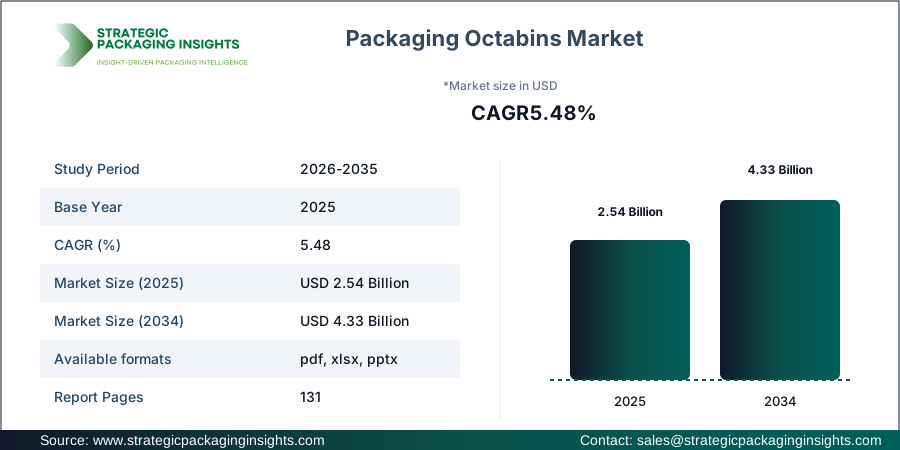
The Packaging Octabins market size was valued at USD $2.54 Billion in 2025 and is anticipated to reach USD $4.33 Billion by 2035, growing at a CAGR of 5.48% % during the forecast period according to Strategic Packaging Insights. The increasing demand for bulk packaging solutions in the food and beverage industry is a significant driver, as these industries require efficient and cost-effective packaging solutions to handle large volumes of products.Report Scope
| Attributes | Details |
| Report Title | Packaging Octabins Market Projected to Scale to 4.33 Billion by 2035, Assesses Strategic Packaging Insights |
| By Product Type | Standard Octabins, Self-Assembly Octabins, Telescopic Octabins, Base Discharge Octabins, Free Flow Base Octabins |
| By Material | Corrugated Paperboard, Plastic, Metal |
| By Wall Type | Single Wall, Double Wall, Triple Wall |
| By Capacity | Below 500 kg, 500–1000 kg, 1001–1500 kg, Above 1500 kg |
| By Liner Type | Without Liner, Polyethylene Liner, Polypropylene Liner, Barrier Liner, Antistatic Liner, Food-Grade Liner |
| By Application | Food, Consumer Goods, Chemicals, Resins and Plastics, Agriculture, Pharmaceuticals, Other Industrial Applications |
| By End Use Industry | Food and Beverage, Chemicals and Specialty Chemicals, Plastics and Polymers, Agriculture, Pharmaceuticals, Consumer Goods, Industrial Manufacturing |
| By Distribution Channel | Direct Sales, Distributors, Industrial Packaging Suppliers, Online Sales |
| Region | Asia Pacific, North America, Latin America, Europe, Middle East & Africa |
| Base Year | 2025 |
| Historic Period | 2018-2024 |
| Forecast Period | 2026-2035 |
| Number of Pages | 131 |
| Customization Available | Yes* |
Market Trends Analysis
The Packaging Octabins market is witnessing a shift towards sustainable materials, with a growing preference for corrugated paperboard due to its recyclability and lower environmental impact. This trend is driven by increasing regulatory pressures and consumer demand for eco-friendly packaging solutions. Additionally, the adoption of advanced manufacturing technologies, such as automation and digital printing, is enhancing production efficiency and enabling customization, which is becoming increasingly important for brand differentiation.
Another significant trend is the rising demand for flexible packaging solutions that offer convenience and improved barrier properties. This is particularly evident in the food and beverage sector, where there is a need for packaging that extends shelf life and maintains product freshness. The integration of smart packaging technologies, such as RFID and QR codes, is also gaining traction, providing enhanced traceability and consumer engagement opportunities.
Industry Transformation Analysis
The Packaging Octabins industry is undergoing a transformation driven by technological advancements and sustainability initiatives. Manufacturers are increasingly investing in automation and digitalization to improve operational efficiency and reduce costs. This shift is enabling companies to meet the growing demand for customized and high-quality packaging solutions while maintaining competitive pricing.
Sustainability is a key focus, with companies exploring the use of recycled materials and developing innovative solutions to reduce waste. The industry is also seeing a shift towards localized production to minimize transportation costs and carbon emissions. This trend is supported by government regulations and incentives aimed at promoting sustainable practices and reducing the environmental impact of packaging.
Trends & Disruptions Impacting Customers' Customers
Downstream customers, particularly in the food and beverage industry, are increasingly prioritizing sustainability and cost-efficiency in their packaging choices. This shift is driven by consumer demand for eco-friendly products and regulatory pressures to reduce packaging waste. As a result, there is a growing preference for packaging solutions that are recyclable, lightweight, and offer improved barrier properties to extend product shelf life.
These changes are influencing product demand and purchasing decisions in the Packaging Octabins market. Companies are investing in research and development to create innovative solutions that meet these evolving needs. This presents opportunities for suppliers to differentiate themselves by offering sustainable and cost-effective packaging options. Additionally, the focus on sustainability is driving collaboration between packaging manufacturers and end-users to develop customized solutions that align with brand values and consumer expectations.
Packaging Octabins Market Ecosystem
The Packaging Octabins market ecosystem involves a complex network of suppliers, manufacturers, distributors, and recyclers. Raw materials such as corrugated paperboard, plastic, and metal are sourced from suppliers and processed into octabins using advanced manufacturing technologies. The distribution stage involves logistics and supply chain management to ensure timely delivery to end-users across various industries.
Recycling plays a crucial role in the ecosystem, with companies focusing on end-of-life processing to promote sustainability and reduce environmental impact. This involves the collection and recycling of used octabins to create a circular economy and meet regulatory requirements. The ecosystem is characterized by strong interdependencies, with changes in one stage impacting the entire value chain.
Analyst Perspective
Analyst Perspective: The Packaging Octabins market is poised for significant growth, driven by increasing demand for sustainable and cost-effective packaging solutions in the food and beverage industry.
The shift towards eco-friendly materials and advanced manufacturing technologies is transforming the industry, creating opportunities for companies to differentiate themselves through innovation and sustainability. The focus on localized production and recycling is also reshaping the market landscape, with companies investing in new facilities and technologies to meet evolving consumer and regulatory demands.
Companies, investors, and suppliers should closely monitor developments in sustainability and technology adoption, as these factors will play a critical role in shaping the future of the Packaging Octabins market. Staying ahead of these trends will be essential for maintaining competitive advantage and capturing growth opportunities in this dynamic market.
Opportunities & Threats
The Packaging Octabins market presents significant opportunities for growth, driven by the increasing demand for bulk packaging solutions in the food and beverage industry. The shift towards sustainable materials and advanced manufacturing technologies offers opportunities for companies to differentiate themselves and capture market share. Additionally, the growing focus on localized production and recycling presents opportunities for companies to reduce costs and improve sustainability.
Technological advancements, such as automation and digital printing, are enabling companies to enhance production efficiency and offer customized solutions. This presents opportunities for companies to meet the evolving needs of end-users and gain a competitive edge. The integration of smart packaging technologies, such as RFID and QR codes, also offers opportunities for enhanced traceability and consumer engagement.
However, the market also faces threats, including raw material volatility and regulatory uncertainty. The reliance on corrugated paperboard and plastic as primary materials exposes companies to fluctuations in raw material prices, which can impact profitability. Additionally, evolving regulations related to packaging waste and sustainability pose challenges for companies, requiring them to adapt their operations and invest in new technologies.
Competition is another significant threat, with numerous players vying for market share. Companies must continuously innovate and differentiate themselves to maintain a competitive edge. The high capital requirements for investing in advanced manufacturing technologies and recycling infrastructure also pose challenges for companies, particularly smaller players with limited resources.
Drivers & Challenges
The Packaging Octabins market is driven by several key factors, including the increasing demand for bulk packaging solutions in the food and beverage industry. The need for efficient and cost-effective packaging solutions to handle large volumes of products is a significant driver, as companies seek to optimize their supply chains and reduce costs. Additionally, the shift towards sustainable materials and advanced manufacturing technologies is driving market growth, as companies look to meet regulatory requirements and consumer demand for eco-friendly packaging solutions.
The growing focus on localized production and recycling is also driving market growth, as companies seek to reduce transportation costs and carbon emissions. This trend is supported by government regulations and incentives aimed at promoting sustainable practices and reducing the environmental impact of packaging. The integration of smart packaging technologies, such as RFID and QR codes, is also driving market growth, providing enhanced traceability and consumer engagement opportunities.
However, the market also faces challenges, including raw material volatility and regulatory uncertainty. The reliance on corrugated paperboard and plastic as primary materials exposes companies to fluctuations in raw material prices, which can impact profitability. Additionally, evolving regulations related to packaging waste and sustainability pose challenges for companies, requiring them to adapt their operations and invest in new technologies. The high capital requirements for investing in advanced manufacturing technologies and recycling infrastructure also pose challenges for companies, particularly smaller players with limited resources.
Packaging Market Economics
The economics of the Packaging Octabins market are influenced by several factors, including raw material costs, conversion costs, and energy costs. The price of corrugated paperboard, plastic, and metal significantly impacts the overall cost structure, with fluctuations in raw material prices affecting profitability. Conversion costs, including manufacturing, printing, and lamination, also play a crucial role in determining the final product cost.
Energy costs are another important factor, as the production of octabins requires significant energy inputs. Companies must carefully manage these costs to maintain competitive pricing and profitability. Logistics and transportation costs also impact the economics of the market, with companies seeking to optimize their supply chains to reduce costs and improve efficiency. The focus on sustainability and recycling is also influencing market economics, with companies investing in new technologies and processes to reduce waste and improve sustainability.
Packaging Value Chain & Cost Analysis
The value chain of the Packaging Octabins market involves several key stages, including raw material procurement, manufacturing, distribution, and recycling. Raw materials such as corrugated paperboard, plastic, and metal are sourced from suppliers and processed into octabins using advanced manufacturing technologies. The manufacturing stage involves conversion processes such as printing, lamination, and forming, which add value to the final product.
The distribution stage involves logistics and supply chain management to ensure timely delivery to end-users across various industries. The recycling stage plays a crucial role in the value chain, with companies focusing on end-of-life processing to promote sustainability and reduce environmental impact. This involves the collection and recycling of used octabins to create a circular economy and meet regulatory requirements. The value chain is characterized by strong interdependencies, with changes in one stage impacting the entire value chain.
Unit Economics & Substrate Cost Analysis
The unit economics of the Packaging Octabins market are influenced by several factors, including raw material costs, energy costs, and conversion costs. The price of corrugated paperboard, plastic, and metal significantly impacts the overall cost structure, with fluctuations in raw material prices affecting profitability. Energy costs are another important factor, as the production of octabins requires significant energy inputs.
Conversion costs, including manufacturing, printing, and lamination, also play a crucial role in determining the final product cost. Companies must carefully manage these costs to maintain competitive pricing and profitability. Logistics and transportation costs also impact the unit economics of the market, with companies seeking to optimize their supply chains to reduce costs and improve efficiency. The focus on sustainability and recycling is also influencing unit economics, with companies investing in new technologies and processes to reduce waste and improve sustainability.
Packaging Regulatory & Sustainability Analysis
The Packaging Octabins market is subject to various regulatory requirements and sustainability initiatives aimed at reducing the environmental impact of packaging. Regulations related to packaging waste, recyclability, and sustainability are driving companies to adopt eco-friendly materials and processes. The European Commission, U.S. EPA, and other regulatory bodies are implementing policies to promote sustainable packaging practices and reduce waste.
Extended Producer Responsibility (EPR) and Packaging Waste Regulations (PPWR) are key regulatory frameworks influencing the market, requiring companies to take responsibility for the end-of-life management of their products. These regulations are driving companies to invest in recycling infrastructure and develop innovative solutions to reduce waste. The focus on sustainability is also influencing consumer preferences, with increasing demand for eco-friendly packaging solutions that align with brand values and regulatory requirements.
Strategic Mergers, Acquisitions & Capacity Expansions
Recent strategic developments in the Packaging Octabins market include mergers, acquisitions, and capacity expansions aimed at enhancing market presence and capabilities. Companies are investing in new facilities and technologies to meet the growing demand for sustainable and cost-effective packaging solutions. For example, Smurfit Westrock and DS Smith have expanded their production capacities to cater to the increasing demand for octabins in the food and beverage industry.
Partnerships and collaborations are also playing a crucial role in driving market growth, with companies joining forces to develop innovative solutions and expand their market reach. The focus on sustainability and recycling is driving investments in new technologies and processes to reduce waste and improve efficiency. These strategic developments are reshaping the competitive landscape, with companies seeking to differentiate themselves through innovation and sustainability.
Strategic Action Directives
Brand Packaging Engineers & Sustainability Directors should focus on material selection and mono-material qualification to enhance recyclability and meet regulatory requirements. The integration of PCR materials and barrier performance optimization are also critical for achieving sustainability goals.
Converter Operations & Extrusion Leads should prioritize line speed optimization and tooling improvements to enhance production efficiency and reduce costs. Managing PCR variability and capacity utilization are also essential for maintaining competitive pricing and profitability.
Procurement & Material Sourcing Managers should focus on resin contracts and price indexing to manage raw material volatility. Supplier diversification and EPR exposure management are also crucial for ensuring a stable supply chain and meeting regulatory requirements.
Investors should monitor capacity expansions and technology investments to identify growth opportunities and assess market concentration. Understanding the margin structure and competitive landscape is also essential for making informed investment decisions.
Market Share Analysis
The Packaging Octabins market is characterized by a competitive landscape with several key players vying for market share. Companies such as Smurfit Westrock, DS Smith, and Mondi Group are prominent players, leveraging their extensive product portfolios and global presence to maintain a competitive edge. These companies are investing in advanced manufacturing technologies and sustainable materials to meet the evolving needs of end-users and capture market share.
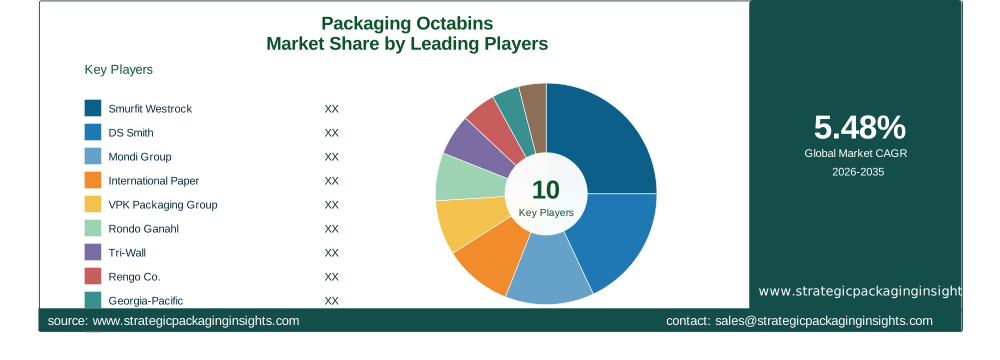
Smurfit Westrock is a leading player in the market, known for its innovative packaging solutions and commitment to sustainability. The company has a strong presence in North America and Europe, with a focus on expanding its capabilities in emerging markets. DS Smith is another key player, offering a wide range of packaging solutions and leveraging its expertise in recycling and sustainability to differentiate itself in the market.
Mondi Group is a global leader in packaging and paper, with a strong focus on sustainability and innovation. The company is investing in new technologies and processes to enhance its product offerings and meet the growing demand for eco-friendly packaging solutions. International Paper and VPK Packaging Group are also significant players, with a focus on expanding their production capacities and enhancing their market presence through strategic acquisitions and partnerships.
The competitive landscape is characterized by strong competition and a focus on innovation and sustainability. Companies are investing in research and development to create innovative solutions that meet the evolving needs of end-users and capture market share. The focus on sustainability and recycling is driving collaboration between packaging manufacturers and end-users to develop customized solutions that align with brand values and consumer expectations.
Key Highlights
- Largest Region: North America
- Fastest-Growing Region: Asia Pacific
- Largest Segment: Food and Beverage
- Fastest-Growing Segment: Pharmaceuticals
- Base-year market size: $2.54 Billion
- Forecast-year market size: $4.33 Billion
- CAGR: 5.48%
- Important application: Bulk packaging solutions
- Major end-use industry: Food and Beverage
- Major market driver: Demand for sustainable packaging solutions
Regional Insights
The Packaging Octabins market is experiencing significant growth across various regions, with North America being the largest market and Asia Pacific emerging as the fastest-growing region. The demand for sustainable and cost-effective packaging solutions is driving market growth, with companies investing in new technologies and processes to meet evolving consumer and regulatory demands.
North America
North America is the largest market for Packaging Octabins, driven by the strong presence of key players and the growing demand for bulk packaging solutions in the food and beverage industry. The focus on sustainability and recycling is also driving market growth, with companies investing in new technologies and processes to reduce waste and improve efficiency.
The region is characterized by a strong regulatory framework, with government initiatives aimed at promoting sustainable packaging practices and reducing the environmental impact of packaging. The focus on localized production and recycling is also reshaping the market landscape, with companies seeking to reduce transportation costs and carbon emissions.
Europe
Europe is a significant market for Packaging Octabins, driven by the increasing demand for sustainable packaging solutions and the strong presence of key players. The focus on sustainability and recycling is driving market growth, with companies investing in new technologies and processes to meet evolving consumer and regulatory demands.
The region is characterized by a strong regulatory framework, with government initiatives aimed at promoting sustainable packaging practices and reducing the environmental impact of packaging. The focus on localized production and recycling is also reshaping the market landscape, with companies seeking to reduce transportation costs and carbon emissions.
Asia Pacific
Asia Pacific is the fastest-growing region for Packaging Octabins, driven by the increasing demand for bulk packaging solutions in the food and beverage industry. The focus on sustainability and recycling is also driving market growth, with companies investing in new technologies and processes to reduce waste and improve efficiency.
The region is characterized by a strong regulatory framework, with government initiatives aimed at promoting sustainable packaging practices and reducing the environmental impact of packaging. The focus on localized production and recycling is also reshaping the market landscape, with companies seeking to reduce transportation costs and carbon emissions.
Latin America
Latin America is a growing market for Packaging Octabins, driven by the increasing demand for bulk packaging solutions in the food and beverage industry. The focus on sustainability and recycling is also driving market growth, with companies investing in new technologies and processes to reduce waste and improve efficiency.
The region is characterized by a strong regulatory framework, with government initiatives aimed at promoting sustainable packaging practices and reducing the environmental impact of packaging. The focus on localized production and recycling is also reshaping the market landscape, with companies seeking to reduce transportation costs and carbon emissions.
Middle East & Africa
The Middle East & Africa is a growing market for Packaging Octabins, driven by the increasing demand for bulk packaging solutions in the food and beverage industry. The focus on sustainability and recycling is also driving market growth, with companies investing in new technologies and processes to reduce waste and improve efficiency.
The region is characterized by a strong regulatory framework, with government initiatives aimed at promoting sustainable packaging practices and reducing the environmental impact of packaging. The focus on localized production and recycling is also reshaping the market landscape, with companies seeking to reduce transportation costs and carbon emissions.
Packaging Octabins Market Segments Insights

By Product Type Analysis
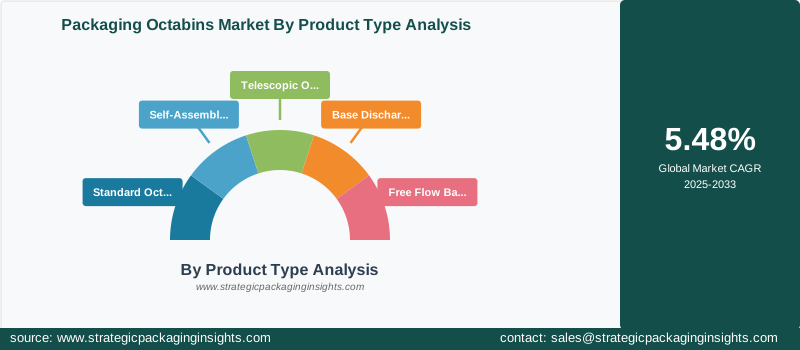
The Packaging Octabins market is segmented by product type, with Standard Octabins being the most widely used due to their versatility and cost-effectiveness. Self-Assembly Octabins are gaining popularity for their ease of use and reduced storage space requirements. Telescopic Octabins offer enhanced protection for fragile goods, while Base Discharge and Free Flow Base Octabins are preferred for their efficient unloading capabilities.
The demand for these products is driven by the need for efficient bulk packaging solutions across various industries, including food and beverage, chemicals, and pharmaceuticals. Companies are investing in research and development to create innovative solutions that meet the evolving needs of end-users and capture market share. The focus on sustainability and recycling is also influencing product development, with companies exploring the use of eco-friendly materials and processes.
By Material Analysis
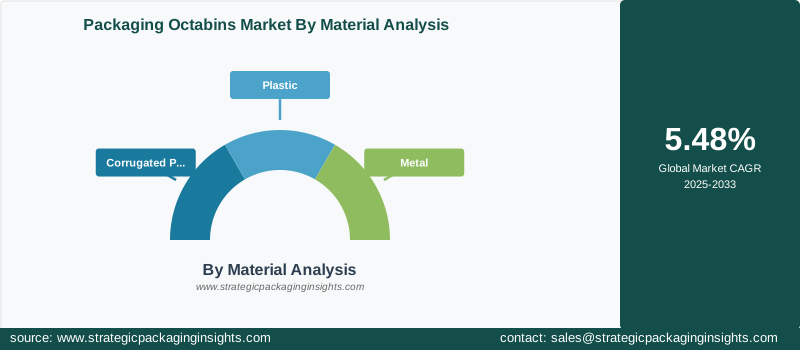
The Packaging Octabins market is segmented by material, with corrugated paperboard being the most widely used due to its recyclability and cost-effectiveness. Plastic and metal are also used, offering durability and strength for heavy-duty applications. The demand for these materials is driven by the need for sustainable and cost-effective packaging solutions across various industries.
Companies are investing in research and development to create innovative solutions that meet the evolving needs of end-users and capture market share. The focus on sustainability and recycling is also influencing material selection, with companies exploring the use of eco-friendly materials and processes. The integration of smart packaging technologies, such as RFID and QR codes, is also gaining traction, providing enhanced traceability and consumer engagement opportunities.
By Wall Type Analysis
The Packaging Octabins market is segmented by wall type, with Single Wall Octabins being the most widely used due to their cost-effectiveness and versatility. Double Wall and Triple Wall Octabins offer enhanced protection for fragile goods, making them ideal for heavy-duty applications. The demand for these products is driven by the need for efficient bulk packaging solutions across various industries.
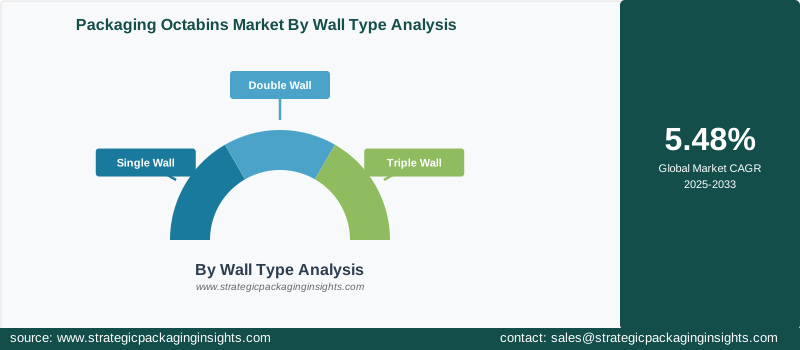
Companies are investing in research and development to create innovative solutions that meet the evolving needs of end-users and capture market share. The focus on sustainability and recycling is also influencing product development, with companies exploring the use of eco-friendly materials and processes. The integration of smart packaging technologies, such as RFID and QR codes, is also gaining traction, providing enhanced traceability and consumer engagement opportunities.
By Capacity Analysis
The Packaging Octabins market is segmented by capacity, with Below 500 kg Octabins being the most widely used due to their versatility and cost-effectiveness. 500-1000 kg and 1001-1500 kg Octabins are gaining popularity for their ability to handle larger volumes of products, while Above 1500 kg Octabins are preferred for heavy-duty applications.
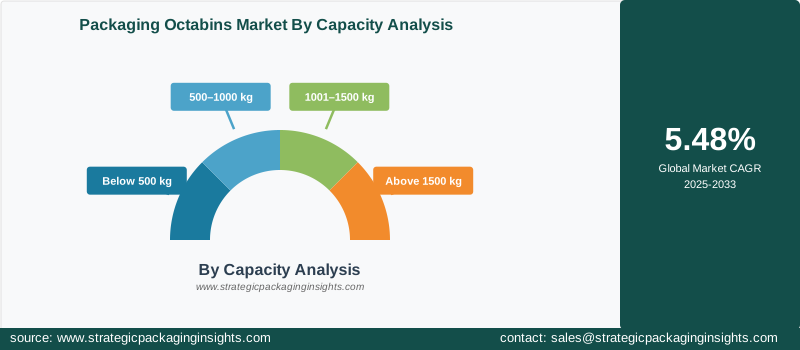
The demand for these products is driven by the need for efficient bulk packaging solutions across various industries, including food and beverage, chemicals, and pharmaceuticals. Companies are investing in research and development to create innovative solutions that meet the evolving needs of end-users and capture market share. The focus on sustainability and recycling is also influencing product development, with companies exploring the use of eco-friendly materials and processes.
By Liner Type Analysis
The Packaging Octabins market is segmented by liner type, with Polyethylene Liners being the most widely used due to their cost-effectiveness and versatility. Polypropylene Liners offer enhanced protection for fragile goods, while Barrier Liners are preferred for their ability to extend product shelf life. Antistatic and Food-Grade Liners are gaining popularity for their specialized applications.
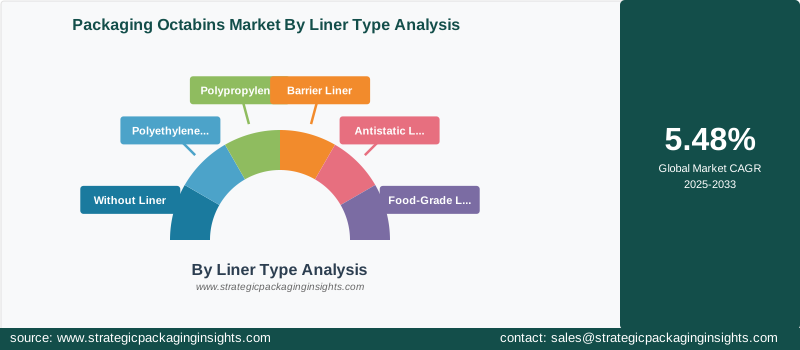
The demand for these products is driven by the need for efficient bulk packaging solutions across various industries, including food and beverage, chemicals, and pharmaceuticals. Companies are investing in research and development to create innovative solutions that meet the evolving needs of end-users and capture market share. The focus on sustainability and recycling is also influencing product development, with companies exploring the use of eco-friendly materials and processes.
By Application Analysis
The Packaging Octabins market is segmented by application, with the food industry being the largest end-user due to the need for efficient bulk packaging solutions. The consumer goods and chemicals industries are also significant users, driven by the need for cost-effective and sustainable packaging solutions. The demand for these products is driven by the need for efficient bulk packaging solutions across various industries.
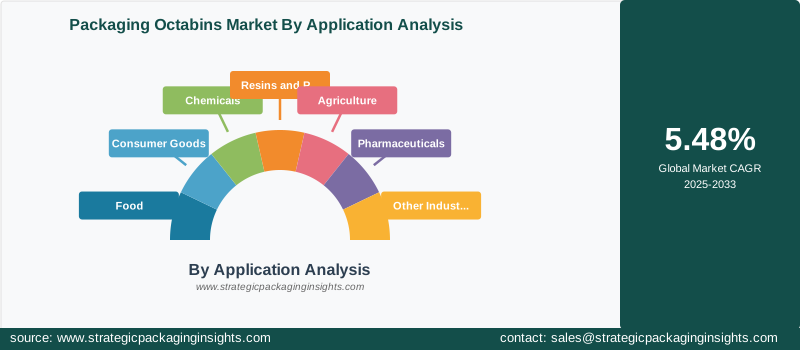
Companies are investing in research and development to create innovative solutions that meet the evolving needs of end-users and capture market share. The focus on sustainability and recycling is also influencing product development, with companies exploring the use of eco-friendly materials and processes. The integration of smart packaging technologies, such as RFID and QR codes, is also gaining traction, providing enhanced traceability and consumer engagement opportunities.
By End Use Industry Analysis
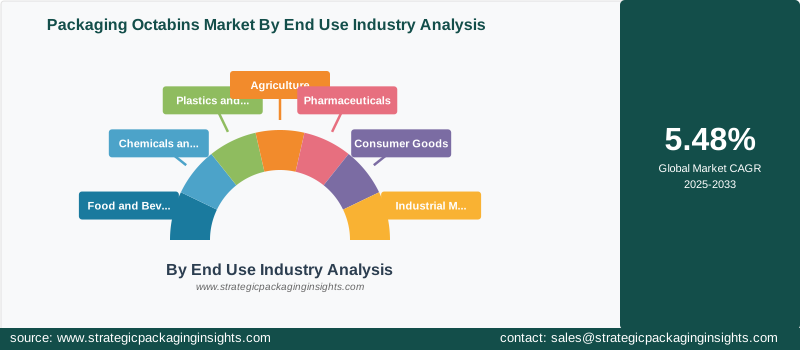
The Packaging Octabins market is segmented by end-use industry, with the food and beverage industry being the largest user due to the need for efficient bulk packaging solutions. The chemicals and specialty chemicals industries are also significant users, driven by the need for cost-effective and sustainable packaging solutions. The demand for these products is driven by the need for efficient bulk packaging solutions across various industries.
Companies are investing in research and development to create innovative solutions that meet the evolving needs of end-users and capture market share. The focus on sustainability and recycling is also influencing product development, with companies exploring the use of eco-friendly materials and processes. The integration of smart packaging technologies, such as RFID and QR codes, is also gaining traction, providing enhanced traceability and consumer engagement opportunities.
By Distribution Channel Analysis
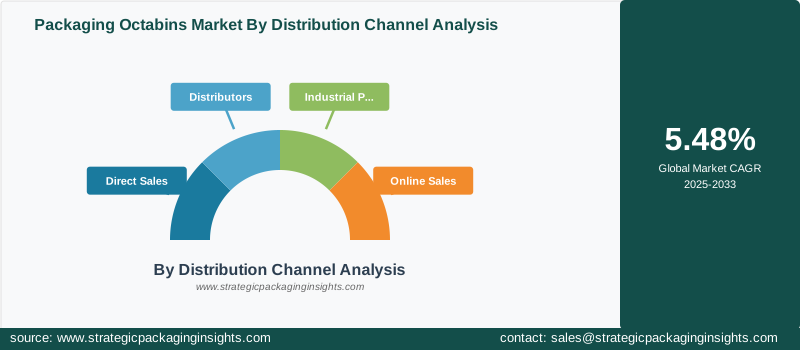
The Packaging Octabins market is segmented by distribution channel, with direct sales being the most widely used due to their cost-effectiveness and efficiency. Distributors and industrial packaging suppliers are also significant channels, offering a wide range of products and services to meet the needs of end-users. Online sales are gaining popularity for their convenience and accessibility.
The demand for these channels is driven by the need for efficient bulk packaging solutions across various industries, including food and beverage, chemicals, and pharmaceuticals. Companies are investing in research and development to create innovative solutions that meet the evolving needs of end-users and capture market share. The focus on sustainability and recycling is also influencing product development, with companies exploring the use of eco-friendly materials and processes.
Packaging Octabins Market Segments
The Packaging Octabins market has been segmented on the basis ofBy Product Type
- Standard Octabins
- Self-Assembly Octabins
- Telescopic Octabins
- Base Discharge Octabins
- Free Flow Base Octabins
By Material
- Corrugated Paperboard
- Plastic
- Metal
By Wall Type
- Single Wall
- Double Wall
- Triple Wall
By Capacity
- Below 500 kg
- 500–1000 kg
- 1001–1500 kg
- Above 1500 kg
By Liner Type
- Without Liner
- Polyethylene Liner
- Polypropylene Liner
- Barrier Liner
- Antistatic Liner
- Food-Grade Liner
By Application
- Food
- Consumer Goods
- Chemicals
- Resins and Plastics
- Agriculture
- Pharmaceuticals
- Other Industrial Applications
By End Use Industry
- Food and Beverage
- Chemicals and Specialty Chemicals
- Plastics and Polymers
- Agriculture
- Pharmaceuticals
- Consumer Goods
- Industrial Manufacturing
By Distribution Channel
- Direct Sales
- Distributors
- Industrial Packaging Suppliers
- Online Sales
Region
- Asia Pacific
- North America
- Latin America
- Europe
- Middle East & Africa




