


Food and Beverage Packaging Market Outlook
The food and beverage packaging market was valued at $305 billion in 2024 and is projected to reach $450 billion by 2033, growing at a CAGR of 4.5% during the forecast period 2025-2033. This market is driven by the increasing demand for convenient and sustainable packaging solutions, as consumers become more health-conscious and environmentally aware. The rise in e-commerce and online food delivery services has further fueled the demand for innovative packaging that ensures product safety and extends shelf life. Additionally, technological advancements in packaging materials and processes are enabling manufacturers to offer more efficient and cost-effective solutions, thereby boosting market growth.
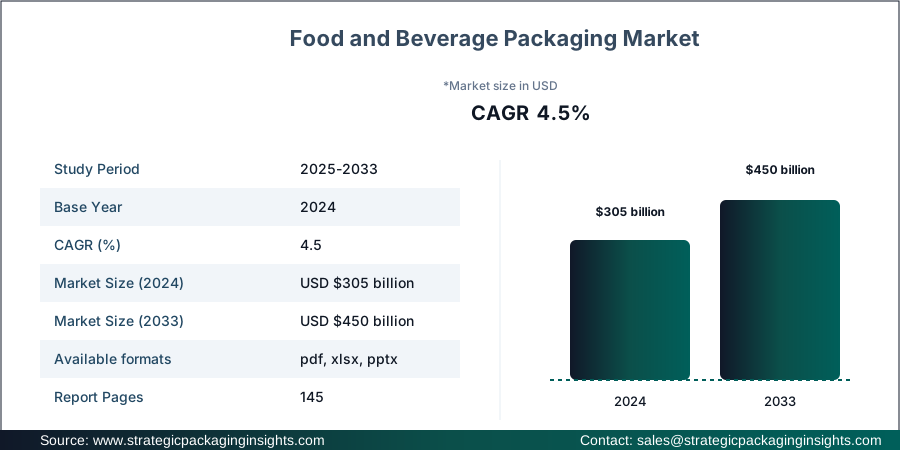
However, the market faces several challenges, including stringent regulations regarding packaging waste and recycling. Governments worldwide are implementing policies to reduce plastic waste, which is pushing companies to invest in eco-friendly alternatives. The high cost of sustainable packaging materials and the complexity of recycling processes are significant restraints for market players. Despite these challenges, the market holds immense growth potential, particularly in emerging economies where urbanization and changing lifestyles are driving the demand for packaged food and beverages. Companies are focusing on developing innovative packaging solutions that not only meet regulatory requirements but also cater to consumer preferences for convenience and sustainability.
Report Scope
| Attributes | Details |
| Report Title | Food and Beverage Packaging Market Size, Future Growth and Forecast 2033 |
| Material | Plastic, Glass, Metal, Paper & Board |
| Type | Rigid, Flexible |
| Application | Dairy Products, Bakery & Confectionery, Convenience Foods, Fruits & Vegetables, Meat, Fish & Poultry, Sauces & Dressings, Others |
| Region | Asia Pacific, North America, Latin America, Europe, Middle East & Africa |
| Base Year | 2024 |
| Historic Period | 2017-2023 |
| Forecast Period | 2025-2033 |
| Number of Pages | 145 |
| Customization Available | Yes* |
Opportunities & Threats
The food and beverage packaging market presents numerous opportunities for growth, particularly in the realm of sustainable packaging solutions. As consumers become increasingly aware of environmental issues, there is a growing demand for packaging that is not only functional but also eco-friendly. This shift in consumer preferences is encouraging companies to invest in research and development to create biodegradable and recyclable packaging materials. Innovations such as plant-based plastics and compostable packaging are gaining traction, offering companies the chance to differentiate themselves in a competitive market. Additionally, the rise of smart packaging technologies, which enhance product safety and provide real-time information to consumers, is opening new avenues for growth.
Another significant opportunity lies in the expansion of e-commerce and online food delivery services. The convenience of ordering food and beverages online has led to a surge in demand for packaging that ensures product integrity during transit. Companies are developing innovative packaging solutions that are not only durable but also lightweight and cost-effective. This trend is particularly prominent in urban areas, where busy lifestyles and the need for convenience drive the demand for ready-to-eat and on-the-go food options. By capitalizing on these opportunities, companies can tap into new markets and expand their customer base.
Despite the promising opportunities, the food and beverage packaging market faces several threats that could hinder its growth. One of the primary challenges is the increasing regulatory pressure to reduce packaging waste and promote recycling. Governments around the world are implementing stringent regulations to curb plastic pollution, which is forcing companies to rethink their packaging strategies. The high cost of developing and implementing sustainable packaging solutions is another significant barrier, particularly for small and medium-sized enterprises. Additionally, the volatility in raw material prices and supply chain disruptions pose risks to market stability. Companies must navigate these challenges carefully to maintain their competitive edge and ensure long-term success.
Market Share Analysis
The competitive landscape of the food and beverage packaging market is characterized by the presence of several key players who hold significant market shares. These companies are continuously striving to innovate and expand their product portfolios to maintain their competitive edge. The market is highly fragmented, with numerous regional and international players competing for market share. The top companies in the market are focusing on strategic partnerships, mergers, and acquisitions to strengthen their market position and expand their geographical reach. Additionally, they are investing heavily in research and development to introduce new and innovative packaging solutions that cater to the evolving needs of consumers.
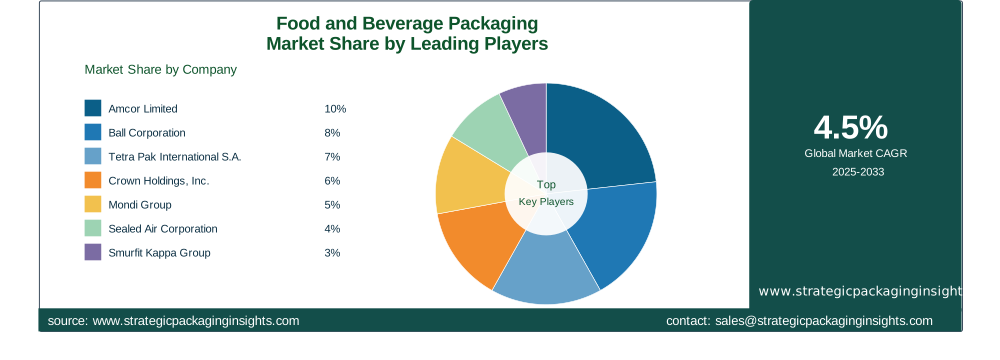
Among the leading companies in the food and beverage packaging market is Amcor Limited, which holds a substantial market share due to its extensive product portfolio and strong global presence. The company is known for its innovative packaging solutions that focus on sustainability and consumer convenience. Another major player is Ball Corporation, which specializes in metal packaging for beverages and has a strong foothold in the North American market. The company's commitment to sustainability and its focus on lightweight packaging solutions have contributed to its success in the industry.
Tetra Pak International S.A. is another key player in the market, renowned for its carton packaging solutions for liquid food products. The company's focus on innovation and sustainability has helped it maintain a strong market position. Similarly, Crown Holdings, Inc. is a leading provider of metal packaging solutions for food and beverages, with a significant presence in the European market. The company's emphasis on product differentiation and customer-centric solutions has enabled it to capture a substantial market share.
Other notable companies in the market include Mondi Group, Sealed Air Corporation, and Smurfit Kappa Group. Mondi Group is known for its paper-based packaging solutions and has a strong presence in the European market. Sealed Air Corporation specializes in protective packaging solutions and has a diverse product portfolio that caters to various industries. Smurfit Kappa Group is a leading provider of corrugated packaging solutions and has a strong focus on sustainability and innovation. These companies, along with others, are driving the growth of the food and beverage packaging market through their strategic initiatives and commitment to meeting consumer demands.
Key Highlights
- The market is projected to grow at a CAGR of 4.5% from 2025 to 2033, driven by increasing demand for sustainable packaging solutions.
- Technological advancements in packaging materials and processes are enabling manufacturers to offer more efficient and cost-effective solutions.
- The rise of e-commerce and online food delivery services is fueling the demand for innovative packaging that ensures product safety and extends shelf life.
- Stringent regulations regarding packaging waste and recycling are pushing companies to invest in eco-friendly alternatives.
- Emerging economies present significant growth opportunities due to urbanization and changing lifestyles driving the demand for packaged food and beverages.
- Smart packaging technologies are gaining traction, offering companies the chance to differentiate themselves in a competitive market.
- The market is highly fragmented, with numerous regional and international players competing for market share.
- Strategic partnerships, mergers, and acquisitions are key strategies adopted by companies to strengthen their market position.
- Volatility in raw material prices and supply chain disruptions pose risks to market stability.
Top Countries Insights
In the food and beverage packaging market, the United States holds a significant market share, with a market size of $85 billion and a CAGR of 3%. The country's growth is driven by the increasing demand for convenient and sustainable packaging solutions, as well as the rise of e-commerce and online food delivery services. The regulatory environment in the U.S. is also favorable, with policies promoting recycling and waste reduction.
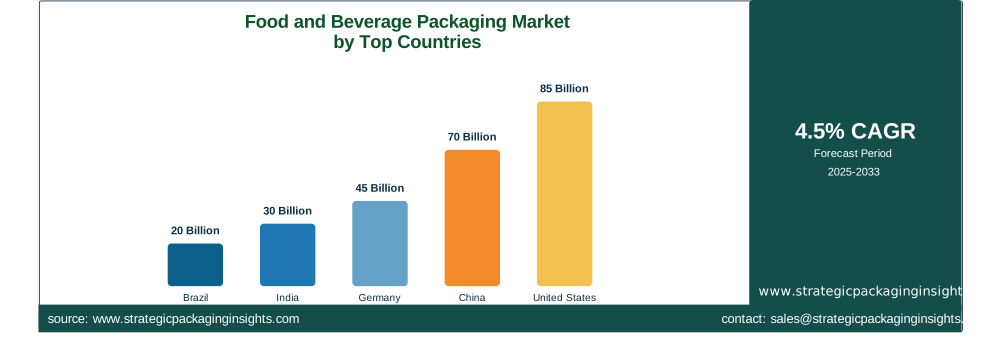
China is another major player in the market, with a market size of $70 billion and a CAGR of 6%. The country's rapid urbanization and changing consumer lifestyles are driving the demand for packaged food and beverages. Additionally, the government's focus on reducing plastic waste and promoting sustainable packaging solutions is creating growth opportunities for companies operating in the market.
Germany is a key market in Europe, with a market size of $45 billion and a CAGR of 4%. The country's strong focus on sustainability and innovation is driving the demand for eco-friendly packaging solutions. The presence of several leading packaging companies in Germany also contributes to the market's growth.
India is an emerging market with significant growth potential, with a market size of $30 billion and a CAGR of 8%. The country's growing middle class and increasing disposable incomes are driving the demand for packaged food and beverages. Additionally, the government's initiatives to promote sustainable packaging solutions are creating opportunities for market players.
Brazil is a prominent market in Latin America, with a market size of $20 billion and a CAGR of 5%. The country's economic growth and increasing consumer awareness of environmental issues are driving the demand for sustainable packaging solutions. The presence of several local and international packaging companies in Brazil also contributes to the market's growth.
Evolving Market Dynamics (2018-2024) and Strategic Foresight (2025-2033)
| Metrics | 2018-2024 | 2025-2033 |
|---|---|---|
| CAGR | 3.5% | 4.5% |
| Market Size Evolution | $250 billion to $305 billion | $305 billion to $450 billion |
| Segment Distribution Shifts | Rigid packaging dominance | Flexible packaging gaining traction |
| Regional Contribution Changes | North America and Europe leading | Asia Pacific emerging as key region |
| Technological Impact Factors | Basic packaging technologies | Advanced smart packaging solutions |
| Client Demand Transformations | Focus on convenience | Emphasis on sustainability |
Food and Beverage Packaging Market Segments Insights

Material Analysis
The material segment of the food and beverage packaging market is dominated by plastic, which is widely used due to its versatility, durability, and cost-effectiveness. However, the increasing environmental concerns and regulatory pressures are driving the demand for alternative materials such as paper, glass, and metal. Paper and board packaging are gaining popularity due to their recyclability and biodegradability, making them a preferred choice for eco-conscious consumers. Glass packaging, known for its premium appeal and inert nature, is also witnessing growth, particularly in the beverage sector. Metal packaging, with its excellent barrier properties, is favored for canned foods and beverages. Companies are investing in research and development to create innovative materials that meet consumer demands for sustainability and functionality.
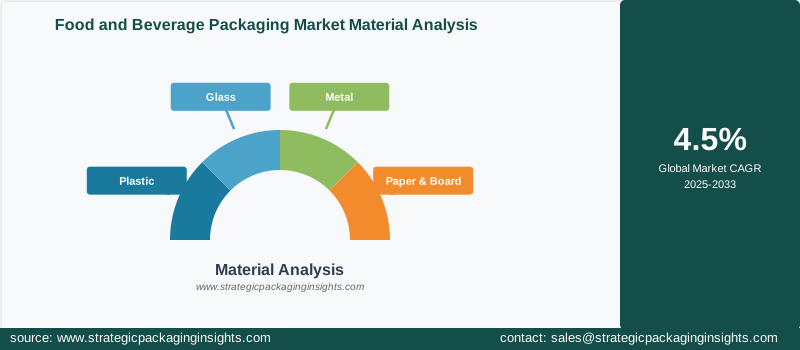
Plastic packaging, despite its environmental challenges, continues to hold a significant share in the market due to its lightweight and flexible nature. It is extensively used in flexible packaging solutions such as pouches and films, which are popular for their convenience and cost-effectiveness. The development of biodegradable and compostable plastics is a key focus area for companies looking to address environmental concerns. Additionally, advancements in recycling technologies are enabling the recovery and reuse of plastic materials, further supporting the growth of this segment. As consumer preferences shift towards sustainable packaging, companies are exploring new materials and technologies to reduce their environmental footprint and enhance product appeal.
Type Analysis
The type segment of the food and beverage packaging market is categorized into rigid and flexible packaging. Rigid packaging, which includes bottles, cans, and containers, is known for its durability and protective properties. It is widely used for packaging beverages, dairy products, and canned foods. However, the demand for flexible packaging is on the rise due to its lightweight, cost-effective, and versatile nature. Flexible packaging solutions such as pouches, bags, and films are gaining popularity for their convenience and ability to extend product shelf life. The growing demand for on-the-go and ready-to-eat food products is driving the adoption of flexible packaging solutions.
Flexible packaging is particularly favored in the snack, confectionery, and convenience food segments, where it offers benefits such as easy storage, transportation, and reduced material usage. The development of innovative materials and technologies, such as barrier films and resealable closures, is further enhancing the appeal of flexible packaging. Companies are focusing on creating sustainable and recyclable flexible packaging solutions to meet consumer demands for eco-friendly products. As the market continues to evolve, the balance between rigid and flexible packaging is expected to shift, with flexible packaging gaining a larger share due to its numerous advantages.
Application Analysis
The application segment of the food and beverage packaging market is diverse, encompassing various product categories such as dairy products, bakery and confectionery, convenience foods, fruits and vegetables, meat, fish and poultry, sauces and dressings, and others. Each application has unique packaging requirements, driven by factors such as product type, shelf life, and consumer preferences. Dairy products, for instance, require packaging solutions that ensure freshness and prevent contamination. The use of aseptic and barrier packaging is common in this segment to extend product shelf life and maintain quality.
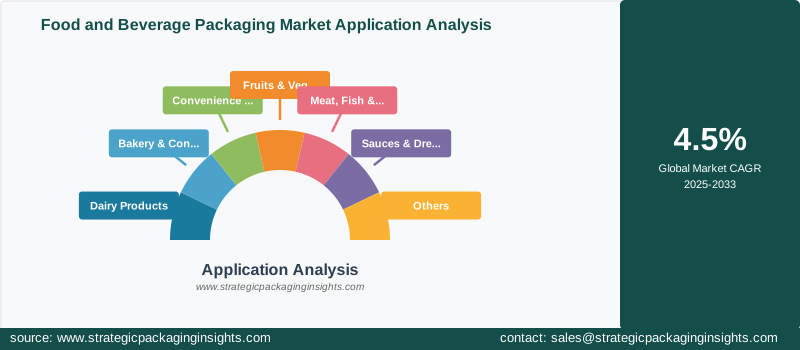
In the bakery and confectionery segment, packaging plays a crucial role in preserving product freshness and enhancing visual appeal. Flexible packaging solutions such as pouches and films are popular in this segment due to their convenience and cost-effectiveness. The convenience food segment is witnessing significant growth, driven by the increasing demand for ready-to-eat and on-the-go food products. Packaging solutions that offer convenience, portability, and extended shelf life are in high demand in this segment. Similarly, the packaging of fruits and vegetables focuses on maintaining freshness and preventing spoilage, with innovative solutions such as modified atmosphere packaging gaining traction.
Region Analysis
The regional analysis of the food and beverage packaging market reveals significant variations in market dynamics and growth opportunities across different regions. North America and Europe have traditionally been the leading markets, driven by the presence of established packaging companies and a strong focus on innovation and sustainability. However, the Asia Pacific region is emerging as a key growth area, fueled by rapid urbanization, changing consumer lifestyles, and increasing disposable incomes. The demand for packaged food and beverages is rising in countries such as China and India, creating lucrative opportunities for market players.
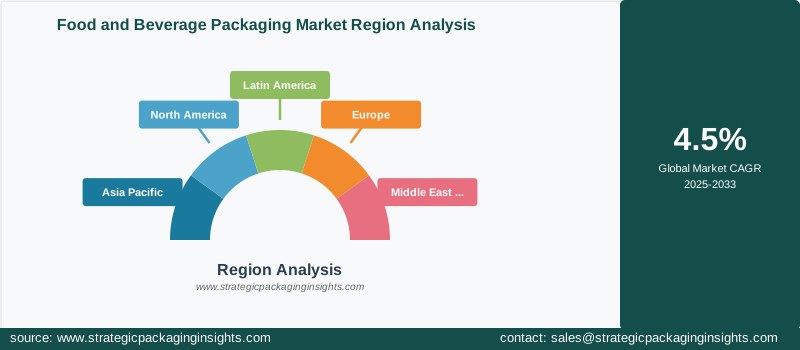
In Latin America, the market is driven by economic growth and increasing consumer awareness of environmental issues. The region is witnessing a shift towards sustainable packaging solutions, with companies focusing on reducing their environmental footprint. The Middle East and Africa region, although smaller in market size, presents significant growth potential due to the increasing demand for packaged food and beverages and the presence of a young and growing population. Companies operating in these regions are focusing on developing innovative packaging solutions that cater to local consumer preferences and regulatory requirements.
Food and Beverage Packaging Market Segments
The Food and Beverage Packaging market has been segmented on the basis ofMaterial
- Plastic
- Glass
- Metal
- Paper & Board
Type
- Rigid
- Flexible
Application
- Dairy Products
- Bakery & Confectionery
- Convenience Foods
- Fruits & Vegetables
- Meat, Fish & Poultry
- Sauces & Dressings
- Others
Region
- Asia Pacific
- North America
- Latin America
- Europe
- Middle East & Africa




