


Pharmaceutical Contract Packaging Market Outlook
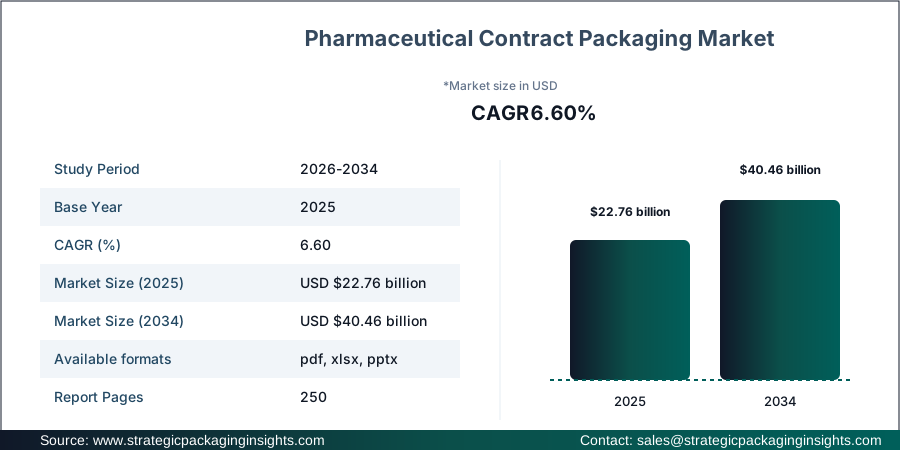
The pharmaceutical contract packaging market was valued at $22.76 billion in 2025 and is projected to reach $40.46 billion by 2034, growing at a CAGR of 6.60% during the forecast period 2026-2034. This market is driven by the increasing demand for innovative and flexible packaging solutions that cater to the diverse needs of pharmaceutical companies. The rise in outsourcing activities by pharmaceutical companies to focus on core competencies and reduce operational costs is a significant driver. Additionally, the growing complexity of drug formulations and the need for specialized packaging solutions to ensure drug safety and efficacy are propelling market growth. The market is also benefiting from advancements in packaging technologies, such as smart packaging and sustainable materials, which are gaining traction among pharmaceutical companies.
However, the market faces challenges such as stringent regulatory requirements and the high cost of compliance, which can hinder growth. The need for adherence to Good Manufacturing Practices (GMP) and other regulatory standards can increase operational costs for contract packaging companies. Despite these challenges, the market holds significant growth potential due to the increasing demand for personalized medicine and biologics, which require specialized packaging solutions. The rise in chronic diseases and the growing geriatric population are also contributing to the demand for pharmaceutical products, thereby driving the need for contract packaging services. Overall, the pharmaceutical contract packaging market is poised for substantial growth, driven by technological advancements and the increasing focus on sustainability and innovation.
Report Scope
| Attributes | Details |
| Report Title | Pharmaceutical Contract Packaging Market Size, Future Growth and Forecast 2034 |
| By Service Type | Primary Packaging, Secondary Packaging, Blister Packaging, Serialization and Labeling |
| By Dosage Form | Solid Oral, Injectables, Liquids, Topicals |
| By End Use | Big Pharma, Generic Manufacturers, Biopharma, OTC Companies |
| By Packaging Type | Bottles, Blisters, Sachets, Vials and Ampoules |
| Region | Asia Pacific, North America, Latin America, Europe, Middle East & Africa |
| Base Year | 2025 |
| Historic Period | 2018-2024 |
| Forecast Period | 2026-2034 |
| Number of Pages | 250 |
| Customization Available | Yes* |
Opportunities & Threats
The pharmaceutical contract packaging market presents numerous opportunities for growth, primarily driven by the increasing trend of outsourcing packaging services. Pharmaceutical companies are increasingly focusing on their core competencies, such as drug discovery and development, and are outsourcing non-core activities like packaging to specialized service providers. This trend is expected to continue, providing significant growth opportunities for contract packaging companies. Additionally, the growing demand for biologics and personalized medicine is creating a need for specialized packaging solutions, which contract packaging companies are well-positioned to provide. The rise in e-commerce and online pharmacies is also driving the demand for innovative packaging solutions that ensure product safety and integrity during transportation.
Another opportunity lies in the increasing focus on sustainability and eco-friendly packaging solutions. Pharmaceutical companies are under pressure to reduce their environmental footprint, and contract packaging companies can capitalize on this trend by offering sustainable packaging solutions. The development of biodegradable and recyclable packaging materials is gaining traction, and companies that can provide these solutions are likely to see increased demand. Furthermore, advancements in packaging technologies, such as smart packaging and anti-counterfeiting solutions, present additional opportunities for growth. These technologies not only enhance product safety and security but also improve patient compliance and engagement.
Despite the opportunities, the pharmaceutical contract packaging market faces several threats that could impact growth. One of the primary threats is the stringent regulatory environment, which requires companies to comply with various standards and guidelines. Non-compliance can result in significant financial penalties and damage to reputation. Additionally, the high cost of compliance and the need for continuous investment in technology and infrastructure can be a barrier for smaller companies. The market is also highly competitive, with numerous players vying for market share, which can lead to pricing pressures and reduced profit margins. Furthermore, the risk of supply chain disruptions, particularly in the wake of global events such as the COVID-19 pandemic, poses a threat to the stability and reliability of contract packaging services.
Drivers & Challenges
The pharmaceutical contract packaging market is driven by several key factors, including the increasing demand for innovative and flexible packaging solutions. Pharmaceutical companies are seeking packaging solutions that not only protect the product but also enhance patient compliance and engagement. The rise in biologics and personalized medicine is driving the need for specialized packaging solutions that can accommodate complex drug formulations. Additionally, the growing trend of outsourcing non-core activities, such as packaging, to specialized service providers is a significant driver of market growth. This allows pharmaceutical companies to focus on their core competencies and reduce operational costs.
Technological advancements in packaging are also driving market growth. The development of smart packaging solutions, such as those with embedded sensors and RFID technology, is enhancing product safety and security. These technologies provide real-time data on product conditions, ensuring that drugs are stored and transported under optimal conditions. The increasing focus on sustainability is another driver, with pharmaceutical companies seeking eco-friendly packaging solutions to reduce their environmental footprint. Contract packaging companies that can offer sustainable and innovative solutions are likely to see increased demand.
However, the market faces several challenges that could impact growth. One of the primary challenges is the stringent regulatory environment, which requires companies to comply with various standards and guidelines. This can increase operational costs and create barriers to entry for smaller companies. Additionally, the high cost of compliance and the need for continuous investment in technology and infrastructure can be a barrier for smaller companies. The market is also highly competitive, with numerous players vying for market share, which can lead to pricing pressures and reduced profit margins. Furthermore, the risk of supply chain disruptions, particularly in the wake of global events such as the COVID-19 pandemic, poses a threat to the stability and reliability of contract packaging services.
Market Share Analysis
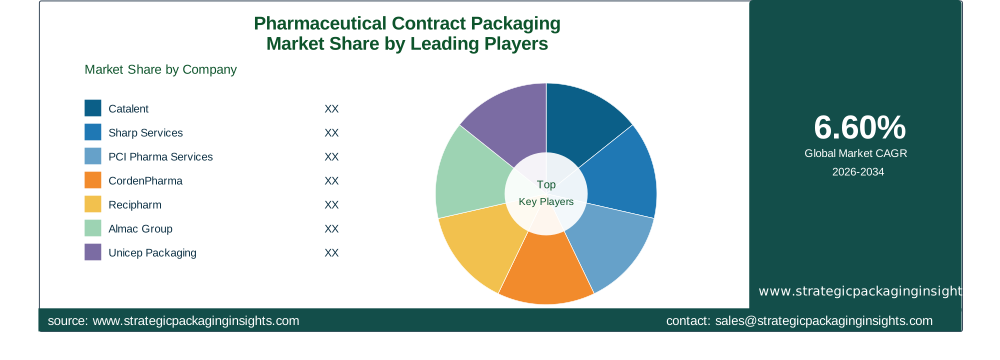
The pharmaceutical contract packaging market is characterized by a competitive landscape with several key players dominating the market. Companies such as Catalent, Sharp Services, PCI Pharma Services, CordenPharma, and Recipharm hold significant market shares due to their extensive service offerings and global presence. These companies have established themselves as leaders in the market by providing a wide range of packaging solutions, including primary and secondary packaging, blister packaging, and serialization and labeling services. Their ability to offer customized solutions and adhere to stringent regulatory requirements has enabled them to maintain a strong foothold in the market.
Catalent is one of the leading players in the pharmaceutical contract packaging market, known for its comprehensive service offerings and global reach. The company provides a wide range of packaging solutions, including primary and secondary packaging, blister packaging, and serialization and labeling services. Catalent's focus on innovation and sustainability has enabled it to maintain a competitive edge in the market. Sharp Services is another key player, offering a range of packaging solutions for both small and large pharmaceutical companies. The company's expertise in serialization and labeling has made it a preferred partner for many pharmaceutical companies.
PCI Pharma Services is a prominent player in the market, known for its extensive service offerings and commitment to quality. The company provides a wide range of packaging solutions, including primary and secondary packaging, blister packaging, and serialization and labeling services. PCI Pharma Services' focus on innovation and sustainability has enabled it to maintain a competitive edge in the market. CordenPharma is another key player, offering a range of packaging solutions for both small and large pharmaceutical companies. The company's expertise in serialization and labeling has made it a preferred partner for many pharmaceutical companies.
Recipharm is a leading player in the pharmaceutical contract packaging market, known for its comprehensive service offerings and global reach. The company provides a wide range of packaging solutions, including primary and secondary packaging, blister packaging, and serialization and labeling services. Recipharm's focus on innovation and sustainability has enabled it to maintain a competitive edge in the market. Other notable players in the market include Almac Group, Unicep Packaging, Jones Healthcare, Perspectum Contract Packaging, and Nipro PharmaPackaging. These companies have established themselves as leaders in the market by providing a wide range of packaging solutions and adhering to stringent regulatory requirements.
Key Highlights
- The pharmaceutical contract packaging market is projected to grow from $22.76 billion in 2025 to $40.46 billion by 2034, at a CAGR of 6.60%.
- Key drivers include the increasing demand for innovative and flexible packaging solutions and the rise in biologics and personalized medicine.
- Technological advancements in packaging, such as smart packaging and anti-counterfeiting solutions, are enhancing product safety and security.
- The market faces challenges such as stringent regulatory requirements and the high cost of compliance.
- Opportunities exist in the growing trend of outsourcing packaging services and the increasing focus on sustainability and eco-friendly packaging solutions.
- Key players in the market include Catalent, Sharp Services, PCI Pharma Services, CordenPharma, and Recipharm.
- The market is highly competitive, with numerous players vying for market share, leading to pricing pressures and reduced profit margins.
- The rise in e-commerce and online pharmacies is driving the demand for innovative packaging solutions that ensure product safety and integrity during transportation.
- The development of biodegradable and recyclable packaging materials is gaining traction, and companies that can provide these solutions are likely to see increased demand.
Top Countries Insights
In the pharmaceutical contract packaging market, the United States holds a significant share, with a market size of approximately $8.5 billion and a CAGR of 5%. The country's robust pharmaceutical industry, coupled with the increasing trend of outsourcing packaging services, is driving market growth. The presence of key players and advancements in packaging technologies further contribute to the market's expansion. However, stringent regulatory requirements and the high cost of compliance pose challenges for market players.
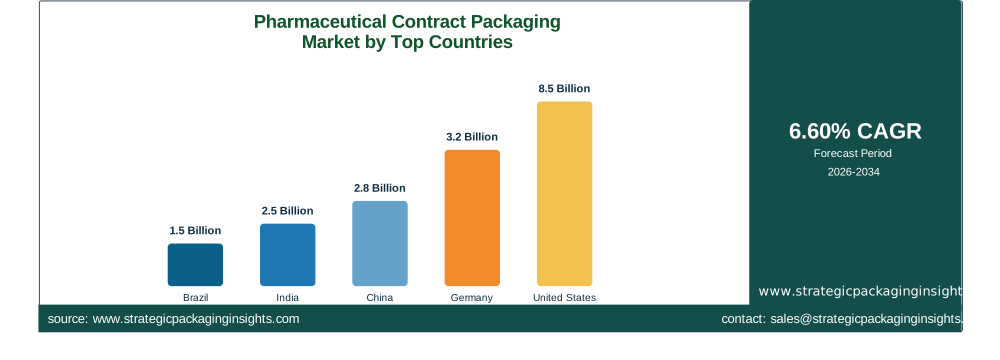
Germany is another key market, with a market size of around $3.2 billion and a CAGR of 4%. The country's strong focus on innovation and sustainability in packaging solutions is driving demand. The presence of a well-established pharmaceutical industry and the increasing demand for biologics and personalized medicine are also contributing to market growth. However, the market faces challenges such as regulatory compliance and the need for continuous investment in technology and infrastructure.
China is experiencing rapid growth in the pharmaceutical contract packaging market, with a market size of approximately $2.8 billion and a CAGR of 8%. The country's expanding pharmaceutical industry and the increasing trend of outsourcing packaging services are driving market growth. The government's focus on improving healthcare infrastructure and the rising demand for innovative packaging solutions are also contributing to the market's expansion. However, the market faces challenges such as regulatory compliance and the risk of supply chain disruptions.
India is another emerging market, with a market size of around $2.5 billion and a CAGR of 7%. The country's growing pharmaceutical industry and the increasing demand for cost-effective packaging solutions are driving market growth. The government's focus on improving healthcare infrastructure and the rising demand for biologics and personalized medicine are also contributing to the market's expansion. However, the market faces challenges such as regulatory compliance and the need for continuous investment in technology and infrastructure.
Brazil is also witnessing growth in the pharmaceutical contract packaging market, with a market size of approximately $1.5 billion and a CAGR of 6%. The country's expanding pharmaceutical industry and the increasing trend of outsourcing packaging services are driving market growth. The government's focus on improving healthcare infrastructure and the rising demand for innovative packaging solutions are also contributing to the market's expansion. However, the market faces challenges such as regulatory compliance and the risk of supply chain disruptions.
Pharmaceutical Contract Packaging Market Segments Insights

Service Type Analysis
The service type segment in the pharmaceutical contract packaging market is categorized into primary packaging, secondary packaging, blister packaging, and serialization and labeling. Primary packaging involves the direct containment of the drug product, ensuring its safety and efficacy. This segment is witnessing significant growth due to the increasing demand for innovative and flexible packaging solutions that cater to the diverse needs of pharmaceutical companies. Secondary packaging, which involves the packaging of primary packages, is also experiencing growth due to the rise in outsourcing activities by pharmaceutical companies. Blister packaging is gaining traction due to its ability to provide product protection and enhance patient compliance. Serialization and labeling are becoming increasingly important due to regulatory requirements and the need for anti-counterfeiting solutions.
The primary packaging segment is driven by the increasing demand for biologics and personalized medicine, which require specialized packaging solutions. The rise in chronic diseases and the growing geriatric population are also contributing to the demand for primary packaging solutions. Secondary packaging is benefiting from the increasing trend of outsourcing packaging services to specialized service providers. Blister packaging is gaining popularity due to its ability to provide product protection and enhance patient compliance. Serialization and labeling are becoming increasingly important due to regulatory requirements and the need for anti-counterfeiting solutions. Overall, the service type segment is poised for substantial growth, driven by technological advancements and the increasing focus on sustainability and innovation.
Dosage Form Analysis
The dosage form segment in the pharmaceutical contract packaging market is categorized into solid oral, injectables, liquids, and topicals. Solid oral dosage forms, such as tablets and capsules, are the most common form of drug delivery and are witnessing significant growth due to the increasing demand for cost-effective and convenient packaging solutions. Injectables are also experiencing growth due to the rise in biologics and personalized medicine, which require specialized packaging solutions. Liquids and topicals are gaining traction due to the increasing demand for innovative and flexible packaging solutions that cater to the diverse needs of pharmaceutical companies.
The solid oral dosage form segment is driven by the increasing demand for cost-effective and convenient packaging solutions. The rise in chronic diseases and the growing geriatric population are also contributing to the demand for solid oral dosage forms. Injectables are benefiting from the increasing demand for biologics and personalized medicine, which require specialized packaging solutions. Liquids and topicals are gaining popularity due to the increasing demand for innovative and flexible packaging solutions that cater to the diverse needs of pharmaceutical companies. Overall, the dosage form segment is poised for substantial growth, driven by technological advancements and the increasing focus on sustainability and innovation.
End Use Analysis
The end use segment in the pharmaceutical contract packaging market is categorized into big pharma, generic manufacturers, biopharma, and OTC companies. Big pharma companies are the largest consumers of contract packaging services, driven by the increasing trend of outsourcing non-core activities to specialized service providers. Generic manufacturers are also experiencing growth due to the increasing demand for cost-effective packaging solutions. Biopharma companies are benefiting from the rise in biologics and personalized medicine, which require specialized packaging solutions. OTC companies are gaining traction due to the increasing demand for innovative and flexible packaging solutions that cater to the diverse needs of consumers.
The big pharma segment is driven by the increasing trend of outsourcing non-core activities to specialized service providers. Generic manufacturers are benefiting from the increasing demand for cost-effective packaging solutions. Biopharma companies are experiencing growth due to the rise in biologics and personalized medicine, which require specialized packaging solutions. OTC companies are gaining popularity due to the increasing demand for innovative and flexible packaging solutions that cater to the diverse needs of consumers. Overall, the end use segment is poised for substantial growth, driven by technological advancements and the increasing focus on sustainability and innovation.
Packaging Type Analysis
The packaging type segment in the pharmaceutical contract packaging market is categorized into bottles, blisters, sachets, and vials and ampoules. Bottles are the most common form of packaging and are witnessing significant growth due to the increasing demand for cost-effective and convenient packaging solutions. Blisters are also experiencing growth due to their ability to provide product protection and enhance patient compliance. Sachets are gaining traction due to the increasing demand for innovative and flexible packaging solutions that cater to the diverse needs of pharmaceutical companies. Vials and ampoules are becoming increasingly important due to the rise in biologics and personalized medicine, which require specialized packaging solutions.
The bottles segment is driven by the increasing demand for cost-effective and convenient packaging solutions. Blisters are benefiting from their ability to provide product protection and enhance patient compliance. Sachets are gaining popularity due to the increasing demand for innovative and flexible packaging solutions that cater to the diverse needs of pharmaceutical companies. Vials and ampoules are experiencing growth due to the rise in biologics and personalized medicine, which require specialized packaging solutions. Overall, the packaging type segment is poised for substantial growth, driven by technological advancements and the increasing focus on sustainability and innovation.
Pharmaceutical Contract Packaging Market Segments
The Pharmaceutical Contract Packaging market has been segmented on the basis ofBy Service Type
- Primary Packaging
- Secondary Packaging
- Blister Packaging
- Serialization and Labeling
By Dosage Form
- Solid Oral
- Injectables
- Liquids
- Topicals
By End Use
- Big Pharma
- Generic Manufacturers
- Biopharma
- OTC Companies
By Packaging Type
- Bottles
- Blisters
- Sachets
- Vials and Ampoules
Region
- Asia Pacific
- North America
- Latin America
- Europe
- Middle East & Africa




